Teeth Whitening Pens: Do They Actually Work?
A whitening pen is the lightest-touch whitening format: modest, short-lived, and best for touch-ups rather than a dramatic change.
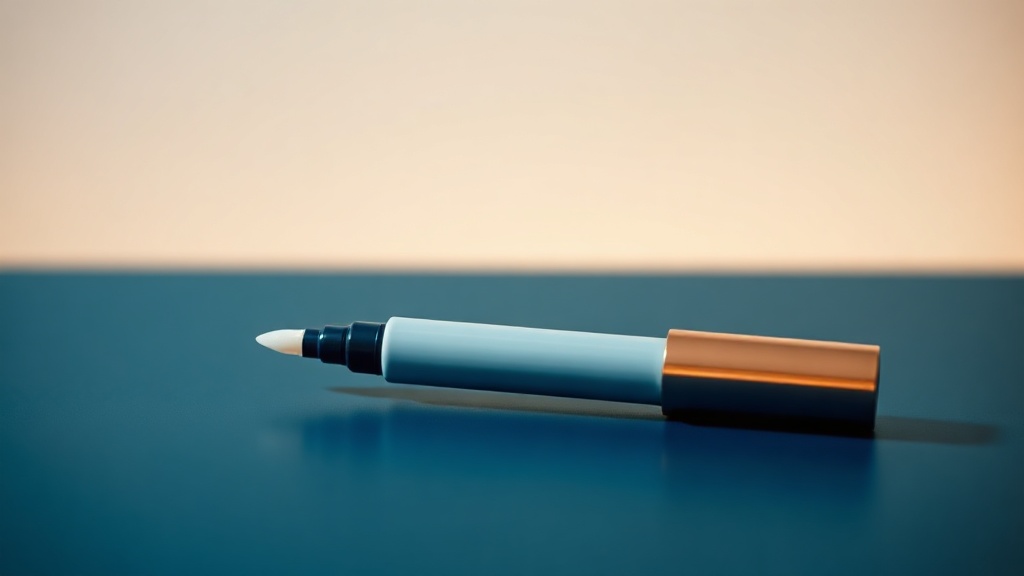
- A whitening pen is the lightest-touch whitening format: a slim applicator paints a very thin film of low-dose gel onto the teeth, so any effect is modest and mostly short-lived compared with strips, trays or in-office whitening.
- Whitening is driven by how much active agent reaches the tooth and for how long. A pen delivers a small dose in a thin layer that saliva quickly dilutes, so it works best for light touch-ups and maintenance, not a big transformation.
- Peroxide pens can lift stains and lighten teeth a little; peroxide-free (PAP) pens mainly remove surface stain, and in one clinical study a PAP result had faded back to baseline by three months.
- For any pen to do its best, keep the film on dry teeth as long as the directions allow and avoid eating or drinking straight after — contact time is the whole game.
- Pens are genuinely useful and inexpensive for small jobs, but manage expectations: think of them as a top-up between bigger whitening steps, not a replacement for them.
Whitening pens work, but modestly. They paint a thin film of low-dose gel that saliva soon dilutes, so peroxide pens give a small, short-lived lightening and peroxide-free pens mainly remove surface stains. They are best for touch-ups and maintenance, not a dramatic before-and-after.
How a whitening pen actually works
A whitening pen is built for convenience, not power. Twist or click the barrel and a small amount of gel is fed to a soft brush tip, which you paint onto the front of the teeth. That gel is usually either a low concentration of peroxide or a peroxide-free agent such as PAP. Whitening itself depends on two things — how much active agent reaches the tooth and how long it stays in contact — and a pen is working against both. The film it leaves is thin, the dose is small, and because you do not seal it under a strip or tray, your saliva starts diluting and washing it away within minutes. That is why a pen can freshen and lightly brighten a smile but rarely produces the deeper change you get from a two-week course of strips or a supervised in-office session. Understanding this is the key to using a pen well: it is a maintenance and touch-up tool, and judged on that job it can be genuinely handy.
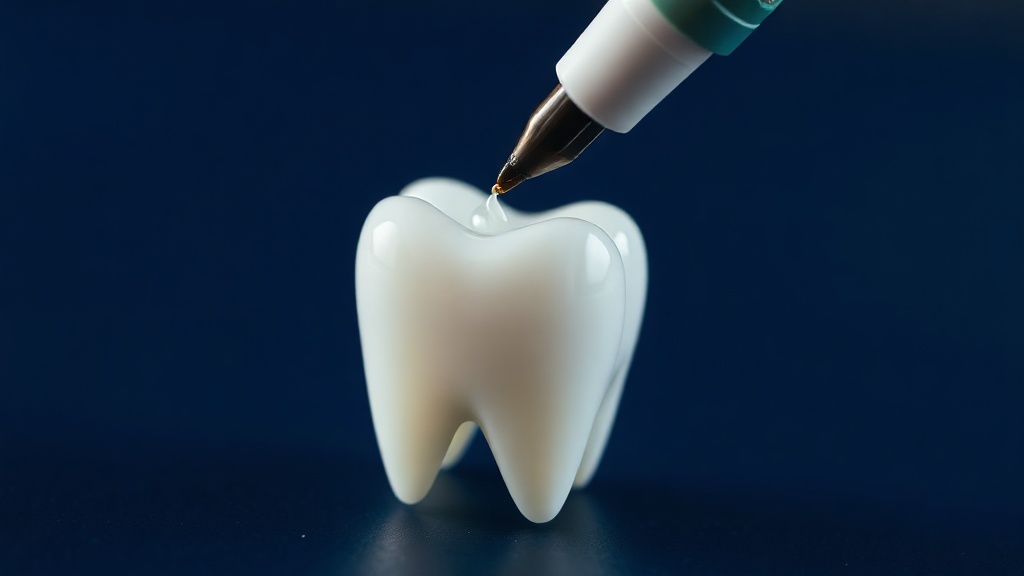
A pen leaves only a thin film of low-dose gel — and without a strip or tray to seal it, saliva begins washing it away within minutes.
What the research says about pen-style whitening
Every claim below maps to a named, peer-reviewed source in the Sources section. According to PubMed.
| Claim | Evidence | Source |
|---|---|---|
| Whitening depends on how concentrated the agent is and how long it stays on the tooth — the two things a thin pen film limits. | Reference review: peroxide whitening efficacy is driven by concentration and contact time. | Joiner, 2006 |
| Longer contact time, not a bigger dose, is what drives at-home whitening — so a quickly-diluted pen film has little time to work. | Randomised trial: an overnight low-concentration gel out-whitened a stronger gel worn only briefly. | Lopez Darriba et al., 2017 |
| Peroxide-free agents mostly remove surface stain rather than truly bleaching; only peroxide meaningfully whitens the tooth itself. | In-vitro comparison: over-the-counter agents only removed stain, while hydrogen peroxide whitened further. | Muller-Heupt et al., 2023 |
| A visible colour change has to clear a measurable threshold — small, transient shifts may not be noticeable at all. | Multicentre study set the perceptibility threshold near a single unit of colour difference. | Paravina et al., 2015 |
| A peroxide-free (PAP) whitening result can be temporary, fading back toward the starting shade within months. | Clinical study: PAP whitening improved colour initially but reverted to baseline by three months. | Kumbhare et al., 2025 |
How a pen compares with other whitening formats
| Format | Whitening power | Contact time | Typical cost | Best for |
|---|---|---|---|---|
| Whitening pen | Low | Seconds to minutes (diluted fast) | $10-30 | Touch-ups, travel, maintenance |
| Whitening toothpaste | Very low (surface stain) | Seconds | $5-15 | Daily upkeep |
| Whitening strips | Moderate to high | 30 min, over 1-2 weeks | $20-60 | Best value visible change |
| Take-home trays | High | 30-60 min or overnight, 1-2 weeks | $250-500 | Even, supervised results |
| In-office whitening | Highest and fastest | One supervised hour | $300-1,200 | Speed and a deadline |
Peroxide pens vs peroxide-free (PAP) pens
Not all pens are the same, and the label matters. Peroxide pens contain a low concentration of hydrogen or carbamide peroxide — the same family of agents used in strips and professional gels, just weaker and applied in a thinner layer. They can genuinely lighten the tooth a little, though the effect is limited by that small dose. Peroxide-free pens usually rely on PAP (phthalimidoperoxycaproic acid) or similar agents, which are popular because they tend to cause less sensitivity. The honest trade-off is durability: laboratory work suggests PAP can lift stains, but a clinical study following real patients found the colour gain had faded back to the starting shade by three months. Peroxide-free rinses and agents also work largely by removing surface stain rather than bleaching the tooth from within. Neither type is a scam — they simply sit at the gentle, low-commitment end of whitening. If your goal is a small refresh with minimal fuss, a pen fits; if you want a lasting, obvious change, a stronger, longer-contact method will serve you better.
Evidence you can act on.
Occasional emails — new research, new protocols, no noise.
How to get the most from a whitening pen
Because a pen gives the active agent so little time on the tooth, technique is what separates a visible touch-up from no result at all. A few habits make a real difference.
- 1
Dry the teeth first
10 secondsWipe or air-dry the front of your teeth before applying. Gel painted onto a wet, saliva-coated surface is diluted before it can act, so a dry start gives the thin film its best chance.
- 2
Apply a thin, even layer and wait
as directedPaint the gel across each visible tooth, then keep your lips away from them for the time the instructions specify — often 30 to 60 seconds. Do not rub your lips together, which wipes the film straight off.
- 3
Avoid eating or drinking straight after
30-60 minFreshly treated enamel can pick up colour more readily, and food or drink washes the agent away. Give it at least half an hour, and skip coffee, tea and red wine in that window.
- 4
Use it as maintenance, not a one-off miracle
ongoingA pen shines as a top-up between bigger whitening steps or before a photo. Layered onto a result you achieved with strips or trays, it helps you re-whiten less often; used alone, keep your expectations modest.
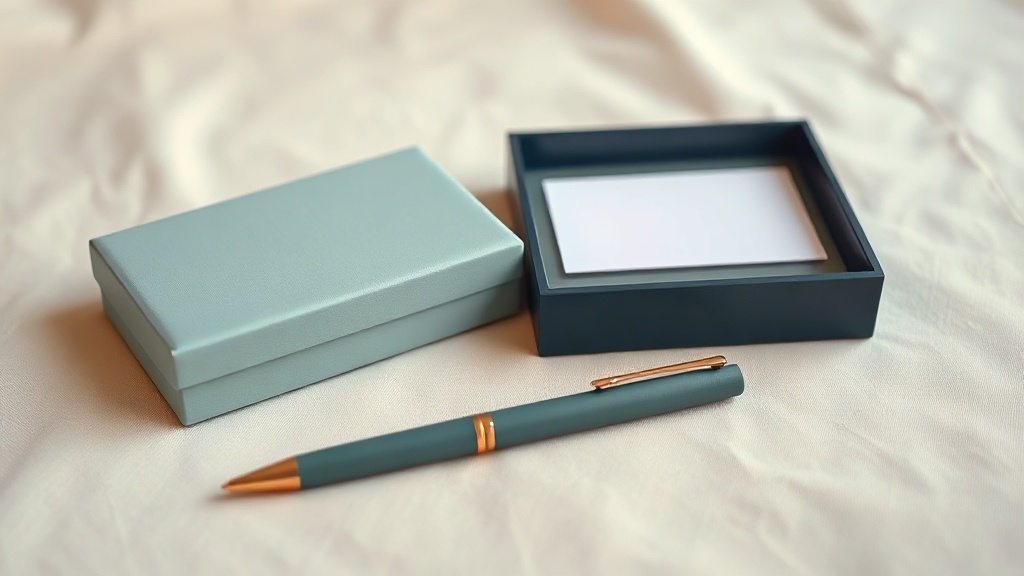
A pen is the lightest-touch option among whitening formats — best seen as a companion to strips or trays, not a replacement.
A pen is low-risk, but see a dentist rather than reaching for one if a single tooth has darkened, if whitening keeps triggering lingering sensitivity, or if you have crowns or veneers on your front teeth, which will not change colour to match. A professional can also tell you whether your discolouration is surface stain a pen might help with, or something inside the tooth that no over-the-counter product will shift.
Frequently asked questions
Sources
- 1.
- 2.
- 3.
- 4.
- 5.
- 6.
- 7.

Fix your breath at the source.
The complete science-backed protocol — engineered to eliminate volatile sulfur compounds at the biological source.
Start the Breath Protocol →Related reading
Educational purposes only. The content on this page is not medical advice and is not a substitute for consultation with a qualified dental or medical professional.
More from the library
 Best Of8 min
Best Teeth Whitening Gel (2025): Dentist-Tested Picks for Every Budget
Whitening gel is the only at-home format that genuinely bleaches teeth. Pick the right concentration and delivery, and contact time does the rest.
Read →→ Best Of8 min
Best Teeth Whitening Trays: Boil-and-Bite vs Custom
A whitening tray does not bleach; it controls contact time and protects the gums. Fit is what separates even, comfortable results from patchy ones.
Read →→ Guides8 min
Teeth Whitening Cost: A Complete Price and Value Guide (2026)
Whitening spans a huge price range, but the research shows the extra money mostly buys speed and supervision, not a whiter smile.
Read →→ Answers8 min
Does Teeth Whitening Damage Enamel? The Evidence-Based Answer
The honest, evidence-based answer to whether whitening harms enamel — what peroxide really does to the surface, why sensitivity is not damage, and the DIY methods that actually cause wear.
Read →→ Answers8 min
Does Baking Soda Whiten Teeth? What the Evidence Says
An honest look at what baking soda can and cannot do for a whiter smile.
Read →→ Best Of9 min
Best Fluoride-Free Whitening Toothpaste: An Honest, Evidence-Based Guide (2026)
Which fluoride-free whitening ingredients hold up to the research — and which are marketing. An honest buyer's guide.
Read →→