Best Fluoride-Free Whitening Toothpaste: An Honest, Evidence-Based Guide (2026)
Which fluoride-free whitening ingredients hold up to the research — and which are marketing. An honest buyer's guide.
- No toothpaste bleaches teeth. Whitening toothpastes — fluoride-free or not — work by polishing away surface stains, so brighter means a cleaner surface, not a lighter underlying tooth.
- Among fluoride-free options, nano-hydroxyapatite (n-HA) is the best-evidenced ingredient — not because it whitens dramatically, but because it helps remineralize enamel comparably to fluoride.
- Baking soda is the standout fluoride-free stain remover: research shows it lifts surface stain effectively at relatively low abrasivity.
- Skip charcoal. Systematic reviews find it whitens less than ordinary toothpaste and is more abrasive — described in the literature as less safe.
- Set expectations honestly: a well-powered trial found a hydroxyapatite whitening toothpaste gave no objective stain reduction versus placebo, so choose fluoride-free paste for gentle daily cleaning and enamel support, not a shade change.
The best fluoride-free whitening toothpastes clean surface stains gently rather than bleaching. Nano-hydroxyapatite pastes are the strongest pick because they help remineralize enamel like fluoride, and baking soda pastes lift stains safely at low abrasivity. Skip charcoal — it is more abrasive and whitens less than plain toothpaste. Expect a cleaner, brighter surface, not a dramatic shade change.
How whitening toothpaste really works
Before comparing brands, it helps to be clear about what any whitening toothpaste can and cannot do — because this is where most marketing quietly oversells. Tooth color has two layers to it. Surface (extrinsic) stains come from coffee, tea, red wine and tobacco settling into the thin protein film on your enamel. The deeper color of the tooth comes from the dentine underneath, and only oxidation — the peroxide used in strips, trays and in-office whitening — can lighten that. A toothpaste does not deliver enough peroxide, or leave it on long enough, to change the dentine. What it can do is scrub away surface stain with mild abrasives, which makes teeth look brighter and cleaner. That distinction is the whole game: when studies measure non-peroxide whitening agents with a spectrophotometer, the color change is so small it sits right at the edge of what the human eye can even perceive. So the honest promise of a good fluoride-free whitening toothpaste is a well-polished, stain-free surface and healthy enamel — not the shade jump you get from actual bleaching. The best products are the ones that deliver that gentle cleaning without grinding away enamel in the process, and the sections below rank the fluoride-free ingredients on exactly that.
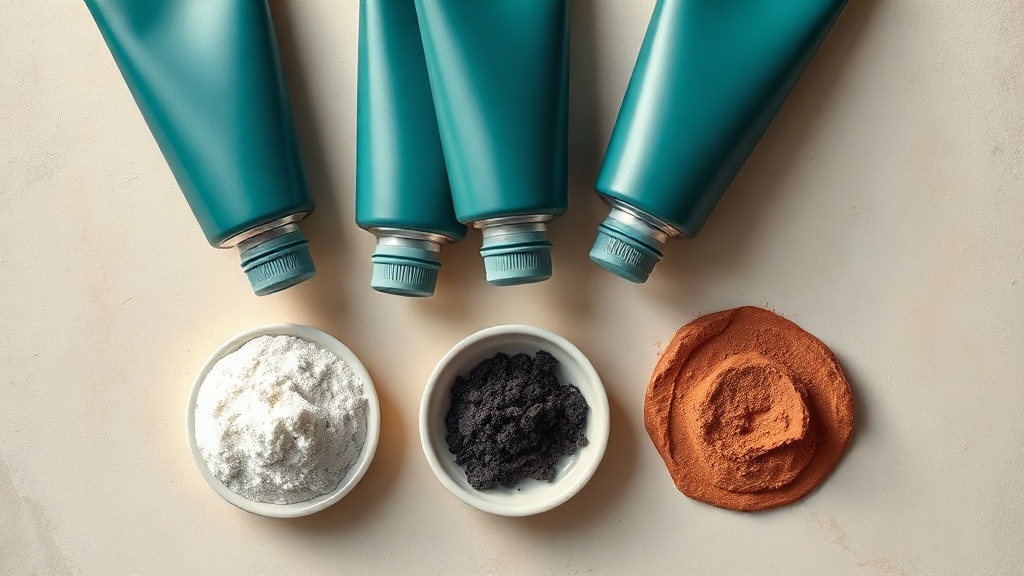
The main fluoride-free whitening ingredients at a glance — mineral pastes and baking soda hold up best; charcoal is the one to avoid.
What the research says about the ingredients
Every claim below maps to a named, peer-reviewed source in the Sources section. According to PubMed.
| Claim | Evidence | Source |
|---|---|---|
| Nano-hydroxyapatite toothpaste remineralized early enamel lesions comparably to a fluoride toothpaste, making it a viable fluoride alternative for enamel support. | Randomized, double-blind, in-situ crossover study (28 days per phase). | Najibfard et al., 2011 |
| Baking soda dentifrices are effective and safe for tooth-stain removal, often out-cleaning higher-abrasivity pastes while staying relatively low in abrasivity. | Review of in-vitro and clinical studies. | Li, 2017 |
| Charcoal toothpastes have a lower whitening effect than other options and are considered less safe because of their higher abrasive potential. | Systematic review of 11 in-vitro studies. | Montero Tomas et al., 2022 |
| Non-peroxide whitening agents mostly remove surface stain; only hydrogen peroxide truly lightened the tooth in a head-to-head comparison. | In-vitro comparison of OTC agents vs hydrogen peroxide. | Muller-Heupt et al., 2023 |
| A hydroxyapatite whitening toothpaste produced no objective stain reduction versus a placebo paste over 12 weeks, though users perceived their teeth as lighter. | Randomized, double-blind clinical trial (n=150). | Raoufi & Birkhed, 2010 |
Fluoride-free whitening toothpaste types, compared
| Type | How it works | Whitening evidence | Enamel-safety note |
|---|---|---|---|
| Nano-hydroxyapatite (n-HA) | Deposits mineral on enamel; brightens the surface optically | Shade-neutral in bleaching trials; a light-scattering surface effect, not bleaching | Low abrasion and helps replace lost minerals — the top all-round pick |
| Baking soda | Low-abrasivity mechanical stain removal plus acid buffering | Lifts surface stain effectively in trials | Relatively low abrasivity — safe for daily use |
| PAP (peroxide-free oxidiser) | Oxidises some surface chromogens without peroxide | Mixed and often fades within weeks; weaker than peroxide | Generally gentle, but the evidence is still thin |
| Blue covarine / purple | Blue pigment optically offsets yellow tones | A transient same-day optical trick; no durable change | Depends on the abrasive base of the paste |
| Charcoal | Abrasive black-powder scrubbing | Whitens less than plain toothpaste in reviews | Higher abrasion — best avoided |
The fluoride-free question, answered honestly
People choose fluoride-free toothpaste for many reasons — personal preference, wanting fewer ingredients, or simply liking a clean-label product. That is a valid choice, but it comes with one honest trade-off worth naming: fluoride is the most-studied ingredient for keeping enamel strong, and going without it means you want a capable stand-in. This is exactly where nano-hydroxyapatite earns its place at the top of the list. It is a synthetic version of the mineral your enamel is largely made of, and in a controlled study it remineralized early enamel comparably to fluoride — so it supports enamel health rather than just cosmetics. Baking soda then covers the day-to-day stain removal, gently and safely, and there is even evidence it helps control the plaque film that stains cling to. What you should not do is reach for charcoal in search of a whiter smile: the reviews are consistent that it scrubs harder and whitens less, and lost enamel does not grow back. And keep the whitening claim in perspective for all of these — when researchers measured a hydroxyapatite whitening paste against placebo, the objective color change was nil even though people felt their teeth looked brighter. A fluoride-free whitening toothpaste, chosen well, is a genuinely good daily-care product. It is just not a substitute for real whitening if a shade change is what you are after.
Evidence you can act on.
Occasional emails — new research, new protocols, no noise.
How to choose and use a fluoride-free whitening toothpaste
This is a cosmetic and daily-care decision, not a dental treatment. A few honest priorities get you a paste that cleans well, supports your enamel, and does not overpromise.
- 1
Decide what you actually want it to do
before you buyIf you want a shade change, a toothpaste is the wrong tool — plan for strips, trays or in-office whitening instead. If you want gentle daily stain control and enamel support with a clean-label product, a good fluoride-free paste is a sensible fit. Naming the goal saves you from disappointment.
- 2
Prioritise nano-hydroxyapatite for enamel support
dailyBecause fluoride-free means skipping the most-studied remineralizing agent, look for nano-hydroxyapatite (n-HA) high on the ingredient list. It is the best-evidenced fluoride alternative for keeping enamel mineralised, and it gently brightens the surface as a bonus.
- 3
Use baking soda for gentle stain removal
dailyA baking-soda paste — or an n-HA paste that includes it — lifts everyday coffee and tea stains at low abrasivity. Research shows stain removal and abrasivity are not the same thing, so you do not need a harsh, gritty paste to keep the surface clean.
- 4
Skip charcoal and gritty whitening pastes
—Charcoal and aggressively abrasive whitening pastes trade long-term enamel for a little short-term polish, and the reviews show charcoal does not even whiten well. Once enamel is worn thin it does not come back, so this is the easiest corner to cut safely.
- 5
Pair it with what genuinely lightens
ongoingFor a real shade change, combine your daily paste with the things that work — easing off deeply staining drinks, and using peroxide-based whitening when you want to go lighter. Think of the toothpaste as maintenance for a clean, healthy surface, not the whitening step itself.
What a whitening toothpaste really does: it polishes away the surface stain film, revealing the brightness already there — it does not bleach.
Talk to a dentist before switching to fluoride-free if you are at higher risk of tooth decay, since fluoride is the most-studied enamel protector and a professional can advise whether nano-hydroxyapatite is a suitable alternative for you. Also see a dentist if you have ongoing sensitivity, if a single tooth looks much darker than the rest, or if you want a genuine shade change rather than surface cleaning.
Frequently asked questions
Sources
- 1.
- 2.
- 3.
- 4.
- 5.
- 6.
- 7.
- 8.
- 9.
- 10.

Fix your breath at the source.
The complete science-backed protocol — engineered to eliminate volatile sulfur compounds at the biological source.
Start the Breath Protocol →Related reading
Educational purposes only. The content on this page is not medical advice and is not a substitute for consultation with a qualified dental or medical professional.
More from the library
 Guides8 min
Purple Toothpaste: Does the Color-Correcting Trick Actually Work?
A calm look at how purple toothpaste masks yellow tones optically, why the effect is temporary, and where it fits alongside methods that actually change your shade.
Read →→ Answers8 min
Does Teeth Whitening Damage Enamel? The Evidence-Based Answer
The honest, evidence-based answer to whether whitening harms enamel — what peroxide really does to the surface, why sensitivity is not damage, and the DIY methods that actually cause wear.
Read →→ Guides8 min
How to Remove Coffee Stains From Teeth
A honest, evidence-based guide to lifting coffee stains from teeth without wrecking your enamel: what works, what only polishes the surface, and why to skip charcoal.
Read →→ Answers8 min
Does Coconut Oil Whiten Teeth? An Honest, Evidence-Based Answer
An honest look at the coconut oil whitening claim, what the research on oil pulling really measured, and the gentle methods that actually work.
Read →→ Answers8 min
Does Baking Soda Whiten Teeth? What the Evidence Says
An honest look at what baking soda can and cannot do for a whiter smile.
Read →→ Guides9 min
In-Office Teeth Whitening Cost: What Dentists Charge (2026)
An honest, evidence-based look at chairside whitening prices — and whether the convenience premium is really worth it.
Read →→