How Much Does Teeth Whitening Cost? A Complete Guide
Whitening spans a huge price range, but the research shows the extra money mostly buys speed and supervision, not a whiter smile.
- Teeth whitening spans a huge price range — from a $5 whitening toothpaste to a $1,000-plus in-office laser session — but the price tag reflects speed, convenience and professional supervision far more than the final whiteness you end up with.
- The active ingredient is what actually whitens. Peroxide works by diffusing into the tooth and oxidising the coloured molecules inside, and its effect is driven by concentration and contact time — the two levers every product is really selling.
- According to peer-reviewed research indexed on PubMed, at-home and in-office whitening reach a similar shade change; paying more mainly buys a faster, dentist-supervised result rather than a whiter one.
- Light and laser activation add no measurable whitening over the gel alone, so a premium laser-whitening upgrade is one of the easiest places to overspend.
- Cheaper is not the same as ineffective: low-cost strips and 10% carbamide-peroxide gels top over-the-counter rankings, while whitening toothpastes and pens do the least and are best seen as maintenance, not transformation.
Teeth whitening typically costs $5-15 for whitening toothpaste, $20-70 for strips, pens and LED kits, $250-500 for dentist take-home trays, and $300-1,200 for in-office or laser sessions. The science shows the extra money mostly buys speed and professional supervision, not a dramatically whiter smile.
Why whitening costs what it costs
Almost every whitening product on the market works the same way: a peroxide gel — hydrogen peroxide or its slower-release cousin, carbamide peroxide — diffuses through the enamel and oxidises the coloured molecules lodged mainly in the dentine underneath. Because the chemistry is shared, the real variables are concentration and contact time. Higher concentrations work faster, while lower concentrations can reach a similar result if you leave them on longer. That single fact explains the entire price ladder. A dentist charges more because a high-concentration gel does the job in one supervised hour; an at-home kit costs less because a gentler gel does the same job over one to two weeks of nightly wear. A whitening toothpaste sits at the bottom because it barely contains an active bleaching agent at all — it mostly polishes surface stains away. So when you compare prices, you are really comparing how fast, how convenient and how supervised the process is, not how white you can ultimately get. Keeping that in mind is the single best defence against overpaying.
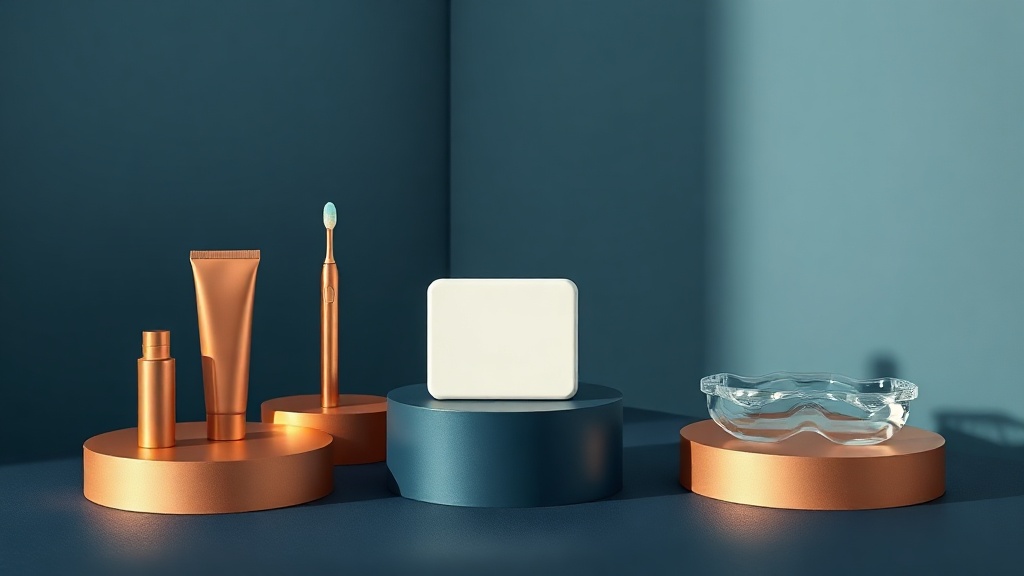
The whitening price ladder runs from a few dollars for toothpaste to over a thousand for an in-office laser session — but the higher tiers mainly buy speed and supervision.
What the price actually buys — and doesn't
Every claim below maps to a named, peer-reviewed source in the Sources section. According to PubMed.
| Claim | Evidence | Source |
|---|---|---|
| At-home and in-office whitening reach a similar shade change; the professional premium buys speed and supervision, not necessarily a whiter result. | Updated systematic review and meta-analysis of 32 studies found no difference in shade-guide-unit change between techniques. | de Geus et al., 2025 |
| Contact time, not concentration, drives at-home results — cheaper low-concentration products can approach stronger ones with longer wear. | Randomised trial: 10% carbamide peroxide overnight out-whitened 7.5% hydrogen peroxide worn one hour; whitening was time- but not concentration-dependent. | Lopez Darriba et al., 2017 |
| Light and laser activation add no measurable whitening benefit over the gel alone. | Network meta-analysis of 28 randomised trials found no colour advantage from any light-activation protocol. | Maran et al., 2019 |
| Lower-concentration gels carry about a third less risk of sensitivity with equal colour change. | Systematic review and meta-analysis: low or medium hydrogen peroxide had a 33% lower sensitivity risk with no loss of whitening. | Maran et al., 2020 |
| Inexpensive over-the-counter strips and 10% carbamide-peroxide gels top the rankings and clearly beat doing nothing. | Network meta-analysis of over-the-counter products ranked 6% hydrogen-peroxide strips and 10% carbamide-peroxide gels highest for colour change. | de Oliveira et al., 2024 |
Teeth whitening costs by method (2026)
| Method | Typical cost (US) | What the price buys | Best for |
|---|---|---|---|
| Whitening toothpaste | $5-15 | Gentle daily surface-stain polishing | Maintaining a result, mild stains |
| Whitening pen | $10-30 | A thin film of low-dose gel for touch-ups | Small touch-ups and travel |
| Whitening strips (OTC) | $20-60 | Around 6% hydrogen-peroxide strips, real bleaching | Best visible change per dollar |
| LED / light kit (OTC) | $30-70 | A gel plus a light that adds little | Convenience seekers (not the light) |
| Dentist take-home trays | $250-500 | Custom trays and a stronger, supervised gel | Even results with professional oversight |
| In-office whitening | $300-800 | A single fast, supervised high-strength session | Speed and a deadline |
| Zoom / laser in-office | $500-1,200 | The fastest session plus a light upgrade | Prioritising speed over cost |
Where it is easy to overspend
If you want the most whitening per dollar, the research points to a few clear traps. The first is paying extra for light or laser activation. Two large network meta-analyses found that shining a light or laser on the gel adds no measurable whitening over the same gel used without one — the phrase laser whitening is marketing, not mechanism. The second is assuming a higher concentration is always better. Stronger gels work faster, but studies show lower-concentration products reach a comparable colour with about a third less risk of sensitivity, so the gentler option is often the smarter buy. The third is writing off cheap products entirely. Over-the-counter strips and 10% carbamide-peroxide gels consistently sit at the top of independent rankings and clearly outperform doing nothing. What genuinely justifies a higher price is professional supervision — a dentist confirms your teeth and gums are healthy, protects your soft tissue and manages sensitivity — which is about safety and predictability, not a whiter endpoint. Spend where that peace of mind matters to you, and save everywhere it does not.
Evidence you can act on.
Occasional emails — new research, new protocols, no noise.
How to choose whitening by budget
There is no single best value — it depends on what you are optimising for. Use this as a simple decision ladder, cheapest first, and stop at the tier that matches your goal and your timeline.
- 1
Start with maintenance if your stains are mild
$5-15If your teeth are only slightly dull, or you are protecting a previous result, a whitening toothpaste or pen is enough. Both work mostly by lifting surface stains rather than bleaching, so expect subtle upkeep, not a dramatic change — and pair them with a soft brush to avoid unnecessary enamel wear.
- 2
Choose strips or a 10% carbamide gel for real, visible change
$20-60For the best whitening per dollar, over-the-counter strips and low-concentration carbamide-peroxide gels are the sweet spot. They contain a genuine bleaching agent, top independent rankings, and let contact time do the work over one to two weeks of consistent use.
- 3
Add professional take-home trays if you want supervision
$250-500Custom-fitted trays from a dentist hold the gel evenly against every tooth and come with professional oversight to manage sensitivity. You are paying for fit, safety and predictability rather than a fundamentally different chemistry.
- 4
Pay for in-office only when speed matters
$300-1,200A single high-strength, supervised session is the fastest route, and genuinely useful before a wedding or event. Skip the light or laser upgrade where you can, since it adds cost without adding whitening, and ask about a lower-concentration protocol to keep sensitivity down.
At-home and in-office whitening reach a similar shade change in the research; the professional route mainly buys speed, fit and supervision.
Whitening is cosmetic, but a few situations are worth a dentist's eyes first. See a professional before whitening if you have unexplained discolouration on a single tooth, visible decay or sore gums, crowns or veneers on your front teeth (which will not change colour), or a history of persistent sensitivity. A quick check-up makes sure you are whitening healthy teeth and helps you avoid spending money on a result that patchy restorations or underlying issues would undermine.
Frequently asked questions
Sources
- 1.
- 2.
- 3.
- 4.
- 5.
- 6.
- 7.
- 8.
Fix your breath at the source.
The complete science-backed protocol — engineered to eliminate volatile sulfur compounds at the biological source.
Start the Breath Protocol →Related reading
Educational purposes only. The content on this page is not medical advice and is not a substitute for consultation with a qualified dental or medical professional.
More from the library
 Guides10 min
Professional Teeth Whitening Cost: In-Office vs Take-Home Prices (2026)
In-office, take-home, and over-the-counter whitening prices for 2026, and an honest look at what the research says each tier actually buys you.
Read →→ Guides9 min
In-Office Teeth Whitening Cost: What Dentists Charge (2026)
An honest, evidence-based look at chairside whitening prices — and whether the convenience premium is really worth it.
Read →→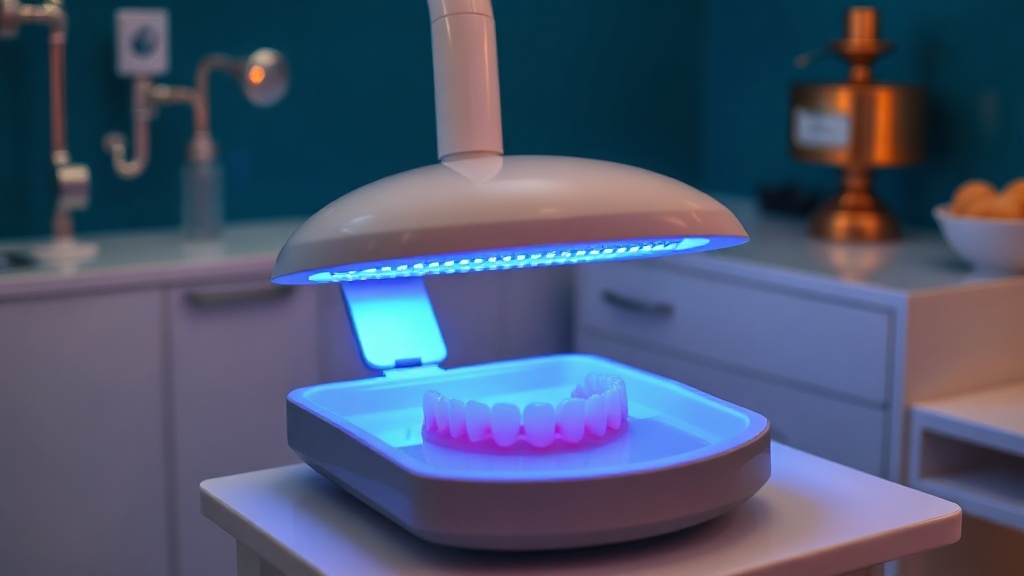 Guides10 min
Zoom Teeth Whitening Cost: Is It Worth $500? (2026 Prices)
What Zoom whitening costs in 2026, what the blue lamp actually contributes, and how it stacks up against gentler, cheaper options.
Read →→ Guides9 min
Laser Teeth Whitening Cost: Prices, Value, and Cheaper Alternatives (2026)
What laser whitening really costs — and the research showing the light adds no extra whitening over the gel alone.
Read →→ Answers8 min
Does Teeth Whitening Damage Enamel? The Evidence-Based Answer
The honest, evidence-based answer to whether whitening harms enamel — what peroxide really does to the surface, why sensitivity is not damage, and the DIY methods that actually cause wear.
Read →→ Answers8 min
Does Baking Soda Whiten Teeth? What the Evidence Says
An honest look at what baking soda can and cannot do for a whiter smile.
Read →→