
Tea Tree Oil Toothpaste: What It Does and How to Use It Safely
A plant essential oil with genuine antimicrobial evidence, honest limits, and safety rules worth knowing.

- Tea tree oil, from Melaleuca alternifolia, is a plant essential oil with documented antimicrobial and anti-inflammatory activity, which is why it appears in some natural toothpastes.
- The best clinical signal is for gums, not plaque: a 2.5 percent tea tree oil gel reduced gum bleeding and inflammation in a trial, but did not reduce plaque.
- It has no cavity-prevention evidence and is not a substitute for fluoride, which remains the established anti-caries ingredient.
- Safety matters: tea tree oil must not be swallowed, can be toxic if ingested in quantity, and can cause allergic or contact reactions in some people.
- Think of a tea tree paste as a possible comfort or adjunct for mild gum irritation, used as directed and spat out, not as a whitening or anti-cavity product.
Tea tree oil toothpaste uses a plant essential oil with real antimicrobial and anti-inflammatory activity. The strongest evidence is that a tea tree gel eased gum inflammation, although it did not reduce plaque, and it has no cavity-prevention data. Use it as directed, never swallow it, and keep a fluoride or hydroxyapatite paste for enamel.
How tea tree oil works in a toothpaste
Tea tree oil is the essential oil distilled from the Australian shrub Melaleuca alternifolia, and its activity comes mainly from a family of terpene compounds, especially terpinen-4-ol. In the laboratory these compounds disrupt the membranes of bacteria and fungi, which is the basis for tea tree oil's long-standing reputation as a natural antiseptic, and reviews of the oil describe both antimicrobial and anti-inflammatory actions. In a toothpaste, that chemistry is carried across the teeth and gumline as you brush, putting the oil in brief contact with the plaque bacteria and the inflamed gum tissue where it might plausibly help. The most useful human evidence to date comes from a controlled trial of a 2.5 percent tea tree oil gel applied with a toothbrush twice daily in adults with chronic gingivitis. Over the study, the tea tree group showed a meaningful reduction in gum bleeding and in the gingival index, a standard measure of gum inflammation, and no adverse reactions were reported. That is a genuine, if narrow, result: it points to an anti-inflammatory soothing effect on irritated gums. But the same trial found something just as important for setting expectations, which is that tea tree oil did not reduce plaque, and plaque scores actually tended to rise over the later weeks. In other words, the plausible benefit is calming inflamed gum tissue, not cleaning the teeth or clearing the biofilm that drives most oral problems in the first place. A tea tree paste, then, is best understood as a possible comfort measure layered on top of good mechanical cleaning, never a replacement for it.

The best evidence points to tea tree oil soothing inflamed gum tissue, not to cleaning teeth or clearing plaque.
What the research actually shows
Every claim below maps to a named, peer-reviewed source in the Sources section. According to PubMed.
| Claim | Evidence | Source |
|---|---|---|
| A 2.5 percent tea tree oil gel reduced gum bleeding and gingival inflammation versus placebo, but did not reduce plaque; no adverse reactions were reported. | Double-blind randomized trial, 49 adults with chronic gingivitis. | Soukoulis & Hirsch, 2004 |
| Tea tree oil has documented antimicrobial and anti-inflammatory activity; its toxicity if ingested is an established concern. | Comprehensive review, Clinical Microbiology Reviews. | Carson et al., 2006 |
| Fluoride toothpaste has a firmly established caries-prevented fraction of about 24 percent; tea tree oil has no comparable cavity data. | Cochrane review of 70 trials. | Marinho et al., 2003 |
| The effective anti-cavity fluoride range is about 1,000-1,500 ppm. | Cochrane concentration review. | Walsh et al., 2019 |
| Fluoride helps form a more acid-resistant enamel mineral, a protective benefit tea tree oil does not provide. | Review of fluoride mechanisms. | Buzalaf et al., 2011 |
What tea tree toothpaste can and cannot do
| Goal | Tea tree oil toothpaste |
|---|---|
| Calm mild gum inflammation | Some supporting evidence (bleeding and gingival index) |
| Reduce plaque | Not shown; plaque may even increase |
| Prevent cavities | No evidence; not a fluoride substitute |
| Whiten teeth | No |
| Safe to swallow | No: do not swallow, toxic if ingested |
Safety and the honest limits
The single most important thing to know about any tea tree oil oral-care product is that it is not meant to be swallowed. Tea tree oil is safe for topical use in appropriate concentrations, but taken internally it can be toxic, with reports of effects such as drowsiness, unsteadiness and confusion after ingestion, and the risk is greatest for small children and pets who might swallow a scented product. That is why a tea tree toothpaste should be used exactly like any toothpaste, brushed on and thoroughly spat out, and kept out of the reach of children who cannot yet reliably spit. The second safety consideration is allergy. Tea tree oil is a known cause of allergic contact dermatitis in susceptible people, and oil that has oxidized with age tends to be more sensitizing, so anyone with sensitive skin or a history of reactions should patch-test first and stop at the first sign of irritation, burning or a rash. Beyond safety, the honest limit is scope. Tea tree oil has no evidence that it prevents cavities or rebuilds enamel, and the gum benefit that does exist came from a specific gel formulation used as an adjunct, not from swapping out your regular protective toothpaste. Fluoride, by contrast, has one of the strongest evidence bases in dentistry for preventing decay and helping form a more acid-resistant enamel surface. So the sensible way to use a tea tree paste is as a possible extra for mild gum irritation, chosen as a properly made product rather than raw oil, while keeping a fluoride or hydroxyapatite toothpaste as the foundation that actually protects your teeth.
Evidence you can act on.
Occasional emails — new research, new protocols, no noise.
How to use a tea tree paste safely
If you want to try tea tree oil for your gums, a few simple rules keep it useful and safe. None of this treats a disease; it supports comfort while your real protection stays in place.
- 1
Patch-test for allergy first
24 hoursDab a small amount of the product on the inner forearm and wait a day. If you get redness, itching or a rash, tea tree oil is not for you and you should stop.
- 2
Use a properly formulated paste, as directed
twice dailyChoose a finished toothpaste with a defined tea tree concentration rather than adding raw essential oil to your brush, which is far too concentrated for the mouth.
- 3
Brush, then spit thoroughly, and never swallow
after brushingTreat it like any toothpaste: spit out all of it. Keep the tube away from young children and pets, since even small swallowed amounts can be harmful.
- 4
Keep a fluoride or hydroxyapatite paste for enamel
ongoingTea tree oil does not prevent cavities, so it should sit alongside a protective paste, not replace it. Many people alternate or keep tea tree for gum comfort only.
- 5
See a dentist if your gums keep bleeding
as neededPersistent bleeding, swelling or bad taste is a reason for a professional assessment, not just a change of toothpaste.
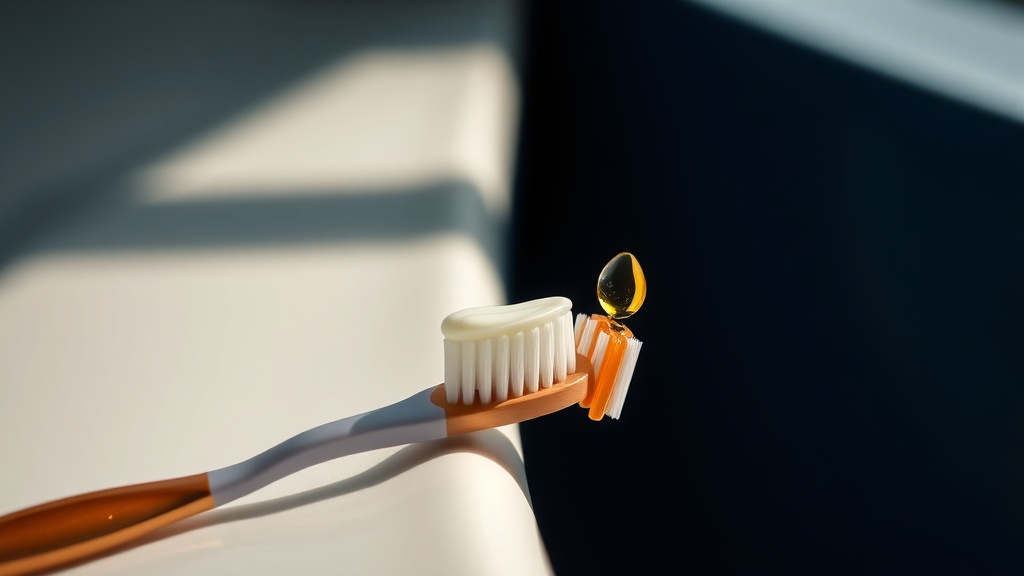
Tea tree oil is for topical use only: brush, spit thoroughly, and keep it away from children who cannot spit.
See a dentist if your gums bleed regularly, stay swollen, or if you have persistent bad breath or a bad taste, since these can signal gum disease that needs proper assessment rather than a natural toothpaste. Seek medical advice promptly if tea tree oil is swallowed in more than a toothpaste-sized trace, especially by a child, and stop using it and see a clinician if you develop a rash, burning or swelling that could be an allergic reaction.
Frequently asked questions
Sources
- 1.
- 2.
- 3.
- 4.
- 5.

Fix your breath at the source.
The complete science-backed protocol — engineered to eliminate volatile sulfur compounds at the biological source.
Start the Breath Protocol →Related reading
Educational purposes only. The content on this page is not medical advice and is not a substitute for consultation with a qualified dental or medical professional.
More from the library
 Ingredients9 min
Tea Tree Oil Mouthwash: Benefits and Safe Use
A rinse where dilution and spitting out matter most, weighed honestly against the evidence.
Read →→ Ingredients8 min
Coconut Oil for Teeth: What It Actually Does
The most popular oil for pulling, weighed honestly against the traditional choice and the trial data.
Read →→ Ingredients8 min
Clove Oil for Teeth: Real Comfort, Honest Limits
A traditional numbing remedy that soothes for a while but never fixes the cause.
Read →→ Ingredients8 min
Hydroxyapatite Toothpaste: How It Remineralizes and Strengthens Enamel
The mineral your enamel is already made of, in a tube: what nano-hydroxyapatite does to the tooth surface, what the evidence shows, and where it stops.
Read →→ Answers8 min
How to Get Rid of White Spots on Teeth: Your Options, Ranked
An honest, evidence-based ladder of options, from what you can do at home to what only a dentist can fix.
Read →→ Ingredients8 min
Hydroxyapatite Toothpaste Benefits: What the Evidence Actually Supports
A calm, science-first look at what hydroxyapatite toothpaste can genuinely do for your enamel, and where the evidence stops.
Read →→