Coconut Oil for Teeth: What It Actually Does
The most popular oil for pulling, weighed honestly against the traditional choice and the trial data.
- Coconut oil is the most popular oil for oil pulling, prized for its mild taste and its high content of lauric acid, a fatty acid with laboratory antibacterial activity.
- In small clinical trials, coconut-oil pulling lowered the bacterial count in saliva and reduced plaque scores, but those studies were mixed in quality and at high risk of bias.
- Sesame oil is the older, more-studied traditional choice; the two behave similarly in practice, and the choice mostly comes down to taste and preference.
- Coconut oil does not whiten teeth, remove firmly attached plaque as well as brushing, or beat a proven antiseptic rinse for plaque control.
- Use it as a low-risk adjunct to fluoride or hydroxyapatite brushing and flossing, and keep your regular dental visits.
Coconut oil, swished as an oil pull, can modestly lower the bacteria in your saliva and may reduce plaque a little, thanks partly to its lauric acid. The trials are small and low certainty, and it works no better than sesame oil or a proven mouthwash. It is a pleasant adjunct to brushing, not a replacement.
Why people reach for coconut oil
Coconut oil has become the default oil for pulling for two reasons. The first is simply that it tastes mild and melts pleasantly in the mouth, which makes several minutes of swishing bearable. The second is its chemistry: coconut oil is unusually rich in lauric acid, a medium-chain fatty acid that, in laboratory settings, disrupts the membranes of some bacteria. That has led to the popular idea that coconut oil actively attacks the microbes behind plaque and bad breath. It is a reasonable hypothesis, but it is important to keep the laboratory and the mouth separate. What the human trials actually measure is not lauric acid killing bacteria on a dish, but whether people who swish coconut oil end up with fewer bacteria in their saliva and a bit less plaque. The mechanism in the mouth is still thought to be mostly mechanical: as the oil emulsifies into fine droplets while you swish, loose bacteria and debris are trapped and then spat out. Lauric acid may add a mild chemical assist, but the evidence cannot separate the two, so it is honest to describe coconut oil as a gentle, mildly antibacterial rinse rather than a targeted germ-killer.
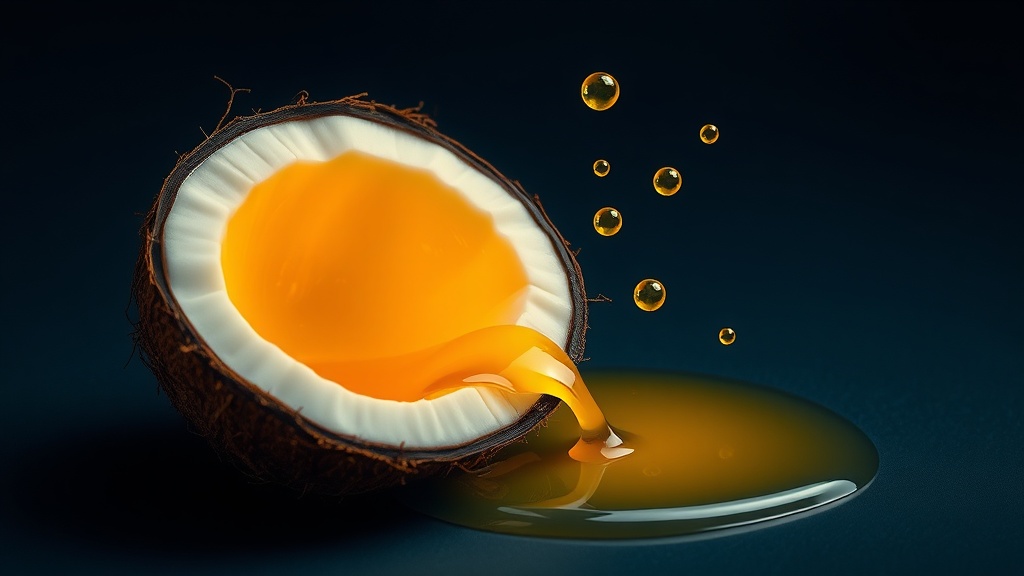
Coconut oil is rich in lauric acid, which shows antibacterial activity in the lab; in the mouth, the effect is mostly a gentle mechanical rinse.
What the research actually shows
Every claim below maps to a named, peer-reviewed source in the Sources section. According to PubMed.
| Claim | Evidence | Source |
|---|---|---|
| Coconut-oil pulling significantly reduced salivary bacterial colony count and plaque score across four small trials; one trial also showed less staining than chlorhexidine, but study quality was mixed and risk of bias high. | Systematic review of 4 RCTs (n=182). | Woolley et al., 2020 |
| Pooling nine oil-pulling trials, salivary bacterial counts fell significantly, but there was no significant advantage over controls for plaque or gingival index. | Meta-analysis of 9 RCTs. | Peng et al., 2022 |
| Sesame-oil pulling reduced plaque, gingival index and colony counts comparably to chlorhexidine over 10 days, showing the traditional oil performs much like coconut oil. | Randomized, triple-blind controlled trial (n=20). | Asokan et al., 2009 |
| In a larger synthesis, chlorhexidine remained more effective than oil pulling at reducing plaque, and the overall certainty of the evidence was very low. | Systematic review and meta-analysis, 25 trials. | Jong et al., 2023 |
| Across five randomized trials, oil pulling showed no significant differences from chlorhexidine or placebo on oral-hygiene scores, though a possible benefit could not be ruled out. | Systematic review of 5 RCTs (n=160). | Gbinigie et al., 2016 |
Coconut oil, sesame oil, or a proven rinse
| Option | What sets it apart | Evidence strength |
|---|---|---|
| Coconut oil | Mild taste, high in lauric acid, most popular today | Small trials show fewer salivary bacteria; high risk of bias |
| Sesame oil | The traditional Ayurvedic choice and the most-studied oil | Comparable to chlorhexidine in a small triple-blind trial |
| Chlorhexidine rinse | A proven antiseptic mouthwash | Best plaque control head-to-head, but for short-term use and can stain |
| Brushing and flossing | Removes firmly attached plaque directly | The foundation no oil replaces |
Coconut oil versus sesame oil
People often ask which oil is best, expecting a decisive winner. The honest answer is that the trials do not clearly separate them. Sesame oil is the oil named in the traditional Ayurvedic practice and the one used in some of the earliest and most carefully designed studies, including a triple-blind trial in which it matched chlorhexidine over ten days. Coconut oil is the newer favourite, backed by its own small systematic review showing reduced salivary bacteria and plaque. Both work through the same emulsification mechanism, both show the same pattern of a real but modest salivary effect and a weaker plaque effect, and neither has been shown to be superior to the other in a head-to-head that would settle the question. So the choice comes down to practical things: taste, texture, cost, and whether you prefer the traditional oil or the popular one. What does not change with the oil you pick is the ceiling on the benefit. No edible oil, coconut or sesame, whitens enamel, dissolves established plaque, or substitutes for the mechanical cleaning of a brush and floss. Choosing coconut oil for its taste is perfectly sensible; choosing it because you expect it to outperform proven care is not.
Evidence you can act on.
Occasional emails — new research, new protocols, no noise.
Using coconut oil sensibly
If coconut oil is your choice, here is how to use it as a clean-feeling add-on. None of this treats a disease.
- 1
Pick a plain, food-grade coconut oil
—An ordinary edible coconut oil is all you need; there is no evidence that pricier flavoured or fortified pulling oils do more. Solid coconut oil will melt in your mouth within seconds.
- 2
Use about a tablespoon and swish gently
5 to 20 minutesMove the melted oil slowly around your mouth and pull it between the teeth. Keep it relaxed rather than forceful, and never swallow it once it holds the debris you are trying to remove.
- 3
Spit into the bin
a few secondsCoconut oil solidifies as it cools and can clog a drain, so spit the used oil into a tissue or the rubbish, then rinse with water.
- 4
Follow with brushing and flossing
twice dailyBecause oil pulling leaves firmly attached plaque behind, finish with your usual fluoride or hydroxyapatite toothpaste and floss. The oil is the warm-up, not the clean.
- 5
Keep your check-ups
as advisedCoconut oil will not fix bleeding gums, sensitivity or a cavity. Let a dentist assess anything that persists.
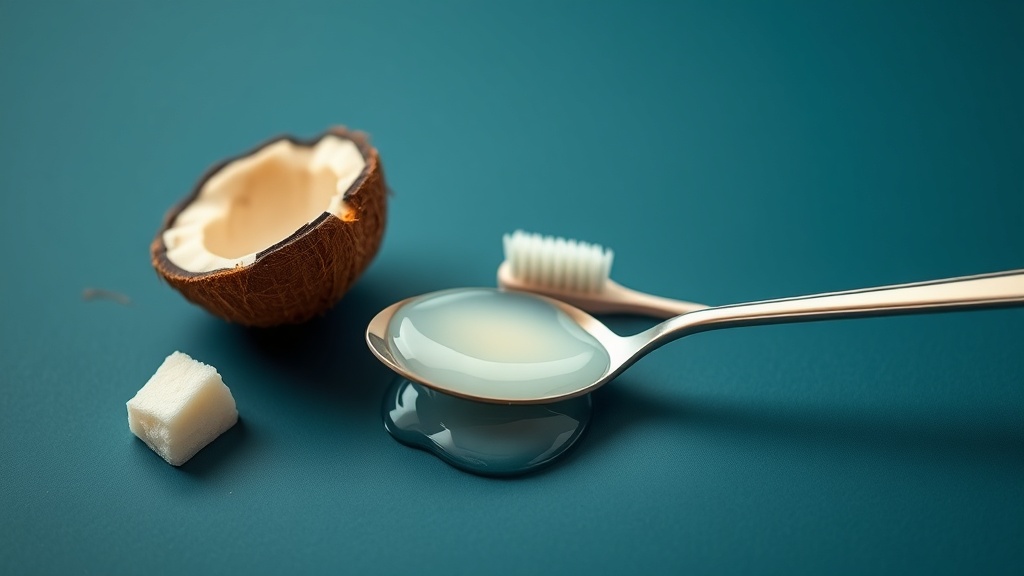
Coconut oil fits before brushing as a mild, clean-feeling adjunct — not in place of it.
Coconut-oil pulling is low-risk, but it is not a treatment. See a dentist if your gums bleed regularly, a tooth is sensitive or painful, your breath stays bad despite good hygiene, or you have a spot on a tooth that needs watching. Do not delay care in the hope that oil will reverse a cavity or gum disease. Never swallow the used oil, and take extra care if you are prone to gagging.
Frequently asked questions
Sources
- 1.
- 2.
- 3.
- 4.
- 5.
- 6.

Fix your breath at the source.
The complete science-backed protocol — engineered to eliminate volatile sulfur compounds at the biological source.
Start the Breath Protocol →Related reading
Educational purposes only. The content on this page is not medical advice and is not a substitute for consultation with a qualified dental or medical professional.
More from the library
 Best Of8 min
Best Oil for Oil Pulling: Coconut vs Sesame vs Sunflower
Which oil to swish, honestly ranked by evidence and by feel.
Read →→ Ingredients8 min
How to Oil Pull: The Complete Step-by-Step Method
The full technique — which oil, how much, how to swish and spit safely, and where oil pulling honestly fits alongside a proven remineralizing routine.
Read →→ Ingredients8 min
Oil Pulling Benefits: What the Evidence Actually Supports
A traditional practice with a small but real evidence base — and a lot of overclaiming to separate out.
Read →→ Ingredients8 min
Hydroxyapatite Mouthwash: What a Remineralizing Rinse Does
The rinse form of hydroxyapatite: how a swish delivers mineral where a brush misses, calms bacterial stickiness without a chlorhexidine trade-off, and where the evidence still thins out.
Read →→ Answers8 min
How to Get Rid of White Spots on Teeth: Your Options, Ranked
An honest, evidence-based ladder of options, from what you can do at home to what only a dentist can fix.
Read →→ Ingredients8 min
Hydroxyapatite Toothpaste Benefits: What the Evidence Actually Supports
A calm, science-first look at what hydroxyapatite toothpaste can genuinely do for your enamel, and where the evidence stops.
Read →→