Hydroxyapatite Toothpaste: How It Remineralizes and Strengthens Enamel
The mineral your enamel is already made of, in a tube: what nano-hydroxyapatite does to the tooth surface, what the evidence shows, and where it stops.
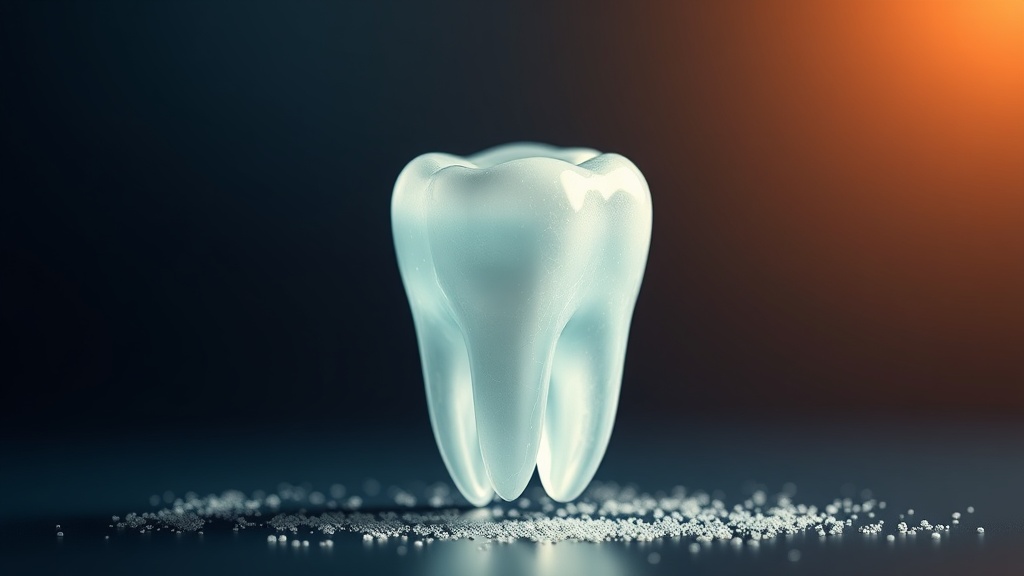
- Hydroxyapatite is the mineral your enamel is already built from — mature enamel is about 96% hydroxyapatite by weight — so the ingredient works by handing the surface more of the exact material it uses to repair itself.
- Nano-hydroxyapatite (n-HA) particles are milled small enough to settle into the microscopic pores of softened, acid-etched enamel, where they help re-deposit mineral and smooth the surface — a structure-supporting process, not a cure for cavities.
- In an 18-month adult trial, fluoride-free hydroxyapatite toothpaste performed on par with 1,450 ppm fluoride (89.3% vs 87.4% caries-free), and in-situ work found 5–10% n-HAP remineralized early lesions about as well as fluoride.
- The honest ceiling: the most rigorous independent review rated the evidence very low certainty and found n-HA matches fluoride under remineralizing conditions but does not resist a direct acid attack the way fluoride does.
- Hydroxyapatite only rebuilds surface mineral on early, non-cavitated enamel — once a tooth has an actual hole, no toothpaste reverses it and you need a dentist.
Hydroxyapatite toothpaste supplies the same calcium-phosphate mineral that enamel is built from. Nano-sized particles settle into softened, demineralized enamel and help re-deposit mineral, strengthening and smoothing the surface. The evidence shows it rivals fluoride for early-lesion remineralization, though it works as prevention on intact enamel, not as a fix for existing holes.
What hydroxyapatite actually is
Enamel is the hardest tissue in the human body, and it earns that title from a single mineral: hydroxyapatite, a crystalline lattice of calcium and phosphate. By weight, mature enamel is roughly 96% hydroxyapatite, with a thin protein-and-water phase giving it a little flexibility and toughness. The idea behind hydroxyapatite toothpaste is almost obvious once you hear it — instead of using a foreign agent to influence your enamel, you hand the surface more of the exact material it is already made of. Every time you eat or drink something acidic, acids from food and from plaque bacteria pull calcium and phosphate out of the outer enamel in a process called demineralization, leaving microscopic pores and a slightly softened, chalky surface. Nano-hydroxyapatite is milled to particles small enough to settle into those pores. There they act as ready-made mineral, helping the surface re-deposit and reorganize its crystal structure. It is more accurate to call this physicochemical re-growth of mineral than biological healing, because mature enamel has no living cells and cannot regenerate itself from within — the only non-invasive route is rebuilding crystals from calcium and phosphate at the surface.
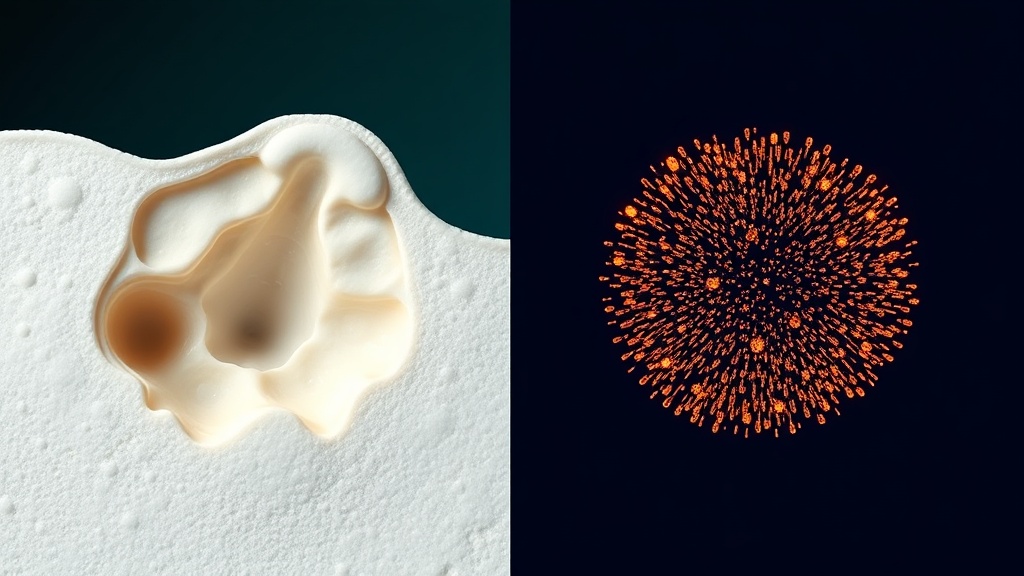
Nano-hydroxyapatite particles are small enough to settle into the pores of softened enamel, where they help re-deposit surface mineral.
What the research actually shows
Every claim below maps to a named, peer-reviewed source in the Sources section. According to PubMed.
| Claim | Evidence | Source |
|---|---|---|
| Mature enamel is about 96% mineral (hydroxyapatite) by weight, with toughness coming from a small protein phase — so remineralization rebuilds surface mineral rather than regrowing enamel structure. | Mechanical and compositional analysis of human enamel. | He & Swain, 2008 |
| Fluoride-free hydroxyapatite toothpaste matched 1,450 ppm fluoride over 18 months in adults, with 89.3% vs 87.4% remaining caries-free and no increase in decayed surfaces. | 18-month randomized non-inferiority trial in adults. | Paszynska et al., 2023 |
| 5% and 10% n-HAP remineralized early enamel lesions about as well as 1,100 ppm fluoride, with no significant difference between them. | 28-day in-situ crossover remineralization study. | Najibfard & Amaechi, 2011 |
| Adding a 5% n-HA leave-on layer after brushing raised remineralization from 37.7% to 58.4% versus a placebo lotion. | In-situ randomized study of a brush-then-leave-on step. | Amaechi et al., 2021 |
| The most rigorous independent review found n-HA equals fluoride under remineralizing conditions but graded certainty very low and found it did not resist demineralization under acid the way fluoride does. | Systematic review and meta-analysis. | Wierichs et al., 2022 |
What it can and cannot do
| Enamel situation | What hydroxyapatite can realistically do | The honest limit |
|---|---|---|
| Early white spot (softened, non-cavitated enamel) | Help re-deposit mineral and smooth and harden the surface | Works best with consistent daily use; have a dentist stage it first |
| Intact, healthy enamel | Top up surface mineral and support day-to-day acid resistance | Prevention and maintenance, not repair |
| A cavitated tooth (an actual hole) | Nothing that reverses it | No toothpaste rebuilds lost tooth structure — this needs a dentist |
| Sensitivity from exposed surface pores | May help occlude pores and ease sensitivity | Supportive comfort, not a disease treatment |
How it compares to fluoride — the part marketing skips
Hydroxyapatite and fluoride do not work the same way, and that difference matters. Fluoride does not simply add mineral; it changes the chemistry of the enamel surface, forming fluorapatite, a modified crystal that resists dissolving at a lower pH than natural enamel. In plain terms, fluoride makes the surface tougher against future acid attacks — remineralized enamel formed with trace fluoride is actually more acid-resistant than the original. Hydroxyapatite, by contrast, mainly supplies mineral to rebuild what acid has already removed. Under gentle, remineralizing conditions the two perform remarkably alike. But when researchers subjected enamel to a sustained, direct acid challenge, hydroxyapatite behaved more like a fluoride-free control and did not hold the line the way fluoride did. That is why the most rigorous review rated hydroxyapatite as roughly equivalent to fluoride for remineralization while grading the certainty very low, and why a pooled analysis put it clearly ahead of placebo but only numerically — not significantly — ahead of fluoride. The balanced takeaway: hydroxyapatite is a legitimate, evidence-backed way to support enamel, and a genuinely useful option for anyone who prefers a fluoride-free routine, but as good as fluoride is the honest ceiling, not better than.
Evidence you can act on.
Occasional emails — new research, new protocols, no noise.
How to get the most from a hydroxyapatite toothpaste
None of this treats a disease — it simply gives the surface the best chance to hold and rebuild mineral. Consistency matters far more than any single brushing.
- 1
Look for a meaningful concentration
when you buyThe studied products cluster around 5–10% hydroxyapatite or nano-hydroxyapatite. Check that it is named prominently on the ingredient list rather than added as a trace. Micro- and nano-sized particles are both used; the trials showing benefit mostly used nano-hydroxyapatite.
- 2
Brush twice a day, unhurried
2 minutes, twice dailyRemineralization is a slow, cumulative process. Two gentle minutes morning and night gives the particles time to contact the whole surface. A soft brush protects the softened areas you are trying to rebuild.
- 3
Spit, do not rinse
after brushingRinsing with water immediately washes away the mineral slurry you just applied. Spit out the excess and leave the thin film in place so the particles keep working on the surface for longer.
- 4
Consider a leave-on step at night
once daily, optionalThe strongest single result came from leaving a hydroxyapatite layer on after brushing rather than rinsing it off. A dab left on before bed, when saliva flow is lowest, mirrors that brush-then-leave-on approach.
- 5
Get any white spot staged first
before you rely on itA dentist can tell an early, arrestable white spot from something that has already cavitated. Hydroxyapatite helps the former; the latter needs professional care. Staging it first tells you whether home remineralization is even the right tool.
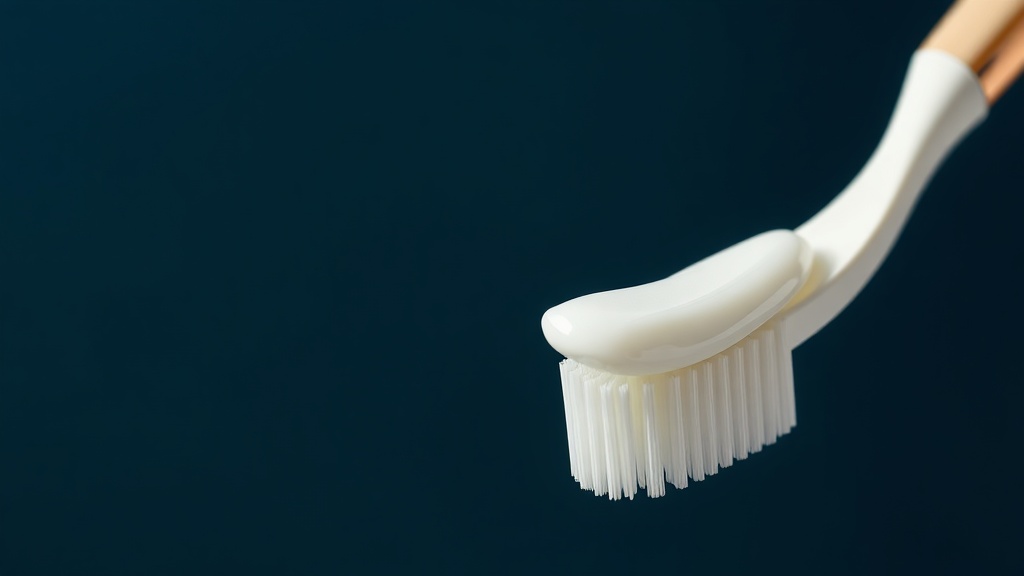
A pea-sized amount, twice a day, spit but not rinsed — consistency is what lets hydroxyapatite build up mineral over time.
Hydroxyapatite toothpaste is a sensible everyday tool, but it is not a substitute for a diagnosis. See a dentist if you notice a persistent white, brown or chalky spot, any visible pit or hole, a rough patch you can catch with a fingernail, or new sensitivity or pain. Only an in-person exam can tell an early, remineralizable lesion from a cavity that has already broken through — and trying to remineralize an open tooth at home can let decay progress unseen.
Frequently asked questions
Sources
- 1.
- 2.
- 3.
- 4.
- 5.
- 6.
- 7.
- 8.
- 9.
- 10.

Fix your breath at the source.
The complete science-backed protocol — engineered to eliminate volatile sulfur compounds at the biological source.
Start the Breath Protocol →Related reading
Educational purposes only. The content on this page is not medical advice and is not a substitute for consultation with a qualified dental or medical professional.
More from the library
 Guides8 min
Does Hydroxyapatite Toothpaste Work? What the Evidence Shows
The fluoride-free ingredient dentists keep debating, measured against the actual clinical trials.
Read →→ Comparisons8 min
Hydroxyapatite vs Fluoride: Which Toothpaste Is Right for You?
Two ways to strengthen enamel, one big difference in how much evidence stands behind each.
Read →→ Answers8 min
Is Nano-Hydroxyapatite Toothpaste Safe?
The nanoparticle worry, answered by the actual toxicology reviews rather than the headlines.
Read →→ Ingredients8 min
Hydroxyapatite Mouthwash: What a Remineralizing Rinse Does
The rinse form of hydroxyapatite: how a swish delivers mineral where a brush misses, calms bacterial stickiness without a chlorhexidine trade-off, and where the evidence still thins out.
Read →→ Answers8 min
How to Get Rid of White Spots on Teeth: Your Options, Ranked
An honest, evidence-based ladder of options, from what you can do at home to what only a dentist can fix.
Read →→ Ingredients8 min
Hydroxyapatite Toothpaste Benefits: What the Evidence Actually Supports
A calm, science-first look at what hydroxyapatite toothpaste can genuinely do for your enamel, and where the evidence stops.
Read →→