Clove Oil for Teeth: Real Comfort, Honest Limits
A traditional numbing remedy that soothes for a while but never fixes the cause.

- Clove oil owes its numbing reputation to eugenol, a compound that blocks the sodium currents pain nerves use to fire, which is a genuine, measured effect.
- The comfort is temporary and symptomatic. Clove oil can take the edge off a sore tooth for a short while; it does not cure a cavity, an infection or the cause of the pain.
- Eugenol-based dental materials are cytotoxic to the tooth pulp during setting, so clove oil should be kept off open, broken or bleeding tissue and used sparingly.
- As a diluted herbal rinse, clove sits among other herbal mouthwashes that modestly reduce plaque and gum inflammation on low-quality evidence.
- Tooth pain is a signal, not a nuisance to be masked. Use clove oil only as brief comfort while you arrange to see a dentist.
Clove oil can briefly numb a sore tooth because its eugenol blocks pain-nerve signalling. That relief is temporary and symptomatic only: it does not heal a cavity or infection, and eugenol can harm exposed pulp tissue. Use a small, diluted amount for short-term comfort, avoid open tissue, and see a dentist for the underlying cause.
Why clove oil numbs a sore tooth
Clove oil has been dabbed on aching teeth for centuries, and unlike many folk remedies its main claim holds up mechanically. The oil is roughly four-fifths eugenol, and laboratory work on the sensory nerves that supply teeth shows that eugenol inhibits the voltage-gated sodium currents those nerves rely on to send a pain signal. Block enough of that current and the nerve struggles to fire, which is felt as a dulling or numbing of the ache. This is the same eugenol chemistry that dentists have long used in temporary fillings and dressings. It is important to be precise about what this means: eugenol is an analgesic, a pain-quieter, not a healer. It does nothing to the bacteria eating into a cavity, the inflammation inside an infected pulp, or the crack in a tooth. It simply turns down the volume on the pain for a while. That distinction is the whole story of clove oil for teeth: a real, explainable comfort effect wrapped around a cause it cannot touch. The moment the eugenol wears off, the underlying problem is exactly where it was, which is why relying on clove oil to get through repeatedly is a warning sign rather than a solution.
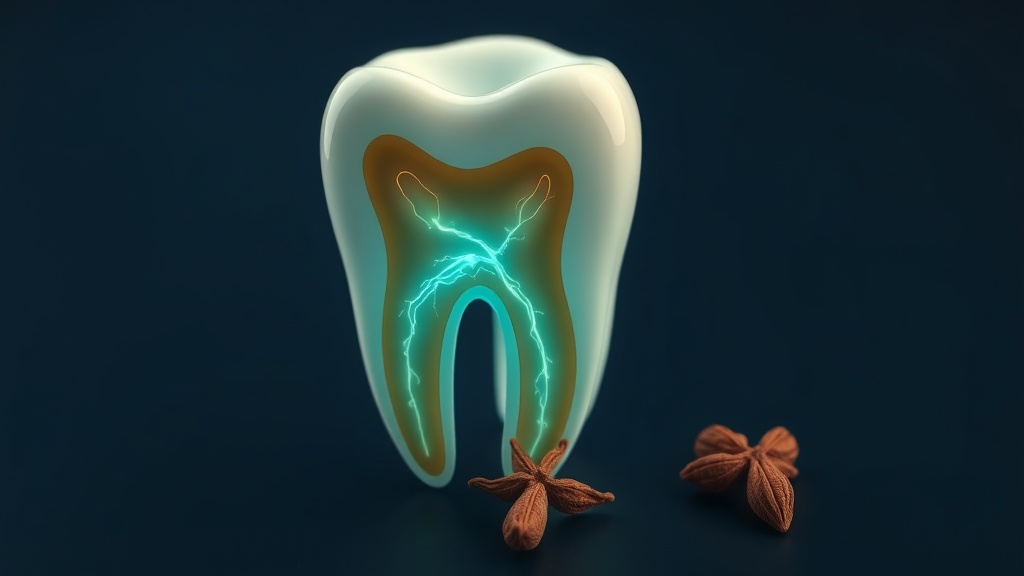
Eugenol dampens the sodium currents a tooth pain nerve uses to fire, dulling the ache without touching its cause.
What the research actually shows
Every claim below maps to a named, peer-reviewed source in the Sources section. According to PubMed.
| Claim | Evidence | Source |
|---|---|---|
| Eugenol inhibits voltage-gated sodium currents in the sensory neurons that supply teeth, the mechanism behind its local anaesthetic, pain-dulling effect. | Patch-clamp study of rat dental afferent neurons. | Park et al., 2006 |
| In a systematic review of plant-derived analgesics for dental pain, clove oil (eugenol) was among the agents with the strongest analgesic evidence, though larger standardized trials are still needed. | Systematic review of 21 studies (GRADE-assessed). | Reddy et al., 2025 |
| Zinc oxide-eugenol dental material is highly cytotoxic to pulp cells, especially while setting, so eugenol should be kept away from exposed or broken tooth tissue. | Cytotoxicity study on human dental pulp cells. | Lee et al., 2016 |
| Herbal mouthwashes, including clove, reduced plaque and gingival index scores comparably to non-herbal rinses in the short term, but the underlying trials were low quality. | Literature review of RCTs (2001-2021). | Tidke et al., 2022 |
| Traditionally, clove oil is applied topically for toothache by soaking a cotton ball and placing it against the affected tooth, a long-standing folk practice. | Commentary on herbs in dentistry. | Haq & Nisa, 2026 |
What clove oil can and cannot do
| Claim | What the evidence shows | Honest verdict |
|---|---|---|
| Numbs a sore tooth for a while | Eugenol blocks pain-nerve sodium currents | Supported, but temporary |
| Cures a cavity or tooth infection | No evidence; these need professional treatment | Not supported |
| Is safe anywhere in the mouth | Eugenol is cytotoxic to pulp and open tissue | Use with care; avoid broken tissue |
| Reduces plaque and gum inflammation as a rinse | Herbal rinses roughly match others on low-quality data | Possible, modest |
| Lets you avoid seeing a dentist for pain | Pain is a signal that needs diagnosis | Not supported |
Where clove oil can do harm, and where it helps
The same potency that makes eugenol useful also makes it something to respect. Studies of zinc oxide-eugenol dental materials show they are highly cytotoxic to pulp cells, particularly during setting, which is a clear signal that concentrated eugenol is not a substance to pour onto exposed nerve or an open, broken tooth. Undiluted clove oil can also irritate or burn the gums and the soft lining of the mouth if it is used generously. That is why the sensible uses of clove oil are narrow: a small, diluted amount dabbed briefly onto a sore but intact tooth for short-term comfort, or a properly diluted clove rinse as one of the many herbal mouthwashes that modestly help plaque and gum inflammation on admittedly weak evidence. The traditional method of soaking a cotton ball and holding it against the tooth persists precisely because a little goes a long way. None of this changes the core limitation. Clove oil is a comfort measure to buy time, not a treatment. If a tooth hurts enough that you are reaching for it, something is wrong that a dentist needs to see, and the safest path is to use clove oil only to make the wait more bearable.
Evidence you can act on.
Occasional emails — new research, new protocols, no noise.
Using clove oil for short-term comfort
If you use clove oil while arranging dental care, use it sparingly and safely. This offers temporary comfort only and treats no disease.
- 1
Dilute it first
—Mix a drop or two of clove oil into a teaspoon of a neutral carrier oil such as coconut or olive oil. Undiluted clove oil is harsh on gums and soft tissue.
- 2
Apply a tiny amount to the sore tooth
a minute or twoDip a cotton bud or a small piece of cotton in the diluted oil and dab it gently onto the aching tooth, not the surrounding gum. Keep it brief.
- 3
Avoid open, broken or bleeding tissue
—Do not pack clove oil into a visibly broken tooth or an open socket; eugenol can damage exposed pulp. If the tooth is broken, this is a reason to be seen sooner, not to self-treat.
- 4
Do not swallow and do not overuse
as needed, brieflySpit out any excess and rinse. Repeatedly needing clove oil to get through the day means the problem is progressing and needs diagnosis.
- 5
See a dentist for the cause
as soon as possibleBook an appointment promptly. Clove oil is a bridge to care, not a substitute for it, and unmanaged tooth infections can become serious.
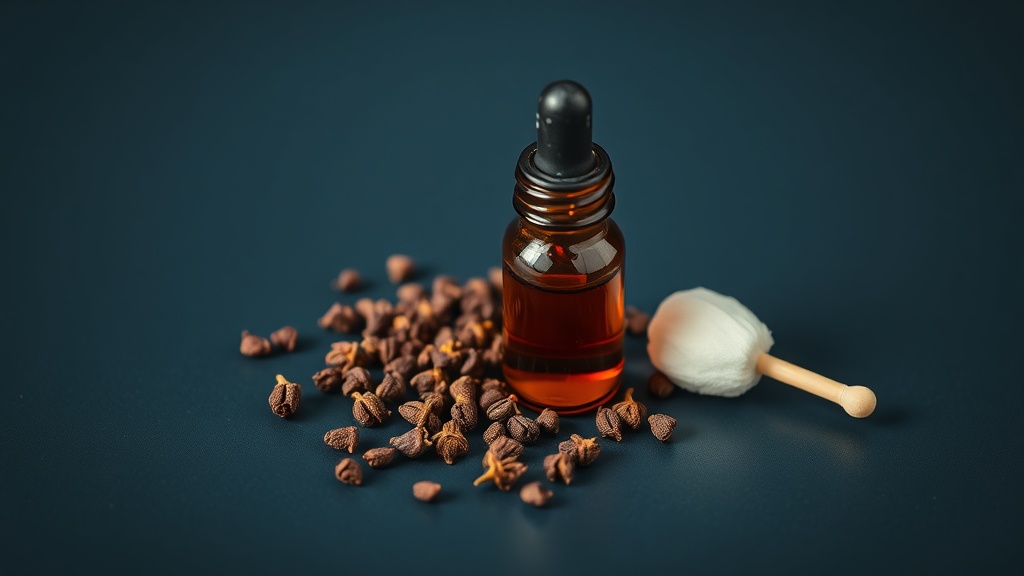
A drop of clove oil diluted in a carrier oil, dabbed briefly on an intact tooth, is the safe way to use it for comfort.
Any tooth pain that lasts more than a day or two, wakes you at night, or comes with swelling, fever, a bad taste or a broken tooth needs a dentist, and swelling that spreads to the face or affects swallowing or breathing is an emergency. Clove oil can make the wait more comfortable, but it cannot treat an infection or a cavity. Do not use it to postpone care, and never apply it to an open or bleeding area of the mouth.
Frequently asked questions
Sources
- 1.
- 2.
- 3.
- 4.
- 5.

Fix your breath at the source.
The complete science-backed protocol — engineered to eliminate volatile sulfur compounds at the biological source.
Start the Breath Protocol →Related reading
Educational purposes only. The content on this page is not medical advice and is not a substitute for consultation with a qualified dental or medical professional.
More from the library
 Ingredients8 min
How to Oil Pull: The Complete Step-by-Step Method
The full technique — which oil, how much, how to swish and spit safely, and where oil pulling honestly fits alongside a proven remineralizing routine.
Read →→ Ingredients8 min
Oil Pulling Benefits: What the Evidence Actually Supports
A traditional practice with a small but real evidence base — and a lot of overclaiming to separate out.
Read →→ Answers8 min
How to Remineralize Teeth: An Honest, Practical Guide
The practical routine that supports enamel remineralization, and the clear line between the early lesions it can rebuild and the decay it cannot.
Read →→ Guides8 min
White Spots on Teeth: Causes and What to Do
The two common reasons enamel turns chalky white, and the honest guide to which spots you can rebuild at home and which need professional care.
Read →→ Answers8 min
How to Get Rid of White Spots on Teeth: Your Options, Ranked
An honest, evidence-based ladder of options, from what you can do at home to what only a dentist can fix.
Read →→ Ingredients8 min
Hydroxyapatite Toothpaste Benefits: What the Evidence Actually Supports
A calm, science-first look at what hydroxyapatite toothpaste can genuinely do for your enamel, and where the evidence stops.
Read →→