Hydroxyapatite Toothpaste Benefits: What the Evidence Actually Supports
A calm, science-first look at what hydroxyapatite toothpaste can genuinely do for your enamel, and where the evidence stops.
- Hydroxyapatite (HA) is the same mineral your enamel is built from — enamel is about 96% hydroxyapatite by weight — so a HA toothpaste supplies a like-for-like source of calcium and phosphate to the tooth surface.
- Its best-supported benefit is remineralizing early, non-cavitated enamel: in an 18-month adult trial, fluoride-free HA toothpaste matched 1,450 ppm fluoride (89.3% vs 87.4% caries-free), and a leave-on HA layer nearly doubled remineralization versus placebo (58.4% vs 37.7%).
- HA also helps in two everyday ways: it can plug open dentin tubules to ease sensitivity, and it lowers bacterial adhesion without killing off your normal oral flora.
- The honest ceiling: the pooled evidence rates HA as 'as good as' fluoride, not better, and one rigorous review graded the certainty 'very low' and found HA less able to resist a pure acid attack. It rebuilds surface mineral; it cannot regrow a tooth or reverse a real cavity.
- HA earns its place as a credible, cosmetic, fluoride-free option — not a miracle. Early white spots can respond; a hole in the tooth still needs a dentist.
Hydroxyapatite toothpaste helps by resupplying the exact mineral enamel is made of, so it can remineralize early surface softening, ease sensitivity by sealing exposed tubules, and reduce plaque stickiness. In head-to-head trials it performs on par with fluoride for early lesions — a genuine benefit, but an equivalence, not a cure for cavities.
Why the mineral match matters
Enamel is roughly 96% mineral, and that mineral is hydroxyapatite — a crystal of calcium and phosphate. Every day, acid from plaque bacteria and food pulls calcium and phosphate out of the surface (demineralization); saliva and any mineral you add push them back in (remineralization). Health is simply keeping that balance tilted toward rebuilding. A hydroxyapatite toothpaste works by flooding the tooth surface with ready-made building blocks that are chemically identical to what is being lost. Particles settle into the microscopic pits of a softened, early lesion and act as seed crystal, letting new mineral grow back into the surface. This is a physicochemical repair of the outer crystal layer — not the tooth 'healing itself' from within, because mature enamel is acellular and has no living cells to regenerate structure. That distinction is the whole honesty of the category: HA can rebuild the mineral skin of an early, intact lesion, but once the surface actually breaks and cavitates, there is no surface left to seed, and the damage is permanent without a dentist.
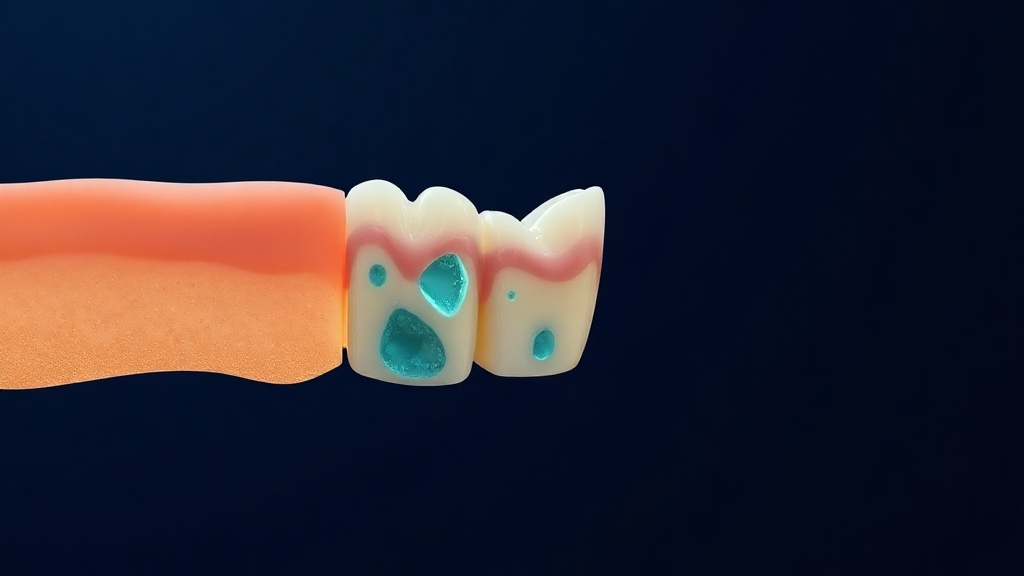
Hydroxyapatite particles seed new mineral into a softened, early enamel surface — a surface repair, not a regrown tooth.
What the research actually shows
Every benefit below maps to a named, peer-reviewed source in the Sources section. According to PubMed.
| Claim | Evidence | Source |
|---|---|---|
| Fluoride-free HA toothpaste was non-inferior to 1,450 ppm fluoride for caries prevention in adults over 18 months (89.3% vs 87.4% caries-free). | Randomized controlled non-inferiority trial in adults. | Paszynska et al., 2023 |
| A 5% n-HA leave-on layer applied after brushing raised remineralization from 37.7% to 58.4% versus a placebo lotion. | In-situ randomized crossover study. | Amaechi et al., 2021 |
| 5% and 10% n-HA and 1,100 ppm fluoride all remineralized early lesions with no significant difference over 28 days. | In-situ crossover remineralization study. | Najibfard & Amaechi, 2011 |
| Pooled analysis: HA beat placebo (OR 2.51) but only numerically edged fluoride (OR 1.1, non-significant) — 'as good as,' not better. | Systematic review and meta-analysis. | Pawinska et al., 2024 |
| A HA rinse rivaled chlorhexidine at reducing bacterial adhesion without killing commensal oral flora. | Narrative review of in-situ and clinical data. | O'Hagan-Wong et al., 2022 |
Benefit by benefit — and how strong the evidence is
| Claimed benefit | What the evidence supports | Strength |
|---|---|---|
| Remineralizes early enamel | Matches fluoride for early, non-cavitated lesions in RCTs | Strong / consistent |
| Eases sensitivity | Particles occlude open dentin tubules; real but modest | Moderate |
| Reduces plaque stickiness | Lowers bacterial adhesion without harming normal flora | Moderate |
| Fluorosis-free for kids | Swallowed HA dissolves to calcium and phosphate; no adverse events reported | Moderate / mechanistic |
| Resists an acid attack like fluoride | One rigorous review found HA did NOT hinder pure demineralization as fluoride does | Weak — an honest limit |
The two everyday benefits beyond remineralization
Two other benefits get less headline attention but matter day to day. The first is comfort. Sensitivity happens when the softer dentin under the enamel is exposed and its microscopic tubules run straight to the nerve; cold, sweet or touch signals travel down them. Hydroxyapatite particles are small enough to settle into and partly plug those tubules, blunting the signal. It is a mechanical seal rather than a nerve drug, so it builds with consistent use rather than working instantly. The second is a gentler effect on the plaque ecosystem. Rather than trying to sterilize the mouth, HA appears to make it harder for bacteria to stick to the tooth in the first place, and one review found a HA rinse reduced bacterial adhesion on par with chlorhexidine but without wiping out the beneficial commensal species you actually want. For anyone uneasy about harsh antibacterial rinses, that selectivity is a quiet advantage. Neither benefit is a disease treatment — they are structure-and-comfort effects — but together they explain why so many people simply find HA toothpaste pleasant and reassuring to use.
Evidence you can act on.
Occasional emails — new research, new protocols, no noise.
How to get the real benefit
Hydroxyapatite only helps if it actually contacts the tooth surface often enough to shift the daily balance. None of this treats a disease; it supports the surface and comfort of your enamel.
- 1
Brush twice a day and let it linger
2 minutes, twice dailyUse a HA toothpaste morning and night. After brushing, spit but try not to rinse with water — leaving a thin film of paste on the teeth keeps mineral in contact with the surface longer, which is the mechanism the leave-on studies leaned on.
- 2
Give it weeks, not days
4–12 weeksRemineralization and tubule sealing are gradual. The trials that showed benefit ran for weeks to months of twice-daily use. Judge it over a season, not a single tube.
- 3
Pair it with lower acid load
ongoingMineral you add back is undone by frequent acid. Cutting the frequency of sugary and acidic drinks and sipping water afterward lets any toothpaste — HA or fluoride — actually get ahead.
- 4
Have new or growing spots staged first
as neededHA rewards early, intact lesions. If you see a spot that is browning, catching a fingernail, or growing, that may already be cavitated — get a dentist to stage it before relying on any paste.
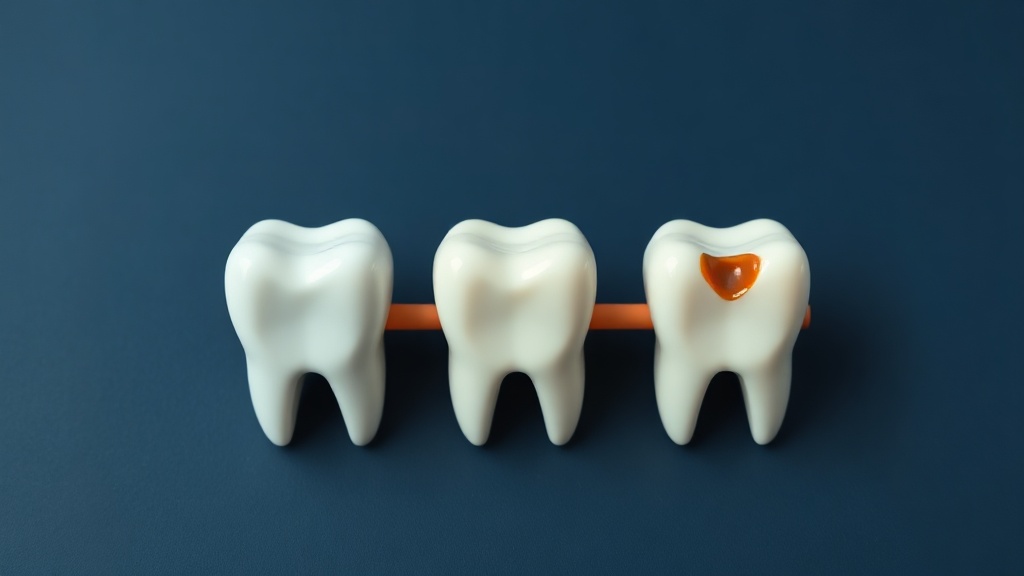
Hydroxyapatite rewards early, intact surfaces; a true cavity is on the other side of the line and needs a dentist.
See a dentist if a spot is brown or grey rather than chalky white, if it catches a fingernail or dental floss, if it is growing, or if you have pain, a hole you can feel, or ongoing sensitivity that does not settle. Hydroxyapatite is a maintenance and early-support tool, not a substitute for staging a lesion. A quick check-up tells you which side of the line you are on before you spend months hoping a toothpaste will do a dentist's job.
Frequently asked questions
Sources
- 1.
- 2.
- 3.
- 4.
- 5.
- 6.
- 7.

Fix your breath at the source.
The complete science-backed protocol — engineered to eliminate volatile sulfur compounds at the biological source.
Start the Breath Protocol →Related reading
Educational purposes only. The content on this page is not medical advice and is not a substitute for consultation with a qualified dental or medical professional.
More from the library
 Ingredients8 min
Hydroxyapatite Toothpaste: How It Remineralizes and Strengthens Enamel
The mineral your enamel is already made of, in a tube: what nano-hydroxyapatite does to the tooth surface, what the evidence shows, and where it stops.
Read →→ Ingredients8 min
Nano-Hydroxyapatite Toothpaste: What n-HA Really Does
A clear, evidence-based look at nano-hydroxyapatite — how the nano form differs from micro, and what the studies actually show.
Read →→ Comparisons8 min
Hydroxyapatite vs Fluoride: Which Toothpaste Is Right for You?
Two ways to strengthen enamel, one big difference in how much evidence stands behind each.
Read →→ Reviews8 min
Hydroxyapatite Toothpaste Reviews: An Honest Category Verdict
A balanced, evidence-checked review of the hydroxyapatite toothpaste category — what to expect, and what not to.
Read →→ Answers8 min
How to Get Rid of White Spots on Teeth: Your Options, Ranked
An honest, evidence-based ladder of options, from what you can do at home to what only a dentist can fix.
Read →→ Answers8 min
Can You Rebuild Tooth Enamel? What Is Actually Possible
The honest split: what you can genuinely strengthen at home, and what only a dentist can restore.
Read →→