How to Get Rid of White Spots on Teeth
An honest, evidence-based ladder of options, from what you can do at home to what only a dentist can fix.
- White spots are not all the same thing: they can be early demineralization (often improvable), dental fluorosis (cosmetic, from fluoride during tooth formation), or enamel hypoplasia (a developmental defect) - and what you can do depends entirely on which one you have.
- Early, chalky demineralization spots are the most hopeful, because they are lost surface mineral rather than a hole; they can often be made less obvious by remineralizing the enamel and improving saliva flow.
- Home care can improve the look of early spots but cannot erase fluorosis or hypoplasia - those are set into the enamel as it formed, and blending or covering them needs a cosmetic dental procedure.
- The in-office ladder runs from least to most invasive: remineralization, then resin infiltration (Icon), enamel microabrasion, composite bonding, and finally veneers - a dentist matches the option to the depth and the cause.
- The single most important first step is getting the spot correctly staged, because an active early cavity can look just like a harmless cosmetic mark, and only an in-person exam reliably tells them apart.
It depends on the cause. Early demineralization spots can often be softened by remineralizing the enamel with fluoride or hydroxyapatite toothpaste and better saliva flow. Fluorosis and developmental spots are locked into the enamel and need a cosmetic option - resin infiltration, microabrasion, bonding or veneers - chosen by a dentist.
Why some white spots fade and others do not
A white spot is simply an area where light bounces off the enamel differently from the tooth around it, and there are three common reasons that happens. The first is demineralization: acid has drawn calcium and phosphate out of the enamel just beneath the surface, leaving it porous, and porous enamel scatters light into that chalky white look. Because this is lost mineral rather than lost structure, some of it can be redeposited - and enamel that remineralizes with a little fluoride actually rebuilds as a more acid-resistant mineral than it started with. The second is fluorosis, where too much fluoride while the tooth was forming left patches of hypomineralized enamel; it is diffuse, symmetrical and purely cosmetic. The third is hypoplasia, where the enamel itself formed thin or defective after a childhood illness, trauma or nutritional gap. The crucial difference is direction of travel: demineralization is a process you can partly reverse, while fluorosis and hypoplasia are finished states baked into the tooth when it grew. And there is a hard ceiling on all home care - once enamel actually cavitates and the surface breaks, it cannot repair itself, no matter what you brush with.
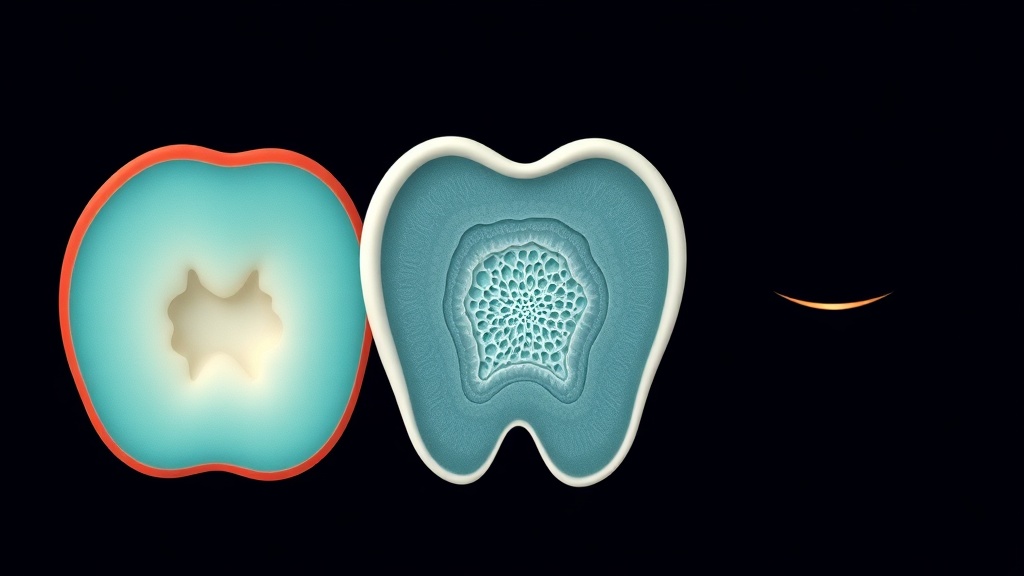
Three different white spots: porous subsurface demineralization (partly reversible), diffuse fluorosis, and a formed hypoplastic defect.
What the research actually shows
Every claim below maps to a named, peer-reviewed source in the Sources section. According to PubMed.
| Claim | Evidence | Source |
|---|---|---|
| A no-drill resin infiltration halted early lesion progression to just 7% over 18 months versus 37% in untreated controls. | Split-mouth randomized controlled trial. | Paris et al., 2010 |
| Early non-cavitated lesions can be arrested at any stage, provided clinically plaque-free conditions are achieved. | Foundational clinical cariology review. | Nyvad & Fejerskov, 1997 |
| Once enamel cavitates, it cannot repair itself, because mature enamel is acellular and cannot regrow lost structure. | Materials-science review of enamel repair. | Liu et al., 2022 |
| A fluoride-free hydroxyapatite toothpaste matched 1,450 ppm fluoride for adult caries prevention over 18 months (89.3% vs 87.4%). | 18-month randomized non-inferiority trial in adults. | Paszynska et al., 2023 |
| A leave-on 5% nano-hydroxyapatite layer after brushing raised remineralization from 37.7% to 58.4% versus placebo. | In-situ randomized crossover study. | Amaechi et al., 2021 |
The options ladder, least to most invasive
| Option | Best for | How invasive | Who does it |
|---|---|---|---|
| Remineralization (fluoride / n-HA) | Early demineralization and white-spot lesions | Non-invasive | You, at home |
| Resin infiltration (Icon) | Fluorosis and early spots that will not remineralize | Minimally invasive, no drilling | Dentist |
| Enamel microabrasion | Shallow, surface fluorosis stains | Removes a very thin surface layer | Dentist |
| Composite bonding | Deeper or well-defined spots, hypoplasia | Moderate | Dentist |
| Porcelain veneers | Widespread or severe cosmetic cases | Most invasive, irreversible | Dentist |
The home-care window, and its honest limit
When a spot really is early demineralization, what you are trying to do is feed mineral back into the porous zone under the surface. Your saliva is the main delivery system: it is naturally supersaturated with calcium and phosphate and held there by proteins like statherin, so it acts as a constant mineral reservoir bathing the tooth. Fluoride and hydroxyapatite simply tip the balance further toward redeposition. But there are two honest limits worth naming up front. First, remineralization arrests and hardens a spot; it does not guarantee the spot becomes invisible. A treated lesion can be sound and acid-resistant yet still faintly visible, because some light-scattering porosity remains. Second, none of this touches fluorosis or hypoplasia, which are not mineral loss at all - there is nothing to redeposit into a defect that formed years ago. So the realistic goal of home care is to stop an early spot getting worse and improve its appearance, not to promise erasure. If that is not enough for you cosmetically, that is exactly where the in-office ladder begins.
Evidence you can act on.
Occasional emails — new research, new protocols, no noise.
A sensible at-home routine for early spots
If a dentist has told you a spot is early demineralization to keep an eye on, this routine tilts the balance toward repair. None of it treats a disease - it simply supports the enamel and keeps the surface clean.
- 1
Use a remineralizing toothpaste, twice daily
twice dailyA 1,000-1,500 ppm fluoride toothpaste is the established standard, and a hydroxyapatite toothpaste is a well-evidenced fluoride-free alternative that performed comparably in adults. Spit, do not rinse, so the active mineral stays on the teeth.
- 2
Add a thin leave-on layer at night
under a minute nightlyAfter brushing, smear a little extra toothpaste or a dedicated remineralizing gel over the spot and leave it - the tooth-mask idea. A leave-on nano-hydroxyapatite step almost doubled remineralization versus placebo in one study.
- 3
Attack acid and sugar frequency, not just amount
ongoingIt is how often the enamel is bathed in acid, not the total sugar, that drives demineralization. Cluster sweets and acidic drinks into mealtimes and give your teeth long acid-free stretches to repair.
- 4
Protect your saliva
all daySaliva is your built-in remineralizing fluid, so a dry mouth stalls repair. Sip water, breathe through your nose, and consider xylitol gum after meals to stimulate flow and buffer acid.
- 5
Get the spot professionally staged within a few weeks
one visitEspecially for spots that appeared after braces, feel rough, or are darkening, only an in-person exam can confirm it is cosmetic and not an active early cavity that needs a different plan.
A simple home ladder: remineralizing toothpaste, a nightly leave-on layer, and protected saliva flow.
See a dentist if a white spot feels rough or catches a fingernail, is darkening, or comes with sensitivity - those can signal an active lesion rather than a cosmetic mark. Book promptly for new spots that appear after braces, since early decalcification responds best when caught quickly. And if a spot is simply bothering you cosmetically, a dentist can walk you through resin infiltration, microabrasion or bonding; those are one-off decisions that belong with a professional who can see the depth and cause.
Frequently asked questions
Sources
- 1.
- 2.
- 3.
- 4.
- 5.
- 6.
- 7.
- 8.

Fix your breath at the source.
The complete science-backed protocol — engineered to eliminate volatile sulfur compounds at the biological source.
Start the Breath Protocol →Related reading
Educational purposes only. The content on this page is not medical advice and is not a substitute for consultation with a qualified dental or medical professional.
More from the library
 Guides8 min
White Spots on Teeth: Causes and What to Do
The two common reasons enamel turns chalky white, and the honest guide to which spots you can rebuild at home and which need professional care.
Read →→ Causes8 min
What Causes White Spots on Teeth? The Honest Differential
The four common causes, how each one forms, and how to tell which kind you are looking at.
Read →→ Ingredients8 min
Remineralizing Toothpaste: How It Works and What Actually Rebuilds Enamel
A plain-English guide to how remineralizing toothpaste works — and an honest comparison of fluoride, n-HA and CPP-ACP.
Read →→ Best Of9 min
Toothpaste That Rebuilds Enamel: The Honest Answer
The honest answer to a common search: what a toothpaste can and cannot do for lost enamel.
Read →→ Ingredients8 min
Hydroxyapatite Toothpaste Benefits: What the Evidence Actually Supports
A calm, science-first look at what hydroxyapatite toothpaste can genuinely do for your enamel, and where the evidence stops.
Read →→ Answers8 min
Can You Rebuild Tooth Enamel? What Is Actually Possible
The honest split: what you can genuinely strengthen at home, and what only a dentist can restore.
Read →→