Probiotic Toothpaste: Do Oral Probiotics in Toothpaste Work?
What oral-probiotic toothpaste promises, how strains such as S. salivarius M18 are meant to work, and where the evidence is genuinely strong or thin.
- Probiotic toothpaste adds live or postbiotic beneficial bacteria — often Streptococcus salivarius strains such as K12 or M18 — aiming to shift the mouth toward a healthier microbial balance rather than to kill bacteria outright.
- The most-repeated marketing claim, that a strain releases an enzyme (dextranase) that dissolves the plaque glue, is not supported by primary evidence; the demonstrated action of these strains is producing bacteriocins that compete with other bacteria.
- Across large reviews, probiotics have not been shown to significantly reduce cavities, and they lower bacteria in saliva more than in the plaque that actually clings to teeth.
- Oral colonization by these strains is transient, so any effect depends on continued daily use — a probiotic toothpaste is a maintenance product, not a one-time reset.
- Treat it as a gentle adjunct. It does not remineralize enamel, so keep a proven fluoride or hydroxyapatite toothpaste as your protective base and see a dentist for anything that hurts or persists.
Probiotic toothpaste seeds the mouth with friendly bacteria — usually Streptococcus salivarius strains — to nudge the oral microbiome toward balance. The honest evidence is modest: it can lower some bacteria in saliva and may help cosmetic issues like staining short-term, but it has not been shown to prevent cavities and cannot rebuild enamel. Use it as an adjunct, not a replacement for fluoride or hydroxyapatite.
How probiotic toothpaste is supposed to work
Conventional oral care mostly works by removing or killing microbes. Probiotic toothpaste takes the opposite angle: instead of scrubbing the ecosystem bare, it tries to tip the balance by adding beneficial species that crowd out the troublemakers. The favourite strains are forms of Streptococcus salivarius, a bacterium that naturally lives in healthy mouths. The genuine, documented mechanism is competition: strains such as M18 produce bacteriocins — natural antibacterial molecules, sometimes called BLIS — that suppress rival species like the acid-making Streptococcus mutans. In theory, a mouth that is home to more friendly salivarius has less room for the bacteria associated with decay and odour. That idea is biologically reasonable, which is why the category exists. The important honesty is about the leap from reasonable to proven: producing bacteriocins in a lab, and reshaping the plaque on your teeth in daily life, are two very different bars — and it is the second one that actually protects a tooth.
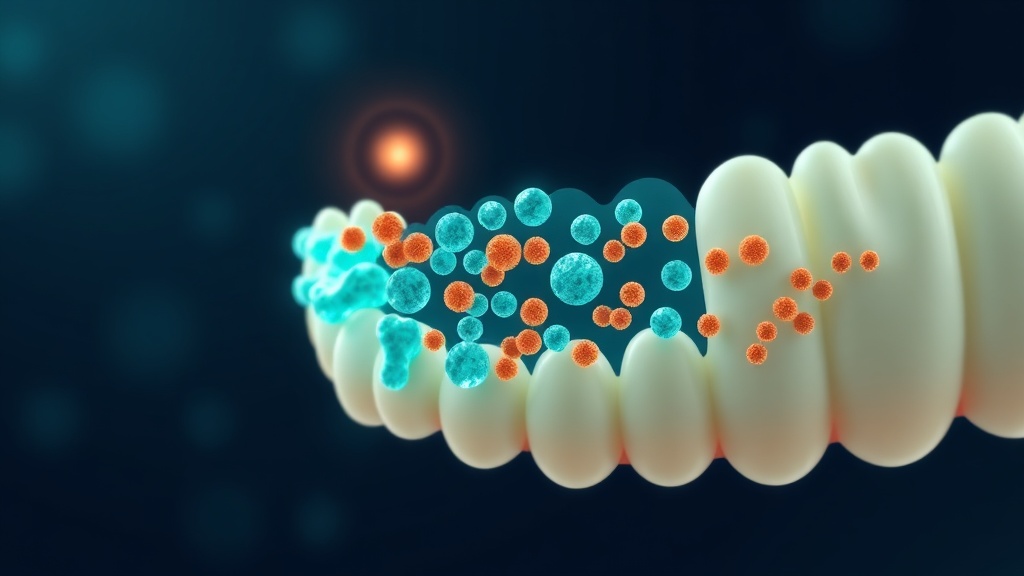
Probiotic strains are meant to compete with acid-producing bacteria using bacteriocins — shifting the balance rather than sterilising the mouth.
What the research actually shows
Every claim below maps to a named, peer-reviewed source in the Sources section. According to PubMed.
| Claim | Evidence | Source |
|---|---|---|
| Genome analysis characterizes S. salivarius M18 as a bacteriocin (BLIS) producer; there is no primary evidence that it secretes dextranase to dissolve plaque in the mouth. | Whole-genome characterization of strain M18. | Heng et al., 2011 |
| In caries-active children, an M18 lozenge produced only a borderline reduction in plaque scores that depended on how well the strain colonized the mouth. | Randomized placebo-controlled trial (borderline P=0.05). | Burton et al., 2013 |
| A meta-analysis of 50 studies found probiotics did not significantly reduce caries incidence, concluding evidence is insufficient to recommend them for caries prevention. | Systematic review and meta-analysis (OR 0.60, not significant). | Gruner et al., 2016 |
| A GRADE-assessed meta-analysis of 19 trials found probiotics probably reduce salivary S. mutans, a surrogate marker, but showed no effect on plaque index or salivary pH. | Meta-analysis of 19 RCTs. | Mayta-Tovalino et al., 2024 |
| An M18 product reduced black-stain reformation at three months — a cosmetic endpoint — but the effect lost statistical significance by six months. | Clinical study of black-stain recurrence (21.2% vs 50% at 3 months). | Bardellini et al., 2020 |
Claim versus evidence
| Common claim | Honest verdict | What is actually shown |
|---|---|---|
| Dissolves the plaque glue with an enzyme | Unsupported | The demonstrated action is bacteriocins, not dextranase dissolving plaque |
| Rebalances your oral microbiome | Partly | Salivary S. mutans can fall; the plaque flora on teeth is largely unchanged |
| Permanently colonises your mouth | No | Colonisation is transient; benefits require ongoing daily use |
| Prevents cavities | Not shown | Large reviews found no significant reduction in caries |
| Reduces staining | Cosmetic, short-lived | A stain signal at 3 months that faded by 6 months |
Saliva versus plaque — why the distinction matters
The single most useful thing to understand about probiotic toothpaste is the gap between saliva and plaque. Most of the encouraging trial data show that probiotics can lower the count of acid-producing bacteria floating in saliva. That sounds impressive, but the bacteria that actually attack a tooth live inside plaque — the sticky, organised biofilm bonded to the enamel — and reviews consistently find that probiotics lower salivary bacteria without meaningfully reducing the plaque flora or changing the plaque and saliva pH. Since it is plaque, not saliva, that drives demineralization, a drop in a salivary surrogate is a hopeful signal rather than proof of protection. Layer on two further limits: colonisation is transient, so the moment you stop the strains fade; and across dozens of studies, probiotics have not translated into fewer cavities. None of this makes probiotic toothpaste useless — a friendlier microbial mix is a sensible goal and the products are generally safe — but it does mean the responsible framing is a gentle, adjunctive one, sitting on top of the remineralizing and professional care that carry the real protective load.
Evidence you can act on.
Occasional emails — new research, new protocols, no noise.
How to use probiotic toothpaste sensibly
None of this treats a disease. The aim is to support a healthier microbial balance without giving up the fundamentals that actually protect enamel.
- 1
Keep a proven remineralizing base
twice dailyDo your real protective brushing with a fluoride or hydroxyapatite toothpaste. If you want to use a probiotic product, treat it as the extra layer, not the foundation — the remineralizing toothpaste is what strengthens the enamel surface.
- 2
Use it consistently
daily, ongoingBecause colonisation is transient, any benefit depends on regular use. Sporadic use is unlikely to do much, so build it into your routine or do not bother.
- 3
Read the label for real specifics
when you buyLook for the named strain (for example S. salivarius M18 or K12) and, where stated, the count of live organisms. Vague probiotic branding without a named strain tells you little.
- 4
Set cosmetic, structure-function expectations
ongoingExpect, at most, support for a fresher, more balanced mouth and perhaps some help with staining — not cavity prevention or enamel repair. Judge it against that honest bar.
- 5
Keep up professional care
as scheduledProbiotics do not replace cleanings or check-ups. Anything that hurts, bleeds persistently or looks like decay needs a dentist, not a change of toothpaste.
Probiotic toothpaste works best as an extra layer on top of a proven fluoride or hydroxyapatite base.
Probiotic toothpaste is not a treatment for gum disease or decay. See a dentist if you have bleeding or swollen gums that do not settle, a toothache, a visible hole or dark spot, persistent bad breath, or a sore that lasts more than two weeks. A friendlier microbiome is a nice extra; it is not a substitute for diagnosing and managing a real problem.
Frequently asked questions
Sources
- 1.
- 2.
- 3.
- 4.
- 5.
- 6.
- 7.

Fix your breath at the source.
The complete science-backed protocol — engineered to eliminate volatile sulfur compounds at the biological source.
Start the Breath Protocol →Related reading
Educational purposes only. The content on this page is not medical advice and is not a substitute for consultation with a qualified dental or medical professional.
More from the library
 Guides8 min
Does Hydroxyapatite Toothpaste Work? What the Evidence Shows
The fluoride-free ingredient dentists keep debating, measured against the actual clinical trials.
Read →→ Comparisons8 min
Hydroxyapatite vs Fluoride: Which Toothpaste Is Right for You?
Two ways to strengthen enamel, one big difference in how much evidence stands behind each.
Read →→ Best Of8 min
How to Choose the Best Hydroxyapatite Toothpaste
Skip the marketing and pick on the three things the research says actually matter.
Read →→ Answers8 min
Is Nano-Hydroxyapatite Toothpaste Safe?
The nanoparticle worry, answered by the actual toxicology reviews rather than the headlines.
Read →→ Answers8 min
How to Get Rid of White Spots on Teeth: Your Options, Ranked
An honest, evidence-based ladder of options, from what you can do at home to what only a dentist can fix.
Read →→ Ingredients8 min
Hydroxyapatite Toothpaste Benefits: What the Evidence Actually Supports
A calm, science-first look at what hydroxyapatite toothpaste can genuinely do for your enamel, and where the evidence stops.
Read →→