Does Hydroxyapatite Toothpaste Work? What the Evidence Shows
The fluoride-free ingredient dentists keep debating, measured against the actual clinical trials.
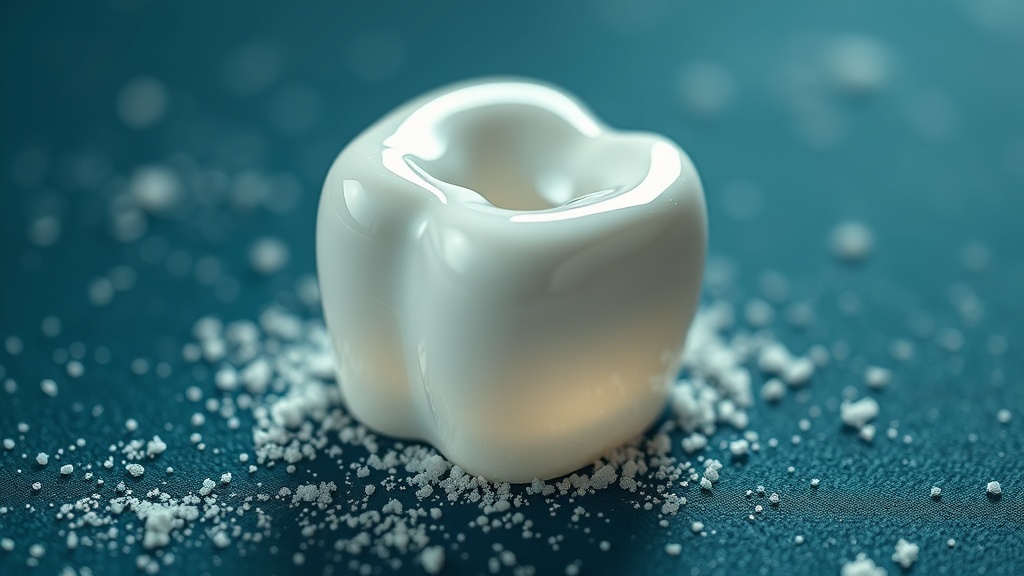
- Hydroxyapatite is the same mineral that makes up about 97% of tooth enamel, so a toothpaste version works by depositing that mineral back onto the surface rather than by killing bacteria.
- In controlled trials, nano-hydroxyapatite remineralized early enamel softening about as well as a standard fluoride toothpaste, and a 2024 meta-analysis found the two performed similarly for caries control.
- It supports enamel and can reduce sensitivity, but it does not cure cavities: once a lesion breaks through the surface, no toothpaste rebuilds it, and you still need a dentist.
- The best-studied concentration is around 5% to 10% nano-hydroxyapatite used twice daily; results build over weeks of consistent use, not overnight.
- It is a reasonable fluoride-free option for people who prefer one, but the evidence base is smaller and newer than the decades of data behind fluoride.
Yes, within limits. Hydroxyapatite toothpaste deposits enamel's own mineral onto the tooth surface, and trials show it remineralizes early enamel softening about as well as fluoride and can reduce sensitivity. It supports enamel and freshness; it does not cure existing cavities or replace a dentist.
What hydroxyapatite actually does
Tooth enamel is not a living tissue that heals itself. It is a dense crystal lattice made almost entirely of a calcium-phosphate mineral called hydroxyapatite, which makes up roughly 97% of enamel by weight. Every day that lattice loses a little mineral when acids from food and bacteria pull calcium and phosphate out of the surface, a process called demineralization, and gains some back when saliva redeposits those minerals. Hydroxyapatite toothpaste adds a third source: microscopic particles of the mineral itself. Because the particles are chemically identical to enamel, they settle into the etched pits and micro-cracks on the surface and act as seed material, helping the tooth draw calcium and phosphate back into place. This is why the marketing language is about supporting and rebuilding the enamel surface rather than fighting germs. It is a mineral-deposition story, not an antibacterial one. Fluoride, by contrast, works by converting some of the surface into a slightly more acid-resistant crystal and by nudging remineralization along. The two ingredients reach a similar destination, stronger and better-mineralized enamel, by different roads.
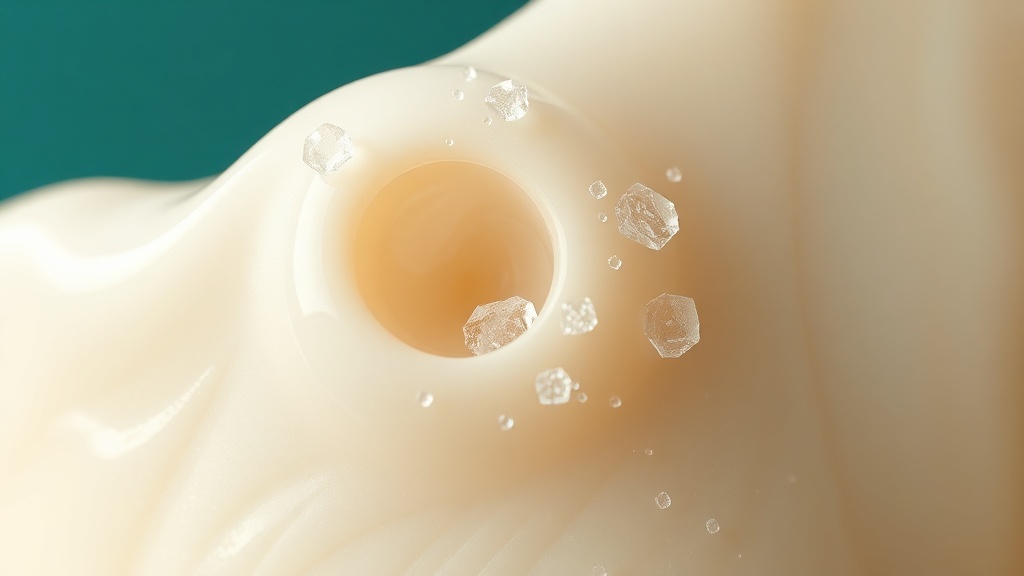
Hydroxyapatite toothpaste deposits the same mineral that makes up tooth enamel, working by mineral deposition rather than by killing bacteria.
What the research actually shows
Every row maps to a named, peer-reviewed source in the Sources section. According to PubMed.
| Claim | Evidence | Source |
|---|---|---|
| Nano-hydroxyapatite toothpaste remineralized early enamel lesions about as well as an 1,100 ppm fluoride toothpaste, with no meaningful difference in mineral gain. | Randomized, double-blind, in situ crossover study in 30 adults over 28-day phases, measuring mineral change by microradiography. | Najibfard et al., J Clin Dent 2011 |
| A 5% nano-hydroxyapatite toothpaste significantly remineralized early lesions and fully inhibited softening of healthy enamel exposed in the mouth. | Randomized, double-blind, in situ crossover trial using transverse microradiography. | Amaechi et al., J Dent 2021 |
| Across pooled randomized trials, hydroxyapatite provided about 17% protection against caries and performed non-inferiorly to fluoride in several studies. | Systematic review and meta-analysis of randomized clinical trials. | Limeback et al., Can J Dent Hyg 2021 |
| An updated meta-analysis found hydroxyapatite toothpaste significantly better than placebo and statistically comparable to fluoride for caries control. | Updated systematic review and meta-analysis of clinical and in situ trials. | Pawinska et al., J Dent 2024 |
| In children with active caries, a hydroxyapatite-plus-fluoride toothpaste inactivated nearly three-quarters of active enamel lesions over two years. | Triple-blind randomized clinical trial in 518 children who completed follow-up. | Cocco et al., Int Dent J 2025 |
Hydroxyapatite toothpaste versus the alternatives
| Approach | How it helps enamel | Evidence maturity | Trade-offs |
|---|---|---|---|
| Nano-hydroxyapatite toothpaste | Deposits enamel's own mineral into the surface; may ease sensitivity | Growing; several RCTs and two recent meta-analyses | Newer, smaller evidence base; premium price |
| Fluoride toothpaste | Forms a more acid-resistant surface crystal and speeds remineralization | Very mature; decades of trials | Some people prefer to avoid fluoride; overuse in young children can mottle developing teeth |
| Hydroxyapatite plus fluoride | Combines mineral deposition with fluoride's acid resistance | Emerging; recent pediatric RCT is encouraging | Fewer long-term head-to-head studies |
| Plain (no active) toothpaste | Mechanical cleaning only; relies on saliva for remineralization | N/A | No added enamel support; used as a trial control |
When hydroxyapatite is not the answer
It helps to be honest about the ceiling. Hydroxyapatite supports the enamel surface, but it cannot rebuild a tooth that has already broken down. Remineralization only works on the earliest stage of decay, the chalky white-spot lesion where the surface has softened but not yet collapsed into a hole. Once a cavity forms an actual cavitation, or once decay reaches the softer dentin underneath, no toothpaste of any kind fills it back in; that needs a filling. Hydroxyapatite also does nothing for problems that are not about mineral, such as gum recession, cracked teeth, or an abscess. And because the surface-deposited layer is thin and turns over, the benefit depends on using it consistently twice a day rather than on any single brushing. If you have visible holes, pain to cold or sweet that lingers, or dark staining in a groove, that is a signal to see a dentist, not to switch toothpaste and wait.
Evidence you can act on.
Occasional emails — new research, new protocols, no noise.
How to use hydroxyapatite toothpaste well
The trials that showed a benefit all relied on regular, twice-daily use at a meaningful concentration. Technique matters more than any single tube.
- 1
Check the concentration
one-timeLook for nano-hydroxyapatite or microcrystalline hydroxyapatite listed high on the ingredient list; the best-studied formulas sit around 5% to 10%. Some pastes pair it with fluoride, which is fine and, in one pediatric trial, worked well on active lesions.
- 2
Brush twice daily for two minutes
2 minutes, twice a dayUse a soft brush and cover every surface. The remineralizing effect is cumulative, built over weeks as mineral deposits and re-deposits, so consistency beats intensity.
- 3
Do not rinse heavily
after brushingSpit out the excess but avoid rinsing with a lot of water immediately, so the mineral stays in contact with the enamel longer. Give it a few weeks before judging results, especially for sensitivity.
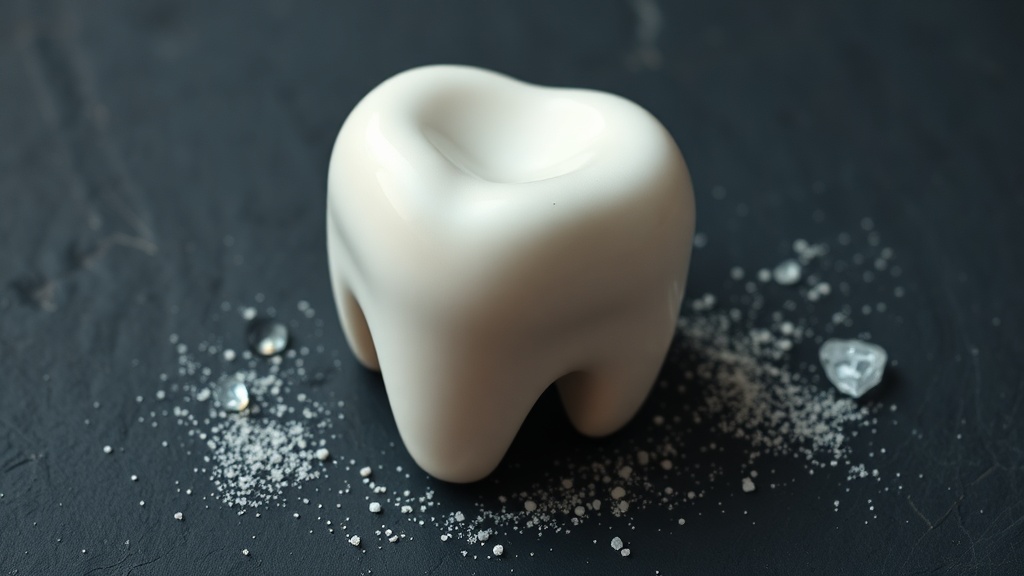
Enamel constantly loses and regains mineral; hydroxyapatite adds seed material that helps tip the daily balance back toward remineralization.
If you have visible cavities, a tooth that hurts to cold or sweetness for more than a few seconds, swelling, or dark spots in the biting grooves, no toothpaste will fix that, and delaying care lets decay spread. See a dentist for a diagnosis. Hydroxyapatite toothpaste is a supportive daily-care choice, not a substitute for professional treatment.
Frequently asked questions
Sources
- 1.
- 2.
- 3.
- 4.
- 5.

Fix your breath at the source.
The complete science-backed protocol — engineered to eliminate volatile sulfur compounds at the biological source.
Start the Breath Protocol →Related reading
Educational purposes only. The content on this page is not medical advice and is not a substitute for consultation with a qualified dental or medical professional.
More from the library
 Comparisons8 min
Hydroxyapatite vs Fluoride: Which Toothpaste Is Right for You?
Two ways to strengthen enamel, one big difference in how much evidence stands behind each.
Read →→ Best Of8 min
How to Choose the Best Hydroxyapatite Toothpaste
Skip the marketing and pick on the three things the research says actually matter.
Read →→ Answers8 min
Is Nano-Hydroxyapatite Toothpaste Safe?
The nanoparticle worry, answered by the actual toxicology reviews rather than the headlines.
Read →→ Answers8 min
How to Get Rid of White Spots on Teeth: Your Options, Ranked
An honest, evidence-based ladder of options, from what you can do at home to what only a dentist can fix.
Read →→ Ingredients8 min
Hydroxyapatite Toothpaste Benefits: What the Evidence Actually Supports
A calm, science-first look at what hydroxyapatite toothpaste can genuinely do for your enamel, and where the evidence stops.
Read →→ Answers8 min
Can You Rebuild Tooth Enamel? What Is Actually Possible
The honest split: what you can genuinely strengthen at home, and what only a dentist can restore.
Read →→