How to Choose the Best Hydroxyapatite Toothpaste
Skip the marketing and pick on the three things the research says actually matter.
- There is no single best hydroxyapatite toothpaste in the trials; the evidence backs the ingredient at the right concentration, not any one brand.
- The best-studied formulas contain roughly 5% to 10% nano- or microcrystalline hydroxyapatite, listed prominently on the ingredient panel.
- For most people the deciding factors are concentration, whether you want it fluoride-free or combined with fluoride, and a flavor and texture you will actually use twice a day.
- Hydroxyapatite supports enamel and can ease sensitivity, but no toothpaste on this list treats an existing cavity; that still needs a dentist.
- For young children who cannot spit, a fluoride-free hydroxyapatite paste is a reasonable choice because the mineral is considered safe if swallowed.
The best hydroxyapatite toothpaste is one with a well-studied concentration, around 5% to 10%, in a flavor and texture you will use twice daily. Decide whether you want it fluoride-free or combined with fluoride based on your caries risk. The ingredient supports enamel; it does not cure cavities.
What makes a hydroxyapatite toothpaste worth buying
Because hydroxyapatite works by depositing enamel's own mineral into the tooth surface, the single most important thing on the box is how much of that mineral is present and in what form. The clinical trials that showed a benefit used defined concentrations, commonly around 5% to 10% nano-hydroxyapatite or microcrystalline hydroxyapatite, applied twice a day. A paste that lists hydroxyapatite far down the ingredient panel, below thickeners and flavors, may contain too little to matter. After concentration, the next real decision is whether you want a purely fluoride-free formula or one that pairs hydroxyapatite with fluoride, since a recent pediatric trial found the combination worked well on active lesions. Everything else, flavor, foaming, whether it includes xylitol-type sweeteners or soothing agents, is about whether you will keep using it, which is not a trivial point: the benefit is cumulative and depends entirely on consistency. In other words, the best toothpaste is a well-formulated one you will actually reach for every morning and night, not the one with the loudest claims.
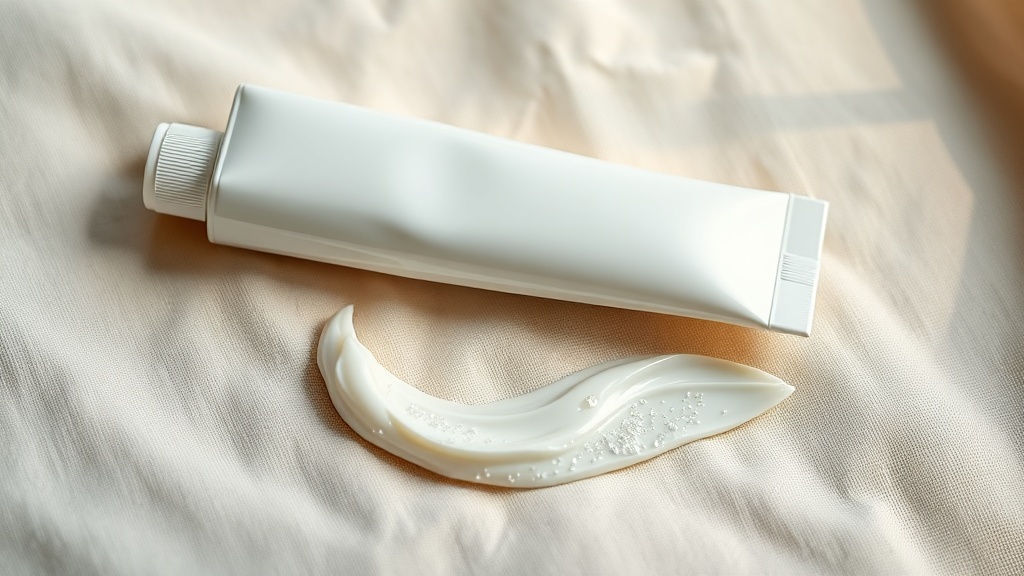
Concentration is the number that matters most: the best-studied formulas contain around 5% to 10% hydroxyapatite, listed high on the panel.
The evidence behind the criteria
Every criterion below traces to a named, peer-reviewed source. According to PubMed.
| Claim | Evidence | Source |
|---|---|---|
| A 5% nano-hydroxyapatite toothpaste significantly remineralized early lesions and inhibited softening of healthy enamel. | Randomized, double-blind, in situ crossover trial. Supports the ~5% benchmark. | Amaechi et al., J Dent 2021 |
| Nano-hydroxyapatite at studied concentrations remineralized early enamel comparably to a fluoride toothpaste. | Randomized, double-blind, in situ crossover study in adults. | Najibfard et al., J Clin Dent 2011 |
| Across pooled trials, hydroxyapatite oral-care products reduced caries and were non-inferior to fluoride, supporting the ingredient category. | Systematic review and meta-analysis of RCTs. | Limeback et al., Can J Dent Hyg 2021 |
| A hydroxyapatite-plus-fluoride toothpaste inactivated most active enamel lesions in children over two years, supporting the combined option. | Triple-blind randomized clinical trial in children. | Cocco et al., Int Dent J 2025 |
| Nano-hydroxyapatite toothpaste reduced dentin sensitivity in the large majority of users, a useful selection factor for sensitive teeth. | Randomized clinical trial for dentin hypersensitivity. | Polyakova et al., J Int Soc Prev Community Dent 2022 |
Matching the toothpaste to your needs
| Your priority | What to look for | Why |
|---|---|---|
| Maximum enamel evidence | ~5% to 10% hydroxyapatite, listed high on the panel | These are the concentrations used in the trials that showed benefit |
| Fluoride-free routine | Hydroxyapatite as the sole active, no fluoride | Suits fluoride-avoidance and young children who swallow paste |
| Higher caries risk | Hydroxyapatite combined with fluoride | A pediatric RCT found the combination effective on active lesions |
| Sensitive teeth | Hydroxyapatite, sometimes with potassium or zinc | Reduced sensitivity in randomized trials |
| A paste you will actually use | A flavor and texture you like | The benefit is cumulative and depends on daily consistency |
What the best toothpaste still cannot do
No hydroxyapatite toothpaste, however well-formulated, rebuilds a tooth that has already broken down. Remineralization only helps the earliest, still-intact stage of decay, the chalky white-spot where the surface has softened but not cavitated. Once there is a genuine hole, or decay reaching the dentin, that needs a filling, and choosing a premium toothpaste instead only delays care while the problem grows. The same honesty applies to whitening: hydroxyapatite can make enamel look brighter by smoothing and filling micro-pits so the surface reflects light more evenly, but that is a cosmetic effect, not bleaching, and it will not lift deep or intrinsic staining. Be wary, too, of concentration claims that are not backed by a clear ingredient position; a product can name-drop hydroxyapatite while including very little. The best choice is defined by what is measurably in the tube and by your willingness to use it, not by superlatives on the front label.
Evidence you can act on.
Occasional emails — new research, new protocols, no noise.
A simple way to choose
Three checks turn a crowded shelf into a short list.
- 1
Check the concentration and position
one-timeConfirm nano- or microcrystalline hydroxyapatite is listed prominently, ideally near a 5% to 10% level. If it is buried at the bottom of the panel, move on.
- 2
Decide fluoride-free or combined
one-timeLow caries risk or a fluoride-avoidance preference points to a fluoride-free formula. Higher risk, braces, or a cavity history points to a hydroxyapatite-plus-fluoride paste, or keeping fluoride entirely.
- 3
Pick a flavor you will use, then commit
2 minutes, twice a dayChoose a taste and texture you enjoy so twice-daily use is easy. Do not over-rinse, and give any new paste about a month before judging comfort, sensitivity, or gloss.
Toothpaste is the core, but a consistent routine, gentle brushing, not over-rinsing, and the right concentration, drives the enamel benefit.
If you have visible cavities, sensitivity that lingers, gum recession, or you are unsure whether going fluoride-free suits your caries risk, ask a dentist before or alongside switching. The best toothpaste supports daily care; it does not replace a diagnosis or treatment.
Frequently asked questions
Sources
- 1.
- 2.
- 3.
- 4.
- 5.

Fix your breath at the source.
The complete science-backed protocol — engineered to eliminate volatile sulfur compounds at the biological source.
Start the Breath Protocol →Related reading
Educational purposes only. The content on this page is not medical advice and is not a substitute for consultation with a qualified dental or medical professional.
More from the library
 Guides8 min
Does Hydroxyapatite Toothpaste Work? What the Evidence Shows
The fluoride-free ingredient dentists keep debating, measured against the actual clinical trials.
Read →→ Comparisons8 min
Hydroxyapatite vs Fluoride: Which Toothpaste Is Right for You?
Two ways to strengthen enamel, one big difference in how much evidence stands behind each.
Read →→ Answers8 min
How to Get Rid of White Spots on Teeth: Your Options, Ranked
An honest, evidence-based ladder of options, from what you can do at home to what only a dentist can fix.
Read →→ Ingredients8 min
Hydroxyapatite Toothpaste Benefits: What the Evidence Actually Supports
A calm, science-first look at what hydroxyapatite toothpaste can genuinely do for your enamel, and where the evidence stops.
Read →→ Answers8 min
Can You Rebuild Tooth Enamel? What Is Actually Possible
The honest split: what you can genuinely strengthen at home, and what only a dentist can restore.
Read →→ Best Of8 min
How to Choose a Cavity-Protection Toothpaste
An ingredient-first buyer guide to anti-cavity toothpaste, judged by the evidence rather than the packaging.
Read →→