Nano-Hydroxyapatite Toothpaste: What n-HA Really Does
A clear, evidence-based look at nano-hydroxyapatite — how the nano form differs from micro, and what the studies actually show.
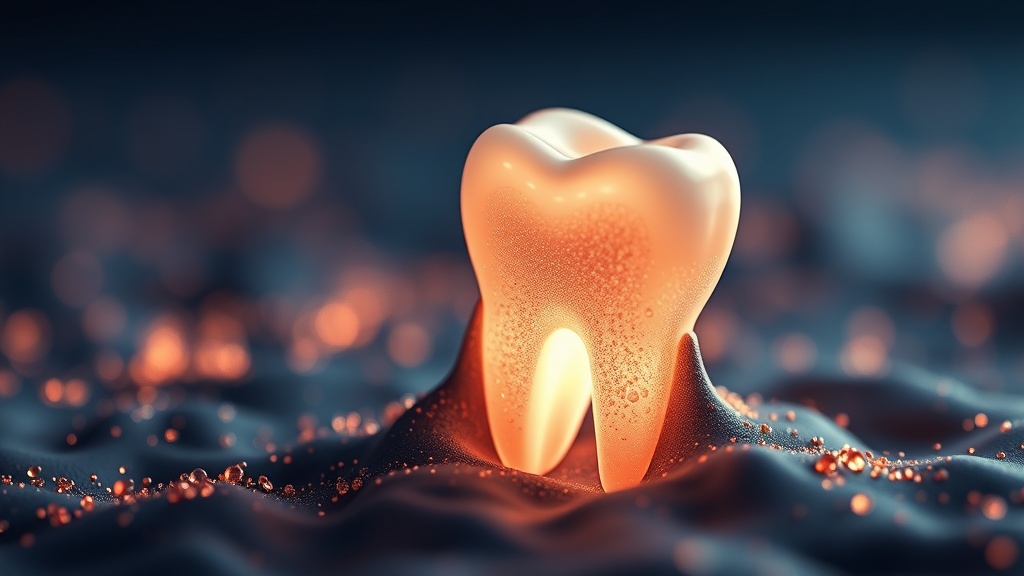
- Nano-hydroxyapatite (n-HA) is a lab-made version of the mineral that already makes up about 96% of your enamel, milled to particles small enough to match the tooth's own crystals.
- Because the particles are nanoscale, they can settle into the microscopic pores of softened, early-stage enamel and supply the calcium and phosphate the surface needs to re-harden.
- In an 18-month trial in adults, a fluoride-free hydroxyapatite toothpaste performed on par with 1,450 ppm fluoride for caries prevention — 89.3% vs 87.4% of participants stayed caries-free.
- n-HA looks strongest at supporting remineralization under everyday conditions; the most skeptical high-quality review found it does not resist a direct acid attack the way fluoride does.
- n-HA helps support and strengthen the enamel surface — it does not regrow lost enamel or fill a cavity, both of which need a dentist.
Nano-hydroxyapatite toothpaste uses nanoscale particles of the same mineral your enamel is built from. They deposit onto the tooth surface and hand over calcium and phosphate, helping remineralize and harden early, softened enamel. Studies show it performs comparably to fluoride for prevention, though it is gentler against a direct acid challenge.
What nano-hydroxyapatite is — and why the size matters
Enamel is roughly 96% hydroxyapatite by weight, so nano-hydroxyapatite toothpaste is, in effect, offering the tooth more of what it is already made of. The word that carries the whole idea is nano. Natural enamel is built from mineral crystals only tens of nanometres across, and when acid softens the surface it opens up microscopic pores at exactly that scale. Older micro-sized hydroxyapatite particles are far too large to enter those pores, so they mostly sit on top of the tooth. Nano-sized particles — typically around 20 nanometres — approximate the size of enamel's own crystals, which lets them lodge into the etched surface and act as seed material, giving calcium and phosphate a place to rebuild mineral. The same particles form a thin protective film over the tooth and can plug the open dentinal tubules behind sensitivity. The often-repeated NASA and Sangi origin story is best treated as heritage narrative rather than proven fact — it appears mainly in manufacturer-affiliated reviews with inconsistent dates. One genuine practical advantage is safety at the sink: any n-HA that is swallowed simply dissolves to calcium and phosphate, with no adverse events reported, which is why it is often positioned for young children who cannot yet reliably spit.
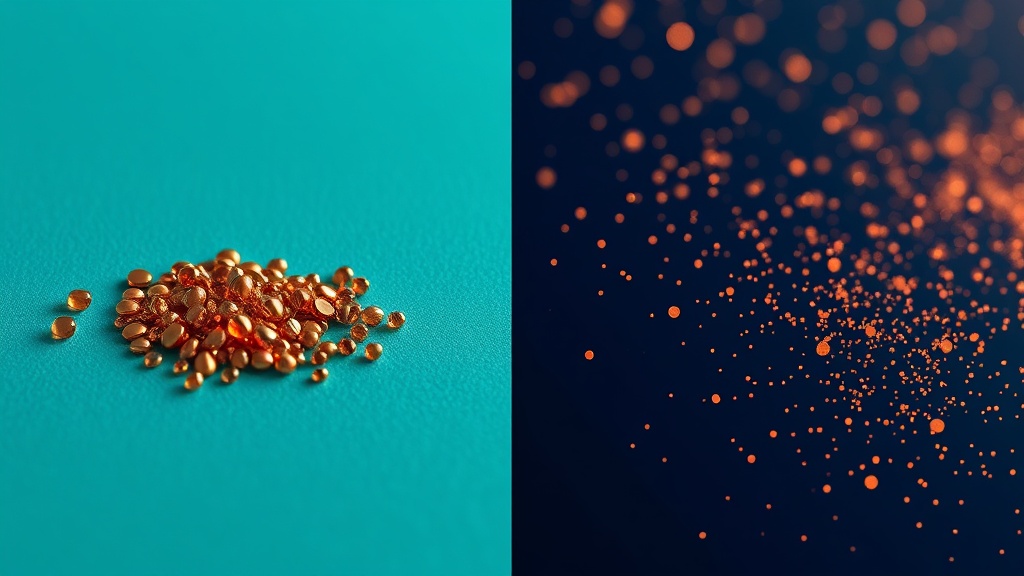
Nano-scale particles approximate enamel's own crystal size, so they can settle into the softened surface where larger micro particles cannot.
What the research actually shows
Every claim below maps to a named, peer-reviewed source in the Sources section. According to PubMed.
| Claim | Evidence | Source |
|---|---|---|
| A fluoride-free hydroxyapatite toothpaste was non-inferior to 1,450 ppm fluoride for caries prevention in adults over 18 months — 89.3% vs 87.4% stayed caries-free. | 18-month randomized controlled non-inferiority trial in adults. | Paszynska et al., 2023 |
| A 5% nano-HAP leave-on layer applied after brushing raised remineralization of early lesions from 37.7% to 58.4% versus a placebo lotion. | In-situ randomized crossover study. | Amaechi et al., 2021 |
| 5% and 10% nano-HAP remineralized early enamel lesions to the same degree as 1,100 ppm fluoride over 28 days. | 28-day in-situ crossover model. | Najibfard & Amaechi, 2011 |
| Pooled analysis found hydroxyapatite clearly beats placebo (OR 2.51) but only numerically edges fluoride (OR 1.1, not significant) — 'as good as,' not 'better than.' | Systematic review and meta-analysis. | Pawinska et al., 2024 |
| n-HA equalled fluoride under remineralizing conditions but did not resist a pure acid attack, and the certainty of evidence was graded 'very low.' | Independent systematic review and meta-analysis. | Wierichs et al., 2022 |
Nano-hydroxyapatite next to fluoride
| Property | Nano-hydroxyapatite | Fluoride (1,000–1,500 ppm) |
|---|---|---|
| How it strengthens enamel | Deposits calcium-phosphate mineral onto the surface; particles fit enamel's own pores | Drives formation of acid-resistant fluorapatite in the surface layer |
| Prevention evidence | Non-inferior to fluoride in an 18-month adult trial | Over half a century of trials; roughly 24% prevented fraction |
| Under a direct acid attack | Behaved like a fluoride-free control in the strictest review | Actively resists demineralization |
| If swallowed | Dissolves to calcium and phosphate; no fluorosis risk | Excess in young children can cause cosmetic fluorosis |
How strong is the evidence, really?
It helps to separate two different claims. The claim that n-HA is roughly equivalent to fluoride is well supported: multiple in-situ studies and randomized trials put the two side by side and find comparable remineralization, and a six-month trial in high-risk orthodontic patients met its non-inferiority target with 54.7% versus 61.6% new lesions. The claim that n-HA is better than fluoride is not supported — a pooled analysis put the odds ratio against fluoride at just 1.1, which is not statistically significant, and independent commentary summarizes the state of play as 'as good as, not better than.' The most cautious high-quality review is worth taking seriously: it graded the certainty of the evidence as 'very low' and noted that, unlike fluoride, n-HA did not hold up under a direct acid challenge, behaving much like a fluoride-free control. There is also an interesting side benefit beyond mineral: a hydroxyapatite rinse reduced bacterial adhesion in the mouth about as well as chlorhexidine, but without wiping out the helpful commensal bacteria. Taken together, n-HA is a legitimate, evidence-backed ingredient — best understood as a genuine alternative to fluoride, not a proven upgrade over it.
Evidence you can act on.
Occasional emails — new research, new protocols, no noise.
How to get the most from an n-HA toothpaste
None of this treats a disease — it simply gives the enamel surface the best chance to stay strong. Early spots still need a dentist to stage them.
- 1
Read the ingredient list, not the front label
one-time checkLook for hydroxyapatite or nano-hydroxyapatite listed high up, usually at around 5–10%. Marketing language on the front tells you little; the concentration and where it sits in the list tell you more.
- 2
Brush twice a day for two minutes
twice dailyConsistency is what lets the mineral build up over weeks. n-HA works by repeated small deposits, not a single dramatic effect, so the routine matters more than any one brushing.
- 3
Spit, but don't rinse
after each brushLeaving a thin film of paste on the teeth keeps the mineral in contact with the surface longer. Rinsing straight away washes most of it down the drain before it can do its job.
- 4
Consider a leave-on step at night
optional, nightlyThe strongest single result for n-HA came from a leave-on layer after brushing. A dab smeared onto the teeth before bed, left in place, mirrors that approach.
- 5
Have early spots staged by a dentist
as neededn-HA supports the surface of early, non-cavitated enamel. A white or brown spot that a dentist judges to be cavitated is past the point any toothpaste can reach and needs professional care.
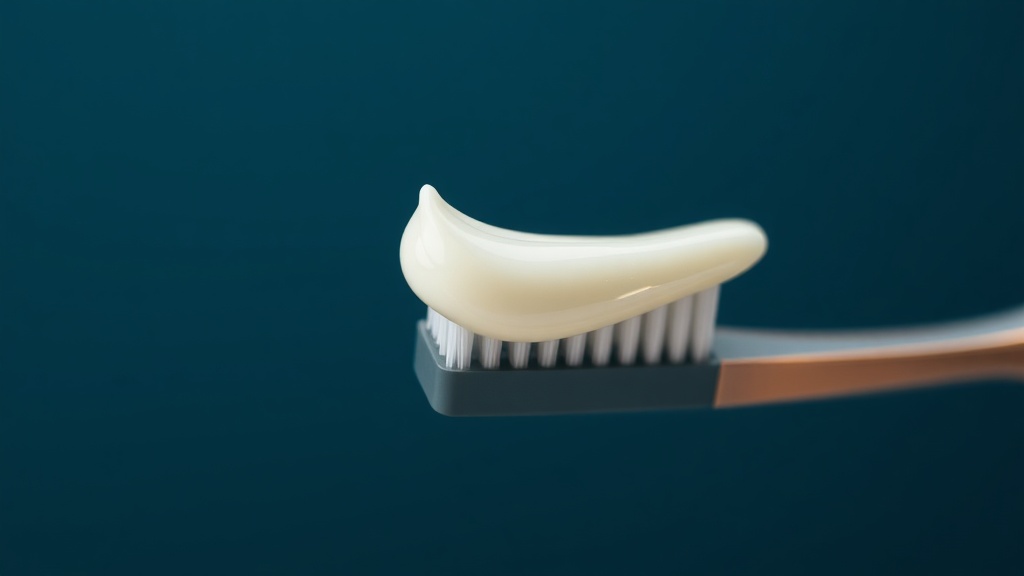
n-HA works as a daily mineral top-up — small, repeated deposits matter more than any single brushing.
See a dentist if you notice a white, brown or chalky spot that is changing, any sensitivity that lingers, or a visible pit or hole. Nano-hydroxyapatite can support early, softened enamel, but only a clinician can tell an arrestable early lesion from a cavity that needs restoring. If you are choosing an n-HA paste for a young child, ask your dentist to confirm the plan at a routine visit.
Frequently asked questions
Sources
- 1.
- 2.
- 3.
- 4.
- 5.
- 6.
- 7.
- 8.
- 9.

Fix your breath at the source.
The complete science-backed protocol — engineered to eliminate volatile sulfur compounds at the biological source.
Start the Breath Protocol →Related reading
Educational purposes only. The content on this page is not medical advice and is not a substitute for consultation with a qualified dental or medical professional.
More from the library
 Guides8 min
Does Hydroxyapatite Toothpaste Work? What the Evidence Shows
The fluoride-free ingredient dentists keep debating, measured against the actual clinical trials.
Read →→ Comparisons8 min
Hydroxyapatite vs Fluoride: Which Toothpaste Is Right for You?
Two ways to strengthen enamel, one big difference in how much evidence stands behind each.
Read →→ Answers8 min
Is Nano-Hydroxyapatite Toothpaste Safe?
The nanoparticle worry, answered by the actual toxicology reviews rather than the headlines.
Read →→ Best Of8 min
How to Choose the Best Hydroxyapatite Toothpaste
Skip the marketing and pick on the three things the research says actually matter.
Read →→ Answers8 min
How to Get Rid of White Spots on Teeth: Your Options, Ranked
An honest, evidence-based ladder of options, from what you can do at home to what only a dentist can fix.
Read →→ Ingredients8 min
Hydroxyapatite Toothpaste Benefits: What the Evidence Actually Supports
A calm, science-first look at what hydroxyapatite toothpaste can genuinely do for your enamel, and where the evidence stops.
Read →→