Nano-Hydroxyapatite Safety: The Honest Profile
What we actually know about the safety of nano-hydroxyapatite — from swallowing to the nanoparticle debate — laid out plainly.
- Nano-hydroxyapatite (n-HA) is a synthetic version of the mineral your enamel and bone are already made of, so if it is swallowed it simply dissolves into calcium and phosphate — the body's own building blocks.
- Across the clinical literature, reviews report no adverse events from n-HA toothpaste, and because there is no fluoride, it removes the risk of dental fluorosis in young children who cannot reliably spit.
- The 'nanoparticle' worry is really about inhaling loose dry powder in a factory setting — not about a wet paste you brush with. In toothpaste, the studied exposure route is swallowing a tiny amount, which is benign.
- The main honest gap is long-term systemic data: most trials are months, not decades, and the strongest independent review still graded the overall evidence base 'very low' certainty. Safe on current data is not the same as proven over a lifetime.
- Bottom line: n-HA has a reassuring, well-tolerated safety profile at toothpaste doses, and is a sensible fluoride-free choice — but it should be represented honestly, not as risk-free perfection.
Nano-hydroxyapatite toothpaste has a strong safety profile at the doses used for brushing. It is chemically identical to natural tooth mineral, dissolves harmlessly into calcium and phosphate if swallowed, carries no fluorosis risk, and shows no reported adverse events. The genuine limitation is a shortage of decades-long systemic data, not any known harm.
Why swallowing it is not the concern people fear
The most common safety question is what happens if you swallow toothpaste — a real issue for children. With fluoride toothpaste, repeatedly swallowing too much during the tooth-forming years can cause dental fluorosis, a cosmetic mottling of the enamel. Nano-hydroxyapatite sidesteps that mechanism entirely, because there is no fluoride in the formula. What is present is hydroxyapatite itself: the same calcium-phosphate mineral that makes up roughly 96% of enamel and the bulk of your skeleton. Swallowed in the small amounts left after brushing, it does not accumulate as a foreign substance; it dissolves in the stomach into calcium and phosphate ions that are indistinguishable from the minerals in milk or any calcium-containing food. Reviews of the clinical data report no adverse events tied to n-HA toothpaste, and this benign-if-swallowed behaviour is precisely why n-HA is so often recommended for toddlers and young children, where reliable spitting cannot be assumed. That does not make any toothpaste a food — you should still use a smear or pea-sized amount and supervise brushing — but the specific fear of a toxic swallow does not apply the way it can with high-fluoride products.
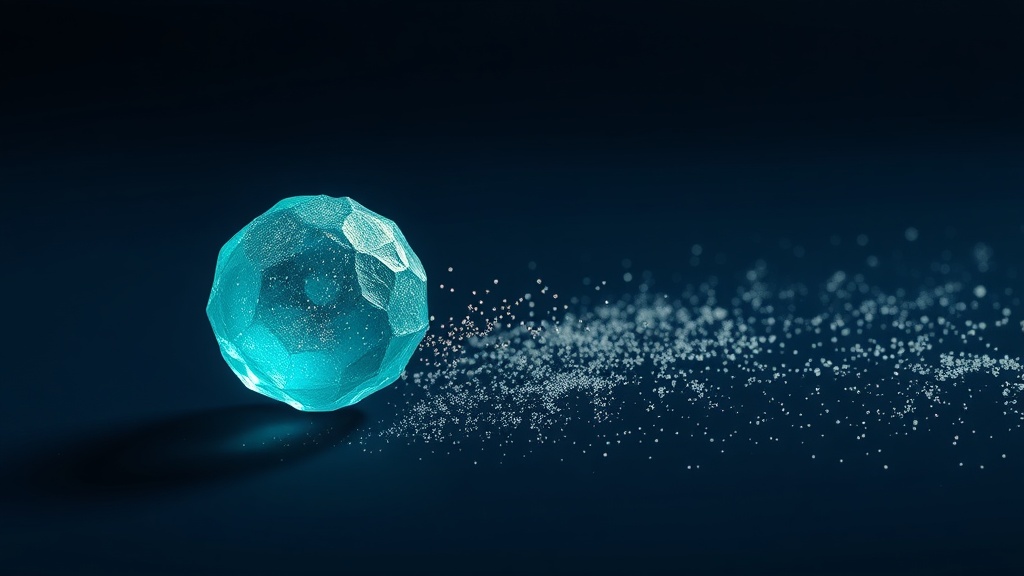
Swallowed hydroxyapatite dissolves into calcium and phosphate — the same minerals found in food and in your own bones and teeth.
What the research actually shows
Every safety point below maps to a named, peer-reviewed source in the Sources section. According to PubMed.
| Claim | Evidence | Source |
|---|---|---|
| Reviews report no adverse events from n-HA toothpaste, and incidentally swallowed HA dissolves to calcium and phosphate — the fluorosis-free rationale for young children. | Narrative review of clinical and in-situ data. | O'Hagan-Wong et al., 2022 |
| Over 18 months of twice-daily use in adults, fluoride-free HA toothpaste was well tolerated with no safety signal versus fluoride. | Randomized controlled non-inferiority trial. | Paszynska et al., 2023 |
| A HA rinse reduced bacterial adhesion on par with chlorhexidine without killing off beneficial commensal flora. | Reviewed in-situ comparison. | O'Hagan-Wong et al., 2022 |
| Pooled analysis found HA effective versus placebo and comparable to fluoride, with no safety concerns raised across included trials. | Systematic review and meta-analysis. | Pawinska et al., 2024 |
| The most rigorous independent review graded the overall n-HA evidence base 'very low' certainty — an honesty limit on long-term claims. | Systematic review and meta-analysis (GRADE). | Wierichs et al., 2022 |
The common worries, weighed honestly
| Safety question | What the evidence says | Verdict |
|---|---|---|
| Swallowing it | Dissolves to calcium and phosphate; no adverse events reported | Reassuring |
| Fluorosis in kids | No fluoride, so no fluorosis mechanism | Not a risk |
| Inhaling nanoparticles | A dry-powder/occupational issue, not a wet-paste one | Not the toothpaste scenario |
| Killing good bacteria | Lowers adhesion without wiping out commensal flora | Gentle by design |
| Long-term systemic effects | Trials are months, not decades; certainty rated 'very low' | Genuine data gap |
The nanoparticle question, without the scare
The word 'nano' understandably raises eyebrows, and it deserves a straight answer rather than either dismissal or alarm. Safety concerns about engineered nanoparticles come overwhelmingly from inhalation — breathing fine, dry, airborne particles deep into the lungs, the kind of exposure studied in industrial and manufacturing settings. That is a completely different situation from brushing with a wet paste, where the particles are bound in a slurry, stay in the mouth, and are either spat out or swallowed in tiny amounts and dissolved. In the toothpaste route, the relevant exposure is oral and, as above, chemically benign because the particle is the body's own mineral. It is also worth noting that 'nano' is not even essential to the benefit — micro-sized hydroxyapatite works too — so the particle size is a formulation choice, not a hidden hazard. The honest caution is not 'nanoparticles are dangerous in your toothpaste'; it is that regulators continue to review nanomaterials as a category, and the very long-term systemic picture for any daily-use ingredient is never fully closed. On the specific, studied question of brushing with n-HA and swallowing a little, the evidence is calm.
Evidence you can act on.
Occasional emails — new research, new protocols, no noise.
Using n-HA safely and sensibly
n-HA is well tolerated, but a few habits keep any toothpaste use sensible — especially for children. None of this is disease treatment; it is ordinary safe-use guidance.
- 1
Match the amount to the age
every brushA rice-grain smear for under-threes and a pea-sized amount for older children is plenty. Adults need only a pea-sized dab. More paste does not add benefit and only increases what is swallowed.
- 2
Supervise children's brushing
until they can spit reliablyEven though swallowed n-HA is benign, teaching a child to brush thoroughly and then spit builds the right habit for every product they will ever use, fluoride or not.
- 3
Spit, do not heavily rinse
every brushLeaving a thin film improves the remineralizing benefit and there is no safety reason to rinse it all away. This is a rare case where the effective habit and the safe habit line up.
- 4
Check the ingredient list and choose a reputable formula
once, when buyingLook for hydroxyapatite or nano-hydroxyapatite named clearly. A well-made, cosmetically regulated toothpaste from an established maker is the sensible way to keep quality predictable.
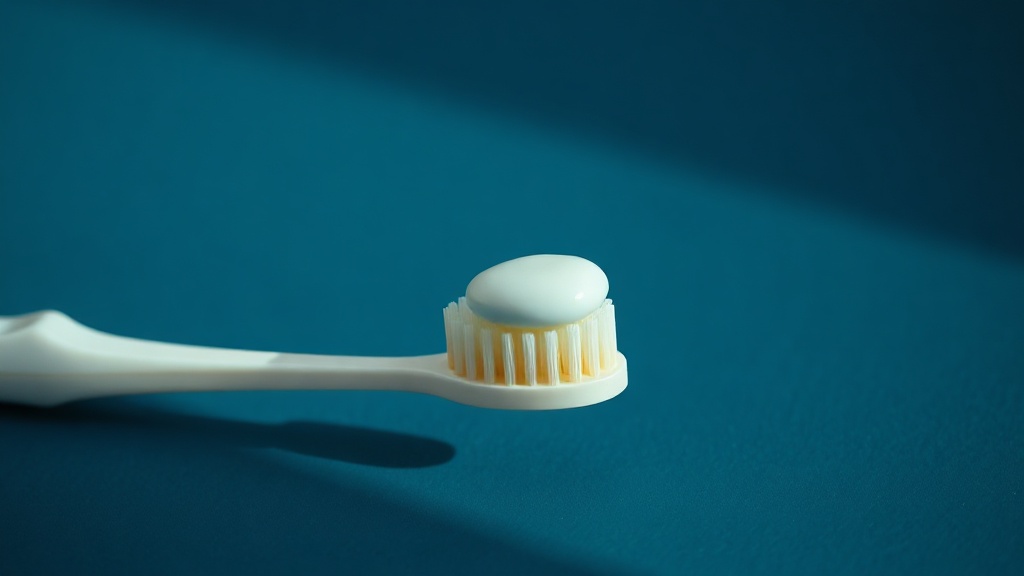
A pea-sized amount is all any toothpaste needs — with n-HA, the small amount swallowed is simply calcium and phosphate.
Talk to your dentist or doctor if a child swallows a large amount of any toothpaste and seems unwell, if you notice unexplained mouth irritation that persists after switching products, or if you are choosing oral care for a child at high decay risk and are unsure whether to go fluoride-free. A professional can weigh your family's actual caries risk against personal preference — that individual judgment matters more than any general safety statement, including this one.
Frequently asked questions
Sources
- 1.
- 2.
- 3.
- 4.
- 5.

Fix your breath at the source.
The complete science-backed protocol — engineered to eliminate volatile sulfur compounds at the biological source.
Start the Breath Protocol →Related reading
Educational purposes only. The content on this page is not medical advice and is not a substitute for consultation with a qualified dental or medical professional.
More from the library
 Ingredients8 min
Nano-Hydroxyapatite Toothpaste: What n-HA Really Does
A clear, evidence-based look at nano-hydroxyapatite — how the nano form differs from micro, and what the studies actually show.
Read →→ Answers8 min
Is Nano-Hydroxyapatite Toothpaste Safe?
The nanoparticle worry, answered by the actual toxicology reviews rather than the headlines.
Read →→ Ingredients8 min
Hydroxyapatite Toothpaste: How It Remineralizes and Strengthens Enamel
The mineral your enamel is already made of, in a tube: what nano-hydroxyapatite does to the tooth surface, what the evidence shows, and where it stops.
Read →→ Ingredients8 min
Hydroxyapatite Toothpaste Benefits: What the Evidence Actually Supports
A calm, science-first look at what hydroxyapatite toothpaste can genuinely do for your enamel, and where the evidence stops.
Read →→ Answers8 min
How to Get Rid of White Spots on Teeth: Your Options, Ranked
An honest, evidence-based ladder of options, from what you can do at home to what only a dentist can fix.
Read →→ Answers8 min
Can You Rebuild Tooth Enamel? What Is Actually Possible
The honest split: what you can genuinely strengthen at home, and what only a dentist can restore.
Read →→