Hydrogen Peroxide for Teeth Whitening: How It Works, Concentrations & Enamel Safety
The active ingredient behind almost every real whitening result — how it works, what strength you need, and whether it is safe for enamel.

- Hydrogen peroxide is the active ingredient behind almost every genuine whitening result: it diffuses through the enamel and chemically oxidises the coloured molecules inside the tooth, which is something no abrasive or "natural" agent does.
- Contact time matters more than raw concentration. A lower-strength gel worn longer can match or beat a stronger gel worn briefly, which is why gentle, patient regimens work.
- Higher concentration mostly buys sensitivity, not whiteness. Studies find low and medium strengths reach a similar shade with about a third less sensitivity.
- Peroxide temporarily softens the enamel surface, but this reverses: a week of ordinary saliva and remineralising products restores the surface, and the tooth's mineral ratio is unchanged in living mouths.
- The legal ceiling differs by region: in the EU and UK, cosmetic products sold over the counter are capped at 0.1% hydrogen peroxide, and anything from above 0.1% up to 6% is dentist-supplied only.
Hydrogen peroxide whitens by diffusing through enamel and oxidising the coloured molecules inside the tooth. Efficacy is driven by how long it stays in contact, not just its strength, and higher concentrations mainly add sensitivity. It briefly softens enamel but this reverses. In the EU and UK, over-the-counter cosmetic products are capped at 0.1%.
How hydrogen peroxide actually whitens
Hydrogen peroxide is a small, unstable molecule that readily releases reactive oxygen. When it is held against a tooth in a gel or strip, it does not just sit on the surface — it diffuses right through the enamel and into the dentine underneath, where most of a tooth's colour actually lives. There it breaks apart the large, darkly coloured organic molecules (chromogens) into smaller, colourless ones. That is chemical bleaching, and it is why peroxide can lighten the tooth's true colour rather than merely scrubbing off surface stain. Carbamide peroxide, the other common whitening active, is simply a slower-release carrier: it breaks down into hydrogen peroxide once it is in the mouth, so roughly 10% carbamide peroxide yields around 3.5% hydrogen peroxide. The reference review of the field is blunt about what governs the result — efficacy tracks concentration multiplied by time. That single idea explains almost everything about whitening: why an overnight tray works, why a five-minute swipe of a weak gel does little, and why the honest levers you can pull are strength and, above all, contact time.
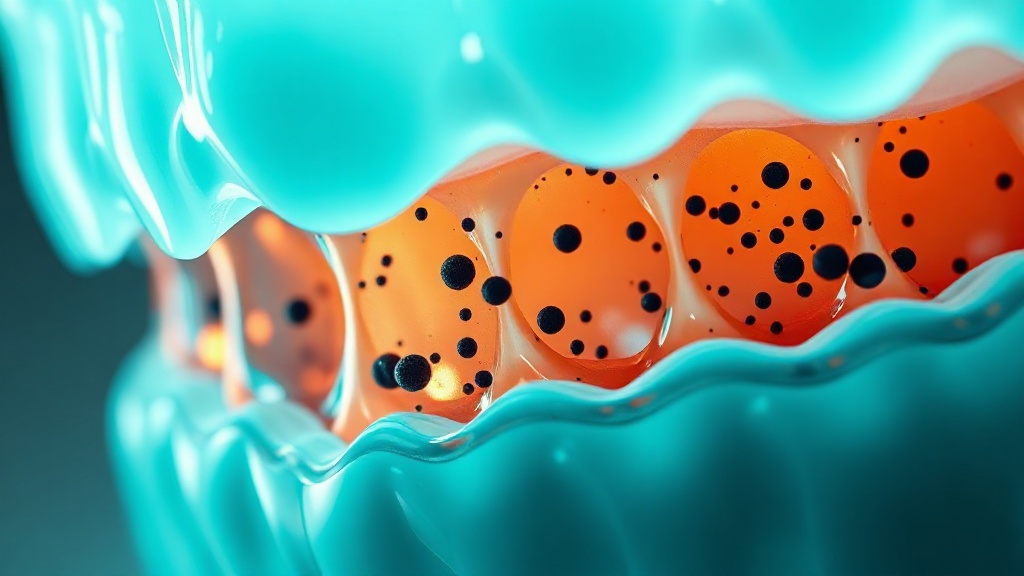
Peroxide works by diffusing through the enamel into the dentine, where it oxidises the coloured molecules that make a tooth look yellow.
What the research actually shows
Every claim below maps to a named, peer-reviewed source in the Sources section. According to PubMed.
| Claim | Evidence | Source |
|---|---|---|
| Peroxide diffuses through enamel to oxidise coloured species mainly in the dentine; efficacy tracks concentration multiplied by contact time. | Reference review of bleaching mechanism. | Joiner, 2006 |
| A 5.3% hydrogen-peroxide strip improved shade by 3.70 Vita units versus 0.87 for placebo over two weeks. | Double-blind randomised controlled trial. | Kugel et al., 2000 |
| Contact time, not concentration, drives at-home whitening: 10% carbamide peroxide worn overnight beat 7.5% hydrogen peroxide worn one hour. | Clinical comparison, time- vs concentration-dependence. | Lopez Darriba et al., 2017 |
| Lower and medium hydrogen-peroxide strengths produced about 33% less sensitivity risk with no loss of colour change. | Systematic review and meta-analysis. | Maran et al., 2020 |
| A single 35% hydrogen-peroxide session lowered enamel microhardness about 18%, but a week of remineralising agents recovered 16-33% of it toward baseline. | In-vitro microhardness and recovery study. | Melo et al., 2022 |
Hydrogen peroxide by format and strength
| Format | Typical active strength | What to expect | EU / UK status |
|---|---|---|---|
| OTC cosmetic product (EU/UK) | Up to 0.1% hydrogen peroxide | Surface-level care; minimal true shade change | The over-the-counter legal cap |
| Whitening strips / gels (US-style) | About 3-6.5% hydrogen peroxide | Visible shade change over roughly two weeks | Above the OTC cosmetic cap in EU/UK |
| Dentist take-home tray | 10-16% carbamide peroxide (~3.5-5.7% HP) | Overnight or short daily wear; time drives the result | Supplied and supervised by a dentist |
| In-office treatment | Up to 35-40% hydrogen peroxide | Fast, single-visit change; highest sensitivity | Dentist-only application |
Concentration, the law, and enamel safety
It is tempting to assume a stronger gel is simply a better one, but the evidence points the other way. Reviews consistently find that once you are in the effective range, pushing the concentration up mostly adds sensitivity rather than whiteness — the extra strength is felt more than it is seen. That is also why regulators set ceilings. Under the EU and UK rules, a cosmetic whitening product you can buy over the counter is capped at 0.1% hydrogen peroxide; products from above 0.1% up to 6% are legal only when supplied through a dentist, and anything above 6% is not permitted for cosmetic tooth whitening at all. It is a genuinely different landscape from the United States, where 6% strips sit on pharmacy shelves. On enamel safety, the honest picture is reassuring but not zero-risk. High-concentration peroxide does temporarily soften the very surface of the enamel and can cause short-lived sensitivity. But that softening is reversible: saliva alone begins restoring the surface, and a week of remineralising products recovers much of the microhardness, while studies of living mouths find the enamel's core mineral ratio unchanged after whitening. At the doses used for teeth, peroxide has not been shown to cause systemic harm. The sensible reading is that peroxide is safe for enamel when used as directed and paired with good remineralising habits — not that concentration does not matter.
Evidence you can act on.
Occasional emails — new research, new protocols, no noise.
How to use hydrogen peroxide sensibly
If you choose a peroxide product, a few principles get you the most colour change for the least irritation. This is cosmetic guidance, not medical treatment.
- 1
Match the format to your region and your goal
before you buyFor a real shade change you need an effective strength. In the EU or UK that means a dentist-supplied product; over-the-counter cosmetic items capped at 0.1% will do little beyond surface care. Choose the legal route that reaches an effective concentration.
- 2
Favour contact time over brute strength
as directedBecause the result tracks concentration times time, a lower-strength gel worn for the full recommended period often matches a stronger gel worn briefly, with far less sting. Longer and gentler beats short and harsh.
- 3
Pair whitening with remineralising care
daily around treatmentPeroxide briefly softens the enamel surface, so use a fluoride or nano-hydroxyapatite paste around your whitening days. This helps the surface recover its hardness and keeps sensitivity down.
- 4
Space out sessions and stop if it stings
ongoingSensitivity is the signal to ease off, not to push harder. Leaving rest days between applications lets the enamel and nerve settle, and it does not cost you the end result, which stays visible for months to years.
- 5
Let a dentist handle high strengths
as neededIn-office and strong take-home gels belong under professional supervision, both because of the law and because a dentist can protect your gums and check the discolouration is the cosmetic, surface-type peroxide can actually lighten.
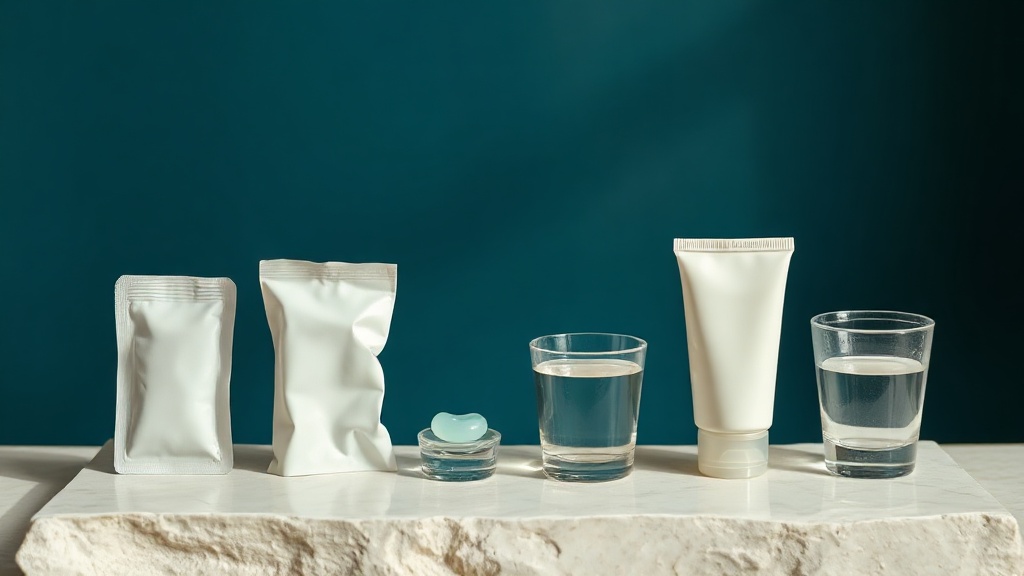
From a light OTC gel to a professional in-office cup: the same active ingredient at rising strengths, with rising speed and rising sensitivity.
See a dentist before whitening if you have untreated cavities, exposed roots, gum recession or a lot of dental work, since peroxide can reach the nerve through weak spots and will not lighten crowns, veneers or fillings. Book in too if whitening causes sharp or lasting sensitivity, if only one tooth stays dark, or if you want a strong, fast result — high-concentration peroxide is legally and practically a dentist's job.
Frequently asked questions
Sources
- 1.
- 2.
- 3.
- 4.
- 5.
- 6.
- 7.
- 8.
- 9.
- 10.
- 11.

Fix your breath at the source.
The complete science-backed protocol — engineered to eliminate volatile sulfur compounds at the biological source.
Start the Breath Protocol →Related reading
Educational purposes only. The content on this page is not medical advice and is not a substitute for consultation with a qualified dental or medical professional.
More from the library
 Comparisons8 min
Carbamide Peroxide vs Hydrogen Peroxide for Teeth Whitening: Which Works Better?
An evidence-based comparison of the two whitening peroxides, what actually separates them, and how to choose by format and comfort rather than by the biggest number.
Read →→ Answers8 min
Does Teeth Whitening Damage Enamel? The Evidence-Based Answer
The honest, evidence-based answer to whether whitening harms enamel — what peroxide really does to the surface, why sensitivity is not damage, and the DIY methods that actually cause wear.
Read →→ Answers9 min
Does Teeth Whitening Hurt? Why It Happens and How to Prevent It
The sting is common but manageable — and the real levers are lower concentration and shorter wear time, not gimmicks.
Read →→ Guides8 min
Teeth Whitening for Sensitive Teeth: A Gentle, Evidence-Based Guide
A calm, evidence-based guide to whitening when your teeth are prone to sensitivity — the levers that actually lower discomfort without giving up results.
Read →→ Answers8 min
Does Baking Soda Whiten Teeth? What the Evidence Says
An honest look at what baking soda can and cannot do for a whiter smile.
Read →→ Best Of9 min
Best Fluoride-Free Whitening Toothpaste: An Honest, Evidence-Based Guide (2026)
Which fluoride-free whitening ingredients hold up to the research — and which are marketing. An honest buyer's guide.
Read →→