Teeth Whitening for Sensitive Teeth
A calm, evidence-based guide to whitening when your teeth are prone to sensitivity — the levers that actually lower discomfort without giving up results.
- You can whiten sensitive teeth. Some twinge is common with any peroxide whitening — around 60% of people report it — but it is usually mild and passes within a day or two, and the approach can be tuned to keep it low.
- The two levers that actually reduce sensitivity are a lower peroxide concentration and a shorter daily wear time. Both have been shown to cut discomfort while still delivering the same colour change over a few weeks.
- Stronger is not faster. Higher-concentration gels buy you more sensitivity, not more whitening — matched trials show equal results with markedly more discomfort at the higher strength.
- Because at-home whitening is driven by contact time rather than raw strength, a gentle, patient approach works: a low-strength gel used consistently reaches the same place as a harsh one, with fewer zingers along the way.
- Supporting the enamel with remineralising minerals (such as nano-hydroxyapatite), and using a peroxide-free violet corrector when you want the lowest-sensitivity option, round out a genuinely gentle routine.
Yes — sensitive teeth can be whitened comfortably if you use a lower-concentration gel and shorter sessions rather than a strong, fast product. Studies show that gentler approach reaches the same shade with far less sensitivity. Supporting the enamel with remineralising minerals and spacing out sessions keeps discomfort low. Sharp or lasting pain means it is time to see a dentist.
Why whitening can make teeth twinge
Whitening sensitivity is real, but it helps to understand that it is usually a temporary, reversible reaction rather than damage. Peroxide works by diffusing through the enamel and into the dentine, and along the way small amounts can reach the pulp, the living core of the tooth. That can trigger a brief inflammatory response felt as the sharp, fleeting zingers people describe during a whitening course. It is common: across studies roughly 60% of people report some sensitivity, and in one in-office trial almost everyone felt at least mild discomfort at some point. The important word is transient — for most people it fades within hours to a couple of days after a session and leaves no lasting change. Some people are more prone to it than others, because background tooth sensitivity is already present in around one in eight adults, often where gums have receded and a little root surface is exposed. That is why the same product can feel like nothing to one person and like an electric tap to another. None of this makes whitening off-limits for sensitive teeth; it simply means the goal is to lighten the tooth while giving the nerve as little to react to as possible. It also helps to know that whitening sensitivity and everyday cold-sensitivity are not quite the same thing. The whitening version is driven by the peroxide itself passing through the tooth and tends to build up over a course and then settle once you stop; the everyday kind is usually tied to exposed dentine at the gum line. Telling them apart matters, because if cold water or air already makes you wince before you whiten at all, that is a sign to get the tooth looked at first.
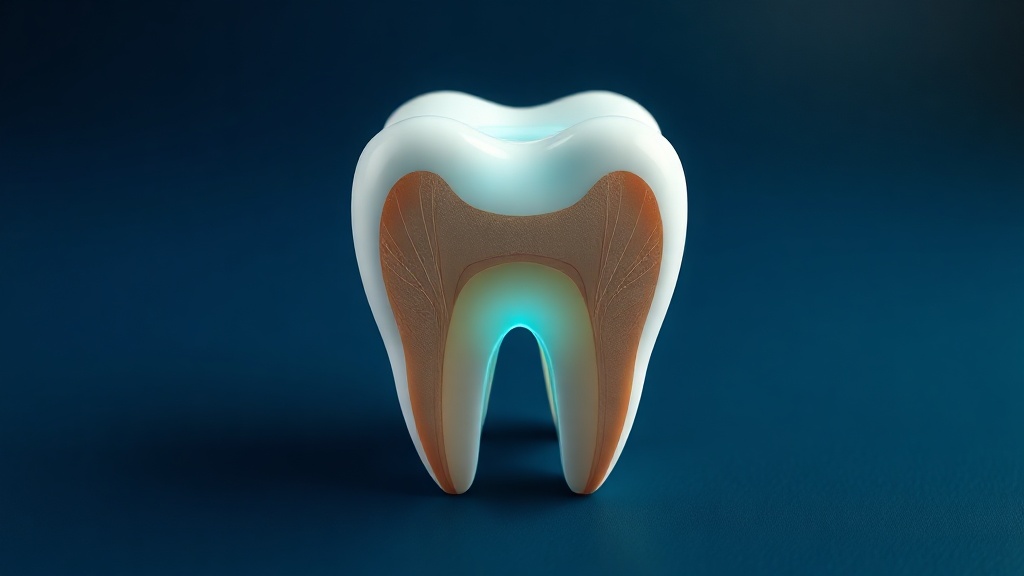
Peroxide travels through the enamel toward the pulp; the brief nerve response is why concentration and contact time matter so much for comfort.
What the research actually shows
Every claim below maps to a named, peer-reviewed source in the Sources section. According to PubMed.
| Claim | Evidence | Source |
|---|---|---|
| Bleaching sensitivity is common — about 60% of people report it during peroxide whitening — but it is typically mild and short-lived. | Clinical study of in-office whitening sensitivity. | de Paula et al., 2014 |
| Lower- and medium-concentration in-office peroxide cut the risk of sensitivity by about a third with no loss of colour change. | Systematic review and meta-analysis. | Maran et al., 2020 |
| 10% and 16% carbamide peroxide whitened equally, but the 16% gel caused significantly more sensitivity — higher strength buys discomfort, not whiteness. | Randomised controlled clinical trial. | Meireles et al., 2008 |
| Shortening daily wear time kept the result: 4% hydrogen peroxide for 30 minutes a day matched 120 minutes a day by week four, both with low sensitivity. | Randomised clinical trial of daily wear time. | Terra et al., 2021 |
| Peroxide-free violet colour-correctors reached a visible colour change with sensitivity under 3% and no enamel erosion — the closest evidence to whitening without sensitivity. | Systematic review of peroxide-free correctors. | Boruga et al., 2025 |
Gentler versus harsher whitening choices
| Choice | Effect on sensitivity | Effect on whitening |
|---|---|---|
| Lower peroxide concentration | Lower sensitivity risk | Equal colour change over a few weeks |
| Shorter daily wear time | Lower sensitivity | Matches longer wear within about four weeks |
| Low strength, more contact time | Gentle on the nerve | Contact time, not strength, drives at-home results |
| High concentration for fast results | More sensitivity and zingers | No extra whitening for the added strength |
| Peroxide-free violet correctors | Very low (under 3%) | Modest, visible cosmetic change |
The levers that actually reduce sensitivity
Most of the advice sold to sensitive whiteners aims at the wrong target. The single most reliable way to lower discomfort is to drop the concentration and shorten the exposure — and the evidence for that is consistent. Matched trials show that a 10% carbamide peroxide gel whitens just as well as a 16% one while causing far less sensitivity, and that a low-concentration hydrogen peroxide worn for half an hour a day catches up with a much longer daily wear within a month. That works because at-home whitening is governed by total contact time, not by how strong each dose is, so patience substitutes neatly for potency. Desensitising additives — the potassium-nitrate and fluoride ingredients marketed heavily for this — do help, but the effect is genuinely modest and, in some analyses, marginal, so they are a useful support rather than the main strategy. Two extra tools are worth knowing about. Nano-hydroxyapatite, a mineral that mirrors what enamel is made of, has been shown to shorten how long whitening sensitivity lasts and to remineralise the surface, and pairing whitening with calcium-and-phosphate support helps the enamel stay solid. And when comfort matters more than a dramatic result, peroxide-free violet correctors offer a visible cosmetic lift with sensitivity rates under three per cent. The practical upshot is a reassuring one: comfort and results are not a trade-off you are forced to make. Every lever that lowers sensitivity — less concentration, less time per session, more days between sessions — either keeps the whitening the same or costs you only a little extra patience. There is genuinely no need to endure sharp zingers to get a lighter shade, and pushing through severe pain is a signal to stop, not a sign of progress.
Evidence you can act on.
Occasional emails — new research, new protocols, no noise.
A gentle whitening routine for sensitive teeth
This is a cosmetic routine, not a treatment for a medical condition — the aim is simply to lighten the tooth while giving the nerve as little to react to as possible. If a session ever causes sharp or lasting pain, stop and check in with a dentist.
- 1
Prime with a mineral or desensitising toothpaste first
1-2 weeks beforeUsing a nano-hydroxyapatite or potassium-nitrate toothpaste for a couple of weeks before you start helps settle the tooth surface and can shorten how long any sensitivity lasts. The effect is modest but real, and it costs you nothing but a little patience.
- 2
Choose the lowest concentration that works
per sessionA lower-strength gel reaches the same shade as a strong one over a few weeks, with markedly less sensitivity. There is no whitening bonus for going stronger — only more discomfort — so start gentle and let time do the work.
- 3
Whiten in shorter sessions, less often
30 min per dayShorter daily wear times have been shown to match long ones within about four weeks. Space your sessions out rather than stacking them, which gives the tooth time to settle between exposures and keeps zingers to a minimum.
- 4
Favour contact time over strength
across a few weeksBecause at-home results build with total contact time, a slow-and-steady, low-strength course is both gentler and just as effective. Think of it as marinating rather than blasting — the same destination, a far more comfortable road.
- 5
Support the enamel and take breaks
ongoingFollow sessions with a remineralising mineral paste to help the surface stay solid, and build in rest days. If you want the lowest-sensitivity option of all, a peroxide-free violet corrector gives a subtler cosmetic lift with very little discomfort.
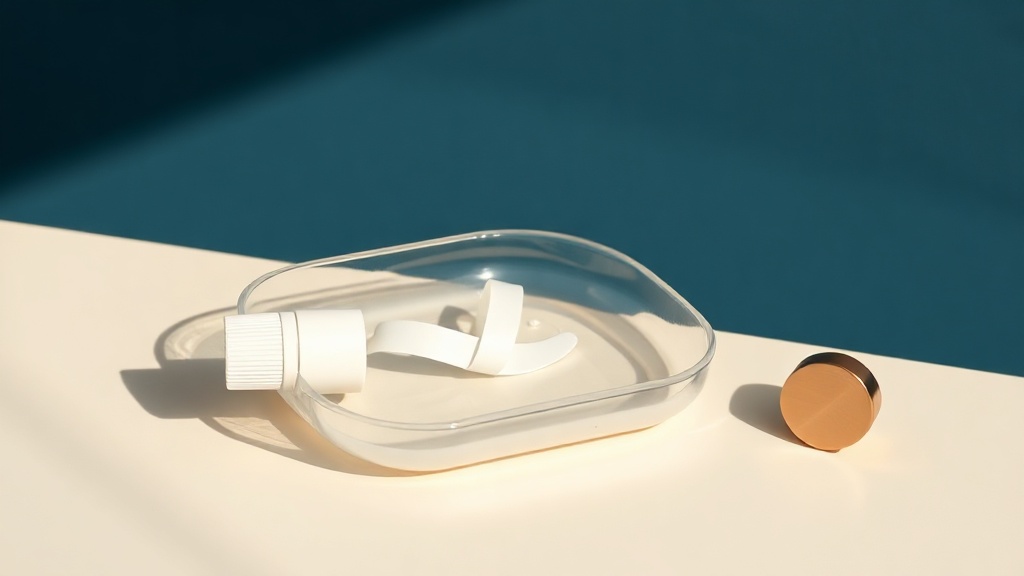
A gentle routine: a low-concentration gel, short timed sessions and a remineralising mineral paste keep sensitivity low without giving up results.
See a dentist before whitening if you already have sharp or lingering tooth sensitivity, visible gum recession or exposed roots, or if pain settles on a single tooth — those can point to something that needs looking at first, and whitening over it can make matters worse. During a course, stop and get advice if sensitivity turns sharp, lasts well beyond a day or two, or keeps you awake. A dentist can supervise a gentler in-chair approach or find and address the underlying cause.
Frequently asked questions
Sources
- 1.
- 2.
- 3.
- 4.
- 5.
- 6.
- 7.
- 8.
- 9.

Fix your breath at the source.
The complete science-backed protocol — engineered to eliminate volatile sulfur compounds at the biological source.
Start the Breath Protocol →Related reading
Educational purposes only. The content on this page is not medical advice and is not a substitute for consultation with a qualified dental or medical professional.
More from the library
 Answers9 min
Does Teeth Whitening Hurt? Why It Happens and How to Prevent It
The sting is common but manageable — and the real levers are lower concentration and shorter wear time, not gimmicks.
Read →→ Answers8 min
Does Teeth Whitening Damage Enamel? The Evidence-Based Answer
The honest, evidence-based answer to whether whitening harms enamel — what peroxide really does to the surface, why sensitivity is not damage, and the DIY methods that actually cause wear.
Read →→ Answers8 min
How Often Should You Whiten Your Teeth? Safe Frequency by Method
A method-by-method guide to how often you can brighten your smile without overdoing it — and why more is rarely better.
Read →→ Comparisons8 min
Carbamide Peroxide vs Hydrogen Peroxide for Teeth Whitening: Which Works Better?
An evidence-based comparison of the two whitening peroxides, what actually separates them, and how to choose by format and comfort rather than by the biggest number.
Read →→ Answers8 min
Does Baking Soda Whiten Teeth? What the Evidence Says
An honest look at what baking soda can and cannot do for a whiter smile.
Read →→ Best Of9 min
Best Fluoride-Free Whitening Toothpaste: An Honest, Evidence-Based Guide (2026)
Which fluoride-free whitening ingredients hold up to the research — and which are marketing. An honest buyer's guide.
Read →→