
Does Teeth Whitening Hurt? Why It Happens and How to Prevent It
The sting is common but manageable — and the real levers are lower concentration and shorter wear time, not gimmicks.
- Whitening can cause sensitivity, but it is usually a short, sharp 'zing' rather than lasting pain — around 60% of people report some sensitivity with strong in-office peroxide, and most of it fades within a day or two.
- The discomfort comes from peroxide passing briefly through the tooth to the nerve; it is a temporary, reversible response, not a sign the tooth is being damaged.
- The two proven ways to reduce it are simple: use a lower peroxide concentration and shorten the wear time. Both cut sensitivity without giving up whiteness.
- LED and laser lamps do not reduce sensitivity, and desensitising pastes help only modestly — so do not rely on gadgets or add-ons to fix the sting.
- Peroxide-free colour correctors are the gentlest option, with sensitivity in under 3% of users, though they whiten more subtly than peroxide.
It can, but usually only mildly. About 60% of people feel some sensitivity from strong peroxide whitening — brief 'zingers' or a cold ache — and it typically settles within a day or two. It happens because peroxide passes through the tooth to the nerve. Using a lower concentration and shorter wear time reduces it substantially without sacrificing results.
Why whitening can sting
Whitening sensitivity is real, and it has a clear explanation. The active ingredient in whitening gels, hydrogen or carbamide peroxide, works by diffusing through the enamel and into the tooth to break down the coloured molecules that make teeth look yellow. That same ability to travel inward is what causes the sensation people describe as a 'zinger' — a brief, sharp jolt, often triggered by cold air or cold water. As the peroxide passes through, it can temporarily irritate the nerve inside the tooth, producing a short-lived inflammatory response. The key word is temporary. In controlled trials, roughly six in ten people report some sensitivity after a strong in-office session, and in one split-mouth study almost everyone felt at least some discomfort during treatment — yet in the same studies the sensation reliably faded after the whitening finished. It is best understood as the tooth briefly registering that something is passing through it, not as an injury. That distinction matters, because it means the goal is not to avoid whitening out of fear of pain, but to whiten in a way that keeps that passing sensation as small as possible.
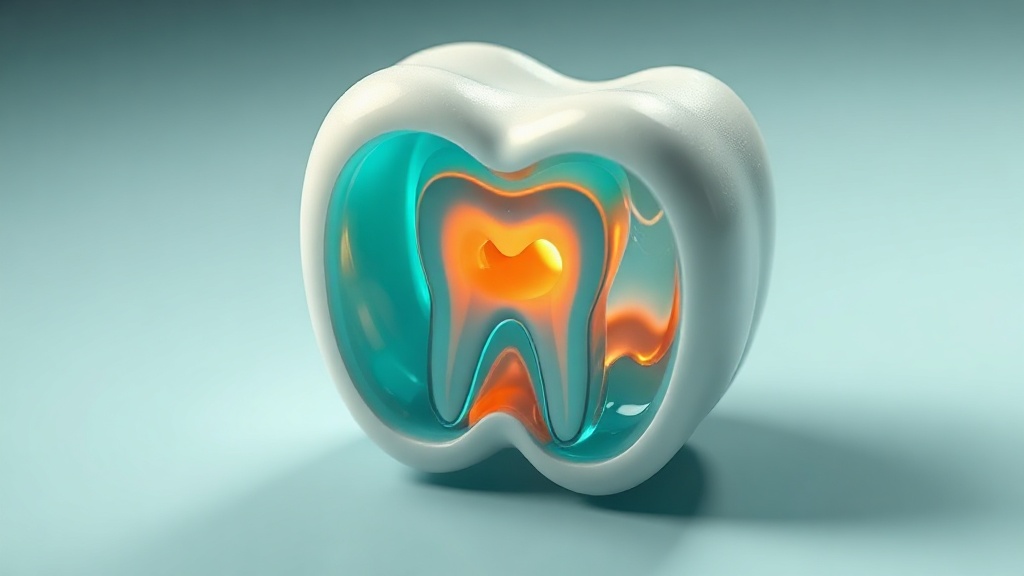
Peroxide diffuses through enamel toward the nerve — the brief passage is what registers as a 'zinger'.
What the research actually shows
Every claim below maps to a named, peer-reviewed source in the Sources section. According to PubMed.
| Claim | Evidence | Source |
|---|---|---|
| About 60% of patients report some tooth sensitivity after strong in-office peroxide whitening. | Randomised clinical trial of 35% hydrogen peroxide (n=40). | de Paula et al. 2014 |
| Low- and medium-concentration peroxide caused about 33% less sensitivity with no loss of whitening. | Systematic review and meta-analysis of 25 studies. | Maran et al. 2020 |
| At equal whitening, a higher-concentration gel (16% vs 10% carbamide peroxide) caused significantly more sensitivity. | Double-blind randomised clinical trial (n=92). | Meireles et al. 2008 |
| Cutting daily wear time to 30 minutes matched 120 minutes for colour after four weeks, both with low sensitivity. | Single-blind randomised clinical trial of 4% hydrogen peroxide (n=92). | Terra et al. 2021 |
| Peroxide-free violet colour correctors produced a visible shade change with sensitivity in under 3% of users. | Systematic review of in vitro and clinical evidence. | Boruga et al. 2025 |
What raises and lowers the odds of a zing
| Factor | Effect on sensitivity | Worth doing? |
|---|---|---|
| Higher peroxide concentration | Raises it — without whitening any more | No |
| Longer daily wear time | Raises it | No — shorter works |
| Lower or medium concentration | Lowers it, same final colour | Yes |
| Shorter wear time | Lowers it, same colour over a few weeks | Yes |
| LED or laser lamp | No measurable effect on sensitivity or colour | Skip it |
| Desensitising paste (potassium nitrate / fluoride) | Small, inconsistent benefit | Optional |
Discomfort is not the same as damage
It is worth separating two things people often blur together: sensitivity and harm. Peroxide can briefly soften the enamel surface at the microscopic level during whitening, and understandably that sounds alarming. But studies that measure it show the change is reversible — enamel microhardness recovers within about a week, and faster when a remineralising paste is used, because saliva and mineral products redeposit what was temporarily lost. In other words, the sting you may feel is the nerve reacting to the process, not evidence of lasting structural damage. This also reframes two popular 'solutions'. Bright LED and laser lamps are marketed as making whitening better, but high-quality analyses find they do not reduce sensitivity at all — and separate reviews show they do not add whitening either, so they are not a route to a gentler result. Desensitising ingredients such as potassium nitrate and fluoride do have some evidence behind them, but the effect is modest and inconsistent across trials, so they are a reasonable add-on rather than a certainty. The levers that genuinely work are the unglamorous ones: less concentrated gel, worn for less time. Research even shows that at-home whitening is driven more by how long the gel is in contact than by how strong it is, which is exactly why a gentle, patient approach can reach the same brightness with far less discomfort.
Evidence you can act on.
Occasional emails — new research, new protocols, no noise.
How to whiten with less discomfort
If your teeth tend to react, you can still whiten comfortably by leaning on the changes the evidence actually supports. None of this treats a disease — it is simply a gentler cosmetic routine.
- 1
Start with a lower concentration
from day oneChoose a lower-strength gel rather than the strongest one you can find. Meta-analyses show low and medium concentrations cause roughly a third less sensitivity while reaching the same final shade — you simply get there a little more gradually.
- 2
Shorten the wear time
per sessionA shorter daily contact time — around 30 minutes rather than two hours — has been shown to match longer wear for colour over a few weeks, with low sensitivity throughout. If a product stings, reduce the time before you reduce your expectations.
- 3
Space sessions out
every other day if neededWhitening every other day instead of daily gives the tooth time to settle between exposures. Because results are cumulative, spacing sessions rarely costs you the end result — it just makes the road there more comfortable.
- 4
Consider a desensitising or mineral paste
before and afterA potassium-nitrate or fluoride toothpaste used around your whitening course can take the edge off for some people. The benefit is modest and not assured, so treat it as helpful support, not a fix.
- 5
Skip the lamp, and pause if it hurts
as neededThere is no need to buy an LED or laser add-on — the evidence says it changes neither sensitivity nor whiteness. And if you get a sharp, lasting ache, simply stop for a few days and let the tooth recover before trying a gentler protocol.
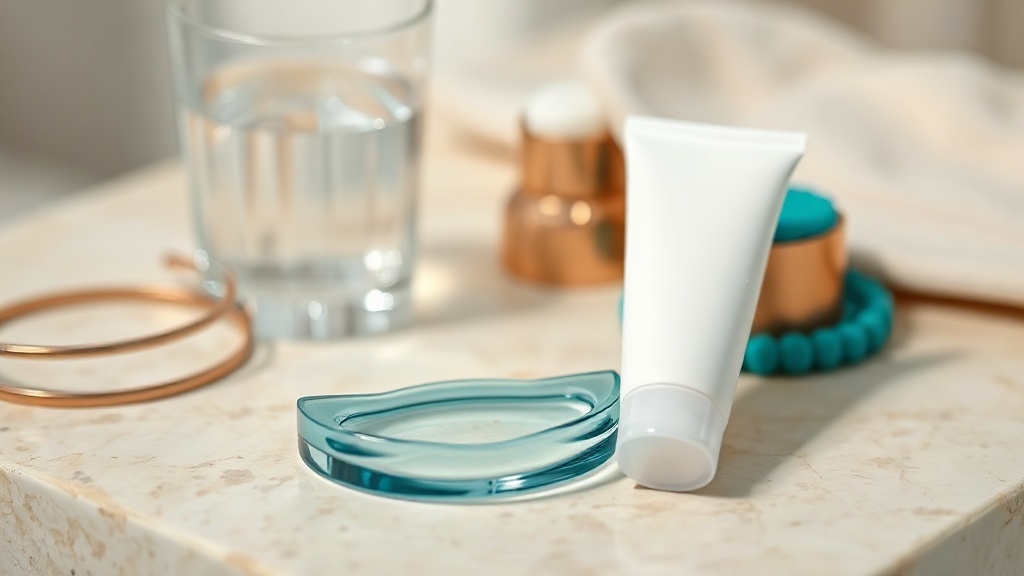
A gentler routine — lower strength, shorter wear, a mineral paste — keeps whitening comfortable.
Occasional zingers that fade within a day or two are normal. See a dentist if a tooth aches on its own without any trigger, if sensitivity lasts more than about three days after you stop whitening, if the pain is sharp and localised to one tooth, or if your gums are sore or blanched. Persistent or one-sided tooth pain should always be assessed in person rather than pushed through with more whitening.
Frequently asked questions
Sources
- 1.
- 2.
- 3.
- 4.
- 5.
- 6.
- 7.
- 8.
- 9.
- 10.

Fix your breath at the source.
The complete science-backed protocol — engineered to eliminate volatile sulfur compounds at the biological source.
Start the Breath Protocol →Related reading
Educational purposes only. The content on this page is not medical advice and is not a substitute for consultation with a qualified dental or medical professional.
More from the library
 Answers9 min
How Often Can You Use Whitening Strips? Safe Frequency Explained
One course does most of the work; the smart move is occasional touch-ups, not back-to-back use.
Read →→ Answers8 min
Does Teeth Whitening Damage Enamel? The Evidence-Based Answer
The honest, evidence-based answer to whether whitening harms enamel — what peroxide really does to the surface, why sensitivity is not damage, and the DIY methods that actually cause wear.
Read →→ Answers8 min
Can You Whiten Veneers? The Truth About Porcelain and Composite
Peroxide only lightens natural tooth structure, so a veneer's shade is essentially fixed — but surface stain is a different story.
Read →→ Answers8 min
Can You Whiten Crowns? What Works and What Doesn't
The honest, evidence-based answer to whether teeth whitening works on crowns, veneers and fillings — and what to do instead.
Read →→ Answers8 min
Does Baking Soda Whiten Teeth? What the Evidence Says
An honest look at what baking soda can and cannot do for a whiter smile.
Read →→ Best Of9 min
Best Fluoride-Free Whitening Toothpaste: An Honest, Evidence-Based Guide (2026)
Which fluoride-free whitening ingredients hold up to the research — and which are marketing. An honest buyer's guide.
Read →→