How to Oil Pull: The Complete Step-by-Step Method
The full technique — which oil, how much, how to swish and spit safely, and where oil pulling honestly fits alongside a proven remineralizing routine.
- Oil pulling means swishing a tablespoon of edible oil around your mouth, then spitting it out — a traditional Ayurvedic practice now studied in modern trials as an adjunct to normal oral care.
- The technique matters more than the ritual: use about a tablespoon of a food-grade oil, swish gently (do not gargle) so it moves between the teeth, then spit it into the bin rather than the sink.
- The best-supported effect is a drop in salivary bacteria and a probable improvement in gum health; the evidence for reducing plaque is weaker, and chlorhexidine mouthwash still outperforms oil for plaque control.
- Oil pulling is an add-on, not a replacement. It does not remineralize enamel or reverse a cavity, so keep a fluoride or hydroxyapatite toothpaste as your proven base.
- Done gently it is low-risk; the main cautions are not swallowing the used oil, not gargling it into your airway, and not using it to delay seeing a dentist about a real problem.
To oil pull, put about a tablespoon of a food-grade oil such as coconut or sesame in your mouth and swish it gently between your teeth for several minutes, then spit it into the bin and rinse. Do it once a day, ideally before brushing. Treat it as an adjunct to fluoride or hydroxyapatite brushing, never a replacement.
What oil pulling actually does in your mouth
Oil pulling is often described in mystical terms, but the plausible mechanism is ordinary chemistry. As you swish, the oil coats the tooth and gum surfaces and begins to emulsify — the constant agitation with saliva breaks the oil into tiny droplets, and reviewers describe a saponification-like process where the oil interacts with the salivary film. Many oral bacteria have fatty, water-repelling cell membranes, so they are drawn into the oil droplets and carried out of the mouth when you spit. That is why the most consistent finding across trials is a reduction in the number of bacteria measured in saliva, rather than any direct change to the tooth itself. It is important to be clear about what this is not: the oil does not soak into enamel, it does not deposit minerals, and it cannot rebuild a surface that has already broken down. Think of oil pulling as a mechanical rinse that lowers the overall bacterial load — closer in spirit to a mouthwash than to a toothpaste, and best judged by that modest standard.
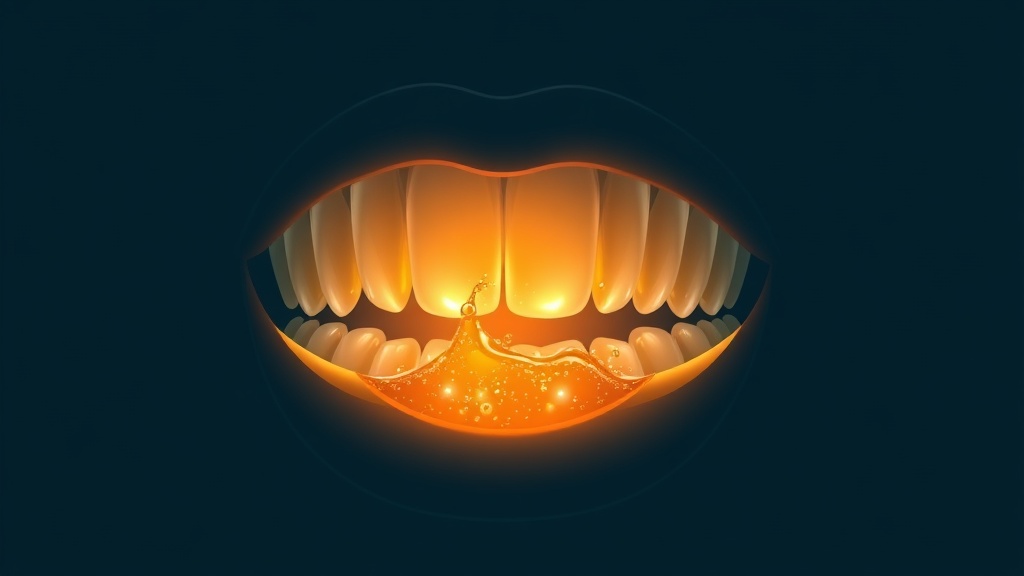
As the oil emulsifies with saliva it breaks into fine droplets that trap fat-loving bacteria, which are then carried out when you spit.
What the research actually shows
Every claim below maps to a named, peer-reviewed source in the Sources section. According to PubMed.
| Claim | Evidence | Source |
|---|---|---|
| In a triple-blind randomized trial, swishing sesame oil daily reduced plaque scores, modified gingival index and the aerobic bacterial colony count in adolescents with plaque-induced gingivitis. | Randomized, controlled, triple-blind study (n=20) vs chlorhexidine. | Asokan et al., 2009 |
| A meta-analysis of nine randomized trials found oil pulling significantly reduced salivary bacterial colony counts, but showed no significant difference in plaque index or gingival index versus controls. | Meta-analysis of 9 RCTs. | Peng et al., 2022 |
| A systematic review of 25 trials found a probable benefit of oil pulling for gum health, but chlorhexidine remained superior for reducing plaque, with overall evidence graded very low certainty. | Systematic review and meta-analysis (25 trials, 1,184 participants). | Jong et al., 2023 |
| A review of coconut-oil trials concluded oil pulling may benefit oral hygiene as an adjunct to normal care, while noting the evidence was limited and the risk of bias high. | Systematic review of RCTs (coconut oil). | Woolley et al., 2020 |
| An Oxford systematic review of randomized trials found limited evidence that oil pulling may have beneficial effects on oral hygiene, and highlighted it as a potentially cost-effective practice. | Systematic review of 5 RCTs (160 participants). | Gbinigie et al., 2016 |
Which oil should you use?
| Oil | Where it stands | Good to know |
|---|---|---|
| Sesame oil | The most-studied choice in trials | The classic Ayurvedic oil; used in the sesame-oil RCTs; distinctive taste |
| Coconut oil | Popular and supported by several trials | Solid below room temperature so it softens as you swish; mild, pleasant flavour |
| Sunflower oil | Used in some early studies | Neutral taste; a reasonable, inexpensive option |
| Any food-grade oil | Broadly fine | Choose one you find tolerable — comfort drives consistency more than the oil type |
Where oil pulling honestly fits
The fairest way to place oil pulling is as a low-cost extra that sits on top of the fundamentals, not in place of them. The trials that show a benefit are mostly short, small and mixed in quality, and the clearest wins are for gum-related measures and salivary bacteria rather than for the hard tissue of the tooth. Crucially, oil pulling has no remineralizing action: it cannot rebuild enamel, cannot arrest an early white-spot lesion the way fluoride or hydroxyapatite can, and cannot touch a cavity that has already opened. Enamel that has broken down does not repair itself, which is exactly why any at-home practice has to be paired with a proven mineral source and with professional care. So if you enjoy oil pulling and it helps you feel your mouth is cleaner, there is little harm in it done gently — but keep it in its lane. The remineralizing work still belongs to your toothpaste, and the diagnosis of anything that hurts, discolours or persists still belongs to a dentist.
Evidence you can act on.
Occasional emails — new research, new protocols, no noise.
How to oil pull, step by step
None of this treats a disease — it is a gentle adjunct that lowers the bacterial load in your mouth. Keep it comfortable and unhurried.
- 1
Measure about a tablespoon of oil
a few secondsUse roughly one tablespoon of a food-grade oil such as coconut or sesame. A little less is fine if a full spoon feels like too much; you want enough to move around freely, not so much that it is a struggle to hold.
- 2
Swish gently — do not gargle
the main eventMove the oil slowly around your mouth and pull it between your teeth, using your tongue and cheeks. Keep it in the front of your mouth; never tip your head back to gargle, because drawing oil toward your throat risks inhaling it. If your jaw tires, slow down or stop — this should be relaxed, not a workout.
- 3
Let it turn thin and milky
until emulsifiedAs the oil mixes with saliva it thins out and turns cloudy or milky. That change is your signal that emulsification has happened. For how many minutes to aim for and how often to do it, see our companion guide on how long to oil pull.
- 4
Spit into the bin, not the sink
a few secondsSpit the used oil into a bin or a tissue. Oil can solidify and clog household drains over time, so avoid the sink or toilet. Do not swallow it — it now carries the bacteria and debris you just lifted from your mouth.
- 5
Rinse, then brush as normal
your usual routineRinse with water, then brush with your fluoride or hydroxyapatite toothpaste as you normally would. Oil pulling is the warm-up act; the remineralizing toothpaste is the main event, so it should never be skipped.
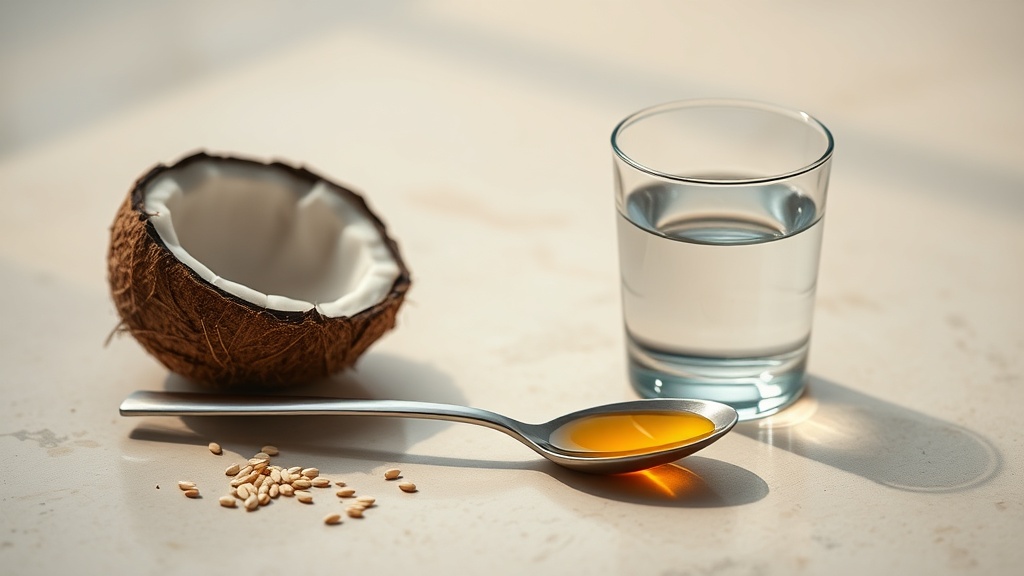
A tablespoon of oil, a gentle swish, and a spit into the bin — a simple morning add-on to a proven brushing routine.
Oil pulling is not a treatment for pain, decay or gum disease. See a dentist if you have a toothache, visible hole, dark spot, persistent bad breath, bleeding gums that do not settle, or a lump or sore that lasts more than two weeks. Do not use oil pulling to postpone care for any of these — an early problem is far easier to manage than a neglected one.
Frequently asked questions
Sources
- 1.
- 2.
- 3.
- 4.
- 5.
- 6.
- 7.

Fix your breath at the source.
The complete science-backed protocol — engineered to eliminate volatile sulfur compounds at the biological source.
Start the Breath Protocol →Related reading
Educational purposes only. The content on this page is not medical advice and is not a substitute for consultation with a qualified dental or medical professional.
More from the library
 Ingredients8 min
How Long Should You Oil Pull? Duration and Frequency Explained
How many minutes, how often, and how long before you notice anything — the timing of oil pulling, grounded in what the trials actually did.
Read →→ Guides8 min
Does Hydroxyapatite Toothpaste Work? What the Evidence Shows
The fluoride-free ingredient dentists keep debating, measured against the actual clinical trials.
Read →→ Comparisons8 min
Hydroxyapatite vs Fluoride: Which Toothpaste Is Right for You?
Two ways to strengthen enamel, one big difference in how much evidence stands behind each.
Read →→ Best Of8 min
How to Choose the Best Hydroxyapatite Toothpaste
Skip the marketing and pick on the three things the research says actually matter.
Read →→ Answers8 min
How to Get Rid of White Spots on Teeth: Your Options, Ranked
An honest, evidence-based ladder of options, from what you can do at home to what only a dentist can fix.
Read →→ Ingredients8 min
Hydroxyapatite Toothpaste Benefits: What the Evidence Actually Supports
A calm, science-first look at what hydroxyapatite toothpaste can genuinely do for your enamel, and where the evidence stops.
Read →→