Does Charcoal Whiten Teeth? What Really Happens
The whitening claim, weighed against what abrasion can and cannot actually do.
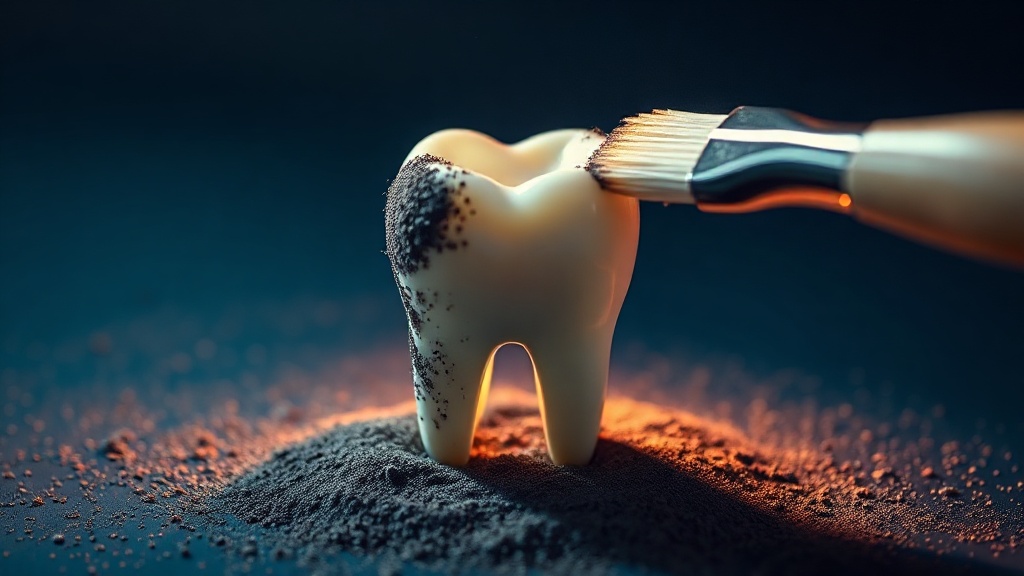
- Charcoal can make teeth look a little brighter by scrubbing off surface (extrinsic) stains through abrasion, but it does not bleach the tooth's internal color the way peroxide whitening does.
- Because its effect is mechanical, it is capped: once surface stains are gone, charcoal cannot lighten a naturally yellow or grey shade.
- Systematic-review evidence finds charcoal toothpaste has a lower whitening effect than other options and a higher abrasive potential, which raises the risk of wearing enamel over time.
- Most charcoal pastes contain no fluoride, so relying on one can mean giving up the best-established cavity-prevention ingredient.
- For genuine, lasting whitening, peroxide-based products or professional whitening reach the internal color; charcoal is at best a surface-stain polish to use sparingly.
Charcoal does not truly whiten teeth. It can lift some surface stains through abrasion, which makes teeth look slightly brighter, but it cannot bleach the internal color the way peroxide does. Reviews find its whitening effect is modest and its abrasiveness is high, so daily use risks wearing enamel rather than improving it.
Surface stain versus a tooth's true color
When people say charcoal whitens teeth, it helps to separate two very different kinds of tooth color. Extrinsic color is the film of stain that builds up on the outside of enamel from coffee, tea, red wine, tobacco and pigmented foods; it sits on the thin protein layer that coats your teeth. Intrinsic color is the tooth's own shade, set by the ivory-colored dentin beneath a semi-translucent enamel layer, plus any deeper staining. These two respond to completely different tools. Abrasion, physically scrubbing, can remove extrinsic surface stain, and that is the entire mechanism behind charcoal. Activated charcoal is a gritty, porous carbon powder, so brushing with it essentially polishes the surface with a fine abrasive: lift the coffee film and the tooth looks a shade brighter. Chemical bleaching is a different process altogether, in which hydrogen peroxide or carbamide peroxide releases oxygen that penetrates enamel and breaks apart the pigment molecules inside the tooth, changing the intrinsic shade. Charcoal has no bleaching chemistry. Marketers often lean on the word adsorption, the idea that charcoal binds toxins, but binding pigment particles on contact is not the same as lightening the color locked inside dentin, and there is no good evidence charcoal does the latter. So the honest ceiling is this: charcoal may make stained teeth look cleaner by removing what is on the surface, but once that film is gone it cannot make a naturally yellow or grey tooth genuinely whiter. Anyone expecting a peroxide-style result from a black powder is simply measuring the wrong thing.
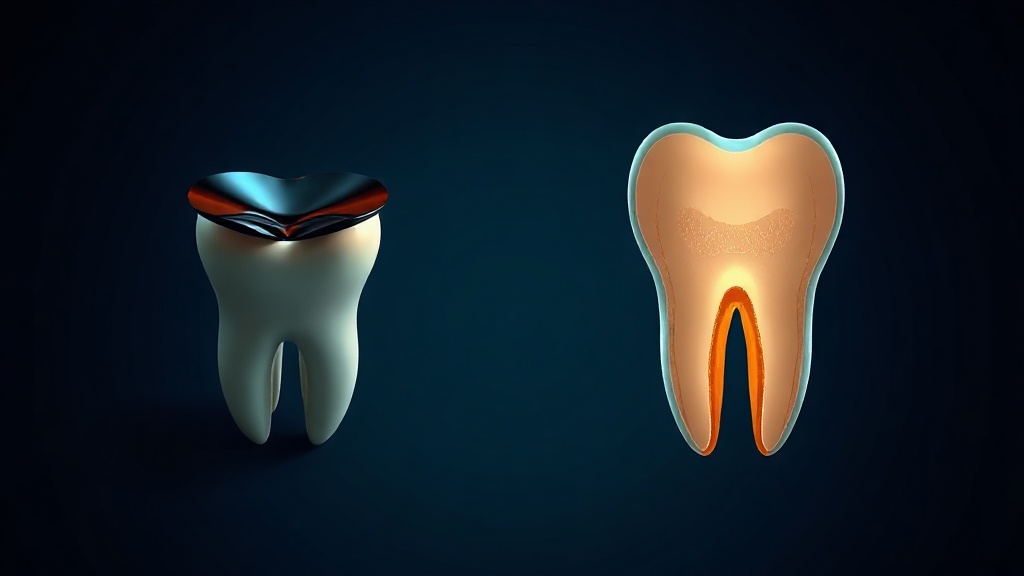
Charcoal only reaches surface stain; a tooth's true shade lives in the dentin beneath the enamel.
What the research actually shows
Every claim below maps to a named, peer-reviewed source in the Sources section. According to PubMed.
| Claim | Evidence | Source |
|---|---|---|
| Charcoal toothpaste has a lower whitening effect than other agents and a higher abrasive potential, and can be considered less safe. | Systematic review of in vitro studies (11 included). | Montero Tomas et al., 2022 |
| There is insufficient clinical and laboratory evidence to substantiate the safety and efficacy claims of charcoal dentifrices; enamel abrasion is a reported harm. | Literature review, Journal of the American Dental Association. | Brooks et al., 2017 |
| Charcoal-based toothpastes increase the surface roughness of teeth and restorative materials because they are abrasive. | Comprehensive review of whitening toothpastes. | Kim et al., 2025 |
| Enamel is about 96 percent mineral and cannot regrow once worn away, so abrasion is permanent. | Enamel mechanical-property study. | He & Swain, 2008 |
| Fluoride at 1,000-1,500 ppm is the established cavity-prevention range, which most charcoal pastes omit. | Cochrane concentration review. | Walsh et al., 2019 |
How different methods change tooth color
| Method | How it changes color | Reaches internal color? |
|---|---|---|
| Charcoal (abrasion) | Scrubs off surface stains | No |
| Peroxide bleaching | Oxidizes pigment inside the tooth | Yes |
| Whitening or hydroxyapatite polishing pastes | Gentle polish, mild optical effect | Mostly surface |
| Professional in-office whitening | Controlled higher-strength peroxide | Yes |
The abrasion trade-off dentists worry about
The reason dentists keep raising an eyebrow at charcoal is the trade-off hidden inside its one real effect. Whitening by abrasion means whitening by wear, and enamel does not grow back. Enamel is about 96 percent mineral, and once it is abraded away a mature tooth has no cells left to rebuild that structure. A systematic review of laboratory studies found charcoal toothpastes tend to have a higher abrasive potential than their alternatives while delivering a lower whitening effect, which is close to the worst combination you can ask of a whitening product: more wear for less payoff. A separate review of how whitening toothpastes affect tooth and restoration surfaces reached the same theme, noting that charcoal formulations increase surface roughness. Rougher enamel is not just an aesthetic issue; a rougher surface can pick up new stains faster, quietly undoing the point of using charcoal in the first place. On top of the abrasion problem, most charcoal pastes leave out fluoride, the single most established cavity-prevention ingredient, so a daily charcoal habit can mean trading a proven protective benefit for an unproven cosmetic one. The largest review in a major dental journal concluded there was simply insufficient clinical and laboratory evidence to support the safety and efficacy claims made for charcoal dentifrices, and advised caution. None of this makes an occasional charcoal brushing a catastrophe. It means charcoal is best understood as an abrasive surface-stain polish with real downsides if overused, not a safe or effective everyday whitener, and certainly not something that strengthens or rebuilds enamel.
Evidence you can act on.
Occasional emails — new research, new protocols, no noise.
How to whiten honestly if that is your goal
If a brighter smile is what you are after, it helps to match the tool to the kind of discoloration you actually have. None of this treats a disease; it is about cosmetics and protecting enamel.
- 1
Work out what kind of discoloration you have
one visitSurface staining from coffee and tea responds to gentle cleaning, while a naturally darker or yellow shade is intrinsic and needs bleaching. A dentist can tell you which you are dealing with in minutes.
- 2
For surface stain, reach for low-abrasion first
dailyA regular whitening or hydroxyapatite paste lifts everyday stain with far less grit than charcoal. If you use charcoal at all, treat it as occasional, not a daily scrub.
- 3
For a real shade change, use peroxide
as directedOver-the-counter peroxide strips or dentist-supervised whitening actually reach the internal color. That is the only route to genuinely whiter, not just cleaner, teeth.
- 4
Do not give up fluoride or hydroxyapatite
twice dailyKeep a protective paste in the routine so a cosmetic experiment never costs you cavity protection or enamel strength.
- 5
Protect the enamel you have
ongoingUse a soft brush, light pressure and avoid daily abrasives. Enamel does not come back, so gentleness is the long game.
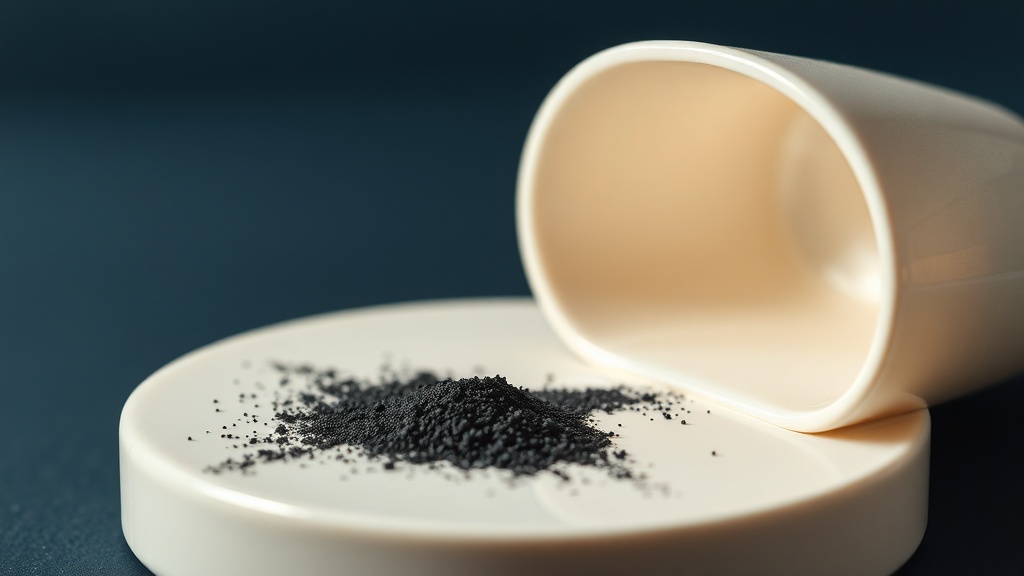
Charcoal is a fine abrasive: the same grit that lifts stain can also wear enamel with daily use.
If your teeth look darker than you would like, ask a dentist whether the discoloration is on the surface or inside the tooth before buying any product. See a dentist too if you notice increasing sensitivity, translucency at the biting edges, or teeth that look worn, since these can be signs of enamel loss from over-abrasion. A professional can recommend a whitening method that fits your enamel and rule out causes that no toothpaste can fix.
Frequently asked questions
Sources
- 1.
- 2.
- 3.
- 4.
- 5.

Fix your breath at the source.
The complete science-backed protocol — engineered to eliminate volatile sulfur compounds at the biological source.
Start the Breath Protocol →Related reading
Educational purposes only. The content on this page is not medical advice and is not a substitute for consultation with a qualified dental or medical professional.
More from the library
 Ingredients9 min
Charcoal Toothpaste Benefits: Claims vs the Evidence
The claimed benefits of charcoal toothpaste, checked one by one against the research.
Read →→ Best Of8 min
How to Choose the Best Hydroxyapatite Toothpaste
Skip the marketing and pick on the three things the research says actually matter.
Read →→ Ingredients8 min
Remineralizing Toothpaste: How It Works and What Actually Rebuilds Enamel
A plain-English guide to how remineralizing toothpaste works — and an honest comparison of fluoride, n-HA and CPP-ACP.
Read →→ Guides8 min
Does Hydroxyapatite Toothpaste Work? What the Evidence Shows
The fluoride-free ingredient dentists keep debating, measured against the actual clinical trials.
Read →→ Answers8 min
How to Get Rid of White Spots on Teeth: Your Options, Ranked
An honest, evidence-based ladder of options, from what you can do at home to what only a dentist can fix.
Read →→ Ingredients8 min
Hydroxyapatite Toothpaste Benefits: What the Evidence Actually Supports
A calm, science-first look at what hydroxyapatite toothpaste can genuinely do for your enamel, and where the evidence stops.
Read →→