How to Remineralize Teeth
The practical routine that supports enamel remineralization, and the clear line between the early lesions it can rebuild and the decay it cannot.
- Remineralization is real, but it has a hard ceiling: it can rebuild early, chalky white-spot lesions where the surface is still intact, and it cannot rebuild a cavitated hole. That needs a dentist.
- The three levers that actually move the balance are the same ones the evidence supports: lower the frequency of acid attacks (diet), deliver mineral-guiding fluoride or hydroxyapatite twice a day, and protect the saliva that does the rebuilding.
- Fluoride and nano-hydroxyapatite are the two toothpaste ingredients with real remineralization evidence; hydroxyapatite has matched fluoride in head-to-head trials, so either is a defensible choice.
- A leave-on step, brushing then leaving a thin mineral layer in place rather than rinsing it away, nearly doubled remineralization versus placebo in one study, which is why spit-do-not-rinse matters.
- You cannot reliably tell an arrestable white spot from a cavitated one by eye. Have new spots staged by a dentist before you rely on a home routine.
To remineralize teeth, tip the daily balance toward rebuilding: cut how often you eat sugar, brush twice a day with fluoride or nano-hydroxyapatite paste and spit without rinsing, and protect your saliva by staying hydrated. This works on early, non-cavitated white spots only. Cavities that have broken the surface cannot be remineralized at home and need a dentist.
What remineralization can and cannot do
Enamel is in constant flux. When the mouth turns acidic after eating, mineral dissolves out of the surface; when saliva restores a neutral pH, calcium and phosphate flow back in and the surface rebuilds. Remineralization is simply making the rebuilding side win more often than the dissolving side. That is genuinely achievable for an early lesion, the chalky white spot where mineral has been lost beneath a still-intact surface. Minerals can diffuse through that surface and rebuild the layers underneath. What remineralization cannot do is regrow lost tooth structure. Mature enamel has no living cells; it can only re-grow crystals chemically from calcium and phosphate, so once the surface collapses into a physical hole there is nothing to rebuild onto. Worse, a cavitated lesion becomes a plaque trap that home care cannot keep clean, and arrest is only possible when clinically plaque-free conditions are obtained. This is the honest boundary of everything below: a remineralization routine is powerful against the early white spot and useless against the hole.
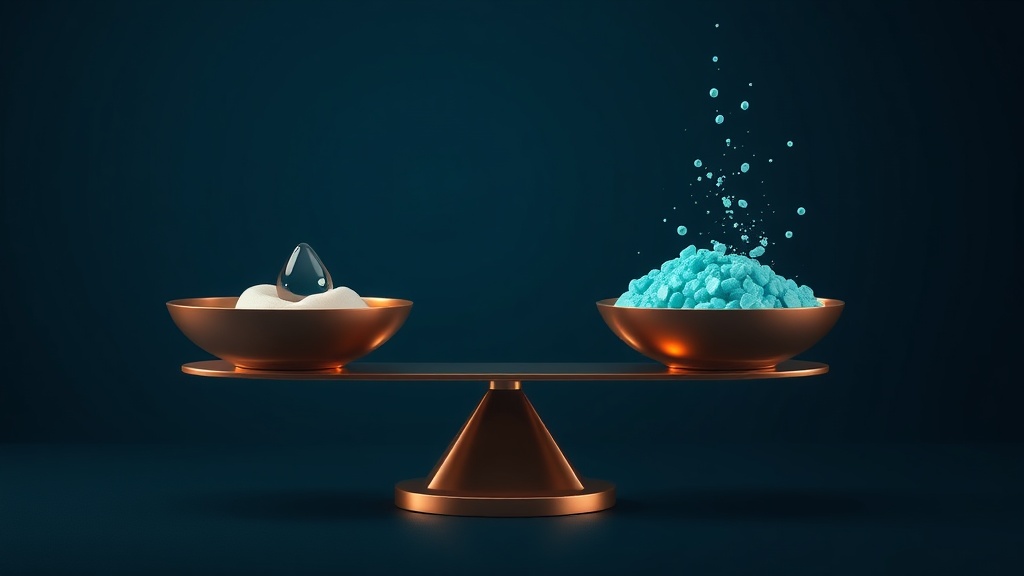
Remineralization is a balance, not a cure: diet, fluoride or hydroxyapatite, and healthy saliva tip an early lesion toward rebuilding rather than dissolving.
What the research actually shows
Every claim below maps to a named, peer-reviewed source in the Sources section. According to PubMed.
| Claim | Evidence | Source |
|---|---|---|
| The demineralization process and early lesions can be prevented or reversed by protective factors, salivary calcium and phosphate and fluoride; the reversal is of the early lesion, not a cavity. | Foundational caries-balance paper. | Featherstone, 1999 |
| Fluoride toothpaste at 1,000 to 1,500 ppm reduces caries increment with a clear dose-response; below about 500 ppm there is no significant benefit. | Cochrane review of fluoride concentrations. | Walsh et al., 2019 |
| Fluoride-free hydroxyapatite toothpaste was non-inferior to 1,450 ppm fluoride for caries prevention over 18 months in adults, 89.3 versus 87.4 percent caries-free. | 18-month randomized controlled trial in adults. | Paszynska et al., 2023 |
| Adding a 5 percent nano-hydroxyapatite leave-on layer after brushing raised remineralization from 37.7 to 58.4 percent versus a placebo lotion. | In-situ randomized crossover study. | Amaechi et al., 2021 |
| Free sugars are the single most important dietary risk factor for caries, with the frequency of intake driving repeated acid attacks; WHO advises keeping them below 10 percent of energy. | WHO systematic review. | Moynihan & Kelly, 2014 |
Which levers actually work
| Approach | What the evidence supports | Honest verdict |
|---|---|---|
| Fluoride toothpaste (1,000 to 1,500 ppm) | Proven caries reduction and remineralization of early lesions | Works; the gold-standard lever |
| Nano-hydroxyapatite toothpaste | Non-inferior to fluoride in head-to-head trials | Works; a defensible fluoride-free alternative |
| Cutting sugar frequency | Fewer acid attacks give rebuilding time | Works; the biggest dietary lever |
| Protecting saliva / hydration | Saliva delivers the calcium and phosphate that rebuild enamel | Works; the engine of remineralization |
| Diet alone to reverse cavities | No human evidence that diet remineralizes cavitated teeth | Does not work; a hole needs a dentist |
Why frequency beats almost everything else
The most common mistake is focusing on how much sugar rather than how often. Every time you eat or drink something fermentable, plaque acid pushes the surface pH below the point where enamel dissolves, and it stays there for a while before saliva brings it back up. A remineralization window only opens once the pH recovers. Six snacks spread across a day means six long dissolving windows and little time to rebuild; the same food eaten with meals means far fewer acid dips and much longer rebuilding windows. This is why grazing, sipping sweet drinks slowly, and bedtime snacks are so damaging, and why simply clustering sugar into fewer moments can shift the balance without giving anything up. Saliva is the other half of the story: it is the fluid that actually carries calcium and phosphate back to the tooth and buffers the acid, so anything that dries the mouth, some medications, mouth-breathing, dehydration, quietly stacks the deck against you. Fluoride and hydroxyapatite are powerful, but they steer a process that diet and saliva set the stage for.
Evidence you can act on.
Occasional emails — new research, new protocols, no noise.
A practical daily remineralization routine
None of this treats decay as a disease; it supports the enamel surface and tips the daily balance toward rebuilding. It is designed for early, non-cavitated lesions on otherwise sound teeth.
- 1
Brush twice a day with fluoride or nano-hydroxyapatite paste
2 minutes, morning and nightBoth ingredients have real remineralization evidence, and hydroxyapatite has matched fluoride head-to-head, so pick the one you will use consistently. Two exposures a day keep a low, steady level of mineral-guiding ingredient at the surface, which is what the evidence rewards.
- 2
Spit, do not rinse, and consider a leave-on layer
right after brushingRinsing washes the active ingredient straight off. Spitting and leaving a thin film keeps the surface reservoir higher; a deliberate leave-on step after brushing nearly doubled remineralization versus placebo in one study.
- 3
Cluster sugar into fewer moments
every dayCutting the frequency of sugary and starchy snacks and sipped sweet drinks does more than cutting the total amount, because it shortens the acid windows and lengthens the rebuilding windows. Keep sweets to mealtimes and avoid them right before bed.
- 4
Protect and stimulate your saliva
all daySip water through the day, especially after coffee, alcohol or exercise, and breathe through your nose where you can. If your mouth is often dry, treat that as a genuine risk factor and raise it with a clinician; sugar-free chewing can also help stimulate flow.
- 5
Get new white spots staged before you rely on this
as neededYou cannot reliably tell an arrestable early lesion from a cavitated one by eye; even trained examiners misclassify them. A dentist can confirm which spots this routine can help and which have already broken through.
The routine that works is unglamorous: fewer acid moments, a twice-daily mineral paste left in place, and well-protected saliva.
A home remineralization routine is for early, chalky white spots on sound teeth. See a dentist promptly if a spot turns brown, feels soft, or has a catch or hole you can feel with your tongue or floss; if a tooth is sensitive or painful; or if you have tried to remineralize a spot and it is spreading. Trying to remineralize an already-open tooth can let decay reach the nerve. When in doubt, have it staged in person rather than waiting.
Frequently asked questions
Sources
- 1.
- 2.
- 3.
- 4.
- 5.
- 6.
- 7.
- 8.
- 9.

Fix your breath at the source.
The complete science-backed protocol — engineered to eliminate volatile sulfur compounds at the biological source.
Start the Breath Protocol →Related reading
Educational purposes only. The content on this page is not medical advice and is not a substitute for consultation with a qualified dental or medical professional.
More from the library
 Ingredients8 min
How Fluoride Toothpaste Remineralizes Teeth
The chemistry behind fluoride's remineralizing power, and the honest line between the early lesions it can rebuild and the cavities it cannot.
Read →→ Guides8 min
Does Hydroxyapatite Toothpaste Work? What the Evidence Shows
The fluoride-free ingredient dentists keep debating, measured against the actual clinical trials.
Read →→ Comparisons8 min
Hydroxyapatite vs Fluoride: Which Toothpaste Is Right for You?
Two ways to strengthen enamel, one big difference in how much evidence stands behind each.
Read →→ Guides8 min
White Spots on Teeth: Causes and What to Do
The two common reasons enamel turns chalky white, and the honest guide to which spots you can rebuild at home and which need professional care.
Read →→ Answers8 min
How to Get Rid of White Spots on Teeth: Your Options, Ranked
An honest, evidence-based ladder of options, from what you can do at home to what only a dentist can fix.
Read →→ Ingredients8 min
Hydroxyapatite Toothpaste Benefits: What the Evidence Actually Supports
A calm, science-first look at what hydroxyapatite toothpaste can genuinely do for your enamel, and where the evidence stops.
Read →→