Zoom Teeth Whitening Cost: Is It Worth $500? (2026 Prices)
What Zoom whitening costs in 2026, what the blue lamp actually contributes, and how it stacks up against gentler, cheaper options.
- Philips Zoom in-office whitening typically costs about 400 to 1,000 dollars in 2026, most often landing near 500 dollars; take-home Zoom kits run about 100 to 400 dollars.
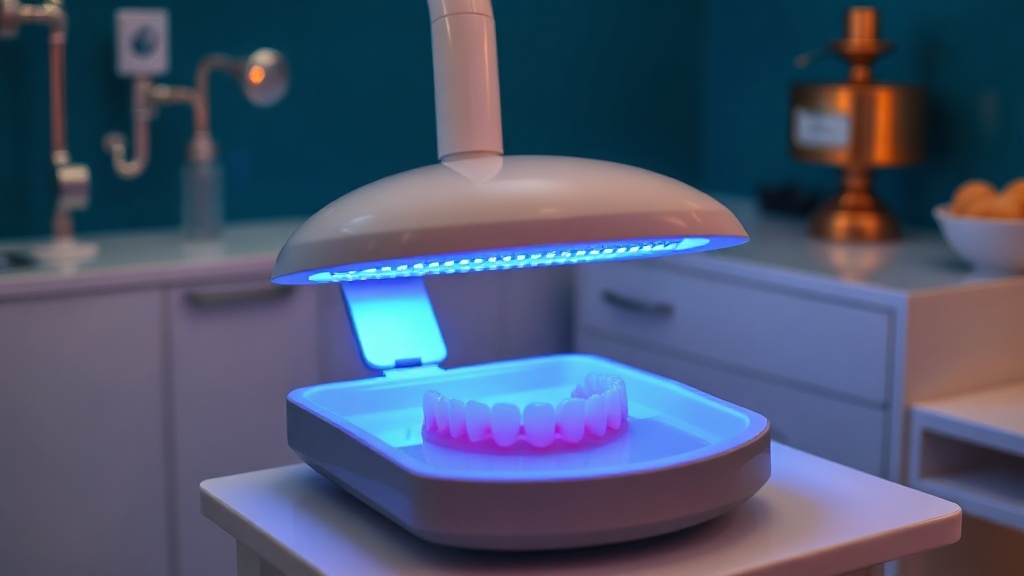
- Zoom is an in-office peroxide treatment paired with a blue-violet LED lamp. The whitening comes from the high-concentration gel, not from the light.
- Across 28 trials, adding a light to peroxide whitening produced no extra colour change, so the lamp is largely an experience and marketing feature rather than a whitening driver.
- The high-concentration gel Zoom uses is also the reason it tends to cause sensitivity; in one controlled study almost every in-office patient felt some discomfort.
- Reviews show take-home trays reach the same final shade over a week or two, so Zoom mainly buys you speed. It is most worth it when a hard deadline makes one-visit results valuable.
Zoom teeth whitening usually costs about 400 to 1,000 dollars in 2026, often around 500 dollars for an in-office session. That price buys speed and supervision, not a whiter result, because the blue Zoom lamp adds no measurable whitening over the peroxide gel and take-home trays reach the same final shade for less.
What Zoom is, and where the 500 dollars goes
Philips Zoom is a brand of in-office, or chairside, whitening. In a typical session a dentist or hygienist protects your gums, applies a high-concentration hydrogen-peroxide gel to the front teeth, and shines a blue-violet LED lamp, the WhiteSpeed light, over them for several short cycles across about an hour. The whitening itself is ordinary peroxide chemistry: oxygen from the gel diffuses into the enamel and breaks down the coloured molecules inside the tooth, and how much it lightens depends on the concentration of the gel and how long it stays in contact. So when you pay roughly 500 dollars for Zoom, most of that is service and speed, the professional time, the gum protection, the custom application, and walking out visibly lighter the same day, plus a premium for the branded light. There is also a take-home version of Zoom, sold under names like DayWhite and NiteWhite, which uses lower-concentration gel in trays over one to two weeks and costs far less. Knowing that the colour change comes from the gel and the contact time, and not from the lamp or the brand name, is the key to judging whether the in-chair price is worth it for you.
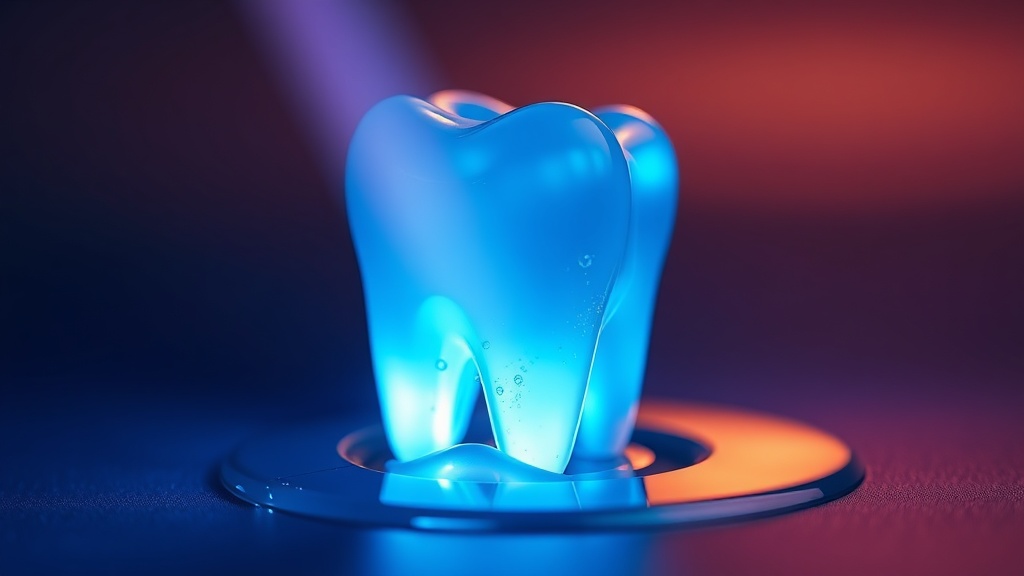
The blue Zoom lamp is the headline feature, but the whitening comes from the peroxide gel, not the light.
What the research actually shows
Every claim below maps to a named, peer-reviewed source in the Sources section. According to PubMed.
| Claim | Evidence | Source |
|---|---|---|
| The blue-violet lamp is the headline feature, but across 28 trials light activation added no extra whitening over the peroxide gel alone. | Network meta-analysis of 28 randomized trials. | Maran et al., 2019 |
| The light does not reduce discomfort either; a companion review of light activation found no sensitivity benefit. | Systematic review and network meta-analysis. | Moran et al., 2021 |
| In-office high-concentration peroxide is the sensitivity-heavy route; 96% of patients reported some discomfort in one controlled trial. | Double-blind randomized controlled trial. | Vochikovski et al., 2022 |
| In head-to-head reviews, at-home trays reach the same final shade as in-office sessions; the difference is speed. | Updated systematic review and meta-analysis. | de Geus et al., 2025 |
| The result lasts: teeth stayed lighter for years, with only about 2.1 shade units of rebound at 4.5 years. | 4.5-year follow-up of a randomized controlled trial. | Hortkoff et al., 2025 |
Zoom versus the alternatives (2026)
| Option | Typical 2026 price | What you get for it |
|---|---|---|
| Zoom in-office (with lamp) | 400 to 1,000 dollars (often near 500) | One-visit speed and supervision; the lamp adds no proven whitening |
| In-office without a light | 300 to 800 dollars | Same peroxide chemistry; light-free bleaching matches lamp-assisted |
| Custom take-home trays (dentist) | 250 to 500 dollars | Same final shade over about two weeks; gentler and custom-fitted |
| Zoom take-home (DayWhite / NiteWhite) | 100 to 400 dollars | Lower-concentration gel; effective with enough contact time |
| OTC 6% HP strips | 20 to 60 dollars | Top-ranked over-the-counter; results close to supervised bleaching |
Does the Zoom light actually do anything?
This is the question the price hinges on, and the evidence is unusually clear. Two large network meta-analyses, pooling dozens of randomized trials, found that adding any light or laser to a peroxide gel produced no extra whitening compared with the gel alone, and a companion review found the light made no difference to sensitivity either. Whatever small edge a lamp seems to give in a single study tends to disappear within a month. In other words, the WhiteSpeed lamp that gives Zoom its futuristic look is not what lightens your teeth; the high-concentration gel is. That matters for your wallet, because a session sold on its light is charging a premium for a feature the research does not back. It also reframes the sensitivity trade-off. Zoom can sting, but the culprit is the strong in-office peroxide, not the lamp; one controlled trial found almost every patient felt some discomfort with high-concentration in-office gel, and stronger gels are known to produce more of that electric-shock sensation. Gentler routes exist that reach the same colour: lower-concentration gels worn longer deliver about a third less sensitivity for an equivalent result. So the honest picture is that Zoom is a fast, professional way to apply peroxide, and the blue glow is mostly experience. If you love the ritual and want it done in an hour, that can be worth paying for, but not because the light whitens better.
Evidence you can act on.
Occasional emails — new research, new protocols, no noise.
Is Zoom worth it for you? How to decide
Zoom is neither a rip-off nor a miracle; it is a fast, supervised way to apply peroxide, with a premium for the brand and the lamp. Here is how to judge the price against your own situation. This is cosmetic colour, not a medical treatment.
- 1
Name your real driver
5 minutesA hard deadline, a wedding, a shoot, a reunion, is the one place one-visit speed clearly justifies the price. If you have a few weeks, cheaper options reach the same shade.
- 2
Ask what you are paying for the light
n/aThe Zoom lamp adds no measurable whitening in the research. A light-free in-office session or custom trays reach the same colour, so do not let the lamp alone justify the premium.
- 3
Weigh the sensitivity
n/aHigh-concentration in-office peroxide is the sting-heavy route, with most patients feeling some discomfort. Ask your dentist about lower-concentration protocols that keep the colour and cut the sensitivity.
- 4
Compare take-home first
about 2 weeksCustom take-home trays, and even Zoom take-home kits, match in-office results over a week or two at a lower price and with a gentler experience. For most people this is the better value.
- 5
Plan maintenance, not repeats
ongoingResults last around two years with only mild relapse, so a periodic take-home top-up protects the result far more cheaply than re-paying for a fresh chairside session.
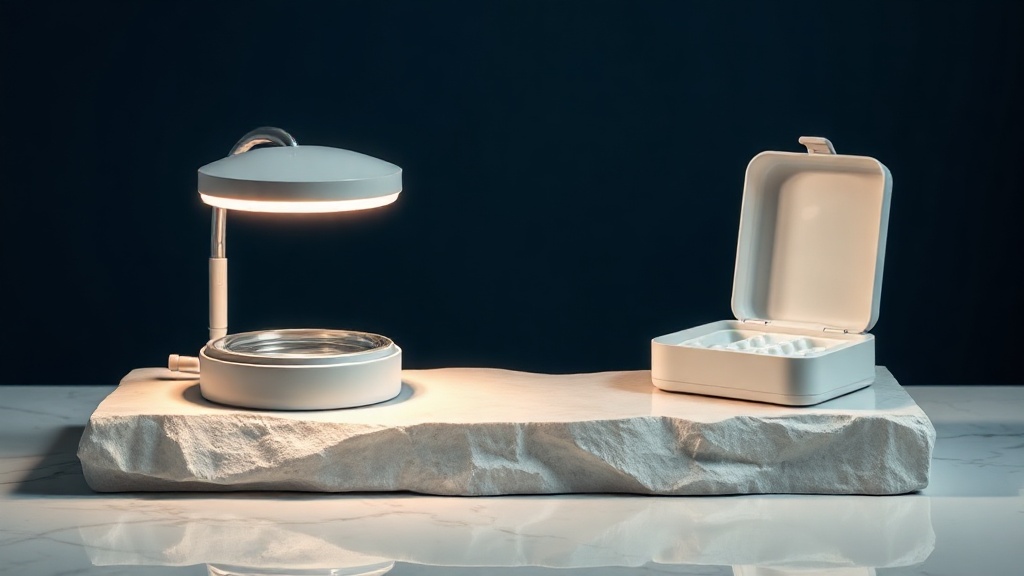
An in-office lamp and a simple take-home tray reach a similar final shade; the chairside price mostly buys speed.
A dentist should confirm that the colour you want to change is surface or age-related and that you do not have crowns, veneers, or exposed roots on your front teeth that will not respond to whitening and could end up mismatched. In-office peroxide is strong, so professional supervision matters for protecting your gums and managing sensitivity. If one tooth is noticeably darker than the rest, that needs individual assessment rather than a whole-mouth session.
Frequently asked questions
Sources
- 1.
- 2.
- 3.
- 4.
- 5.
- 6.
- 7.
- 8.
- 9.
- 10.
Fix your breath at the source.
The complete science-backed protocol — engineered to eliminate volatile sulfur compounds at the biological source.
Start the Breath Protocol →Related reading
Educational purposes only. The content on this page is not medical advice and is not a substitute for consultation with a qualified dental or medical professional.
More from the library
 Guides10 min
Professional Teeth Whitening Cost: In-Office vs Take-Home Prices (2026)
In-office, take-home, and over-the-counter whitening prices for 2026, and an honest look at what the research says each tier actually buys you.
Read →→ Answers9 min
Does Teeth Whitening Hurt? Why It Happens and How to Prevent It
The sting is common but manageable — and the real levers are lower concentration and shorter wear time, not gimmicks.
Read →→ Answers8 min
Does Teeth Whitening Damage Enamel? The Evidence-Based Answer
The honest, evidence-based answer to whether whitening harms enamel — what peroxide really does to the surface, why sensitivity is not damage, and the DIY methods that actually cause wear.
Read →→ Comparisons8 min
Carbamide Peroxide vs Hydrogen Peroxide for Teeth Whitening: Which Works Better?
An evidence-based comparison of the two whitening peroxides, what actually separates them, and how to choose by format and comfort rather than by the biggest number.
Read →→ Answers8 min
Does Baking Soda Whiten Teeth? What the Evidence Says
An honest look at what baking soda can and cannot do for a whiter smile.
Read →→ Best Of9 min
Best Fluoride-Free Whitening Toothpaste: An Honest, Evidence-Based Guide (2026)
Which fluoride-free whitening ingredients hold up to the research — and which are marketing. An honest buyer's guide.
Read →→