Tooth Sensitivity: Causes, Triggers and Types
The causes-and-types companion to our sensitive-teeth guide: what exposes dentine, why the nerve fires, and when a twinge is really something else.
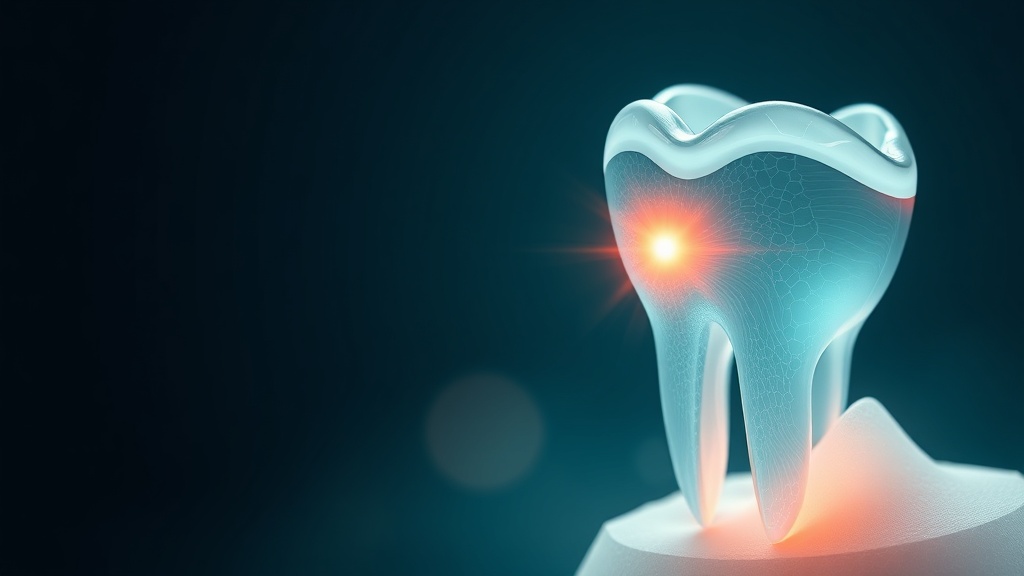
- True tooth sensitivity — dentine hypersensitivity — is a short, sharp pain from an outside trigger (cold, heat, sweet, sour, touch, or air) on dentine that has lost its protective cover and cannot be explained by any other dental problem.
- It follows the hydrodynamic theory: exposed dentine carries open, fluid-filled tubules, and any trigger that moves that fluid is read by the nerve as a quick jolt.
- Dentine gets exposed two main ways — the crown loses enamel (largely through acid erosion, sometimes worsened by abrasion) or the gum recedes and uncovers the softer root surface.
- Dietary acid is the dominant driver of erosion; gum recession, over-vigorous brushing, grinding, whitening, and a dry mouth all widen the door.
- Sensitivity is a diagnosis of exclusion — a dentist first rules out cavities, cracks, leaking fillings, and exposed pulp, because those cause similar pain but need real treatment.
Tooth sensitivity happens when dentine loses its enamel or gum cover and its microscopic tubules open to the surface. Triggers such as cold, sweet, or air move the fluid inside those tubules, and the nerve reads the movement as a brief, sharp pain. The usual culprits are acid erosion and gum recession — but a dentist should rule out cavities and cracks first.
The hydrodynamic mechanism, explained
For more than fifty years the leading explanation for tooth sensitivity has been the hydrodynamic theory, and the evidence still fits it well. Inside each tooth, beneath the enamel, is dentine — a tissue perforated by countless microscopic dentinal tubules that run from the outer surface inward to the pulp, each one filled with fluid. On a comfortable tooth those tubules are capped by enamel or sealed by a natural smear layer, so the fluid sits still. On a sensitive tooth, the tubules are exposed and open at both ends: wide at the surface, patent to the pulp. When a trigger arrives — a sip of iced water, a mouthful of citrus, a blast of cold air, a sweep of the toothbrush — it makes the fluid inside those open tubules surge. Cold and drying pull the fluid outward; heat pushes it inward. The nerve endings sitting at the inner end of the tubule sense that rapid flow and fire, and your brain reads it as a fast, sharp pain that vanishes the moment the trigger is gone. The tooth is not being damaged; a normal messaging system is simply being switched on because the insulation is missing.
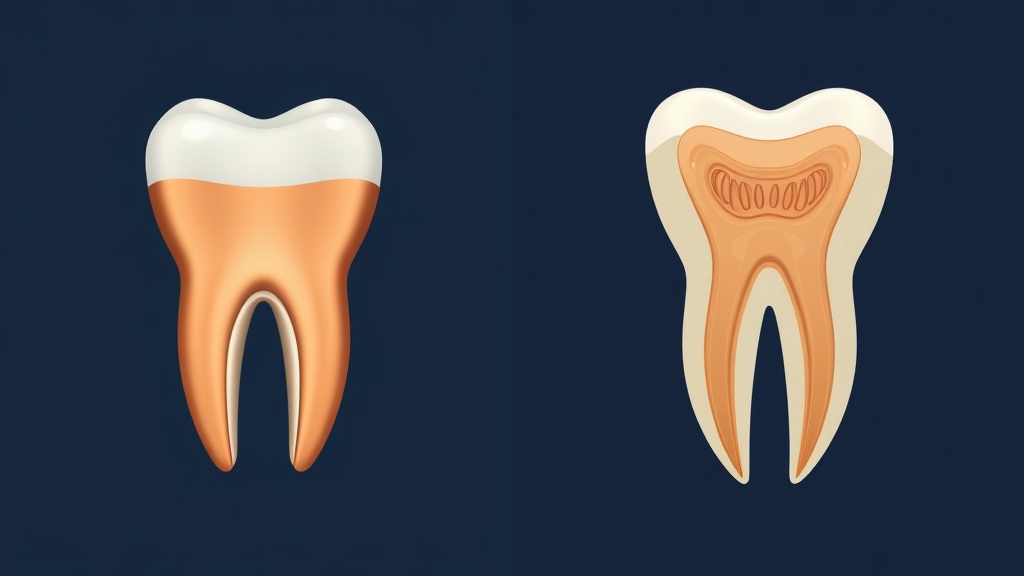
Dentine is uncovered either from the top — enamel worn away by acid — or from the side, as the gum recedes and exposes the root.
What the research actually shows
Every claim below maps to a named, peer-reviewed source in the Sources section. According to PubMed.
| Claim | Evidence | Source |
|---|---|---|
| Sensitive dentine shows large numbers of open tubules at the surface that are patent through to the pulp — the hallmark of hydrodynamic pain. | Review of the clinical features of dentine hypersensitivity. | Addy, 1992 |
| Acid erosion, especially from dietary acids, is the dominant way tubules are exposed and opened; brushing alone causes little enamel wear but is additive to erosion. | Review of aetiological and environmental factors. | Addy & Pearce, 1994 |
| Brushing with most toothpastes removes the natural smear layer and can open tubules, and is implicated in gum recession — a reason to brush gently. | Review of toothpaste in the aetiology and treatment of dentine hypersensitivity. | Addy & West, 2013 |
| Enamel begins to dissolve below a critical pH of about 5.5, and that threshold is not fixed — it varies with the calcium and phosphate around the tooth. | Review of erosion and the chemistry of enamel dissolution. | Lussi et al., 2011 |
| Dry-mouth symptoms affect roughly 23% of people and raise the risk of both sensitivity and decay by removing saliva's protective mineral bath. | Clinical review in JAMA. | Stoopler et al., 2024 |
The common triggers and what sits behind them
| Trigger or cause | Why it exposes or provokes dentine | Can you change it? |
|---|---|---|
| Dietary acid (soda, citrus, wine, vinegar) | Softens and dissolves enamel, opening tubules | Yes — reduce and rinse |
| Gum recession | Uncovers the softer root, which has no enamel | Partly — gentler brushing, see a dentist |
| Hard or over-vigorous brushing | Wears the neck of the tooth and drives recession | Yes — soft brush, light pressure |
| Teeth grinding (bruxism) | Flexes and wears enamel at the gum line | Partly — a night guard can help |
| Whitening treatments | Temporarily increases tubule fluid movement | Yes — usually settles after stopping |
| Dry mouth | Removes saliva's soothing, remineralising bath | Partly — hydrate, review medications |
Why sensitivity is a diagnosis of exclusion
Here is the part that matters most for safety: a short sharp twinge is not proof of simple sensitivity. Dentine hypersensitivity is formally defined as pain from exposed dentine that cannot be attributed to any other cause — which means a clinician is supposed to rule out the imposters first. A cavity can feel identical at the edges but is active decay that will spread. A hairline crack can produce a sharp jolt on biting or cold that comes and goes unpredictably. A leaking or worn filling lets triggers seep underneath. And pain that lingers, throbs, or arrives on its own can mean the pulp itself is inflamed, which is a different problem altogether. The tell-tale signature of ordinary sensitivity is that it is provoked, brief, and gone within seconds; the tell-tale signature of something more is pain that outlasts its trigger, fixes on a single tooth, or shows up unbidden. This is why the honest advice is never to simply self-diagnose a whole mouth of twinges as harmless. Manage the sensitivity, yes — but let a dentist confirm that is all it is, because the treatments for a cavity or a crack are nothing like a change of toothpaste.
Evidence you can act on.
Occasional emails — new research, new protocols, no noise.
How to lower your sensitivity risk
You cannot regrow enamel or reverse recession at home, but you can stop feeding the causes. These habits reduce further exposure while a dentist checks what is going on.
- 1
Tame the acid load
dailyAcids are the number-one driver of enamel erosion. Cut back on soda, sports and energy drinks, citrus, and vinegary foods; drink acidic drinks quickly rather than sipping, use a straw, and rinse with plain water afterward to help saliva neutralise the acid.
- 2
Wait before you brush
after mealsRight after acid, enamel is temporarily softened. Brushing then scrubs away that softened layer. Wait about an hour, or rinse and chew sugar-free gum to get saliva flowing, before you brush.
- 3
Brush gently to protect the gum line
every brushRecession and worn notches at the neck of the tooth are self-inflicted by hard scrubbing more often than people realise. Use a soft brush, hold it like a pen, and let the bristles do the work — no sawing.
- 4
Address grinding
ongoingIf you clench or grind, the flexing wears enamel exactly where sensitivity starts. Ask your dentist about a night guard and stress habits; protecting the tooth surface protects the tubules underneath it.
- 5
Support your saliva
all daySaliva constantly bathes exposed dentine in calcium and phosphate. Stay hydrated, breathe through your nose, and if a medication is drying your mouth, raise it with your dentist or doctor rather than living with the risk.

Everyday acids — citrus, fizzy drinks, wine — are the leading cause of the enamel erosion that opens dentine to the outside world.
Because sensitivity can mask a cavity, a crack, a failing filling, or an inflamed pulp, see a dentist if the pain lingers after the trigger stops, throbs or wakes you, is spontaneous, is pinned to one tooth, comes with swelling or a bad taste, or fails to improve after a couple of weeks of gentle desensitising care. Fast-progressing gum recession also deserves a professional look. An exam can distinguish harmless sensitivity from something that needs treatment — self-diagnosis cannot.
Frequently asked questions
Sources
- 1.
- 2.
- 3.
- 4.
- 5.

Fix your breath at the source.
The complete science-backed protocol — engineered to eliminate volatile sulfur compounds at the biological source.
Start the Breath Protocol →Related reading
Educational purposes only. The content on this page is not medical advice and is not a substitute for consultation with a qualified dental or medical professional.
More from the library
 Guides9 min
Sensitive Teeth: What They Are and How to Get Relief
A plain-language guide to what sensitive teeth feel like, why the twinge happens, and the gentle steps that help most people find relief.
Read →→ Ingredients9 min
Desensitizing Toothpaste: How It Works and What to Look For
A clear guide to the two mechanisms behind desensitizing toothpaste, which ingredient does what, and how to pick and use one.
Read →→ Guides8 min
White Spots on Teeth: Causes and What to Do
The two common reasons enamel turns chalky white, and the honest guide to which spots you can rebuild at home and which need professional care.
Read →→ Ingredients10 min
MI Paste for Teeth: What CPP-ACP Crème Really Does
A clear, honest guide to MI Paste (CPP-ACP): how the milk-derived crème works, where the evidence supports it, its limits, and how to use it.
Read →→ Answers8 min
How to Get Rid of White Spots on Teeth: Your Options, Ranked
An honest, evidence-based ladder of options, from what you can do at home to what only a dentist can fix.
Read →→ Ingredients8 min
Hydroxyapatite Toothpaste Benefits: What the Evidence Actually Supports
A calm, science-first look at what hydroxyapatite toothpaste can genuinely do for your enamel, and where the evidence stops.
Read →→