MI Paste for Teeth: What CPP-ACP Crème Really Does
A clear, honest guide to MI Paste (CPP-ACP): how the milk-derived crème works, where the evidence supports it, its limits, and how to use it.
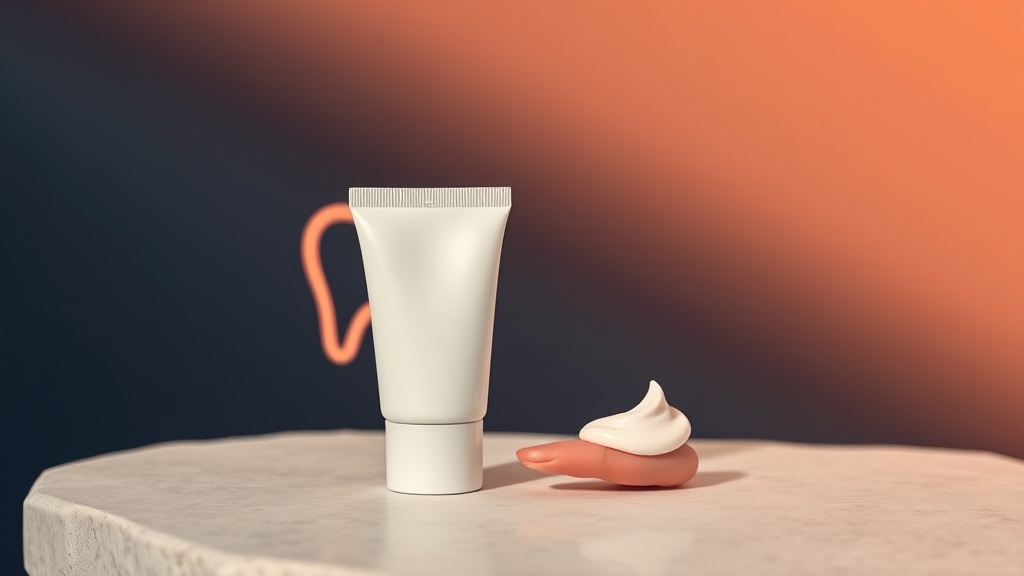
- MI Paste is a leave-on topical crème built around CPP-ACP (also called Recaldent), a milk-derived complex that carries bioavailable calcium and phosphate to the tooth surface.
- Its most defensible, evidence-backed roles are easing tooth sensitivity and helping against acid erosion — not arresting cavities.
- For remineralising early lesions, CPP-ACP performs about as well as fluoride but not better, and a leading dental guideline recommends against relying on it as a stand-alone caries-arrest agent.
- Because it is casein-based, MI Paste is not suitable for anyone with a milk-protein allergy; a fluoride-containing version (MI Paste Plus) also exists.
- Think of it as a supportive comfort-and-protection crème that tops up the minerals saliva already supplies — helpful, but not a substitute for fluoride, good habits, or a dentist.
MI Paste is a leave-on crème containing CPP-ACP, a milk-protein complex that delivers calcium and phosphate to the tooth. It genuinely helps with sensitivity and acid erosion and supports remineralisation of early surface softening, but the evidence puts it on par with fluoride, not above it — and it cannot repair a real cavity. It is unsuitable for milk allergies.
What CPP-ACP actually is
MI Paste is the best-known brand of a topical agent called CPP-ACP — casein phosphopeptide-amorphous calcium phosphate, marketed under the ingredient name Recaldent. The idea behind it is clever. Enamel is built from calcium and phosphate, and saliva normally keeps the tooth bathed in a supersaturated supply of both so that minor surface softening can be repaired. The problem is that free calcium and phosphate do not stay dissolved and available for long. CPP-ACP solves this by borrowing a trick from milk: casein peptides wrap around clusters of amorphous calcium phosphate and hold them in a stable, bioavailable form. Smeared onto the teeth as a crème, it coats the surface and slowly releases calcium and phosphate right where they are needed, both feeding the remineralisation of softened enamel and helping to plug the exposed dentine tubules that cause sensitivity. Because it is a leave-on product rather than a rinse-off toothpaste, it stays in contact for far longer, which is the whole point. It does not add anything the body cannot make on its own — it simply concentrates and delivers the same minerals saliva already uses, in a form that lingers on the tooth.
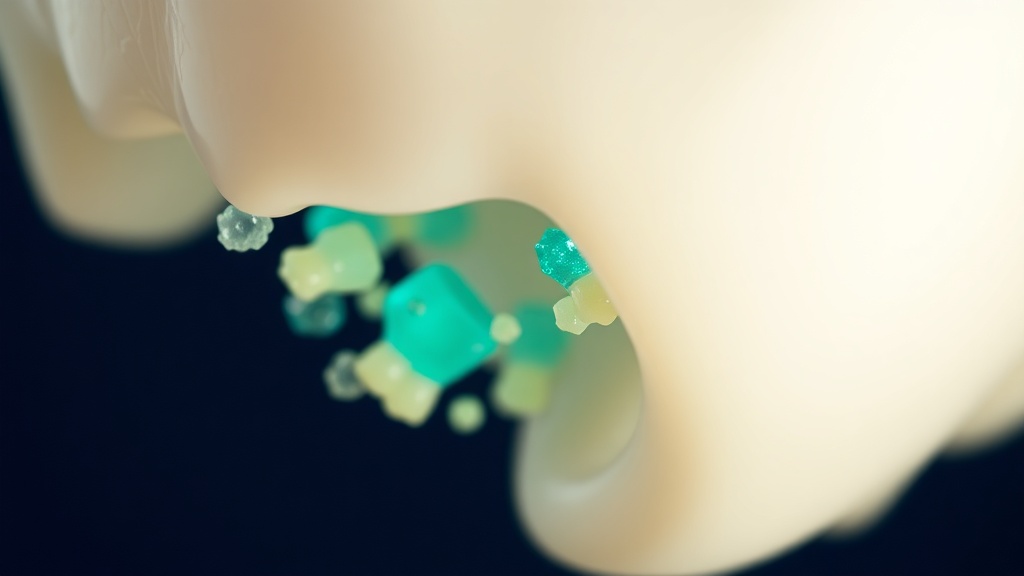
CPP-ACP uses milk-derived casein to hold calcium and phosphate in a stable form and release them onto the tooth over time.
What the research actually shows
Every claim below maps to a named, peer-reviewed source in the Sources section. According to PubMed.
| Claim | Evidence | Source |
|---|---|---|
| A leading dental guideline places CPP-ACP's defensible role in hypersensitivity and erosion, and recommends against relying on it to arrest cavities. | American Dental Association clinical-practice guideline. | Slayton et al. (ADA), 2018 |
| CPP-ACP remineralises early lesions better than placebo, but its effect is not significantly different from that of fluoride — so it is a peer, not a superior. | Systematic review of long-term remineralisation. | Li et al., 2014 |
| Enamel softens and dissolves below a critical pH of about 5.5, the erosion problem CPP-ACP is positioned to help buffer against. | Review of dental erosion and enamel chemistry. | Lussi et al., 2011 |
| Dry mouth affects roughly 23% of people and reduces saliva's mineral supply — a setting where a leave-on mineral crème is often suggested. | Clinical review in JAMA. | Stoopler et al., 2024 |
| Sensitivity comes from open dentine tubules connected to the pulp, so delivering calcium and phosphate to seal them addresses the cause of the twinge. | Review of the mechanism of dentine hypersensitivity. | Addy, 1992 |
Where MI Paste fits
| Use | How well it fits | Honest note |
|---|---|---|
| Easing tooth sensitivity | Strong fit | A defensible, guideline-recognised role |
| Protecting against acid erosion | Strong fit | Helps buffer and re-supply minerals |
| Supporting early white-spot remineralisation | Moderate fit | About as good as fluoride, not better |
| Dry mouth / low saliva | Reasonable fit | Tops up minerals saliva is not supplying |
| Arresting an actual cavity | Poor fit | Guidelines advise against relying on it here |
| Milk-protein allergy | Not suitable | Casein-based — avoid entirely |
The honest scope — and its limits
MI Paste sits in an awkward but honest middle ground, and it is worth being precise about it. On the positive side, its two best-supported uses are exactly the ones this system cares about: calming sensitivity by delivering minerals that help seal exposed tubules, and helping teeth stand up to acid erosion. Those are real, defensible roles. Where the marketing tends to overreach is remineralisation of decay. High-quality reviews find that CPP-ACP does remineralise early, non-cavitated surface softening better than nothing — but no better than fluoride, and a major clinical guideline explicitly recommends against leaning on it as a cavity-arresting treatment. That matters because the tempting story is that a mineral crème can heal cavities at home, and it cannot: once a tooth has a genuine hole, no leave-on paste closes it, and treating it as a substitute for a filling risks letting decay advance. There is also a formulation footnote worth knowing — the standard product is fluoride-free, while a version called MI Paste Plus adds fluoride for people who want both. And because the whole system is built on milk-derived casein, anyone with a milk-protein allergy should avoid it. Used within its real scope, it is a genuinely useful supportive crème; stretched beyond it, it becomes a false promise.
Evidence you can act on.
Occasional emails — new research, new protocols, no noise.
How to use MI Paste
MI Paste is a supportive comfort-and-protection crème for exposed or eroded surfaces and sensitivity. It complements fluoride and good habits rather than replacing them. Skip it entirely if you have a milk-protein allergy.
- 1
Brush first, then apply
after your evening brushClean your teeth as usual, then apply a pea-sized amount of the crème to the tooth surfaces with a clean finger, a cotton swab, or a soft brush, focusing on the sensitive or eroded areas.
- 2
Leave it on — do not rinse
3 minutes or overnightThe value of a leave-on crème is contact time. Let it sit for at least a few minutes, spit out the excess, and avoid rinsing, eating, or drinking for about half an hour. Applying it last thing at night gives the longest contact.
- 3
Use it once or twice a day
dailyOnce daily at night is a common routine; twice daily may be suggested for active sensitivity or erosion. Consistency matters more than quantity — a thin layer used regularly beats an occasional thick one.
- 4
Keep your fluoride in the routine
ongoingUnless you are using the fluoride-containing version, MI Paste does not replace fluoride toothpaste. Keep brushing with your usual paste and treat the crème as an add-on, or ask your dentist whether MI Paste Plus suits you better.
- 5
Check for a milk allergy first
before startingCPP-ACP is derived from casein, a milk protein. If you have a milk-protein allergy, do not use MI Paste at all, and ask your dentist about non-dairy alternatives such as hydroxyapatite.
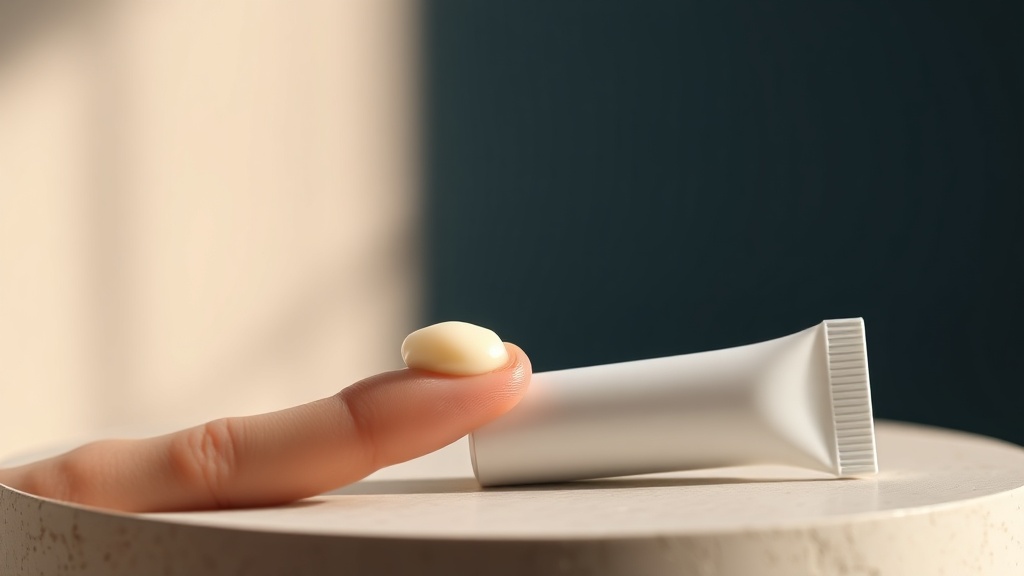
Applied after brushing and left on overnight, MI Paste maximises contact time on sensitive and eroded surfaces.
MI Paste supports comfort and surface protection — it does not treat decay. See a dentist if you have a visible hole or dark spot, pain that lingers, throbs, or is spontaneous, sensitivity fixed to one tooth, or white spots that are spreading, and do not try to remineralise an open or cavitated tooth at home. A dentist can stage early lesions, confirm whether a mineral crème is appropriate, and provide professional-strength fluoride or restorative care when that is what is actually needed.
Frequently asked questions
Sources
- 1.
- 2.
- 3.
- 4.
- 5.

Fix your breath at the source.
The complete science-backed protocol — engineered to eliminate volatile sulfur compounds at the biological source.
Start the Breath Protocol →Related reading
Educational purposes only. The content on this page is not medical advice and is not a substitute for consultation with a qualified dental or medical professional.
More from the library
 Ingredients9 min
Desensitizing Toothpaste: How It Works and What to Look For
A clear guide to the two mechanisms behind desensitizing toothpaste, which ingredient does what, and how to pick and use one.
Read →→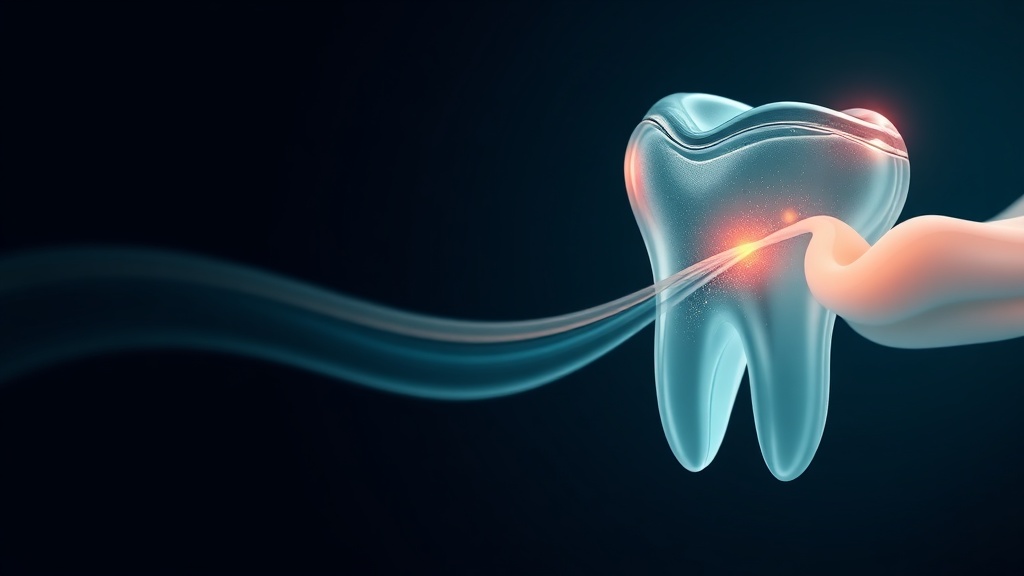 Ingredients9 min
Potassium Nitrate Toothpaste: How It Calms Sensitive Teeth
A focused guide to potassium nitrate toothpaste: how the nerve-calming mechanism works, the honest evidence, the two-week timeline, and how to use it.
Read →→ Answers8 min
How to Remineralize Teeth: An Honest, Practical Guide
The practical routine that supports enamel remineralization, and the clear line between the early lesions it can rebuild and the decay it cannot.
Read →→ Ingredients8 min
Remineralizing Toothpaste: How It Works and What Actually Rebuilds Enamel
A plain-English guide to how remineralizing toothpaste works — and an honest comparison of fluoride, n-HA and CPP-ACP.
Read →→ Answers8 min
How to Get Rid of White Spots on Teeth: Your Options, Ranked
An honest, evidence-based ladder of options, from what you can do at home to what only a dentist can fix.
Read →→ Ingredients8 min
Hydroxyapatite Toothpaste Benefits: What the Evidence Actually Supports
A calm, science-first look at what hydroxyapatite toothpaste can genuinely do for your enamel, and where the evidence stops.
Read →→