Sensitive Teeth: What They Are and How to Get Relief
A plain-language guide to what sensitive teeth feel like, why the twinge happens, and the gentle steps that help most people find relief.

- Sensitive teeth produce a sharp, short jolt in response to cold, heat, sweet, sour, or even a rush of air — a signal that the softer inner layer of the tooth, dentine, has become exposed.
- The twinge is explained by the hydrodynamic theory: fluid inside microscopic tubules in the dentine shifts when a trigger hits, and that movement is read by the nerve as a quick flash of pain.
- Two things must happen for sensitivity to start — the dentine has to be uncovered (often by gum recession or acid erosion), and the tiny tubules have to be open to the surface.
- Most everyday sensitivity can be calmed at home with a desensitising toothpaste, a soft brush, and easing up on acidic foods — relief usually builds over about two weeks rather than overnight.
- Sensitivity is managed, not cured, and it can also be an early warning of a cavity, a crack, or a worn filling — so pain that is sharp, lingering, or one-sided always deserves a dentist's eyes.
Sensitive teeth happen when the enamel or gum line thins and exposes dentine, the layer beneath. Dentine is threaded with tiny fluid-filled tubules that lead toward the nerve, so cold, sweet, or air makes the fluid move and the nerve fires a brief, sharp twinge. Gentle products and habits usually calm it within a couple of weeks.
What sensitive teeth actually are
A healthy tooth wears two coats. The crown is capped by enamel, the hardest tissue in the body, and below the gum the root is covered by a thin layer of cementum. Underneath both sits dentine — a living, porous tissue laced with millions of microscopic channels called dentinal tubules that run inward toward the pulp, where the nerve lives. Sensitivity begins when that protective coat is breached and the dentine is left open to the mouth. Under the long-standing hydrodynamic theory, the tubules that surface on a sensitive tooth are wider and more openly connected to the pulp than those on a comfortable tooth. When something cold, hot, sweet, or drying reaches the exposed surface, it makes the fluid inside the tubules rush inward or outward. The nerve cannot tell exactly what caused the shift; it only registers the sudden movement and translates it into that unmistakable short, sharp jolt. This is why the pain is instant and fleeting rather than a dull ache, and why almost any trigger can set it off once the door to the dentine is open.
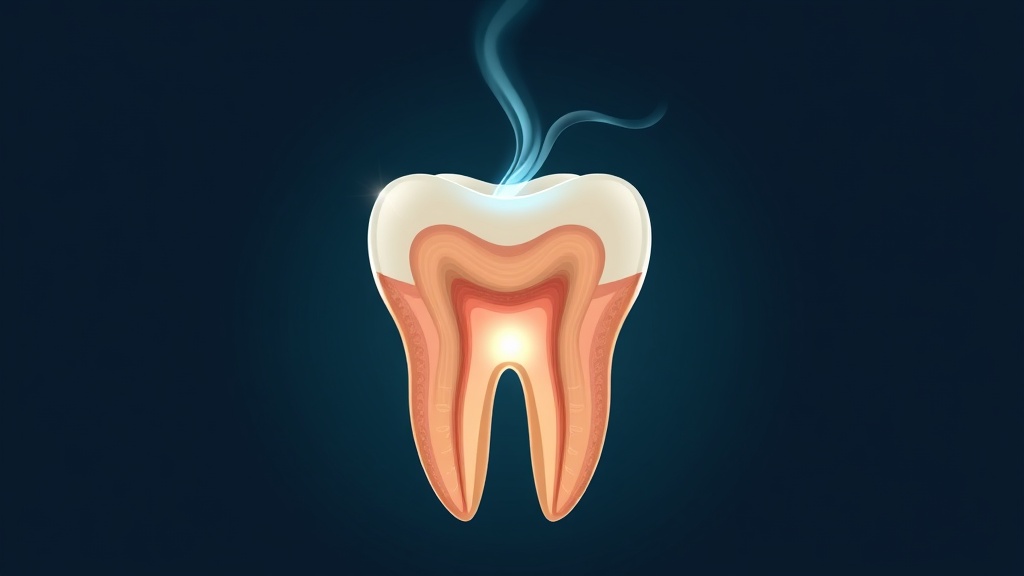
When dentine is exposed, a cold or sweet trigger moves fluid inside the open tubules, and the nerve reads that movement as a quick flash of pain.
What the research actually shows
Every claim below maps to a named, peer-reviewed source in the Sources section. According to PubMed.
| Claim | Evidence | Source |
|---|---|---|
| Sensitive dentine has tubules that are open at the surface and connected to the pulp — the physical basis of the sharp, quick twinge. | Review of the clinical features and hydrodynamic mechanism of dentine hypersensitivity. | Addy, 1992 |
| Dentine is most often exposed by acid erosion and by gum recession, not simply by hard brushing alone — which is why easing acids matters. | Review of aetiological and environmental factors that expose dentine. | Addy & Pearce, 1994 |
| A potassium-nitrate desensitising toothpaste reduced iced-water sensitivity by roughly 81% after 7 days and 88.6% after 14 days of twice-daily use. | Randomised, examiner-blind clinical trial in adults with sensitive teeth. | Seong et al., 2021 |
| A stannous-fluoride toothpaste physically sealed open tubules (82% occluded vs 35% for control) and cut tactile sensitivity by about 42% at 8 weeks. | Combined laboratory and clinical evaluation. | Hines et al., 2019 |
| Casein-based CPP-ACP paste has a defensible role for hypersensitivity and erosion, distinct from any claim about arresting cavities. | American Dental Association clinical-practice guideline. | Slayton et al. (ADA), 2018 |
What sensitivity feels like — and what it might mean
| What you notice | Typical of ordinary sensitivity | Worth a dentist visit |
|---|---|---|
| A quick zing from cold or sweet that fades in seconds | Yes — classic exposed-dentine sensitivity | If it keeps worsening |
| Pain that lingers for many seconds or minutes after the trigger | Less typical | Yes — could signal deeper trouble |
| Sensitivity on one specific tooth, not a whole area | Less typical | Yes — rule out a crack or cavity |
| Twinge along the gum line of several teeth | Yes — often recession or erosion | If gums are receding fast |
| Throbbing, spontaneous ache with no trigger | No | Yes — see a dentist promptly |
Why relief takes a couple of weeks
Desensitising products work in two very different ways, and understanding which one you are using explains the timeline. The first approach calms the nerve. Potassium-based ingredients such as potassium nitrate are thought to bathe the nerve endings inside the tubules and make them less quick to fire; because that effect has to build up with repeated daily use, this route typically needs about two weeks of consistent brushing before the twinge noticeably settles. The second approach plugs the plumbing. Ingredients such as stannous fluoride, arginine with calcium carbonate, and hydroxyapatite deposit a mineral-like layer that physically narrows or seals the open tubule mouths, so fewer triggers can move the fluid at all; this can feel quicker but still improves with continued use as the seal is reinforced. Neither route regrows lost enamel or reverses gum recession, and neither is a cure — stop using them and the sensitivity often drifts back. That is the honest frame for sensitive teeth: you are quieting a signal and shielding a surface, day by day, not permanently rebuilding the tooth.
Evidence you can act on.
Occasional emails — new research, new protocols, no noise.
A calm quick-start plan for relief
None of this treats a disease. It is a gentle routine to reduce everyday sensitivity while you arrange a check-up. Give it about two weeks of consistency before judging results.
- 1
Switch to a desensitising toothpaste
twice daily, ~2 weeksChoose a paste built for sensitivity — potassium nitrate to calm the nerve, or stannous fluoride, arginine, or hydroxyapatite to seal the tubules. Use it morning and night and give it the full two weeks, because the nerve-calming effect in particular builds up over time.
- 2
Try the smear-and-leave trick
nightlyAfter brushing at night, rub a little of the desensitising paste directly onto the tender spots with a clean fingertip and do not rinse it away before bed. Leaving the active ingredients in contact overnight gives them more time to work on the exposed surface.
- 3
Brush soft and gentle
every brushUse a soft-bristled brush and light pressure, angled toward the gum line, not a hard scrub. Aggressive brushing wears the very areas that are already exposed and can make sensitivity worse rather than better.
- 4
Ease off the acids — and wait to brush
daily habitFizzy drinks, citrus, wine, and vinegar dressings soften enamel and open tubules. Cut back where you can, rinse with water afterward, and wait about an hour before brushing so you are not scrubbing acid-softened enamel.
- 5
Protect your saliva
all daySaliva is the mouth's own mineral bath and it naturally soothes exposed dentine. Sip water through the day, and if your mouth runs dry — often a side effect of medications — mention it to your dentist, because dry mouth makes sensitivity and decay more likely.
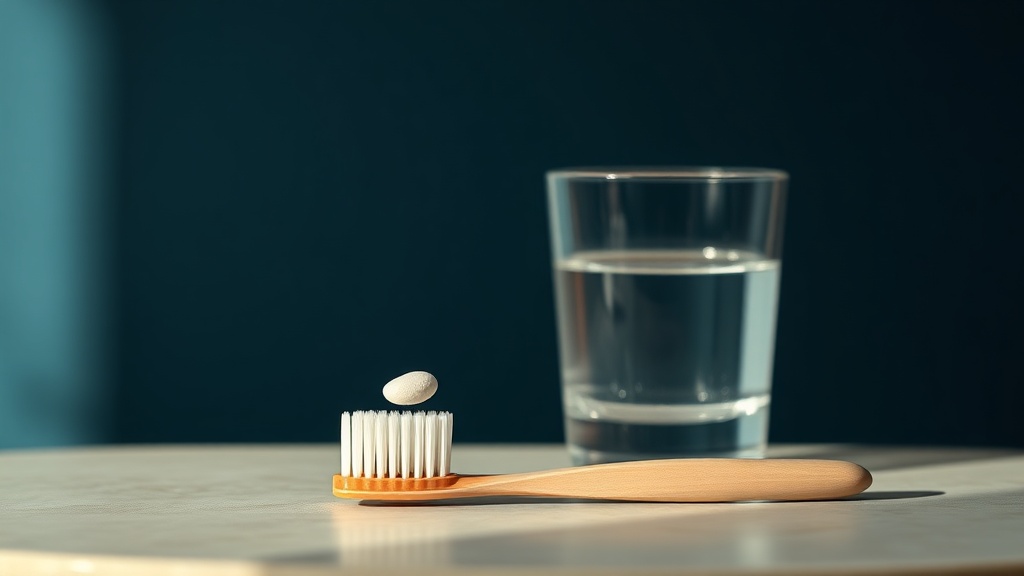
A soft brush, a desensitising paste left on the tender spots overnight, and gentler acid habits are the backbone of at-home relief.
Home care is for ordinary, short-lived sensitivity. See a dentist if the pain lingers well after the trigger is gone, if it is spontaneous or throbbing, if it is pinned to one tooth, if there is swelling, or if two weeks of a good desensitising routine brings no change. Sensitivity can be the first sign of a cavity, a cracked tooth, a failing filling, or gum disease, and only an in-person exam can tell everyday sensitivity apart from something that needs treatment.
Frequently asked questions
Sources
- 1.
- 2.
- 3.
- 4.
- 5.
- 6.

Fix your breath at the source.
The complete science-backed protocol — engineered to eliminate volatile sulfur compounds at the biological source.
Start the Breath Protocol →Related reading
Educational purposes only. The content on this page is not medical advice and is not a substitute for consultation with a qualified dental or medical professional.
More from the library
 Guides9 min
Tooth Sensitivity: Causes, Triggers and Types
The causes-and-types companion to our sensitive-teeth guide: what exposes dentine, why the nerve fires, and when a twinge is really something else.
Read →→ Ingredients9 min
Desensitizing Toothpaste: How It Works and What to Look For
A clear guide to the two mechanisms behind desensitizing toothpaste, which ingredient does what, and how to pick and use one.
Read →→ Guides9 min
Home Remedies for Sensitive Teeth: What Actually Helps
A no-hype home routine for sensitive teeth — what the evidence supports, what only soothes, and when to stop self-treating.
Read →→ Ingredients9 min
Potassium Nitrate Toothpaste: How It Calms Sensitive Teeth
A focused guide to potassium nitrate toothpaste: how the nerve-calming mechanism works, the honest evidence, the two-week timeline, and how to use it.
Read →→ Answers8 min
How to Get Rid of White Spots on Teeth: Your Options, Ranked
An honest, evidence-based ladder of options, from what you can do at home to what only a dentist can fix.
Read →→ Ingredients8 min
Hydroxyapatite Toothpaste Benefits: What the Evidence Actually Supports
A calm, science-first look at what hydroxyapatite toothpaste can genuinely do for your enamel, and where the evidence stops.
Read →→