Sensitive Teeth After Whitening
That post-whitening zing is common and almost always temporary. Here is what is happening, and how to calm it.
- Whitening sensitivity is common and usually transient: the peroxide passes through enamel into the dentin and briefly irritates the nerve, then settles, most often within a day or two.
- It is generally a reversible irritation rather than lasting damage - the sharp, fleeting zings during and just after whitening typically fade as the teeth rehydrate and the pulp calms.
- Desensitizing toothpastes have real, if protocol-specific, evidence for reducing post-whitening sensitivity, and using them before and after can blunt the twinge.
- Two ingredient strategies help: potassium calms the nerve signal, while stannous fluoride and arginine plug the tubules so stimuli reach the nerve less easily.
- Sensitivity that is severe, keeps getting worse, or lingers well beyond a few days is a reason to pause whitening and check in with a dentist rather than push through.
Teeth get sensitive after whitening because peroxide penetrates the enamel into the dentin and temporarily irritates the nerve, and whitening can briefly open the tubules. The result is short, sharp zings that usually fade within a day or two. Desensitizing toothpastes with potassium or stannous fluoride, used before and after, help calm and prevent it.
What whitening does inside the tooth
Whitening gels work with peroxide - hydrogen peroxide, or carbamide peroxide that breaks down into it. Peroxide is a small molecule, so it does not just sit on the surface; it diffuses through the enamel and into the dentin, where it breaks apart the pigment molecules that stain a tooth. That is how whitening works, and it is also why it can cause sensitivity. As peroxide moves through the dentin, it can reach the pulp and briefly irritate the nerve, producing the short, sharp zings people describe during and just after a session. Whitening can also temporarily dehydrate the teeth and leave the dentin tubules more open, so ordinary cold and air feel sharper for a while. Both effects tie back to the same hydrodynamic mechanism behind all dentin sensitivity: when the tubules are open and the nerve is already a little irritated, stimuli that move the tubule fluid register more strongly. The reassuring part is that this is generally a reversible irritation. As the teeth rehydrate over the hours and days after whitening and the pulp settles, the sensitivity typically fades. Whitening at sensible concentrations is not carving holes in your enamel; it is a temporary chemical and fluid shift that the tooth recovers from.
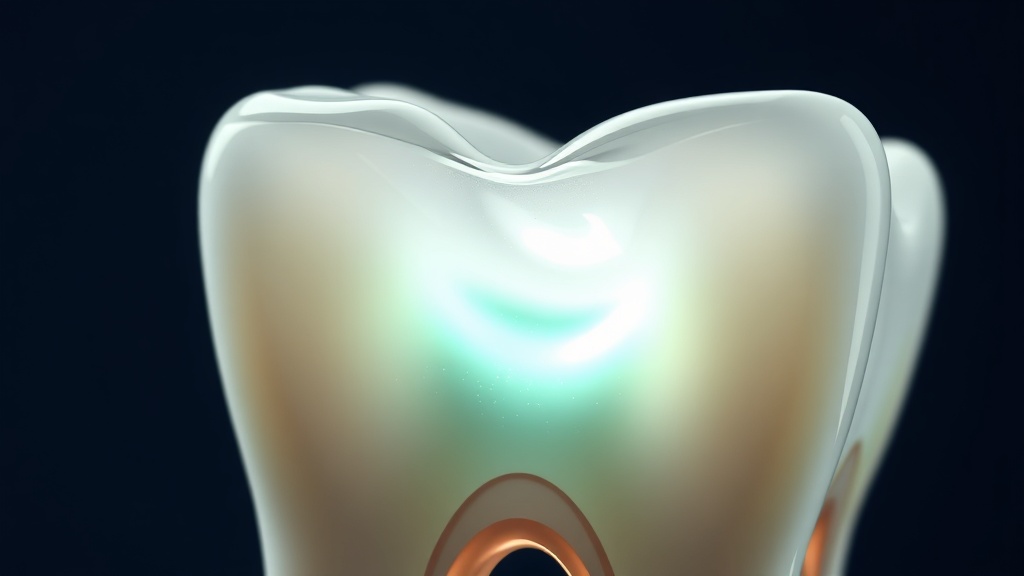
Peroxide diffuses through enamel into the dentin and can briefly irritate the nerve - a temporary effect that usually settles in days.
What the research actually shows
Every claim below maps to a named, peer-reviewed source in the Sources section. According to PubMed.
| Claim | Evidence | Source |
|---|---|---|
| A systematic review of randomized trials found desensitizing toothpastes reduced tooth sensitivity after several whitening protocols, though effectiveness varied by peroxide type and regimen. | Systematic review of five RCTs, 387 participants. | Cabral et al., 2024 |
| Sensitivity is explained by the hydrodynamic mechanism - stimuli that move fluid in open dentin tubules activate the nerve - which whitening can heighten by opening tubules and irritating the pulp. | Narrative review of sensitivity mechanisms. | Aminoshariae & Kulild, 2021 |
| Potassium-containing toothpaste significantly reduced air-blast and tactile sensitivity at 6-8 weeks, supporting potassium as a nerve-calming option around whitening. | Meta-analysis of six randomized trials. | Poulsen et al., 2006 (Cochrane) |
| A stannous fluoride toothpaste occluded about 82% of dentin tubules and significantly reduced sensitivity, an occlusion strategy for open, post-whitening tubules. | In-vitro plus double-blind clinical study. | Hines et al., 2019 |
| CPP-ACP (casein phosphopeptide-amorphous calcium phosphate) has defensible niches in hypersensitivity and erosion, offering another calcium-phosphate route to comfort. | ADA clinical practice guideline. | Slayton et al. (ADA), 2018 |
The typical whitening-sensitivity timeline
| When | What you may feel | What helps |
|---|---|---|
| During a session | Sharp, occasional zings | Shorter contact time; lower concentration |
| The first 24 hours after | Heightened cold and air sensitivity | Desensitizing paste; avoid very cold foods |
| Days 1-3 after | Twinges fading as teeth rehydrate | Keep using the desensitizing paste |
| Beyond a few days | Sensitivity should be resolving | If it is not, pause and see a dentist |
| Before the next session | A chance to prevent it | Pre-treat with potassium or stannous paste |
Why calming and plugging both help around whitening
Because post-whitening sensitivity has two parts - a briefly irritated nerve and more-open tubules - the two families of desensitizing ingredients each address one part. Potassium works on the nerve: it raises the potassium around the nerve endings so they are less quick to fire, effectively lowering the volume of the signal, which is useful when whitening has left the pulp a little irritable. Stannous fluoride and arginine work on the tubules: they deposit a mineral or a calcium-phosphate plug that seals the openings peroxide and cold are traveling through, so fewer stimuli reach the nerve in the first place. This is why the practical advice is to start a desensitizing paste before you whiten, not only after. Pre-treating gives the ingredients time to build up their effect, so the teeth go into the session already calmer and better sealed. The evidence here is honest about nuance: desensitizing pastes clearly help with some whitening protocols and less with others, and the benefit builds with consistent use rather than a single application. But the underlying logic - calm the nerve, plug the tubules - is the same well-supported strategy used for everyday sensitivity, simply applied around a whitening routine.
Evidence you can act on.
Occasional emails — new research, new protocols, no noise.
How to soothe and prevent whitening sensitivity
This calms a temporary, reversible irritation and helps prevent it next time. It is comfort care, not a fix for a damaged tooth - lasting or worsening pain means pause and see a dentist.
- 1
Pre-treat with a desensitizing paste
1-2 weeks beforeStart using a potassium nitrate or stannous fluoride toothpaste before you whiten. Building up the nerve-calming and tubule-plugging effect ahead of time means the teeth enter the session more comfortable and better sealed.
- 2
Keep using it right after
twice dailyContinue the desensitizing paste through the whitening course and for the days after. You can also rub a little directly onto the most sensitive teeth and leave it on for extra contact time.
- 3
Dial down the intensity
each sessionShorter wear times, a lower peroxide concentration, and spacing sessions further apart all reduce how much the nerve is irritated. Slower whitening is gentler whitening, and it still works.
- 4
Avoid very cold and acidic foods briefly
first day or twoWhile the tubules are more open, icy drinks and acidic foods feel sharper and can prolong the twinge. Favor room-temperature foods for a day or two and let the teeth rehydrate.
- 5
Pause if it is not settling
as neededWhitening sensitivity should be easing within a few days. If it is severe, getting worse, or lasting well beyond that, stop whitening and check with a dentist before continuing.
Pre-treating with a desensitizing paste and dialing down intensity are the most effective ways to keep whitening comfortable.
Most whitening sensitivity fades within a few days. See a dentist if the pain is severe, keeps getting worse, lingers well beyond a few days, is spontaneous or throbbing, comes from one specific tooth, or is joined by gum irritation or swelling. Whitening can aggravate an underlying problem such as a cavity, a crack, or gum recession, and persistent or severe pain is a signal to have the tooth examined rather than to keep whitening through it.
Frequently asked questions
Sources
- 1.
- 2.
- 3.
- 4.
- 5.
- 6.

Fix your breath at the source.
The complete science-backed protocol — engineered to eliminate volatile sulfur compounds at the biological source.
Start the Breath Protocol →Related reading
Educational purposes only. The content on this page is not medical advice and is not a substitute for consultation with a qualified dental or medical professional.
More from the library
 Causes8 min
Sudden Tooth Sensitivity: Why It Started and When to See a Dentist
When sensitivity arrives suddenly, the timing is the clue. Here is how to read it - and the signs that mean call a dentist now.
Read →→ Answers9 min
How to Get Rid of Sensitive Teeth: An Evidence-Based Relief Routine
The relief that works is simple, but the details matter. Here is the routine, ingredient by ingredient.
Read →→ Causes8 min
Why Are My Teeth Sensitive to Cold? The Real Reason (and What Helps)
A cold sip should not sting. Here is why it does, and the two proven ways to quiet it.
Read →→ Guides8 min
Does Hydroxyapatite Toothpaste Work? What the Evidence Shows
The fluoride-free ingredient dentists keep debating, measured against the actual clinical trials.
Read →→ Answers8 min
How to Get Rid of White Spots on Teeth: Your Options, Ranked
An honest, evidence-based ladder of options, from what you can do at home to what only a dentist can fix.
Read →→ Ingredients8 min
Hydroxyapatite Toothpaste Benefits: What the Evidence Actually Supports
A calm, science-first look at what hydroxyapatite toothpaste can genuinely do for your enamel, and where the evidence stops.
Read →→