Sudden Tooth Sensitivity
When sensitivity arrives suddenly, the timing is the clue. Here is how to read it - and the signs that mean call a dentist now.
- Sudden sensitivity almost always follows a recent change - new gum recession, a bout of grinding, a recent whitening or cleaning, a cracked tooth, or a spike in acidic foods - rather than appearing for no reason.
- The underlying mechanism is the same as any dentin sensitivity: something newly exposed or opened the dentin tubules, giving cold, sweet or touch a fresh route to the nerve.
- The most useful clue is the pattern. Sensitivity spread gently across several teeth is usually manageable; sudden, sharp pain from one specific tooth deserves a dental look.
- Some sudden causes are self-limiting: whitening and cleanings settle within days, and grinding flares ease with a night guard and desensitizing paste.
- Certain patterns are urgent - sharp pain on biting, pain that lingers or throbs, spontaneous pain, or swelling - because these can point to a cracked tooth, deep decay, or an inflamed pulp that needs professional care.
Tooth sensitivity that starts suddenly usually reflects a recent change - fresh recession, grinding, whitening, a cleaning, more acidic food, or a cracked tooth - that newly exposed or opened the dentin tubules. Gentle sensitivity across several teeth is often manageable at home, but sudden sharp pain from one tooth, or pain on biting, should be checked by a dentist.
Why sensitivity can appear overnight
Everyday sensitivity develops slowly as enamel wears and gums recede over years. When it appears suddenly, something changed recently to expose or open the dentin tubules that carry sensation toward the nerve. Dentin sensitivity is multifactorial by nature, arising when two or more factors combine to strip away the enamel or gum that was covering the dentin. A new stiff toothbrush or a spell of hard scrubbing can abrade the gumline in days. A recent professional cleaning or a whitening session can briefly open or dehydrate the tubules. A change in diet toward more acidic drinks can soften and thin the enamel surface faster than usual. A period of stress that ramps up clenching and grinding flexes the teeth and can chip tiny wedges of enamel away at the gumline. And a cracked tooth or a new area of decay can open a direct channel to the dentin all at once. Whatever the trigger, the final step is the familiar one: with the tubules newly exposed, cold, sweet or touch move the fluid inside them, and the nerve reads that movement as a sharp jolt. The sudden timing is simply the tooth reacting to a fresh opening rather than a slow, long-standing one.
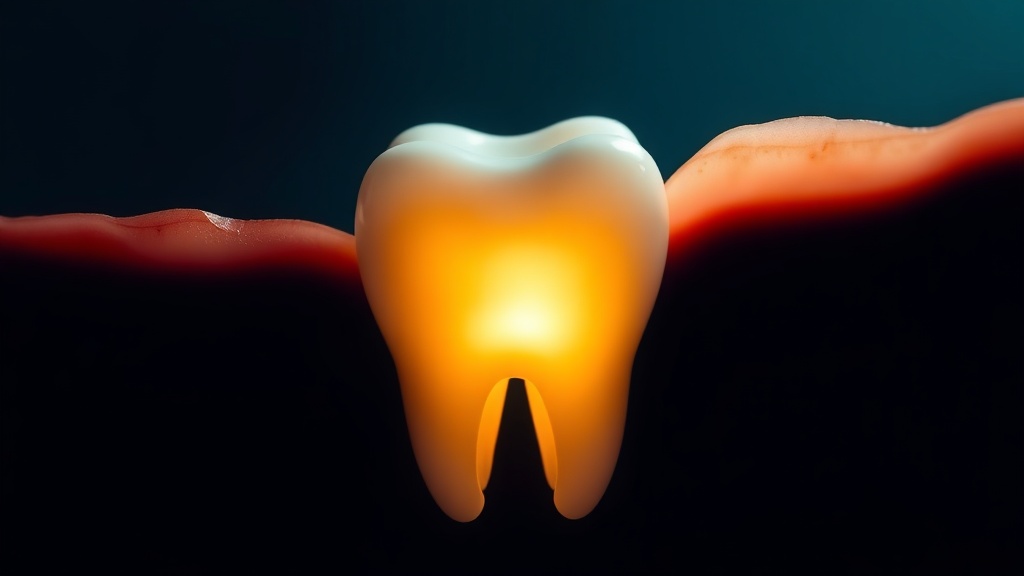
Sudden sensitivity usually follows a recent change - fresh recession, grinding, whitening or a crack - that newly exposes the dentin.
What the research actually shows
Every claim below maps to a named, peer-reviewed source in the Sources section. According to PubMed.
| Claim | Evidence | Source |
|---|---|---|
| Dentin sensitivity is multifactorial: it develops when two or more factors combine to cause loss of enamel and/or cementum and expose the dentin. | Review of aetiology, prevalence and mechanism. | Al-Sabbagh et al., 2004 |
| Gingival recession is the primary cause of dentin exposure, and sensitivity requires tubules that are open at the surface and patent to the pulp. | Review of epidemiology and management. | Cummins, 2009 |
| Once a stimulus reaches exposed dentin, changing the fluid flow in the tubules activates the nerve - the shared final step behind any sudden trigger. | Narrative review of sensitivity mechanisms. | Aminoshariae & Kulild, 2021 |
| Desensitizing toothpastes measurably reduced tooth sensitivity after some whitening protocols, supporting that whitening-related sensitivity is treatable and often transient. | Systematic review of five randomized trials. | Cabral et al., 2024 |
| A stannous fluoride toothpaste occluded about 82% of dentin tubules and significantly reduced sensitivity over 8 weeks, one option for newly exposed dentin. | In-vitro plus double-blind clinical study. | Hines et al., 2019 |
Reading a sudden onset
| Recent change | What it did | Manageable or urgent? |
|---|---|---|
| New whitening or a cleaning | Briefly opened or dehydrated the tubules | Manageable - usually settles in days |
| Harder brushing or a new stiff brush | Abraded the gumline and enamel edge | Manageable - switch to a soft brush |
| A stressful, teeth-clenching stretch | Flexed teeth and chipped enamel at the gumline | Manageable - a night guard helps |
| More acidic drinks or foods | Softened and thinned the enamel surface | Manageable - cut acid, support enamel |
| Sharp pain on biting from one tooth | Possible cracked tooth or deep decay | Urgent - see a dentist |
| Lingering, throbbing or spontaneous pain | Possible pulp inflammation or infection | Urgent - see a dentist promptly |
The two patterns that change what you should do
When sensitivity comes on suddenly, sorting it into one of two buckets tells you almost everything. The first bucket is diffuse and stimulus-linked: a gentle zing across several teeth that appears only with cold, sweet or a toothbrush and disappears the moment the trigger is gone. This is the manageable kind. It usually follows whitening, a cleaning, a diet shift or a brushing habit, and it responds to a desensitizing paste and a little patience. The second bucket is focal and behaves differently: sharp pain from one specific tooth, pain when you bite down and then release, pain that lingers or throbs after the trigger is gone, pain that arrives on its own, or any swelling. That pattern is the tooth telling you the problem is structural - a crack, a deep cavity, a failing filling, or inflammation reaching the pulp. The reason this distinction matters so much is a hard biological fact: enamel is not a living tissue that heals itself once it truly breaks, so a crack or a cavity does not mend with better brushing. Home desensitizing care can quiet the first bucket, but the second bucket needs a dentist to look, diagnose and repair. When in doubt, the safe move is to have it checked rather than wait it out.
Evidence you can act on.
Occasional emails — new research, new protocols, no noise.
What to do about sudden sensitivity
First, calm the manageable causes. Second, watch for the urgent patterns. This routine soothes newly exposed dentin - it does not fix a crack, a cavity or a failing filling, which need a dentist.
- 1
Identify the recent change
firstThink back over the last week or two: a whitening kit, a new toothbrush, a dental cleaning, a stressful stretch, or more coffee, wine or soda. Naming the trigger tells you whether to simply wait it out, adjust a habit, or book a visit.
- 2
Start a desensitizing toothpaste
twice dailyUse a paste that plugs the tubules (stannous fluoride or arginine with calcium carbonate) or calms the nerve (potassium nitrate). For whitening-related sensitivity in particular, desensitizing pastes have measurable support and the twinge is usually temporary.
- 3
Switch to a soft brush and lighten up
every brushingIf harder brushing set it off, a soft brush and gentle pressure let the gumline settle. Aggressive scrubbing keeps abrading the exact area that is now sensitive.
- 4
Ease acids and protect enamel
dailyCut back on acidic drinks, rinse with water after them, and wait before brushing so softened enamel is not scrubbed away. A fluoride or hydroxyapatite paste supports the enamel surface while things calm down.
- 5
Pause whitening and consider a night guard
as neededIf a whitening product triggered it, stop for now and let the teeth recover. If you suspect grinding, a night guard reduces the flexing that chips enamel at the gumline. If sensitivity does not ease within a couple of weeks, see a dentist.
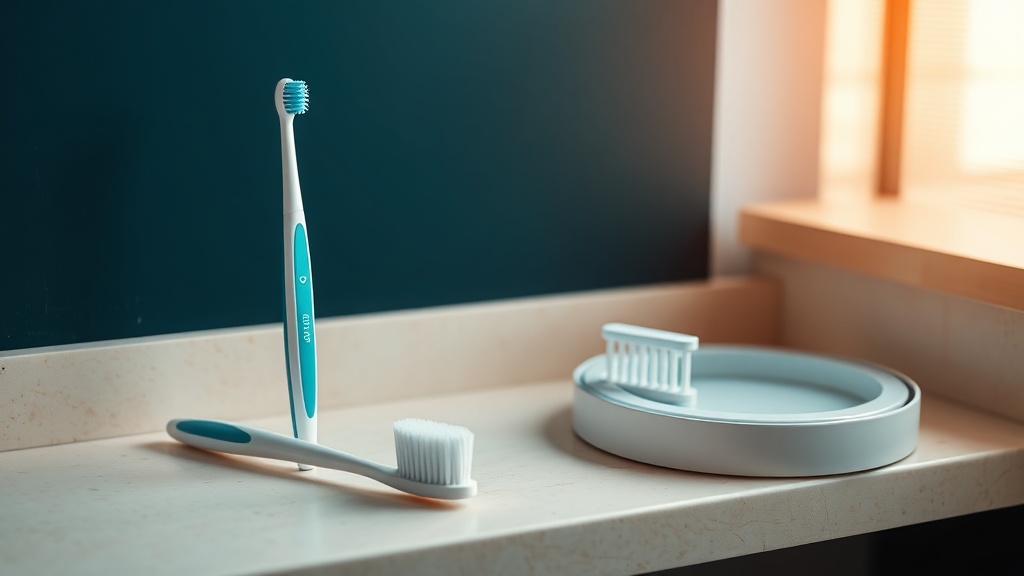
For the manageable causes, a soft brush, a desensitizing paste and a short pause on whitening let newly exposed dentin settle.
Book a dental visit - promptly - if sudden sensitivity comes with sharp pain when you bite down, pain that lingers or throbs after the trigger is gone, pain that starts on its own, sensitivity from one specific tooth, or any swelling, fever or bad taste. These patterns can signal a cracked tooth, deep decay, a failing filling or an inflamed or infected pulp. None of those can be fixed by toothpaste, and a cracked or abscessed tooth can worsen quickly, so having it assessed in person is the safe choice.
Frequently asked questions
Sources
- 1.
- 2.
- 3.
- 4.
- 5.
- 6.

Fix your breath at the source.
The complete science-backed protocol — engineered to eliminate volatile sulfur compounds at the biological source.
Start the Breath Protocol →Related reading
Educational purposes only. The content on this page is not medical advice and is not a substitute for consultation with a qualified dental or medical professional.
More from the library
 Causes8 min
Why Are My Teeth Sensitive? Every Common Cause, Explained
One mechanism sits behind nearly every kind of tooth sensitivity. Understand it, and the causes - and the fixes - fall into place.
Read →→ Guides8 min
Sensitive Teeth After Whitening: Why It Happens and How to Soothe It
That post-whitening zing is common and almost always temporary. Here is what is happening, and how to calm it.
Read →→ Answers9 min
How to Get Rid of Sensitive Teeth: An Evidence-Based Relief Routine
The relief that works is simple, but the details matter. Here is the routine, ingredient by ingredient.
Read →→ Guides8 min
Does Hydroxyapatite Toothpaste Work? What the Evidence Shows
The fluoride-free ingredient dentists keep debating, measured against the actual clinical trials.
Read →→ Answers8 min
How to Get Rid of White Spots on Teeth: Your Options, Ranked
An honest, evidence-based ladder of options, from what you can do at home to what only a dentist can fix.
Read →→ Ingredients8 min
Hydroxyapatite Toothpaste Benefits: What the Evidence Actually Supports
A calm, science-first look at what hydroxyapatite toothpaste can genuinely do for your enamel, and where the evidence stops.
Read →→