Why Are My Teeth Sensitive to Cold?
A cold sip should not sting. Here is why it does, and the two proven ways to quiet it.
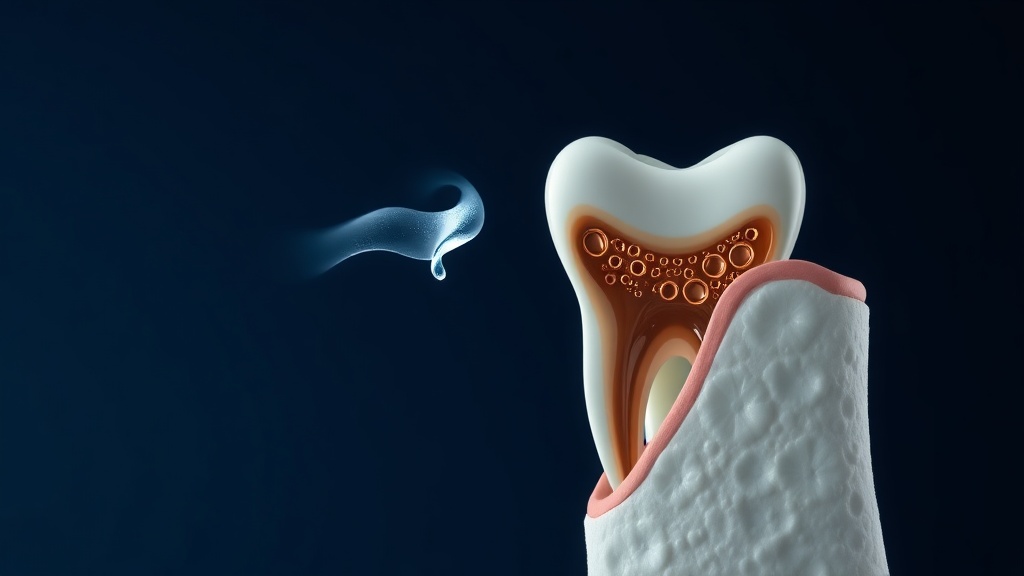
- Cold sensitivity begins when the enamel or gum that shields the softer inner layer of your tooth (dentin) is worn thin or pulled back, exposing thousands of microscopic channels called dentin tubules that run toward the nerve.
- The leading explanation is the hydrodynamic theory: cold makes the fluid inside those tubules move abruptly, and that tiny rush of fluid trips the nerve, so you feel a short, sharp zing rather than a slow ache.
- It is common and usually not dangerous. Reviews estimate dentin sensitivity affects roughly 15-20% of adults, most often between about 20 and 50 years old.
- Two evidence-backed comfort routes exist: physically plugging the open tubules (stannous fluoride or arginine pastes) and calming the nerve signal itself (potassium). They often work best together and take a few weeks.
- A twinge that vanishes in a second or two is typical. Cold pain that lingers, throbs, wakes you, or comes from one specific tooth is a reason to see a dentist, because that pattern can mean something other than everyday sensitivity.
Teeth feel sensitive to cold when worn enamel or receded gums expose the dentin underneath, opening tiny fluid-filled tubules that lead toward the nerve. Cold makes that fluid shift suddenly, and the nerve reads the movement as a brief, sharp pain. It is common, usually harmless, and manageable at home.
How cold actually reaches the nerve
Your tooth is built in layers. The outer enamel on the crown, and a thin layer of cementum on the root, are the shield. Underneath sits dentin, and dentin is not solid: it is threaded with thousands of microscopic tunnels, the dentin tubules, that point inward toward the pulp where the nerve lives. As long as the enamel and gum cover the dentin, cold never reaches those tunnels. Trouble starts when the shield is lost, and reviews are consistent that dentin exposure comes from a combination of enamel wear and gum recession that uncovers the root. Once the tubules are open at the surface and still connected to the pulp, cold has a route in. The most widely accepted explanation for what happens next is the hydrodynamic theory: a cold stimulus makes the fluid inside the tubules contract and move rapidly, and that sudden flow bends the nerve endings waiting at the inner end of each tunnel. The nerve cannot tell you it is fluid movement, so it reports the only thing it knows how to report, a fast jolt of pain. Cold is such a reliable trigger precisely because temperature change moves that fluid faster than almost anything else.
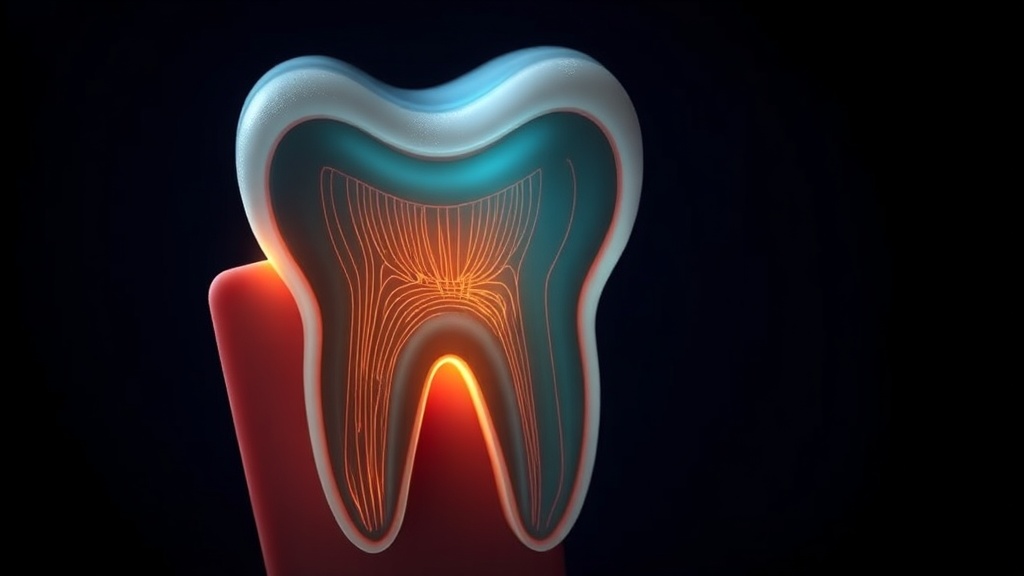
When enamel or gum no longer covers the dentin, cold moves the fluid inside the tubules and the nerve reads it as a sharp zing.
What the research actually shows
Every claim below maps to a named, peer-reviewed source in the Sources section. According to PubMed.
| Claim | Evidence | Source |
|---|---|---|
| The hydrodynamic theory is the most accepted mechanism of dentinal sensitivity: a stimulus like cold changes fluid flow inside the dentin tubules, which activates the nerve fibers. | Narrative review of dentinal-sensitivity mechanisms. | Aminoshariae & Kulild, 2021 |
| Dentin exposure results from loss of enamel and/or cementum, and the hydrodynamic theory best explains why an exposed surface hurts; sensitivity affects middle-aged people most. | Review of aetiology, prevalence and mechanism. | Al-Sabbagh et al., 2004 |
| For a tooth to be sensitive, dentin must be exposed with tubules open at the surface and patent to the pulp; gingival recession is the primary cause, and roughly 15-20% of adults are affected. | Review of diagnosis, epidemiology and management. | Cummins, 2009 |
| A stannous fluoride toothpaste occluded 82% of dentin tubules versus 35% for control and significantly reduced air-blast sensitivity by about 32% at 8 weeks. | In-vitro plus double-blind clinical study. | Hines et al., 2019 |
| Potassium-containing toothpaste significantly reduced air-blast and tactile sensitivity at 6-8 weeks, though the overall body of evidence is modest. | Meta-analysis of six randomized trials. | Poulsen et al., 2006 (Cochrane) |
What is really behind your cold twinge
| Cold trigger | What is happening | Can you calm it? |
|---|---|---|
| Receded gums exposing the root | The root has no enamel, so tubules sit right at the surface | Yes - occluding paste plus gentler brushing |
| Worn or eroded enamel | Acid and abrasion have thinned the shield over the dentin | Partly - cut acid exposure and support remineralization |
| A recent cleaning or whitening | Tubules are briefly opened or dehydrated | Yes - usually settles within days |
| A cracked tooth or deep cavity | Cold is reaching an inflamed pulp directly | No - this needs a dentist |
| Clenching or grinding | Flexing stresses and micro-chips enamel at the gumline | Partly - a night guard and desensitizing paste help |
Why the two relief routes work
Because the pain is a plumbing problem, the fixes attack the plumbing in two different places. The first route is to physically block the open ends of the tubules so cold can no longer move the fluid. Stannous fluoride does this by depositing a mineral coating that seals the tunnels, and in testing it plugged the large majority of them while a plain paste barely touched them. Arginine paired with calcium carbonate works the same way, building a plug of calcium and phosphate that resists normal pressure inside the tooth. The second route ignores the tubules and quiets the nerve itself: potassium salts raise the potassium around the nerve endings so they are less able to fire, effectively turning down the volume on the signal. Neither is a cure, and both need honesty about the timeline. Clinical studies measure their benefit over four to eight weeks of twice-daily use, not overnight, and the evidence for potassium in particular is real but modest. That is why the sensible approach is to pick a paste, use it consistently, and often combine an occluding paste with a nerve-calming one rather than expecting a single application to switch the feeling off.
Evidence you can act on.
Occasional emails — new research, new protocols, no noise.
How to quiet cold sensitivity
None of this treats a disease. It reduces how much cold reaches the nerve and calms how loudly that nerve responds. Give any routine two to four weeks before you judge it.
- 1
Switch to a desensitizing toothpaste
twice dailyChoose one that plugs tubules (stannous fluoride, or arginine with calcium carbonate) or one that calms the nerve (potassium nitrate). Both have clinical support; the plugging pastes tend to show tubule occlusion you can measure. Use it morning and night and be patient - the benefit builds over weeks.
- 2
Smear a little on the sensitive spot at night
nightlyAfter brushing, rub a small amount of the paste directly onto the tender area with a clean fingertip and leave it, rather than rinsing it all away. Letting it sit gives the plugging or calming ingredients longer contact with the exposed dentin.
- 3
Brush gently with a soft brush
every brushingHard scrubbing with a stiff brush is one of the ways enamel and gum are worn away in the first place, which only exposes more dentin. Use a soft brush, light pressure, and short strokes, especially along the gumline.
- 4
Ease off acids, and never brush straight after them
ongoingCitrus, soda, wine and vinegar soften the enamel surface for a while; brushing immediately can scrub away that softened layer. Rinse with water and wait 30 to 60 minutes before brushing, because enamel begins to dissolve below roughly pH 5.5.
- 5
Let cold foods warm slightly, and use a straw
as neededA straw carries cold drinks past the most sensitive surfaces, and letting ice-cold food sit for a moment reduces the sharp temperature swing that drives the fluid movement. These are comfort tactics while the paste does the deeper work.
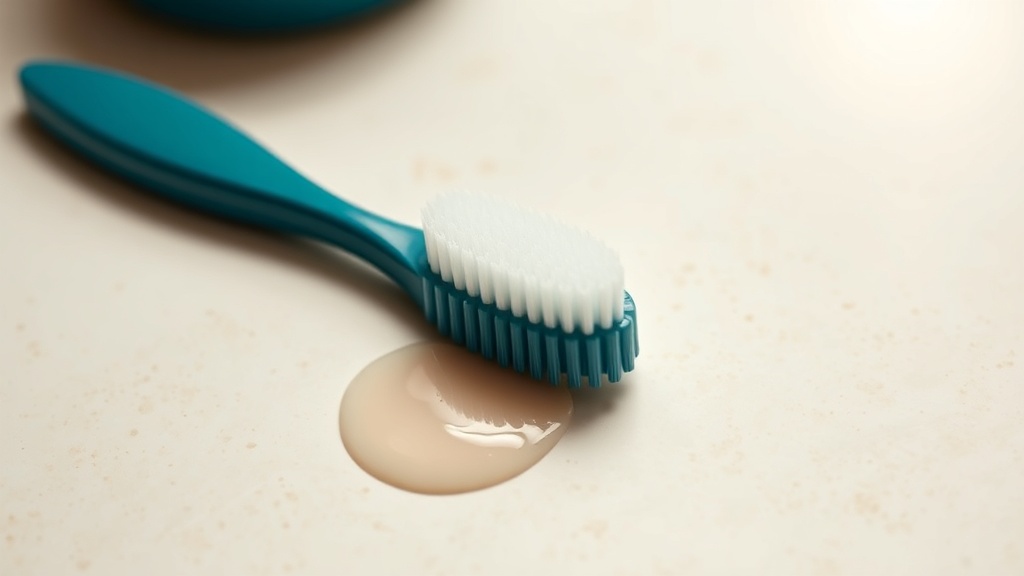
A soft brush, gentle pressure and a nightly leave-on smear give desensitizing ingredients time to plug tubules and calm the nerve.
Everyday cold sensitivity is a quick zing that fades almost as soon as the cold is gone. See a dentist if cold pain lingers for many seconds or minutes, throbs, arrives on its own without any trigger, wakes you at night, or comes from one specific tooth. A single painful tooth or lasting cold pain can signal a cracked tooth, a deep cavity, or inflammation of the pulp, and those need a professional to look, diagnose and treat - home care cannot substitute for that.
Frequently asked questions
Sources
- 1.
- 2.
- 3.
- 4.
- 5.
- 6.

Fix your breath at the source.
The complete science-backed protocol — engineered to eliminate volatile sulfur compounds at the biological source.
Start the Breath Protocol →Related reading
Educational purposes only. The content on this page is not medical advice and is not a substitute for consultation with a qualified dental or medical professional.
More from the library
 Answers9 min
How to Get Rid of Sensitive Teeth: An Evidence-Based Relief Routine
The relief that works is simple, but the details matter. Here is the routine, ingredient by ingredient.
Read →→ Causes8 min
Why Are My Teeth Sensitive? Every Common Cause, Explained
One mechanism sits behind nearly every kind of tooth sensitivity. Understand it, and the causes - and the fixes - fall into place.
Read →→ Guides8 min
Does Hydroxyapatite Toothpaste Work? What the Evidence Shows
The fluoride-free ingredient dentists keep debating, measured against the actual clinical trials.
Read →→ Answers8 min
How to Remineralize Teeth: An Honest, Practical Guide
The practical routine that supports enamel remineralization, and the clear line between the early lesions it can rebuild and the decay it cannot.
Read →→ Answers8 min
How to Get Rid of White Spots on Teeth: Your Options, Ranked
An honest, evidence-based ladder of options, from what you can do at home to what only a dentist can fix.
Read →→ Ingredients8 min
Hydroxyapatite Toothpaste Benefits: What the Evidence Actually Supports
A calm, science-first look at what hydroxyapatite toothpaste can genuinely do for your enamel, and where the evidence stops.
Read →→