Purple Toothpaste: What It Really Does to Your Smile
A calm look at how purple toothpaste masks yellow tones optically, why the effect is temporary, and where it fits alongside methods that actually change your shade.
- Purple toothpaste is a colour-correcting cosmetic, not a bleach. It uses violet or blue pigment to visually cancel yellow tones, the same trick purple shampoo uses to tone brassy blonde hair.
- The effect is optical and short-lived: purple sits opposite yellow on the colour wheel, so a thin tint makes teeth look cooler and brighter for a few hours, then rinses and wears away.
- It does not change the actual colour of your enamel or dentine. Only peroxide, hydrogen or carbamide, chemically lightens the tooth structure itself.
- Because it works only on the surface, purple toothpaste can mask a mild yellow cast but does nothing for deep or built-in discolouration.
- Used honestly it is a low-risk touch-up for a photo or an event, and it works best as a finishing step alongside real stain control, never as a replacement for it.
Purple toothpaste does not whiten teeth in the chemical sense. It deposits a thin violet tint that optically cancels yellow tones, so teeth look brighter for a few hours. It is colour-correcting cosmetics borrowed from hair care, not bleaching, and the effect fades as the pigment washes away.
The colour-wheel trick behind the purple
The idea comes straight from a hairdresser toolkit. Blonde hair that turns brassy is toned with purple shampoo because violet and yellow sit on opposite sides of the colour wheel; laid over each other they cancel toward a cooler, more neutral tone. Teeth read slightly yellow for a physical reason. Enamel is translucent, and the dentine beneath it is naturally more saturated and yellow, so as enamel thins with age that warmth shows through more. Purple toothpaste borrows the hairdresser trick and applies it to the tooth surface: it leaves behind an extremely thin film of violet or blue pigment that absorbs a little of the yellow light bouncing off your teeth, so the eye reads them as cooler and, by contrast, brighter. Nothing inside the tooth has changed. The pigment is simply sitting on top, doing the same job a colour-correcting concealer does on skin. That is also why context matters so much: perceived whiteness shifts with whatever sits next to a tooth, which is why a violet or red lipstick can make the very same teeth look noticeably lighter in a photo.
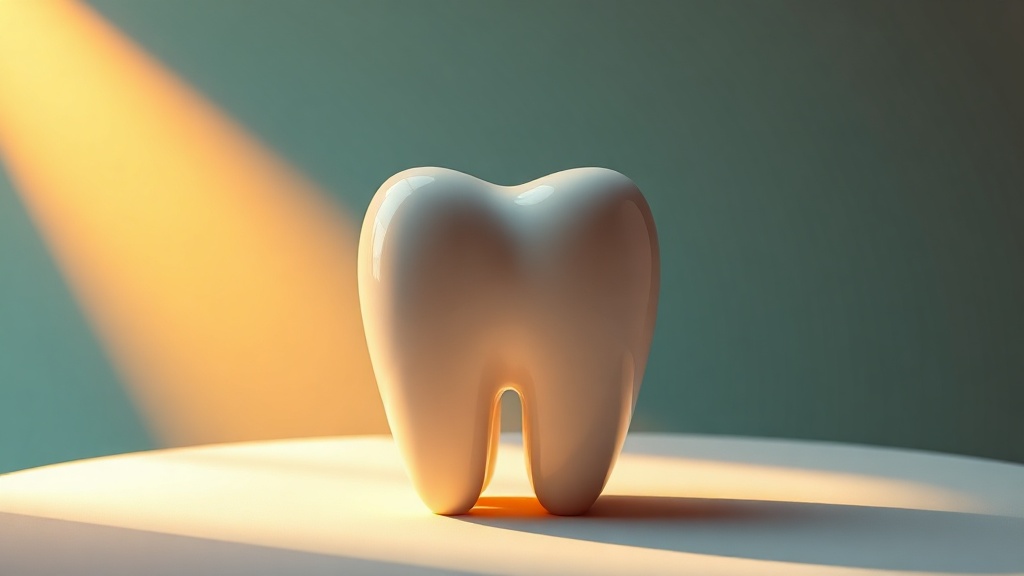
Colour correction, not bleaching: a thin violet tint cancels the yellow light your teeth reflect, so they look cooler and brighter for a while.
What the research actually shows
Every claim below maps to a named, peer-reviewed source in the Sources section. According to PubMed.
| Claim | Evidence | Source |
|---|---|---|
| Blue and violet colour-correcting pigments make teeth look whiter and less yellow immediately after a single brushing, an optical shift rather than bleaching. | Double-blind randomised crossover trial in 66 adults using digital colour imaging. | Zhang et al., 2025 |
| In an independent trial, a blue-covarine toothpaste produced no clinically relevant whitening over an ordinary toothpaste after brushing. | Triple-blind randomised controlled trial measured with a spectrophotometer. | Schlafer et al., 2020 |
| Over two weeks a pigment whitening toothpaste was no better than conventional toothpaste and well behind a peroxide gel. | Double-blind RCT of 75 adults comparing the toothpaste with 10% carbamide peroxide. | Meireles et al., 2020 |
| Non-peroxide whitening products mostly remove surface stain; only peroxide oxidation actually lightens the tooth itself. | In-vitro comparison of over-the-counter agents against hydrogen peroxide. | Muller-Heupt et al., 2023 |
| A colour change is only reliably visible to the eye above roughly a delta-E of 1.2, the yardstick for whether any whitening is real. | Multicentre study establishing perceptibility and acceptability thresholds. | Paravina et al., 2015 |
Purple toothpaste versus what actually changes colour
| Approach | How it works | Real effect on colour | How long it lasts |
|---|---|---|---|
| Purple / colour-correcting toothpaste | Deposits violet pigment that optically cancels yellow | Looks cooler and brighter; the tooth itself is unchanged | Hours, until it rinses off |
| Whitening (stain-removing) toothpaste | Mild abrasives lift surface stains over time | Removes extrinsic stain; no bleaching of the tooth | Weeks, with regular use |
| Peroxide gel, strips or trays | Hydrogen or carbamide peroxide oxidises coloured molecules inside the tooth | Genuinely lightens enamel and dentine | Months to years, with mild relapse |
| In-office professional whitening | Higher-concentration peroxide applied under supervision | The largest, fastest colour change | Months to years |
Why the glow disappears by lunchtime
The catch with any optical tweak is that it is only there while the pigment is. Saliva, drinking and your next meal lift that micro-thin violet film within a few hours, and the yellow you started with returns unchanged, because it was never removed, only masked. That is the honest difference between camouflage and colour change. Peroxide whitening rearranges the coloured molecules inside the tooth, which is why a proper course stays visible for months and often years, fading only gradually. A pigment sitting on the surface cannot do that. It is worth naming one more wrinkle: whitening is unusually suggestible. In blind trials people using a dummy product with no measurable colour change still reported that their teeth looked whiter, so some of the lift you feel from a purple tube is genuine perception rather than measured lightening. None of this makes purple toothpaste a scam, it makes it cosmetics. Treat it like a tinted primer: a quick, low-risk way to look a shade cooler for an evening, not a tool that moves where your teeth actually sit on the shade guide.
Evidence you can act on.
Occasional emails — new research, new protocols, no noise.
How to get the most out of purple toothpaste
Purple toothpaste is a finishing touch, not a treatment. Here is how to use it so the optical effect actually shows, and how to pair it with the things that move your real shade.
- 1
Brush normally first, then apply
twice dailyBrush with your regular fluoride toothpaste first to clear the day film, then apply the purple product as directed, usually left on the teeth for a minute or two so the pigment can settle before you rinse. On a clean, freshly brushed surface the violet lays down more evenly and the cooling effect reads better.
- 2
Time it for when you need it
day of an eventBecause the effect lasts hours and not weeks, use it the morning of a photo, a date or an event rather than waiting for a slow cumulative change. Reapply just before you head out for the freshest result.
- 3
Do the real work with stain control
ongoingThe tint masks yellow; it does not remove the coffee, tea and red-wine stains sitting underneath. A low-abrasivity option such as a baking-soda toothpaste lifts surface stain gently over weeks, and cutting the contact time of staining drinks slows new stain from settling. That is what actually keeps the underlying shade lighter.
- 4
If you want a true colour change, choose peroxide
as a courseNo pigment will lighten the tooth itself. If your goal is a measurable move on the shade guide, a peroxide gel, strip or dentist-supervised course is the only route with real evidence behind it. Purple toothpaste can then be a pleasant top-up between whitening sessions.
- 5
Keep expectations honest with heavy staining
—If your teeth are deeply yellow, grey or discoloured from within, a surface tint will do very little, and so will most over-the-counter products. That is the point to get a professional opinion rather than keep spending on gimmicks.
Used well, purple toothpaste is a quick morning-of touch-up, applied on a freshly brushed surface for the most even effect.
If your teeth look yellow, grey or spotted despite good brushing, or if the discolouration is uneven or came on suddenly, see a dentist before buying more products. Colour that sits inside the tooth, from age, past medication, an old injury or developmental changes, will not respond to any toothpaste, and a professional can tell you which options are realistic and safe for your enamel. Purple toothpaste is harmless as a cosmetic, but it should never stand in for a check-up on a change you cannot explain.
Frequently asked questions
Sources
- 1.
- 2.
- 3.
- 4.
- 5.
- 6.
- 7.
- 8.
- 9.

Fix your breath at the source.
The complete science-backed protocol — engineered to eliminate volatile sulfur compounds at the biological source.
Start the Breath Protocol →Related reading
Educational purposes only. The content on this page is not medical advice and is not a substitute for consultation with a qualified dental or medical professional.
More from the library
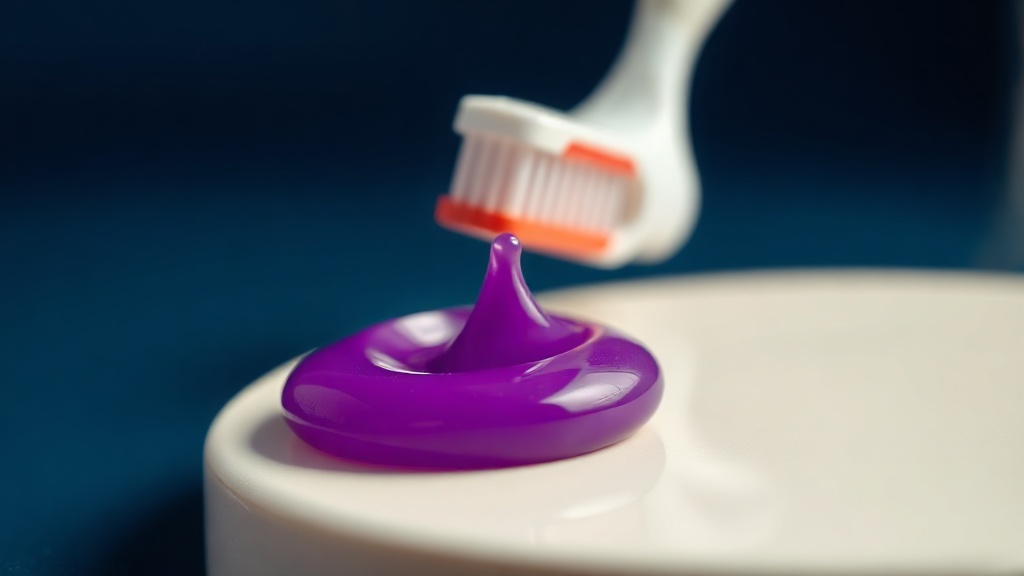 Guides8 min
Does Purple Toothpaste Work? An Honest Evidence Check
The honest verdict on purple toothpaste — why it is an optical trick rather than real bleaching, why industry and independent studies split, and where it fits.
Read →→ Guides9 min
How to Whiten Teeth at Home: Methods, Timelines and What Actually Works
The methods that genuinely lighten teeth, the ones that only remove surface stains, and honest timelines for each — so you know what to expect before you start.
Read →→ Best Of8 min
Best Whitening Toothpaste (2026): What Actually Removes Stains
A whitening toothpaste polishes away surface stains but cannot bleach the tooth underneath. Here is how to pick one that works without wearing enamel down.
Read →→ Answers8 min
Does Teeth Whitening Damage Enamel? The Evidence-Based Answer
The honest, evidence-based answer to whether whitening harms enamel — what peroxide really does to the surface, why sensitivity is not damage, and the DIY methods that actually cause wear.
Read →→ Answers8 min
Does Baking Soda Whiten Teeth? What the Evidence Says
An honest look at what baking soda can and cannot do for a whiter smile.
Read →→ Best Of9 min
Best Fluoride-Free Whitening Toothpaste: An Honest, Evidence-Based Guide (2026)
Which fluoride-free whitening ingredients hold up to the research — and which are marketing. An honest buyer's guide.
Read →→