How to Whiten Teeth at Home: Methods, Timelines and What Actually Works
The methods that genuinely lighten teeth, the ones that only remove surface stains, and honest timelines for each — so you know what to expect before you start.
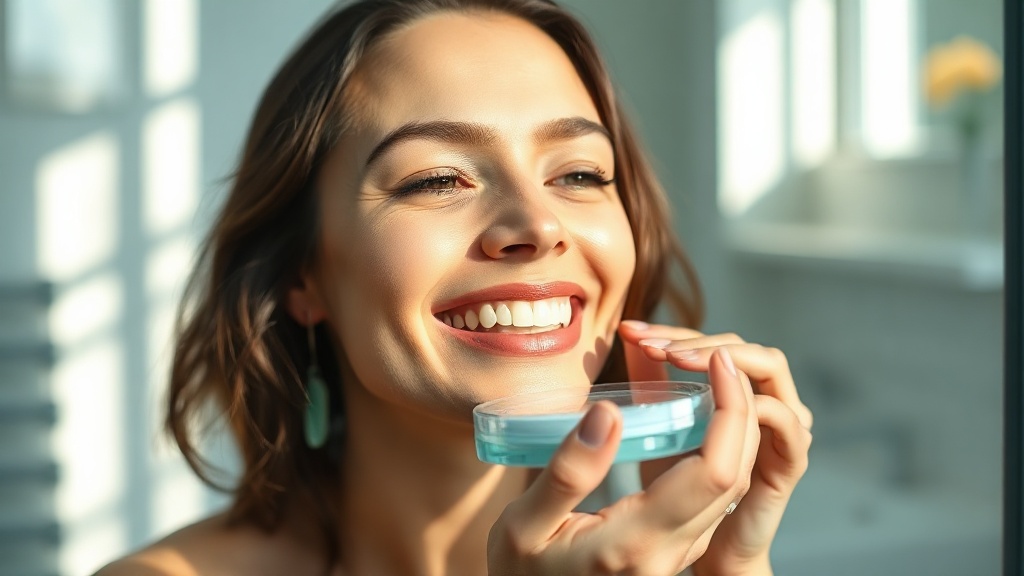
- Only two things genuinely change the colour of the tooth itself: peroxide (in strips or trays) and time. Everything else — baking soda, whitening toothpaste, charcoal — works on surface stains, not the deeper colour, so set your expectations by which lever you are pulling.
- At-home peroxide works and can rival a single in-office session over a couple of weeks; the trick is contact time, not a higher concentration, which is why gentle overnight or daily wear adds up.
- Realistic timeline: peroxide strips or trays show a visible change in about one to two weeks, keep improving for a few weeks, then settle. There is no credible way to safely change deep tooth colour overnight.
- Baking soda is a genuinely safe, low-abrasivity way to lift surface stains and brighten — but it is stain removal, not bleaching. Charcoal is the opposite: it whitens less and abrades more, so most evidence says skip it.
- Sensitivity is the main downside, and the proven fixes are lower concentration and shorter wear time — not fancier gadgets. LED lights add no meaningful whitening on top of the peroxide.
To actually whiten teeth at home, use a peroxide product — whitening strips or a tray gel — consistently for one to two weeks; contact time matters more than strength. Baking soda and whitening toothpaste lift surface stains but do not bleach. Skip charcoal, and manage sensitivity with lower concentrations and shorter sessions.
What actually makes a tooth look whiter
There are two different jobs hiding inside the word whiten, and mixing them up is why so many home routines disappoint. The first job is removing extrinsic stains — the film of colour that coffee, tea, red wine and tobacco leave on the outside of the enamel. The second is lightening the intrinsic colour, the deeper shade that comes mostly from the dentin beneath the enamel. Surface stain sits on top and can be polished away by mild abrasives; the deeper colour can only be lightened by an agent that diffuses into the tooth and oxidises the coloured molecules, and in practice that means peroxide. This is the key distinction. Whitening toothpaste, baking soda and most natural methods are stain removers — they can absolutely make teeth look brighter by clearing the film, but once that film is gone they hit a ceiling and cannot go further. Peroxide keeps going because it changes the colour inside the tooth. Knowing which of the two you are doing tells you exactly how much change to expect and how long it should take.
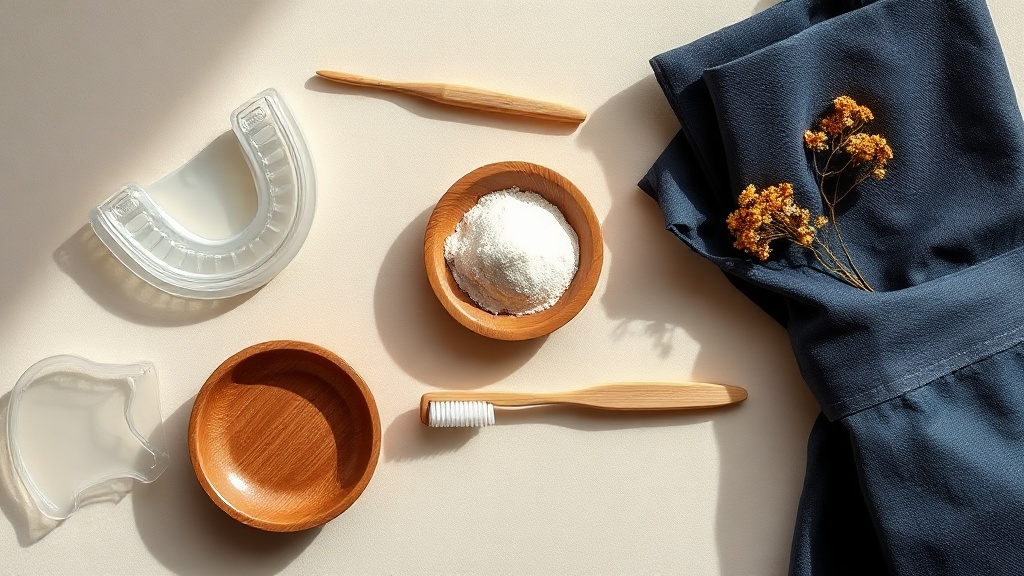
The at-home toolkit splits cleanly in two: peroxide (trays, strips, pens) lightens deeper colour, while baking soda and pastes lift surface stain.
What the research actually shows
Every claim below maps to a named, peer-reviewed source in the Sources section. According to PubMed.
| Claim | Evidence | Source |
|---|---|---|
| At-home whitening reliably beats placebo, and its effect tracks the active peroxide dose over time. | Cochrane systematic review of home whitening. | Hasson et al., 2006 |
| For at-home whitening, contact time drives the result more than concentration: 10% carbamide peroxide overnight out-performed a stronger gel worn for one hour. | Clinical comparison, time- vs concentration-dependence. | López Darriba et al., 2017 |
| Among over-the-counter options, 6% hydrogen peroxide strips and 10% carbamide peroxide gels rank at the top for colour change. | Network meta-analysis of OTC products. | de Oliveira et al., 2024 |
| Baking-soda dentifrice cut extrinsic stain about 62% and improved shade by roughly 2.6 units in six weeks, at low abrasivity. | Randomised clinical trial (146 subjects). | Ghassemi et al., 2012 |
| Charcoal products whiten less than alternatives and are more abrasive — considered less safe. | Systematic review of charcoal dentifrices. | Montero Tomás et al., 2022 |
Home methods, ranked honestly
| Method | What it really does | Realistic timeline |
|---|---|---|
| Whitening strips (6% HP) | Genuinely lightens tooth colour | Visible in 1–2 weeks |
| Custom or boil-and-bite tray + gel | Lightens tooth colour; time-on-teeth is the lever | Visible in 1–2 weeks, settles by ~4 |
| Whitening pen | Thin peroxide layer; mild, best for touch-ups | Subtle over 1–2 weeks |
| Baking soda / whitening toothpaste | Removes surface stain, brightens | Brighter in days, then plateaus |
| Charcoal | Whitens less, abrades more | Not recommended |
| Oil pulling / lemon / DIY scrubs | No real bleaching; some are risky | No reliable effect |
Realistic timelines — and why overnight results are a myth
Because peroxide has to diffuse into the tooth and oxidise colour gradually, whitening runs on a predictable clock. In controlled trials, a two-week course of strips produced a clearly visible shade change versus almost none for placebo, and tray systems show the same pattern: a noticeable difference inside the first week or two, continued improvement over three to four weeks, then a plateau. A portion of the early change also relaxes back in the months afterward — one classic study found teeth stay lighter than baseline but lose part of the peak brightness as they settle, which is normal regression, not failure. Two honest points follow from this. First, anything promising a dramatic colour change overnight is either only removing surface stain or overselling — safely lightening the deeper colour simply takes repeated contact. Second, the results last: teeth generally stay visibly lighter than they started for a year or more, with only a small rebound over several years, so occasional short top-ups keep the look rather than starting over. Patience, not intensity, is what makes home whitening work.
Evidence you can act on.
Occasional emails — new research, new protocols, no noise.
A gentle, effective at-home routine
This is the sequence that gets the most colour change for the least irritation. None of it is a medical remedy — it is cosmetic care of healthy teeth. If you have decay, gum problems or dental work, see a dentist first, since whitening only changes natural enamel.
- 1
Start from a clean, stain-free surface
a few daysBrush with a baking-soda or gentle whitening toothpaste for a few days first. Clearing the surface film means the peroxide step works on the actual tooth colour, and for lightly stained teeth this alone may be enough.
- 2
Choose one peroxide method and commit
1–2 weeksPick strips or a tray gel — not both. Follow the wear time on the pack. Because contact time is the real lever, wearing a lower-strength gel a little longer is gentler and works as well as chasing a high concentration.
- 3
Whiten in short, consistent sessions
daily, per packConsistency beats marathon sessions. Daily wear for the recommended window builds a steady change; overloading in one sitting mostly buys sensitivity, not extra whiteness.
- 4
Protect against sensitivity
ongoingIf teeth twinge, the proven fixes are simple: drop to a lower concentration or shorten each session, and space treatments out. A pause of a day or two lets sensitivity settle without losing your progress. A nano-hydroxyapatite or fluoride paste between sessions supports the enamel surface.
- 5
Maintain instead of repeating from scratch
as neededOnce you like the shade, rinse or use a straw with staining drinks, keep up gentle stain-removing brushing, and do a short one- or two-day top-up every few months. That keeps the result without another full course.
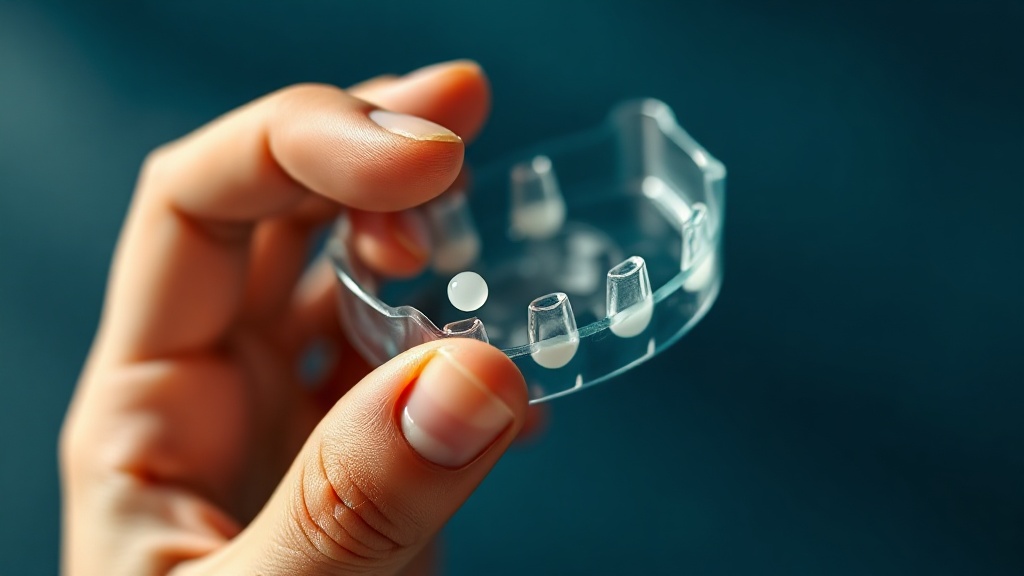
With trays, a thin, even bead of gel and consistent wear time does the work — more gel does not mean more whitening.
See a dentist before whitening if you have untreated decay, sore or bleeding gums, or a lot of dental work such as crowns and veneers, since whitening only changes natural enamel and can leave a mismatch. Also check in if teeth stay sensitive after you lower the concentration and pause, if only one tooth is darkening, or if the colour will not budge — a single dark tooth in particular deserves an in-person look.
Frequently asked questions
Sources
- 1.
- 2.
- 3.
- 4.
- 5.
- 6.
- 7.
- 8.
- 9.
- 10.
- 11.
- 12.

Fix your breath at the source.
The complete science-backed protocol — engineered to eliminate volatile sulfur compounds at the biological source.
Start the Breath Protocol →Related reading
Educational purposes only. The content on this page is not medical advice and is not a substitute for consultation with a qualified dental or medical professional.
More from the library
 Guides8 min
How to Whiten Teeth at Home in One Day (Realistic, Enamel-Safe Methods)
The honest, evidence-based answer: real bleaching takes time, but you can safely lift surface stains and look a shade brighter in a single day.
Read →→ Guides8 min
How to Get Rid of Yellow Teeth: An Enamel-Safe Guide
Two kinds of yellow, two different fixes, and the enamel-safe way to brighten each one.
Read →→ Answers8 min
Does Teeth Whitening Damage Enamel? The Evidence-Based Answer
The honest, evidence-based answer to whether whitening harms enamel — what peroxide really does to the surface, why sensitivity is not damage, and the DIY methods that actually cause wear.
Read →→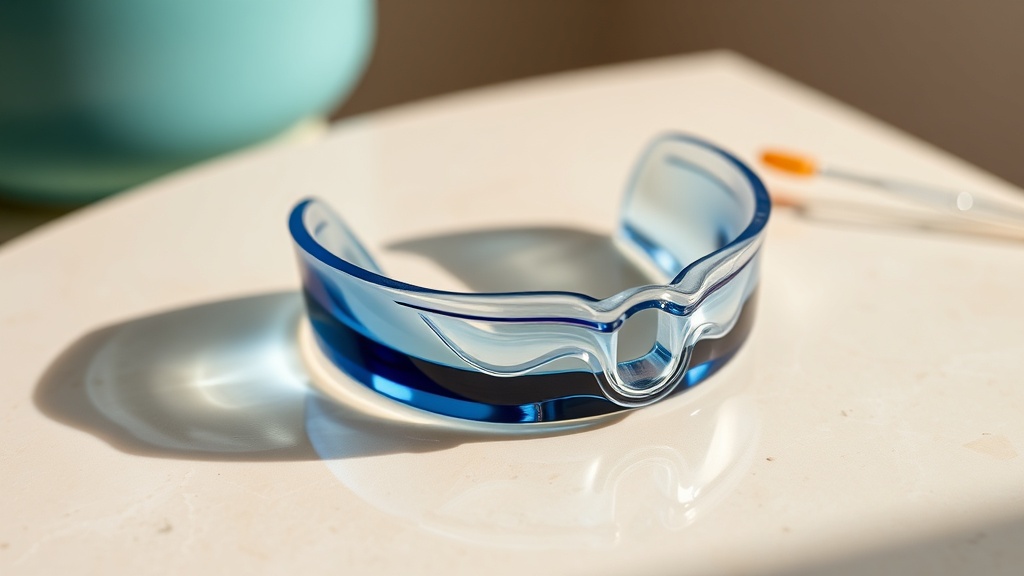 Best Of8 min
Best Teeth Whitening Trays: Boil-and-Bite vs Custom
A whitening tray does not bleach; it controls contact time and protects the gums. Fit is what separates even, comfortable results from patchy ones.
Read →→ Answers8 min
Does Baking Soda Whiten Teeth? What the Evidence Says
An honest look at what baking soda can and cannot do for a whiter smile.
Read →→ Best Of9 min
Best Fluoride-Free Whitening Toothpaste: An Honest, Evidence-Based Guide (2026)
Which fluoride-free whitening ingredients hold up to the research — and which are marketing. An honest buyer's guide.
Read →→