
Does Purple Toothpaste Work?
The honest verdict on purple toothpaste — why it is an optical trick rather than real bleaching, why industry and independent studies split, and where it fits.
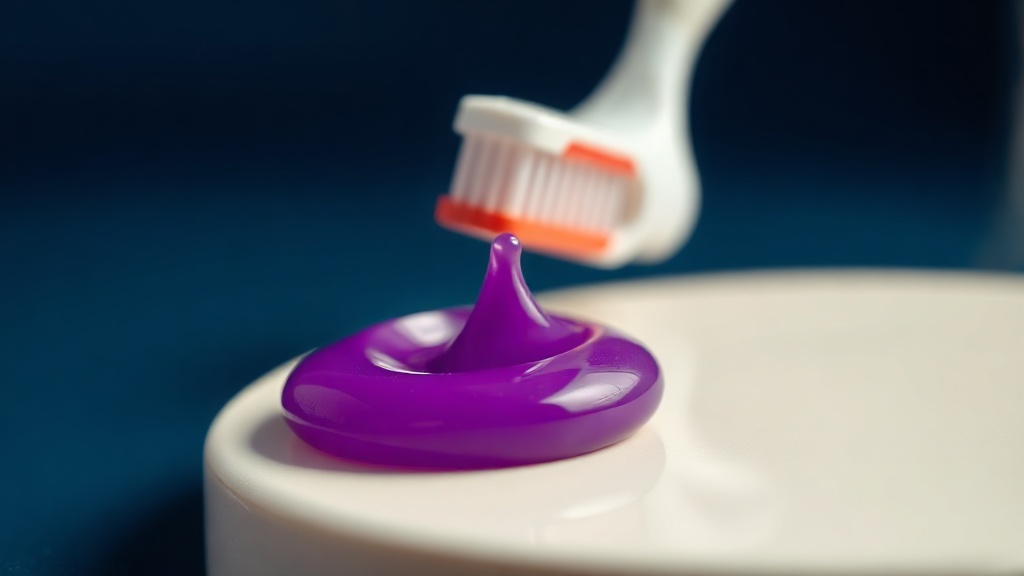
- Purple toothpaste works by optics, not chemistry. A violet pigment leaves a faint film that offsets yellow tones on the tooth surface, making teeth look a touch cooler and brighter for a few hours — the same colour-wheel idea behind purple shampoo for blonde hair.
- It does not bleach. Real whitening oxidises the coloured molecules inside the tooth; purple toothpaste never gets that far, so it cannot change your actual shade the way peroxide can.
- The effect is temporary and washes out. Because it is a surface tint sitting on the pellicle, it fades as you eat, drink and rinse through the day, and it does not build up into a lasting change.
- Studies disagree largely along funding lines: industry-linked trials report a measurable same-day optical gain, while several independent trials find no clinically relevant colour change versus an ordinary toothpaste.
- It is best understood as a same-day cosmetic finishing touch for teeth that are already fairly light — not a substitute for stain removal or peroxide whitening if you want a real, durable shade change.
Purple toothpaste can make teeth look slightly cooler and brighter for a few hours by using violet pigment to optically offset yellow tones. It does not bleach or change your real shade, the effect washes out, and independent studies find little to no lasting colour benefit over ordinary toothpaste. Treat it as a cosmetic touch-up, not a whitener.
What purple toothpaste is actually doing
The idea comes straight from colour theory. On the colour wheel, purple sits opposite yellow, so a thin layer of violet pigment laid over a yellowish surface makes the two visually cancel toward a cooler, more neutral white. It is the same trick a purple shampoo uses to take the brassy warmth out of blonde hair, and the same reason a make-up colour-corrector uses green to hide redness. The key word is optical. Purple toothpaste — and the blue-covarine pigment that does the same job in some whitening pastes — leaves a faint tinted film on the outside of the enamel that changes how light reflects off the tooth in that moment. It never penetrates, and it never alters the coloured compounds inside the dentine that set your tooth's true shade. That is the whole mechanism, and it is worth being clear about, because it is completely different from how peroxide whitening works. Peroxide diffuses through the enamel and chemically oxidises the pigment molecules within the tooth, actually lightening the structure. Purple toothpaste is cosmetics; peroxide is chemistry. Understanding that one distinction answers almost every question people have about whether it works. It is also why the shade of the paste itself is chosen so carefully. Too little pigment and there is no visible correction; too much and the film tips from neutralising yellow into leaving a faint lilac cast, which is the complaint behind the occasional review that says teeth looked slightly purple. Used as directed the amount is calibrated to sit right at the point of cancelling warmth, which is why the result reads as a cleaner white rather than as any colour at all.

Violet sits opposite yellow on the colour wheel, so a thin purple film optically offsets warm tones — an illusion of white, not a change in shade.
What the research actually shows
Every claim below maps to a named, peer-reviewed source in the Sources section. According to PubMed.
| Claim | Evidence | Source |
|---|---|---|
| An industry-linked crossover trial reported a measurable same-day colour shift from a blue-covarine (violet-pigment) toothpaste — consistent with an immediate optical effect. | Randomised crossover study of blue-covarine toothpaste. | Zhang et al., 2025 |
| An independent single-brushing trial found the whitening effect of blue-covarine toothpaste was not clinically relevant compared with an ordinary paste. | Randomised controlled single-brush study. | Schlafer et al., 2020 |
| A double-blind controlled trial of a blue-covarine whitening toothpaste found no durable objective shade change beyond the immediate optical impression. | Double-blind controlled clinical trial. | Meireles et al., 2020 |
| A colour change only becomes perceptible around ΔE 1.2 and clinically acceptable around 2.7 — the bar any optical tweak has to clear to count as real whitening. | Reference colour-difference thresholds in dentistry. | Paravina et al., 2015 |
| Non-peroxide agents mainly lift surface stain and their colour effect is often below the perceptibility threshold; only oxidation truly whitens the tooth. | In-vitro comparison of non-hydrogen-peroxide whitening agents. | Ntovas et al., 2021 |
Purple toothpaste versus what it is often confused with
| Approach | How it changes colour | How long it lasts |
|---|---|---|
| Purple / blue-covarine toothpaste | Optical: a violet film offsets yellow tones on the surface | Hours — it washes off |
| Whitening (peroxide) strips or gel | Chemical: oxidises coloured molecules inside the tooth | Months, with gradual relapse |
| Whitening or baking-soda toothpaste | Mechanical: removes surface stain by gentle polishing | Ongoing while you use it |
| In-office professional whitening | Chemical: higher-strength peroxide, dentist-supervised | Longest — often a year or more |
Why the studies seem to disagree
If you read the reviews you will see confident claims in both directions, and the split is not random. Trials linked to manufacturers tend to measure the colour immediately after brushing, capturing the fresh violet film at its strongest — and they duly report a measurable shift. Several independent trials instead ask a harder question: does the tooth end up genuinely lighter in a way that lasts and clears the thresholds at which a colour change is even visible? There, the answer has repeatedly been no clinically relevant benefit over an ordinary toothpaste. Both results can be true at once, because they are measuring different things — a momentary optical impression versus a durable change in shade. Two further findings keep the picture honest. First, perception is slippery: in a double-blind whitening trial the placebo group, whose teeth had not measurably changed colour at all, still reported feeling their teeth looked whiter — people are highly suggestible about their own smile. Second, perceived whiteness is influenced by contrast with everything around the tooth, from lip colour to lighting, so a tooth can look brighter without any change in the tooth itself. Purple toothpaste lives squarely in that space: a real, same-day optical effect that is easy to feel and hard to measure. This is not a criticism of the product so much as a caution about the claims wrapped around it. A same-day optical cool-down is a perfectly reasonable thing to want and to buy, provided the price and the promise match a cosmetic touch-up. The trouble only starts when purple toothpaste is sold as a replacement for whitening, because someone hoping to move several shades lighter will keep brushing, keep seeing the momentary effect, and never get the durable change they were actually paying for.
Evidence you can act on.
Occasional emails — new research, new protocols, no noise.
How to use purple toothpaste (and get a real result if you want one)
Purple toothpaste is a cosmetic finishing touch, not a whitener. Used with the right expectations it is harmless and can look nice — here is how to use it honestly and what to pair it with for lasting change.
- 1
Set the right expectation
before you buyThink of it like a colour-correcting make-up step for your smile: a same-day cool-down of yellow tones that photographs well and then fades. If you expect it to change your shade, you will be disappointed; if you expect a subtle, temporary brightening, it can deliver that.
- 2
Use it on already-clean teeth
as your last brushThe optical effect sits on the surface, so it reads best on teeth that are already free of heavy surface stain. Brush normally first, or use it as your evening or pre-event brush for the freshest film.
- 3
Do not expect it to accumulate
ongoingBecause it washes off, using it twice a day does not build toward a real shade change the way a course of peroxide does. It is a repeatable touch-up, not a treatment that compounds.
- 4
Tackle the base colour first if you want lasting change
weeksFor a durable result, remove surface stain with a low-abrasivity paste and, if you want an actual shade change, use a peroxide product or see a dentist. Purple toothpaste can then sit on top as a finishing cosmetic layer.
- 5
Mind the contrast
same dayPerceived whiteness depends on what surrounds the tooth. A cooler or bolder lip colour and good lighting can make teeth read brighter — sometimes more than the toothpaste itself. It is a fair trick to use, just know it is contrast, not chemistry.
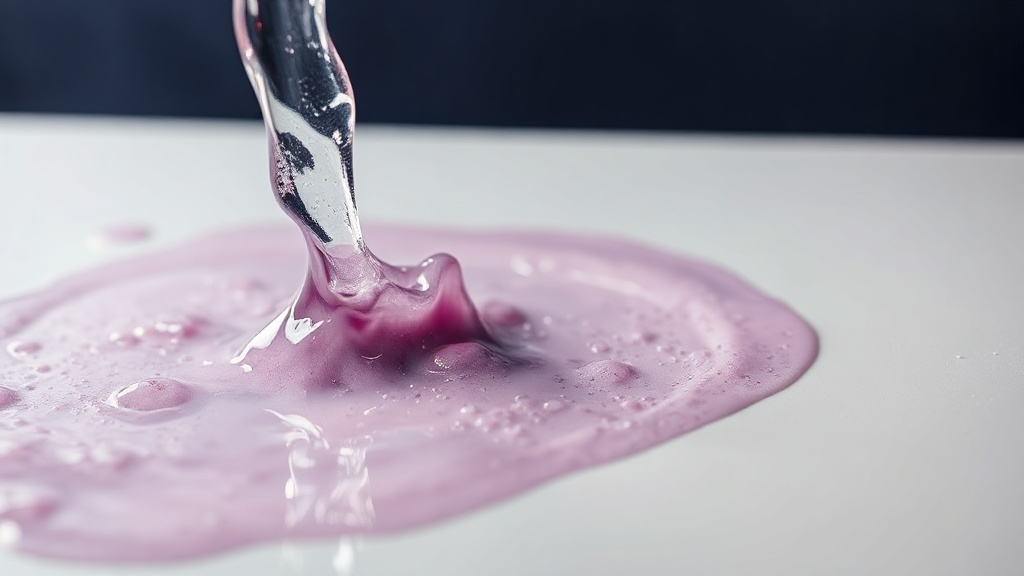
Because the effect is a surface tint, it rinses away — which is why purple toothpaste is a same-day touch-up, not a lasting change.
If your teeth look noticeably yellow or grey and you want a genuine, lasting change, or if a single tooth is darker than the rest, a dentist can assess the cause and talk you through options that actually alter shade. Purple toothpaste cannot touch intrinsic colour that is built into the tooth, and reaching for stronger and stronger cosmetic products is not a substitute for a proper look at why the colour is there.
Frequently asked questions
Sources
- 1.
- 2.
- 3.
- 4.
- 5.
- 6.
- 7.
- 8.

Fix your breath at the source.
The complete science-backed protocol — engineered to eliminate volatile sulfur compounds at the biological source.
Start the Breath Protocol →Related reading
Educational purposes only. The content on this page is not medical advice and is not a substitute for consultation with a qualified dental or medical professional.
More from the library
 Guides8 min
Purple Toothpaste: Does the Color-Correcting Trick Actually Work?
A calm look at how purple toothpaste masks yellow tones optically, why the effect is temporary, and where it fits alongside methods that actually change your shade.
Read →→ Answers8 min
Does Coconut Oil Whiten Teeth? An Honest, Evidence-Based Answer
An honest look at the coconut oil whitening claim, what the research on oil pulling really measured, and the gentle methods that actually work.
Read →→ Comparisons8 min
Carbamide Peroxide vs Hydrogen Peroxide for Teeth Whitening: Which Works Better?
An evidence-based comparison of the two whitening peroxides, what actually separates them, and how to choose by format and comfort rather than by the biggest number.
Read →→ Answers8 min
Does Teeth Whitening Damage Enamel? The Evidence-Based Answer
The honest, evidence-based answer to whether whitening harms enamel — what peroxide really does to the surface, why sensitivity is not damage, and the DIY methods that actually cause wear.
Read →→ Answers8 min
Does Baking Soda Whiten Teeth? What the Evidence Says
An honest look at what baking soda can and cannot do for a whiter smile.
Read →→ Best Of9 min
Best Fluoride-Free Whitening Toothpaste: An Honest, Evidence-Based Guide (2026)
Which fluoride-free whitening ingredients hold up to the research — and which are marketing. An honest buyer's guide.
Read →→