Best Whitening Toothpaste: What Actually Removes Stains
A whitening toothpaste polishes away surface stains but cannot bleach the tooth underneath. Here is how to pick one that works without wearing enamel down.
- Whitening toothpaste works by lifting surface (extrinsic) stains — the coffee, tea, wine and tobacco film that settles on enamel — not by bleaching the tooth's deeper colour.
- Only peroxide actually changes a tooth's internal shade. In head-to-head lab testing, hydrogen peroxide was the single agent that truly whitened, while every non-peroxide toothpaste maxed out at removing stain.
- A whitening paste does not have to be harsh to work: stain removal and abrasiveness are separate dials, and some low-abrasion formulas out-clean grittier ones.
- Baking-soda pastes are the standout — low abrasivity, gentle on enamel, and shown to cut visible stain by about 61% and lighten teeth roughly 2.5 shades over six weeks.
- Skip charcoal and heavily abrasive 'whitening' pastes: reviews find they remove less stain while wearing enamel more, and lost enamel does not grow back.
The best whitening toothpaste removes surface stains effectively while staying gentle on enamel — which usually means a low-abrasion formula built around baking soda or mild polishing agents. No toothpaste bleaches the tooth itself; for a genuine shade change you need peroxide. Choose for stain removal and enamel safety, not bold whitening promises.
What a whitening toothpaste actually does
Tooth colour comes from two layers. The outer enamel is nearly translucent, so most of the colour you see is the dentine underneath showing through, plus a film of stain sitting on the surface. Whitening toothpaste only ever touches that surface film. Coffee, tea, red wine, curry and tobacco leave pigmented deposits that lodge in the thin protein pellicle coating the enamel, and a whitening paste lifts them with gentle polishing agents and mild abrasives — much the way a polish brings back a dulled surface. What it cannot do is reach the dentine, where a tooth's deeper colour actually lives. That job belongs to peroxide, which diffuses through enamel and chemically oxidises the coloured molecules inside. Researchers have measured this gap directly: line a row of over-the-counter agents up next to hydrogen peroxide and only the peroxide produces a real shade change, while the toothpastes plateau at stain removal. So a whitening toothpaste is best understood as a maintenance and surface-brightening tool — excellent at keeping a smile clean and bright, but powerless to change what colour your teeth are underneath.
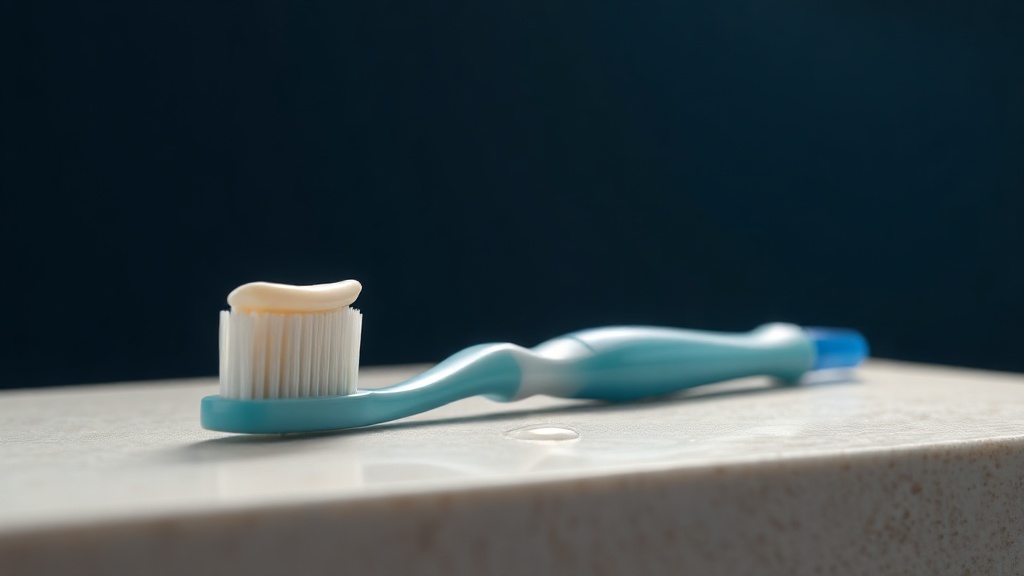
A whitening toothpaste polishes stain off the surface of the enamel; it does not reach the dentine, where a tooth's deeper colour lives.
What the research actually shows
Every claim below maps to a named, peer-reviewed source in the Sources section. According to PubMed.
| Claim | Evidence | Source |
|---|---|---|
| Among over-the-counter agents, only hydrogen peroxide genuinely whitened teeth; non-peroxide products (including baking soda and enzyme pastes) achieved stain removal only. | In-vitro comparison of six OTC whitening agents vs hydrogen peroxide on human teeth. | Muller-Heupt et al., 2023 |
| Non-peroxide whitening products lighten teeth only by removing superficial stain, with a colour change so small it is barely perceptible (about 0.9-1.15 ΔE). | Four-week in-vitro study of non-peroxide whitening mouthrinses measured by spectrophotometer. | Ntovas et al., 2021 |
| Across 26 commercial toothpastes, abrasiveness (RDA) ranged from 36 to 269, and stain removal did not track directly with how abrasive a paste was. | Standardised in-vitro RDA and pellicle-cleaning-ratio testing of retail dentifrices. | Schemehorn et al., 2011 |
| A baking-soda and peroxide toothpaste cut extrinsic stain by 61.6% and improved tooth shade by 2.57 units over six weeks, while a silica control was essentially unchanged. | Randomised, controlled six-week clinical trial in 146 subjects. | Ghassemi et al., 2012 |
| Charcoal toothpastes whiten less than other options and are more abrasive, making them a less safe choice for stain removal. | Systematic review of 11 in-vitro studies of charcoal dentifrices. | Montero Tomas et al., 2022 |
What a whitening toothpaste can and cannot do
| The job | Can whitening toothpaste do it? | What actually does it |
|---|---|---|
| Lift coffee, tea, wine and tobacco surface stains | Yes — this is its real strength | Gentle polishing agents and mild abrasion |
| Change the tooth's deeper (intrinsic) colour | No | Peroxide gel, strips or professional bleaching |
| Whiten a crown or a veneer | No | Nothing — the restoration has to be replaced |
| Keep teeth bright between whitening sessions | Yes — this is good maintenance | Daily stain control with a low-abrasion paste |
| Brighten without scrubbing enamel away | Yes, if the abrasivity is low | A low-RDA formula, a soft brush and light pressure |
Why 'more abrasive' does not mean 'more effective'
It is tempting to assume a whitening paste that feels gritty must be working harder. The evidence says otherwise. When one laboratory tested 26 commercial toothpastes, their abrasiveness — measured as Relative Dentin Abrasivity, or RDA — ranged enormously, from about 36 to 269, yet the amount of stain each removed did not track neatly with how abrasive it was. Some low-abrasion pastes cleaned as well as gritty ones; a few harsh ones cleaned poorly. In plain terms, stain removal and enamel wear are two separate dials, and the goal is a paste that turns the first one up without the second. This matters because enamel does not grow back once it is worn away. Baking soda is the clearest example of the gentle-but-effective combination: it sits at the low end of the abrasivity scale, helps buffer acid, and still lifts stain reliably — often out-cleaning pastes that feel far rougher. Charcoal pastes sit at the opposite, worst-of-both-worlds corner: a systematic review found they whiten less than ordinary toothpaste while being more abrasive, which is why so many dentists, and even long-time users, now warn against them. When you shop, a lower advertised abrasivity paired with proven stain removal beats any promise printed on the front of the tube.
Evidence you can act on.
Occasional emails — new research, new protocols, no noise.
How to choose and use a whitening toothpaste
None of this bleaches a tooth or treats a condition — it simply keeps the surface clean and bright while protecting the enamel you cannot replace. Choose for stain removal and gentleness, then use it patiently.
- 1
Shop for stain removal, not 'bleaching' promises
at purchaseA tube can honestly say it removes surface stains and helps teeth look whiter; a toothpaste that promises to bleach or lastingly change the colour of your natural tooth colour is overselling what any paste can do. Read the claim, not the marketing.
- 2
Favour a low-abrasion (low-RDA) formula
at purchaseLook for baking-soda or gentle-polishing formulas rather than gritty 'extreme' pastes or charcoal. Lower abrasivity removes stain just as well in the studies while sparing enamel over years of daily brushing.
- 3
Use a soft brush and a light hand
twice dailyMost enamel wear comes from technique, not toothpaste. A soft-bristled brush, light pressure and small circles let the paste do the polishing without you sanding the surface.
- 4
Give it weeks, not days
4-6 weeksSurface stain lifts gradually. In the clinical trials, meaningful shade and stain improvements showed up around weeks four to six of twice-daily use — so judge a paste over a month, not a morning.
- 5
Add peroxide only if you want a true shade change
as neededIf your goal is genuinely lighter teeth rather than stain-free ones, pair maintenance brushing with a peroxide product — strips, a gel tray or a professional treatment. The toothpaste keeps the result clean; the peroxide creates it.
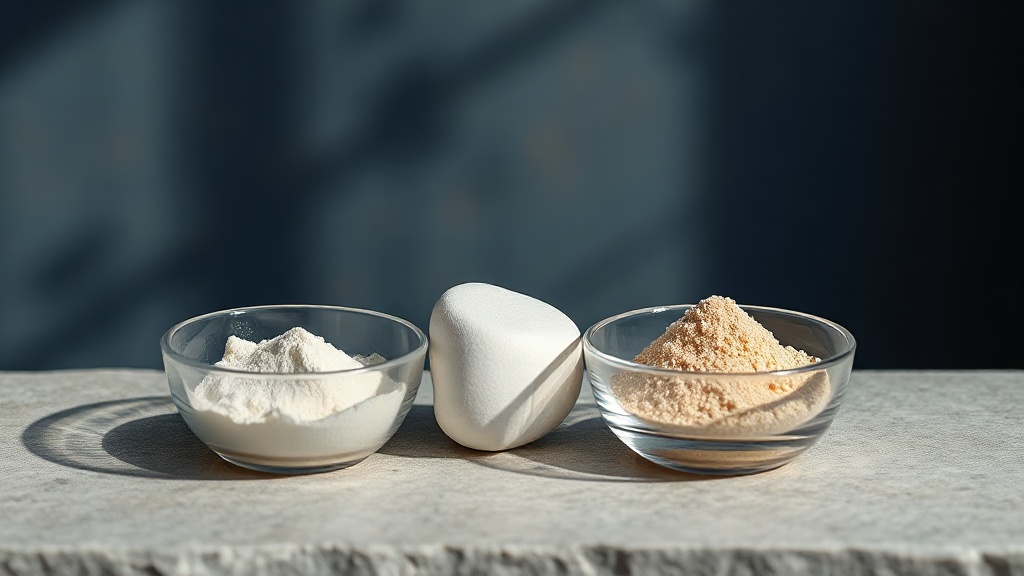
Fine, low-abrasion agents like baking soda can clean stain as well as coarse ones — abrasiveness and stain removal are not the same thing.
If your teeth look darker than a surface stain would explain, if a single tooth is discolouring, or if brightening does not budge with weeks of good brushing, the colour is likely intrinsic — inside the tooth — and a whitening toothpaste will not touch it. See a dentist to check for the cause and to discuss peroxide whitening or other cosmetic options. Also check in if brushing brings on sensitivity or if your gums are receding, since exposed root surfaces stain differently and wear more easily.
Frequently asked questions
Sources
- 1.
- 2.
- 3.
- 4.
- 5.
- 6.
- 7.
- 8.

Fix your breath at the source.
The complete science-backed protocol — engineered to eliminate volatile sulfur compounds at the biological source.
Start the Breath Protocol →Related reading
Educational purposes only. The content on this page is not medical advice and is not a substitute for consultation with a qualified dental or medical professional.
More from the library
 Best Of8 min
Best Teeth Whitening Powder (2025): Peroxide-Free & Enamel-Safe Picks
Whitening powders lift surface stain by polishing, not bleaching. The safe pick removes stain at low abrasivity; the trendy one quietly wears enamel.
Read →→ Best Of8 min
Best Whitening Mouthwash: Honest Picks and What Actually Works
A whitening mouthwash is a maintenance tool, not a transformation. Here is how the main types really compare, and how to pick one that earns its place.
Read →→ Answers8 min
Does Baking Soda Whiten Teeth? What the Evidence Says
An honest look at what baking soda can and cannot do for a whiter smile.
Read →→ Guides8 min
Teeth Whitening for Sensitive Teeth: A Gentle, Evidence-Based Guide
A calm, evidence-based guide to whitening when your teeth are prone to sensitivity — the levers that actually lower discomfort without giving up results.
Read →→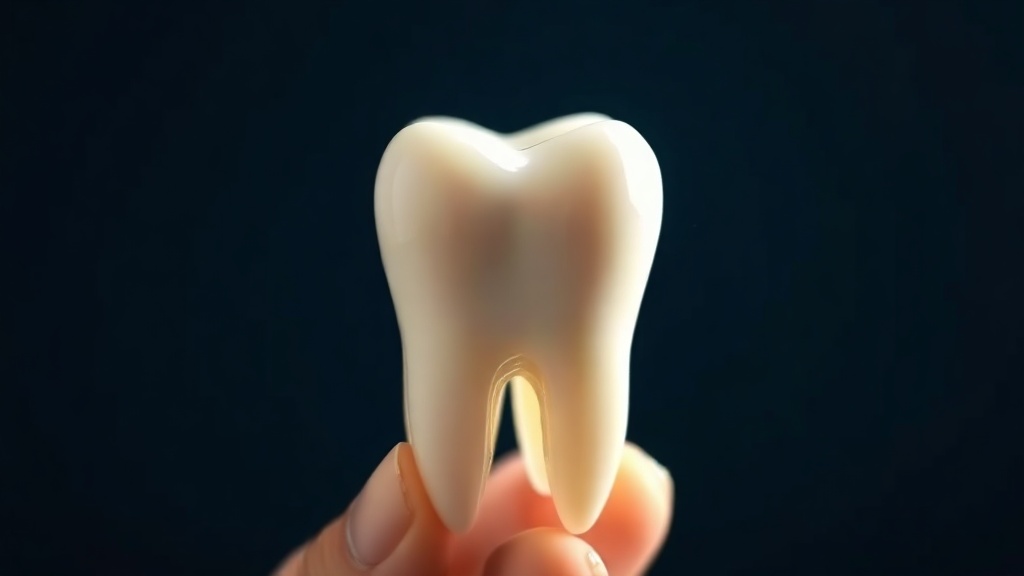 Answers8 min
Does Teeth Whitening Damage Enamel? The Evidence-Based Answer
The honest, evidence-based answer to whether whitening harms enamel — what peroxide really does to the surface, why sensitivity is not damage, and the DIY methods that actually cause wear.
Read →→ Best Of9 min
Best Fluoride-Free Whitening Toothpaste: An Honest, Evidence-Based Guide (2026)
Which fluoride-free whitening ingredients hold up to the research — and which are marketing. An honest buyer's guide.
Read →→