Natural Teeth Whitening: What Actually Works (and What Wrecks Your Enamel)
The honest truth about natural whitening — which home methods lift surface stains safely, and which ones quietly damage your enamel.
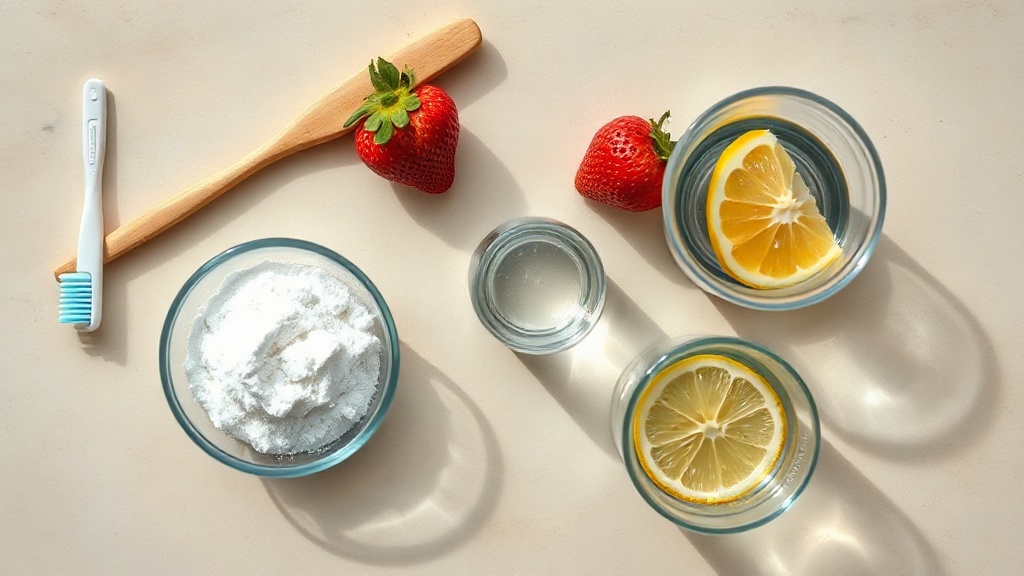
- "Natural whitening" mostly means removing surface stains, not bleaching the tooth. Real color change deeper than the surface only comes from oxidation (peroxide) or from lightening what stains the enamel from outside.
- Baking soda is the one natural method with solid support: it lifts surface stains and can improve tooth shade by a couple of shade units, and it does this at low abrasivity when used gently.
- Charcoal is the method to avoid: studies show it whitens less than ordinary toothpaste while abrading enamel more, which is why dentists and even online communities now warn against it.
- Oil pulling, lemon or citrus rubs, and most "detox" pastes either do nothing measurable for color or actively erode enamel — a change you cannot undo.
- You can look brighter naturally by clearing surface stains and protecting enamel; for a true shade change, a gentle low-concentration peroxide product is the honest next step.
Natural teeth whitening mainly removes surface stains rather than bleaching the tooth. Baking soda is the safe, evidence-backed option: it polishes away stains at low abrasivity. Charcoal, lemon and oil pulling either do not whiten or damage enamel. For a real shade change, a gentle peroxide product is the honest path.
What "natural whitening" can and cannot do
To judge any home method fairly you have to separate two very different things: removing stains that sit on the outside of the tooth, and changing the tooth's own colour. Most of what we call staining is extrinsic — coffee, tea, red wine and tobacco pigments settle into the thin protein film (the pellicle) on the enamel surface. A gentle polish can lift that film, and the tooth looks brighter because you have removed something that was sitting on top. That is real, and it is what the best "natural" methods do. True whitening is different. The tooth reads yellow largely because of the dentine underneath the enamel, and the only way to lighten that is to oxidise the coloured molecules inside — which is exactly how peroxide works, diffusing through the enamel to bleach the colour chemically. No food, oil or powder in your kitchen does that. So when a product promises to "naturally bleach" your teeth, the honest translation is almost always "remove some surface stain" — worth doing, but not the same as a shade change. Colour scientists even have a yardstick for whether a change is visible at all: differences smaller than roughly one to three ΔE units are at or below what the human eye reliably notices.
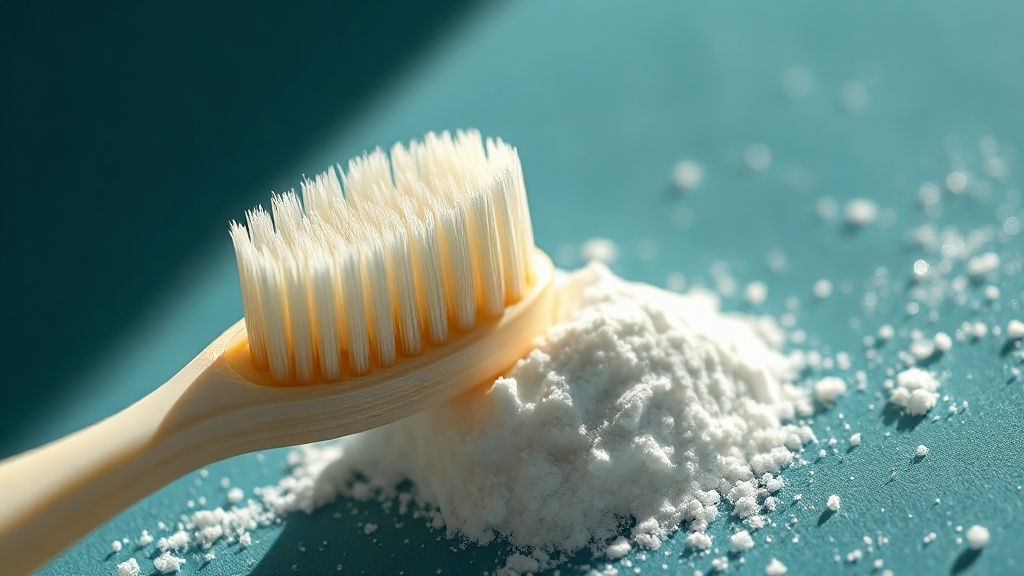
Baking soda works by gently polishing surface stains off the enamel — it brightens by removing what sits on top, not by bleaching the tooth.
What the research actually shows
Every claim below maps to a named, peer-reviewed source in the Sources section. According to PubMed.
| Claim | Evidence | Source |
|---|---|---|
| A baking-soda dentifrice cut surface stain by 61.6% and improved tooth shade by 2.57 shade-guide units by week 6, versus an unchanged control. | Randomised controlled trial, 146 subjects. | Ghassemi et al., 2012 |
| Stain removal and abrasivity are not directly coupled — you do not need a harsh, high-abrasion paste to lift stain, and baking soda sits at the lower end of the abrasivity (RDA) scale. | Laboratory comparison of 26 dentifrices. | Schemehorn et al., 2011 |
| Charcoal toothpastes had lower whitening than alternatives and higher abrasive potential, and were judged "less safe." | Systematic review of 11 in-vitro studies. | Montero Tomas et al., 2022 |
| Non-peroxide agents (baking soda, enzymes, sodium chlorite) mostly remove surface stain; only oxidation genuinely changes the tooth's shade. | In-vitro comparison of OTC whitening agents. | Muller-Heupt et al., 2023 |
| Lemon juice is among the most erosive common fruit acids, causing about 0.52 microns of enamel loss — comparable to a citric-acid control. | In-vitro enamel erosion study. | Romao et al., 2021 |
Natural methods, honestly ranked
| Method | What it actually does | Enamel-safe? |
|---|---|---|
| Baking-soda paste (used gently) | Polishes away surface stains; teeth look brighter | Yes — low abrasivity |
| Nano-hydroxyapatite paste | Brightens optically and remineralises; does not bleach | Yes |
| Whitening toothpaste (silica/enzyme) | Mostly abrasion plus optical effect; modest surface-stain lift | Usually — check the paste is not high-abrasion |
| Oil pulling (coconut oil) | No measured change in tooth shade | Harmless, but ineffective for whitening |
| Charcoal powder or paste | Whitens less than plain toothpaste; roughens enamel | No — more abrasive |
| Lemon, citrus or DIY acid mixes | Strips surface minerals; can leave teeth duller over time | No — erosive hazard |
Where the natural-whitening myths come from
Most viral "natural whitening" tricks share one flaw: the short-term appearance of a whiter tooth without any real colour change — or worse, a brighter look bought at the cost of enamel. Charcoal is the clearest example. It feels productive because it is gritty, and gritty scrubbing does buff off some surface stain, so people see a quick difference. But controlled work shows charcoal actually whitens less than an ordinary paste while wearing enamel down faster, and once enamel is abraded it does not grow back. That is exactly why one large review concluded charcoal products "should be discouraged." Lemon and other citrus rubs are worse still: the acid dissolves surface minerals, which can momentarily look like a cleaner tooth but leaves the enamel etched and, over time, more prone to looking dull and yellow as the softened surface picks up stain more easily. DIY mixes that pair an acid with an abrasive — the classic strawberry-and-baking-soda hack — combine both harms and have been shown to soften enamel measurably. Oil pulling sits in a gentler category: it is not damaging, but there is no measured whitening effect, so the glowing testimonials are almost certainly a mix of better overall oral hygiene and wishful thinking. The pattern to remember: if a method relies on scrubbing hard or on acid, it is trading your enamel for the illusion of white.
Evidence you can act on.
Occasional emails — new research, new protocols, no noise.
An enamel-safe natural brightening routine
You can genuinely look brighter without risking your enamel — the trick is to clear surface stains gently, protect the enamel, and stop feeding new stain. None of this treats a medical condition; it is simple cosmetic care.
- 1
Polish gently with baking soda a few times a week
2 minutesA soft brush with a little baking soda (or a low-abrasivity baking-soda toothpaste) lifts surface stains without the harshness of charcoal. Because stain removal is not tied to abrasivity, gentle is enough — there is no need to scrub.
- 2
Use a remineralising or brightening paste day to day
twice dailyA nano-hydroxyapatite or fluoride paste keeps the enamel surface smooth and strong. Nano-hydroxyapatite in particular makes teeth look brighter by depositing a fine light-scattering layer, rather than by bleaching.
- 3
Cut stain off at the source
ongoingStaining is cumulative and depends on contact time, so it is the sipping-all-day habit that darkens teeth most. Drinking coffee, tea and red wine in one sitting, using a straw for cold drinks, and rinsing with water afterwards all reduce how much pigment settles in.
- 4
Let a powered toothbrush do the surface work
twice dailyA powered toothbrush removes extrinsic stain about as well as a professional clean in some studies, and far more consistently than aggressive manual scrubbing — a much safer way to keep the surface bright.
- 5
For a true shade change, go gentle and low-concentration
as directedIf clearing stains is not enough and you want the tooth itself to be lighter, the honest option is a low-concentration peroxide product used as directed, or a professional treatment. That is the only route that changes the tooth's real colour — and low and slow keeps sensitivity down.
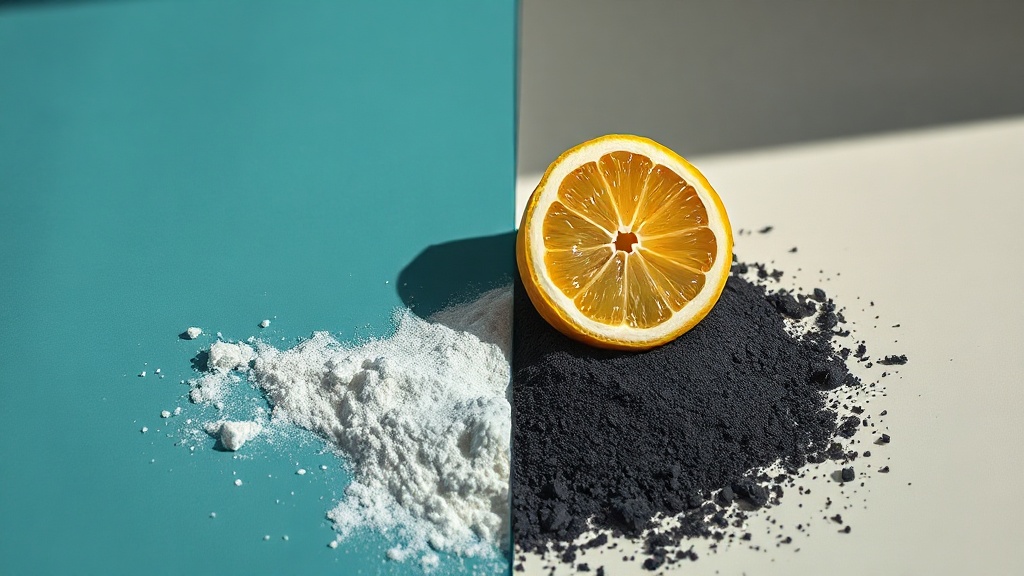
The honest split: gentle baking soda polishes safely, while charcoal grit and citrus acid brighten only by wearing enamel away.
Natural methods only address surface stain. If your teeth are evenly grey or deeply yellow from within, if a single tooth is much darker than its neighbours, or if brightness has not budged after weeks of gentle care, see a dentist — the cause may be intrinsic (inside the tooth) and worth assessing in person. Also check in if home whitening leaves lasting sensitivity, or if you have crowns, veneers or fillings, since those do not lighten and can end up mismatched.
Frequently asked questions
Sources
- 1.
- 2.
- 3.
- 4.
- 5.
- 6.
- 7.
- 8.
- 9.
- 10.
- 11.

Fix your breath at the source.
The complete science-backed protocol — engineered to eliminate volatile sulfur compounds at the biological source.
Start the Breath Protocol →Related reading
Educational purposes only. The content on this page is not medical advice and is not a substitute for consultation with a qualified dental or medical professional.
More from the library
 Answers8 min
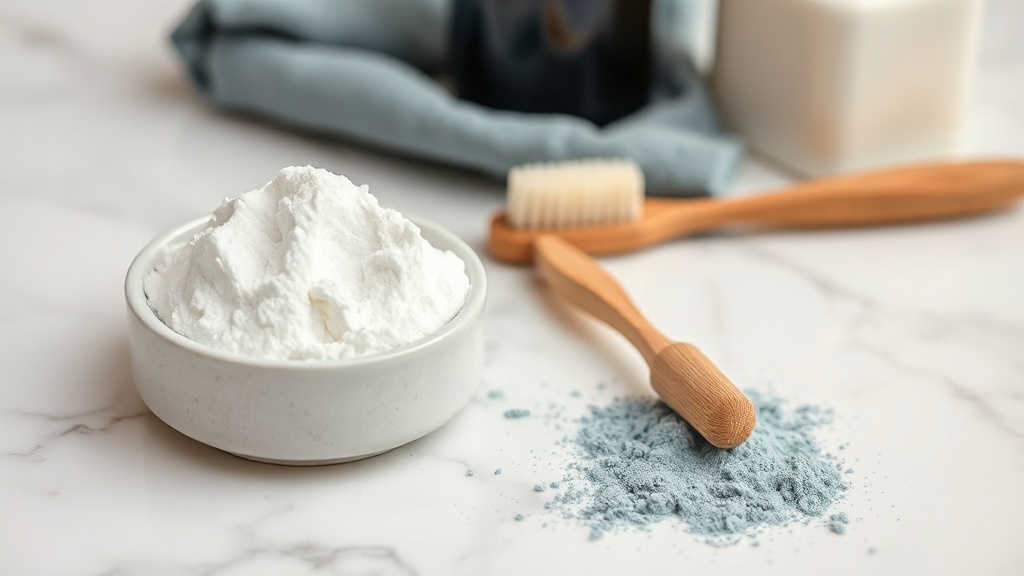
Does Baking Soda Whiten Teeth? What the Evidence Says
An honest look at what baking soda can and cannot do for a whiter smile.
Read →→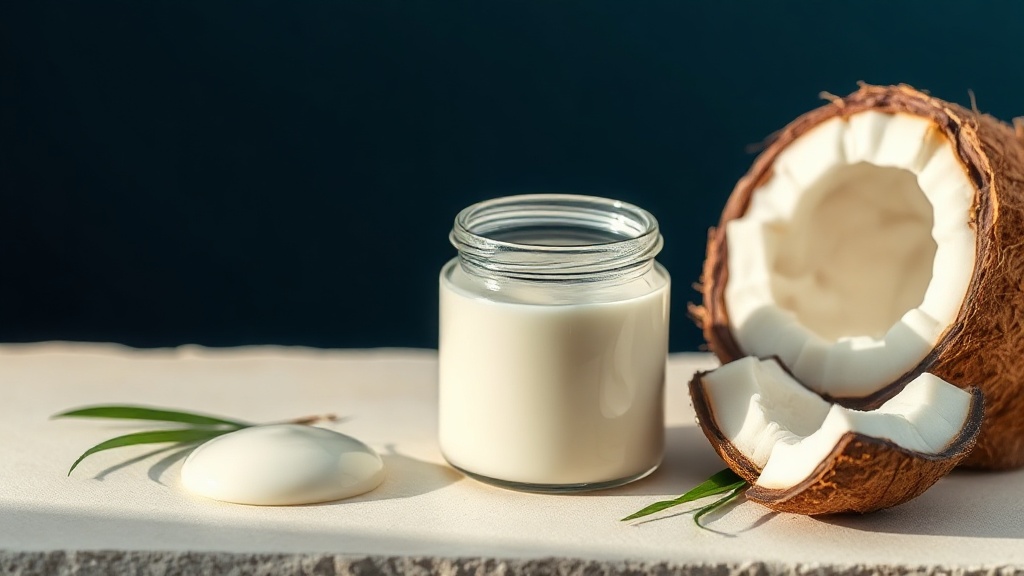 Answers8 min
Does Oil Pulling Whiten Teeth? What the Evidence Actually Shows
The honest answer is no. No study has measured a real colour change from oil pulling. Here is why the myth persists and what genuinely brightens a smile.
Read →→ Guides8 min
How to Get Rid of Yellow Teeth: An Enamel-Safe Guide
Two kinds of yellow, two different fixes, and the enamel-safe way to brighten each one.
Read →→ Causes8 min
Why Do Teeth Turn Yellow? The Real Colour Science
A calm, evidence-based look at what actually makes teeth yellow — enamel optics, dentine colour and surface staining — and what you can realistically influence.
Read →→ Answers8 min
Does Teeth Whitening Damage Enamel? The Evidence-Based Answer
The honest, evidence-based answer to whether whitening harms enamel — what peroxide really does to the surface, why sensitivity is not damage, and the DIY methods that actually cause wear.
Read →→ Best Of9 min
Best Fluoride-Free Whitening Toothpaste: An Honest, Evidence-Based Guide (2026)
Which fluoride-free whitening ingredients hold up to the research — and which are marketing. An honest buyer's guide.
Read →→