Does Oil Pulling Whiten Teeth? What the Evidence Actually Shows
The honest answer is no. No study has measured a real colour change from oil pulling. Here is why the myth persists and what genuinely brightens a smile.
- No study has ever measured a genuine colour or shade change from oil pulling, so there is no evidence that swishing coconut or sesame oil actually whitens teeth.
- Real whitening needs an oxidising agent, usually peroxide, that diffuses into the tooth to break down coloured molecules; plain oil has no chemistry that can do this.
- The whiter look some people report is almost certainly a cleaner surface, similar to a light polish, plus the natural pull of wanting a natural habit to work, not a true change in tooth colour.
- Even a marketed regimen built around plant oils and salt failed to lighten teeth in a controlled trial, while ordinary peroxide strips in the same study clearly did.
- Oil pulling is low-risk as an add-on to brushing and flossing, but it should never replace them, and it is not a substitute for a proven whitening method if a real colour change is your goal.
No. There is no evidence that oil pulling whitens teeth. No study has ever measured a shade or colour change from it, and oil has none of the oxidising chemistry that real whitening relies on. Any brighter look comes from a cleaner surface, not a true colour change. For that, gentle stain removal or peroxide whitening is what works.
What oil pulling is, and what it can and cannot do
Oil pulling is an old practice of swishing a tablespoon of edible oil, usually coconut or sesame, around the mouth for anywhere from five to twenty minutes and then spitting it out. The idea is that the oil lifts bacteria, food debris and some of the sticky film from the teeth. Traditionally it was used for general mouth cleanliness, and what little modern research exists has looked at bacteria and debris rather than tooth colour. That distinction is the whole answer to the whitening question. To change the actual colour of a tooth, you have to reach the coloured molecules that live in and under the enamel and break them apart, and the only well-established way to do that is with an oxidising agent such as hydrogen or carbamide peroxide, which diffuses through the enamel and oxidises those pigments. The effect depends on the concentration of the agent and how long it stays in contact. Oil does none of this. It cannot oxidise a pigment, it does not diffuse into the tooth, and it has no bleaching action of any kind. So while a swish of oil may leave the surface feeling clean, there is no plausible mechanism by which it would lighten the tooth itself, and no measurement has ever shown that it does.
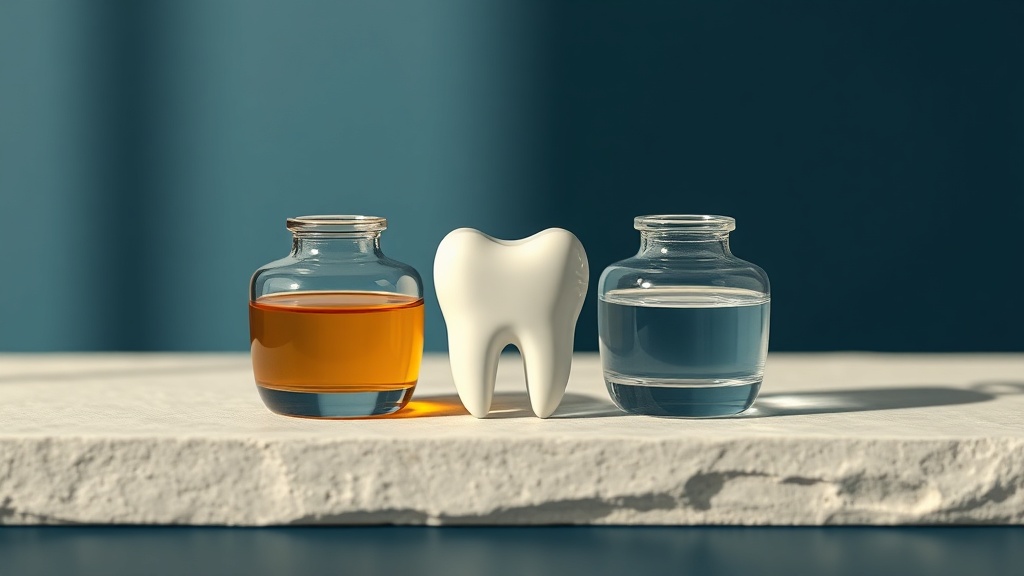
Coconut oil cleans the surface but cannot change tooth colour; only an oxidising agent such as peroxide produces a measured shade change.
What the research actually shows
Every claim below maps to a named, peer-reviewed source in the Sources section. According to PubMed.
| Claim | Evidence | Source |
|---|---|---|
| True whitening requires an oxidising agent, usually peroxide, that diffuses into the tooth and breaks down coloured molecules; the effect scales with concentration and contact time. | Reference review of the whitening mechanism. | Joiner, 2006 |
| For a colour change to be visible at all it has to cross a measurable perceptibility threshold; agents that only clean the surface rarely reach it. | Study defining perceptibility and acceptability colour thresholds. | Paravina et al., 2015 |
| A regimen built around plant oils (coconut, sage, lemon) and Dead Sea salt produced no significant lightening in a controlled trial, while peroxide strips clearly did. | Randomised, double-blind clinical trial. | Gurich et al., 2023 |
| Non-peroxide products at best remove surface stain; only peroxide actually whitens the tooth structure. | In-vitro comparison of over-the-counter agents versus peroxide. | Muller-Heupt et al., 2023 |
| Non-peroxide whitening rinses shift colour only slightly by lifting surface stain, an effect described as barely perceptible. | In-vitro study of whitening mouthrinses. | Ntovas et al., 2021 |
Oil pulling next to methods with measured evidence
| Method | How it is meant to work | Measured whitening evidence |
|---|---|---|
| Oil pulling with coconut or sesame oil | Swishing oil to lift bacteria and debris | None; no study has measured a shade or colour change |
| Whitening or baking-soda toothpaste | Gentle polishing lifts surface stain | Modest surface-stain removal, not bleaching |
| Peroxide strips or gel | Peroxide oxidises colour inside the tooth | Strong, repeatedly measured colour change |
| Professional whitening | Higher-concentration peroxide, supervised | The largest and most reliable colour change |
| Charcoal powder | Abrasive scrubbing of the surface | Whitens less than ordinary paste and is more abrasive |
Where the my-teeth-got-whiter stories come from
Plenty of people genuinely feel their teeth look better after a few weeks of oil pulling, and it is worth taking that experience seriously rather than dismissing it. There are two honest explanations, and neither is bleaching. The first is surface cleanliness. Swishing anything thoroughly for several minutes, twice a day, disturbs the soft film and loose debris on the teeth, and a cleaner surface reflects light a little more evenly, so teeth can look fresher and marginally brighter, the same way they do after a polish. That is stain and film management, and it plateaus quickly once the surface is clean; it is not a colour change moving deeper into the tooth. The second is expectation. Whitening is unusually suggestible: in blinded trials, people given a dummy treatment with no active ingredient and no measurable colour change still report feeling their smile improved. When someone invests fifteen minutes a morning in a wholesome-feeling ritual, they are primed to notice improvement. None of this makes oil pulling a scam, but it does explain why the enthusiastic reviews and the measurements do not line up. The reviews describe a feeling of a cleaner, brighter mouth. The measurements, when anyone takes them, show no whitening.
Evidence you can act on.
Occasional emails — new research, new protocols, no noise.
If you want to try oil pulling, do it sensibly
Oil pulling is a low-risk ritual you can keep if you enjoy it, as long as you treat it as an extra rather than a whitening treatment. Here is how to use it without letting it crowd out the things that actually keep teeth clean and bright. None of this treats a disease; it is simple cosmetic and hygiene care.
- 1
Keep it as an add-on, never a replacement
optionalThe real risk of oil pulling is not the oil, it is skipping proven basics because you feel the oil has it covered. Keep brushing twice a day with a fluoride toothpaste and cleaning between your teeth; treat any oil swishing as an extra on top of that, not a substitute for it.
- 2
Swish gently and spit it in the bin
5 to 15 minutesUse about a tablespoon of coconut or sesame oil, swish gently rather than forcefully to avoid tiring your jaw, and spit the used oil into a bin, not the sink, where it can solidify and clog the drain. Do not swallow it, and rinse your mouth with water afterwards.
- 3
For a cleaner, brighter surface, polish gently
twice dailyIf your goal is that fresh, brighter-surface look, a gentle low-abrasion whitening or baking-soda toothpaste removes surface stain far more efficiently than swishing oil, and it does so in seconds rather than minutes. This is the honest way to get the effect people credit to oil pulling.
- 4
For a real colour change, use a proven method
as directedIf you actually want lighter teeth, not just a cleaner surface, a peroxide-based strip, tray or professional treatment is what produces a measured change, because the effect depends on peroxide concentration and contact time. A dentist can point you to a safe option for your teeth.
- 5
Manage stain at the source
every dayWhatever you choose, keeping teeth bright is easier if you slow down staining in the first place. Rinse with water after coffee, tea and red wine, use a straw for iced dark drinks, and avoid nursing them for hours, since staining builds up with contact time.

Slowing how long staining drinks stay in contact does more for brightness than any oil ever could.
If your teeth look yellow or brown and you want a real, lasting colour change, a dentist can talk you through safe whitening options rather than leaving you to chase results from oil. See one in person if a single tooth has darkened on its own, if discolouration comes with sensitivity or pain, or if you have staining you suspect comes from inside the tooth, since none of those respond to oil pulling or any home routine and may need proper assessment.
Frequently asked questions
Sources
- 1.
- 2.
- 3.
- 4.
- 5.
- 6.
- 7.

Fix your breath at the source.
The complete science-backed protocol — engineered to eliminate volatile sulfur compounds at the biological source.
Start the Breath Protocol →Related reading
Educational purposes only. The content on this page is not medical advice and is not a substitute for consultation with a qualified dental or medical professional.
More from the library
 Answers8 min
Does Coconut Oil Whiten Teeth? An Honest, Evidence-Based Answer
An honest look at the coconut oil whitening claim, what the research on oil pulling really measured, and the gentle methods that actually work.
Read →→ Answers8 min
Does Teeth Whitening Damage Enamel? The Evidence-Based Answer
The honest, evidence-based answer to whether whitening harms enamel — what peroxide really does to the surface, why sensitivity is not damage, and the DIY methods that actually cause wear.
Read →→ Answers8 min
Do Whitening Strips Damage Enamel? What Studies Show
An evidence-based look at whether whitening strips harm enamel: what peroxide really does to the surface, why softening is reversible, and how sensitivity differs from damage.
Read →→ Guides8 min
Purple Toothpaste: Does the Color-Correcting Trick Actually Work?
A calm look at how purple toothpaste masks yellow tones optically, why the effect is temporary, and where it fits alongside methods that actually change your shade.
Read →→ Answers8 min
Does Baking Soda Whiten Teeth? What the Evidence Says
An honest look at what baking soda can and cannot do for a whiter smile.
Read →→ Best Of9 min
Best Fluoride-Free Whitening Toothpaste: An Honest, Evidence-Based Guide (2026)
Which fluoride-free whitening ingredients hold up to the research — and which are marketing. An honest buyer's guide.
Read →→