
Why Do Teeth Turn Yellow?
A calm, evidence-based look at what actually makes teeth yellow — enamel optics, dentine colour and surface staining — and what you can realistically influence.
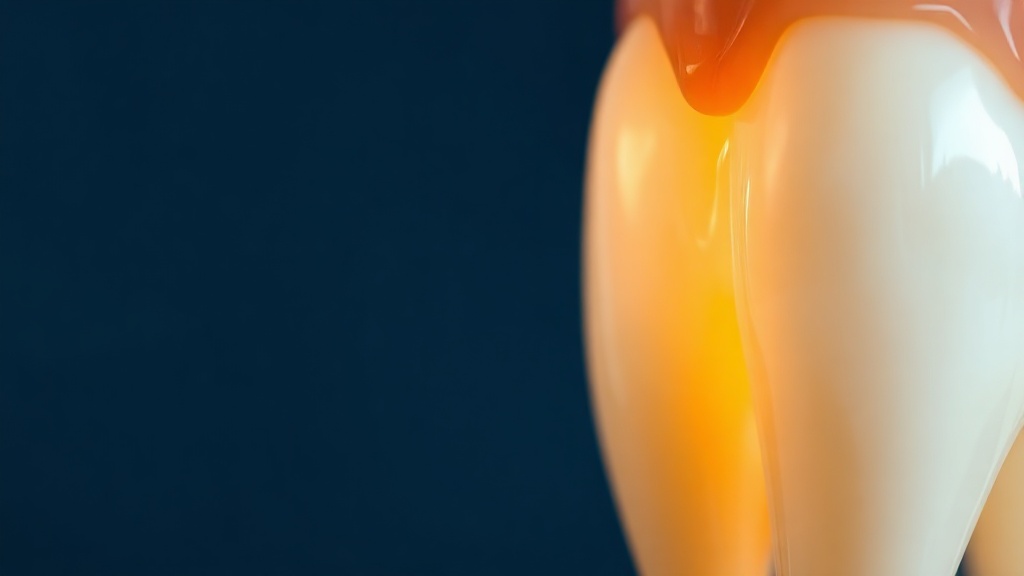
- Two things drive yellowing: the outer enamel gradually thins and grows more translucent, and the naturally yellow dentine beneath it shows through more over time. For most people this is a normal, physiologic colour shift, not a sign of decay.
- Even a perfectly healthy tooth is not paper-white. Enamel is slightly translucent and dentine is inherently yellow, so the base colour of a clean, cavity-free tooth is naturally warm.
- On top of that base colour sits extrinsic staining — pigments from coffee, tea, red wine and tobacco that lodge in the thin protein film (the pellicle) on the enamel surface and accumulate day by day.
- Some yellowing is intrinsic, built into the tooth — for example the banding left by certain childhood antibiotics. That colour lives inside the tooth and is a cosmetic matter for a professional, not something a rinse can lift.
- The colour you can most realistically influence is the surface-stain layer. The deeper, age-related shift is about the tooth's own optics, which is why looking whiter is usually about brightening and removing stains rather than bleaching a tooth back to childhood white.
Teeth turn yellow mainly for two reasons: the outer enamel thins and becomes more translucent with age, letting the naturally yellow dentine beneath show through, and pigments from food, drink and tobacco build up in the surface film on the enamel. Most yellowing is a normal cosmetic colour shift, not decay.
The colour of a tooth starts inside it
A tooth is not a single white block. It is built in layers, and its colour is really the sum of how light behaves as it passes through them. The outer shell, enamel, is the hardest and most highly mineralised tissue in the body, made of tightly packed hydroxyapatite crystals. But hard does not mean opaque: enamel is slightly translucent, more like frosted glass than white paint. Underneath it sits dentine, which is softer, denser in organic material, and naturally yellow. Because enamel lets light through, a good deal of the colour you see is actually the dentine showing from beneath. When researchers measured this directly in the mouth, a dentine-backed enamel complex read distinctly more yellow than pure enamel on its own — its yellowness value climbed while it also became more opaque. This is why whitening chemistry is aimed where it is: peroxide works by diffusing through the enamel to oxidise the coloured molecules that sit mainly in the dentine. In other words, the tooth's base shade is governed by its inner layer, not by a film of dirt on the outside. That single fact explains most of what follows about why teeth look yellow and what can and cannot change it. It also explains why two people with equally clean teeth can have very different natural shades: the thickness and translucency of enamel and the underlying dentine colour are largely inherited, so some people simply start life with warmer-looking teeth. Genetics set the baseline, age slowly shifts it warmer, and everything you do on the surface plays out on top of that fixed starting point rather than replacing it.
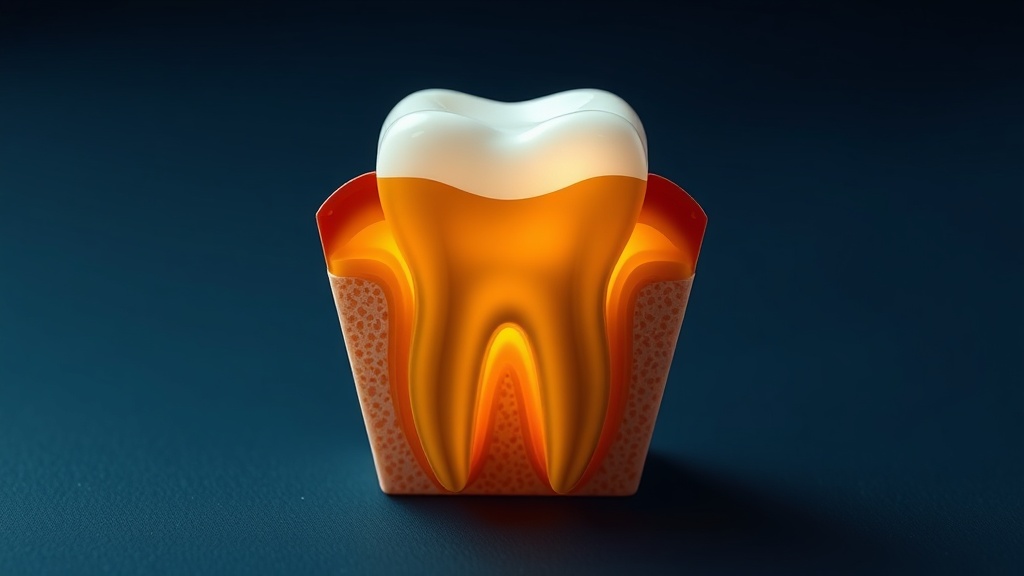
The warmth you see is largely the yellow dentine showing through translucent enamel — and it grows more visible as enamel thins.
What the research actually shows
Every claim below maps to a named, peer-reviewed source in the Sources section. According to PubMed.
| Claim | Evidence | Source |
|---|---|---|
| With age, enamel thins and becomes more translucent while dentine darkens and grows more saturated, so teeth read progressively yellower — a normal physiologic change, not disease. | Authoritative review of the ageing mouth. | Lamster et al., 2016 |
| Measured in the mouth, a dentine-backed enamel complex reads markedly more yellow than pure enamel (yellowness b* about 20.4 versus 17.2), quantifying why the dentine layer drives the warm colour. | In-vivo spectrophotometric study of enamel optical properties. | Ardu et al., 2010 |
| Tooth discolouration is classified as extrinsic (surface pigment), intrinsic (within the tooth) or internalised — the framework that explains why different yellows behave so differently. | Canonical review of tooth discolouration. | Sulieman, 2005 |
| Whitening chemistry works by oxidising coloured molecules that sit mainly in the dentine, confirming the tooth's inner layer governs its base shade. | Reference review of the bleaching mechanism. | Joiner, 2006 |
| Everyday surface staining is cumulative and time-dependent, adding roughly 0.34 colour units (ΔE) per day of contact with staining drinks. | Controlled study of beverage contact time on enamel. | Farawati et al., 2019 |
What actually makes teeth look yellow
| What makes teeth look yellow | How it works | Can you influence it? |
|---|---|---|
| Thinner, more translucent enamel with age | Less opaque enamel to mask the dentine, so the warm layer reads through | No — it is normal ageing of the tooth |
| Naturally yellow dentine showing through | Dentine is inherently more saturated and becomes more so over time | Not directly — it is the tooth's own biology |
| Surface stains from coffee, tea, red wine, tobacco | Pigments lodge in the pellicle film on the enamel and build up | Yes — this is the layer stain removal targets |
| Intrinsic stains (e.g. tetracycline in childhood) | Colour is built into the tooth structure itself | Only cosmetically, with a professional's help |
| Smoking | Tar and nicotine pigments deposit heavily on the surface | Yes — reducing or stopping measurably lightens shade over weeks |
Where the yellow really comes from — and where it doesn't
It is worth separating the yellow you caused from the yellow you simply grew into. The stains you can act on are extrinsic: chromogens from coffee, black tea, red wine and tobacco settle into the pellicle, the protein film that reforms on your enamel within seconds of brushing. Red wine is the heaviest stainer of the common drinks, far ahead of coffee and tea, and the effect is cumulative — it is the frequency and contact time that build colour, not a single cup. Smoking is its own category, laying down tar and nicotine pigment so heavily that quitting has been shown to measurably lighten tooth shade over a matter of weeks. Then there is the yellow you did not cause. Intrinsic discolouration is built into the tooth: the classic example is the banding some adults carry from tetracycline-type antibiotics taken in childhood, reported in a few per cent of people. That colour sits within the tooth structure and is a cosmetic question for a dentist, never something a toothpaste or rinse dissolves away. And finally, the honest part most marketing skips: the slow warming of teeth with age is optics, not grime. As enamel thins and dentine deepens, no amount of scrubbing returns a tooth to childhood white — the realistic goal is brighter and cleaner, not brand-new. One more honest caveat is worth adding: a single dark tooth among lighter neighbours almost never comes from diet or brushing at all. It usually means that tooth was knocked at some point and the pulp inside changed, darkening the dentine from within. That is intrinsic colour with a specific cause, and it behaves nothing like the even, gradual warming of a whole smile — which is exactly why it needs a dentist to look at rather than a stronger toothpaste.
Evidence you can act on.
Occasional emails — new research, new protocols, no noise.
How to keep teeth looking their brightest
None of this treats a disease — it simply slows surface staining and lets the tooth's natural brightness show. Think maintenance, not miracle.
- 1
Cut the contact time of staining drinks
every dayBecause staining is dose- and time-dependent — on the order of a third of a colour unit per day of exposure — how long a drink lingers on your teeth matters more than the occasional cup. Sip through a straw where practical, and try not to hold coffee, tea or red wine in your mouth.
- 2
Rinse or sip water after staining drinks
after each cupA quick swish or a few sips of water clears loose pigment from the pellicle before it has time to settle in. It is a small habit that quietly slows how fast surface colour builds up.
- 3
Brush gently, and not straight after acids
twice dailyThorough brushing lifts the surface stain layer, and a powered brush does this particularly well. Wait a little after acidic drinks like citrus or wine, though — enamel is briefly softened then, and immediate scrubbing is best avoided.
- 4
Choose a low-abrasivity whitening or baking-soda toothpaste
dailyStain removal and abrasivity are not the same thing, so you do not need a harsh paste to lift colour. A low-abrasivity baking-soda formula removes surface stain gently while being kind to enamel.
- 5
If you smoke, cutting back lightens shade
ongoingTobacco is one of the heaviest surface stainers there is. Beyond the wider health reasons, reducing or stopping has been shown in trials to lighten tooth shade measurably within weeks.
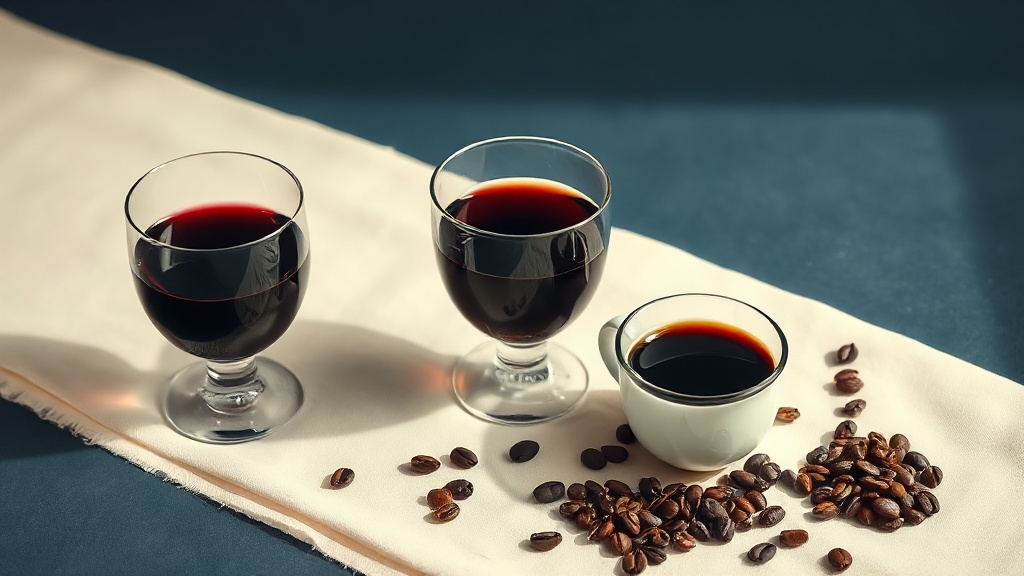
Red wine, coffee and tea are the heaviest everyday stainers; it is the contact time, not one cup, that builds colour.
Gradual, even yellowing across all your teeth is normal. See a dentist, though, if the colour change is sudden, affects a single tooth, or comes with pain, sensitivity, or a grey, brown or banded discolouration — those can signal something other than ordinary surface staining, such as a tooth that has been knocked or an intrinsic stain. Intrinsic discolouration in particular needs an in-person cosmetic assessment rather than a self-applied product.
Frequently asked questions
Sources
- 1.
- 2.
- 3.
- 4.
- 5.
- 6.
- 7.
- 8.

Fix your breath at the source.
The complete science-backed protocol — engineered to eliminate volatile sulfur compounds at the biological source.
Start the Breath Protocol →Related reading
Educational purposes only. The content on this page is not medical advice and is not a substitute for consultation with a qualified dental or medical professional.
More from the library
 Answers8 min
Does Teeth Whitening Damage Enamel? The Evidence-Based Answer
The honest, evidence-based answer to whether whitening harms enamel — what peroxide really does to the surface, why sensitivity is not damage, and the DIY methods that actually cause wear.
Read →→ Guides8 min
How to Remove Coffee Stains From Teeth
A honest, evidence-based guide to lifting coffee stains from teeth without wrecking your enamel: what works, what only polishes the surface, and why to skip charcoal.
Read →→ Causes8 min
Does Turmeric Stain Teeth? Why It Happens and How to Remove It
The golden spice is a potent natural dye — but the stains it leaves sit on the surface and lift with the right gentle habits.
Read →→ Answers8 min
How Often Should You Whiten Your Teeth? Safe Frequency by Method
A method-by-method guide to how often you can brighten your smile without overdoing it — and why more is rarely better.
Read →→ Answers8 min
Does Baking Soda Whiten Teeth? What the Evidence Says
An honest look at what baking soda can and cannot do for a whiter smile.
Read →→ Best Of9 min
Best Fluoride-Free Whitening Toothpaste: An Honest, Evidence-Based Guide (2026)
Which fluoride-free whitening ingredients hold up to the research — and which are marketing. An honest buyer's guide.
Read →→