How to Remove Coffee Stains From Teeth
A honest, evidence-based guide to lifting coffee stains from teeth without wrecking your enamel: what works, what only polishes the surface, and why to skip charcoal.
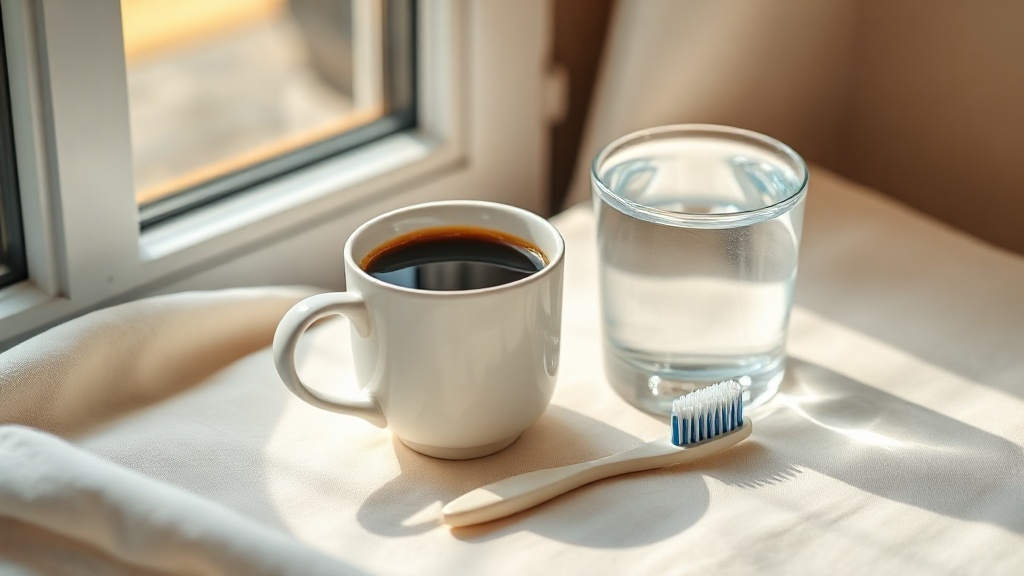
- Coffee stains are almost always extrinsic: pigment settles on the thin protein film (the pellicle) coating your enamel, not deep inside the tooth, which is exactly why they respond so well to surface cleaning.
- The most reliable everyday tools are gentle mechanical cleaning: a powered toothbrush or a low-abrasion baking-soda toothpaste lift surface stain about as well as a professional polish, without scrubbing enamel away.
- Only peroxide chemically lightens the tooth itself; toothpastes, rinses and natural pastes mostly remove what sits on the surface, so match the tool to whether your problem is surface stain or a deeper yellow.
- Cutting contact time matters more than cutting coffee: staining is cumulative, so rinsing with water and not nursing a cup all day reduces how much pigment ever settles.
- Charcoal is the one popular fix worth skipping: reviews find it removes stain no better than ordinary toothpaste while abrading more enamel, and lost enamel does not grow back.
Coffee stains sit mostly on the surface film of your enamel, so they lift with gentle mechanical cleaning: brush twice daily (a powered brush helps), use a low-abrasion baking-soda toothpaste, and rinse with water after coffee. For a deeper, even yellow, only a peroxide whitening product actually lightens the tooth. Skip abrasive charcoal.
Why coffee stains your teeth in the first place
Enamel is not a sealed, glassy surface. Within seconds of brushing, proteins in your saliva form a microscopically thin film over every tooth called the acquired pellicle. Coffee is loaded with dark pigment molecules, and its tannins behave like a glue that helps that pigment bind to the pellicle, so the colour builds up on the outside of the tooth rather than soaking deep into it. This is why dental researchers classify coffee discolouration as extrinsic: it lives on the surface and within the pellicle, not inside the dentine. Among everyday drinks, coffee is a real but middling stainer, red wine and strong black tea deposit more colour and cola less, yet coffee quietly wins on volume because most people drink it daily and slowly. The encouraging half of that biology is simple: what settles on the surface can usually be lifted off the surface, which is why most coffee staining is a cosmetic housekeeping problem rather than a permanent change to the tooth.
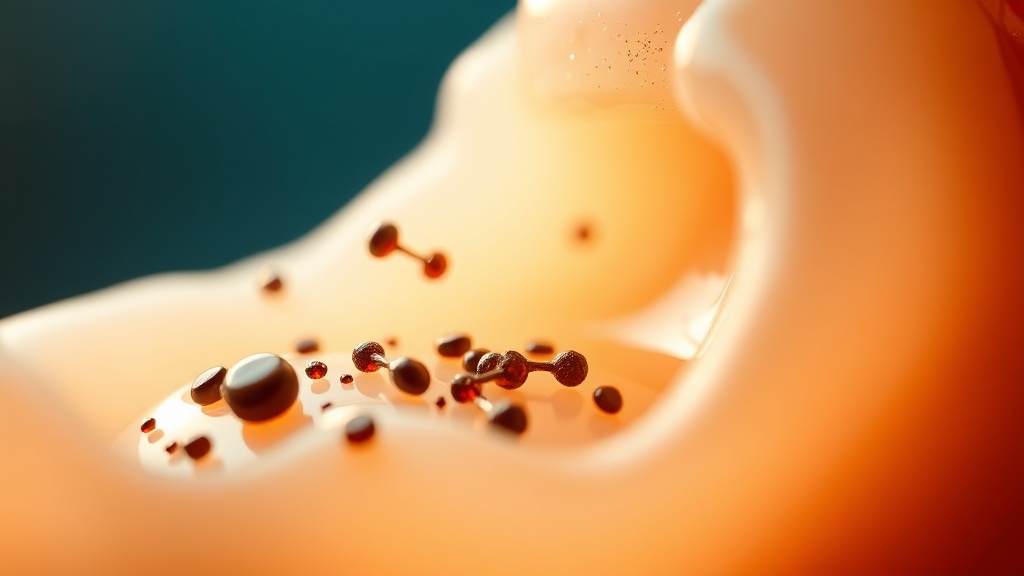
Coffee pigment lodges in the thin salivary pellicle on the outside of the enamel, which is why surface cleaning works so well.
What the research actually shows
Every claim below maps to a named, peer-reviewed source in the Sources section. According to PubMed.
| Claim | Evidence | Source |
|---|---|---|
| Coffee discolouration is extrinsic: pigment deposits on the tooth surface and within the pellicle layer, not deep inside the tooth. | Review classifying extrinsic, intrinsic and internalised stains. | Sulieman, 2005 |
| The acquired pellicle forms within seconds and largely governs how stain and bacteria attach to enamel. | Review of the composition and functions of the enamel pellicle. | Siqueira et al., 2012 |
| Common beverages including coffee, tea and red wine stain enamel to differing degrees under a controlled staining model. | In-vitro beverage staining study. | Sarembe et al., 2022 |
| A baking-soda-based dentifrice cut measured extrinsic stain by about 61.6% and improved shade by 2.57 units over six weeks, at low abrasivity. | 146-subject randomised controlled trial. | Ghassemi et al., 2012 |
| A powered toothbrush removed extrinsic stain comparably to a professional dental polishing. | Clinical extrinsic-stain removal trial. | Terezhalmy et al., 2008 |
What each method really does
| Method | What it actually does | Enamel-safe? |
|---|---|---|
| Powered or manual brushing | Mechanically lifts surface stain and disrupts the pellicle every day | Yes, with soft bristles and light pressure |
| Low-abrasion baking-soda toothpaste | Polishes off extrinsic stain at low abrasivity | Yes |
| Peroxide whitening (strips, trays, gel) | Chemically oxidises deeper colour inside the tooth | Yes as directed; can cause temporary sensitivity |
| Professional dental cleaning | Removes hardened stain and tartar a brush cannot reach | Yes |
| Charcoal powders and pastes | Abrasively scrubs the surface with no real whitening edge | No, higher abrasion and discouraged |
Surface stain versus a truly yellower tooth (and why charcoal is the wrong answer)
Before buying anything, it helps to know which problem you actually have, because the fix is different. If your teeth are an even, deeper yellow all over, that is usually the dentine beneath the enamel showing through, and that is a job for chemical whitening with peroxide, not surface cleaning. If instead you see brown or grey films, flecks and lines near the gumline that a fingernail can sometimes catch, that is classic extrinsic coffee stain, and gentle mechanical cleaning removes it. This distinction explains a common disappointment: non-peroxide whitening toothpastes, rinses and enzyme pastes mostly lift surface stain, so their brightening is genuine but modest, a cosmetic polish rather than true bleaching. Charcoal is the cautionary tale. A systematic review and a controlled trial both found activated-charcoal products whiten no better than a plain fluoride paste while being more abrasive to enamel, and unlike stain, enamel you grind away never comes back. The wider oral-health community has landed on the same verdict, that charcoal simply scrubs the surface and does not restore colour, which is why it belongs on the skip list rather than the shopping list.
Evidence you can act on.
Occasional emails — new research, new protocols, no noise.
How to remove coffee stains, step by step
Removing coffee stains is about lifting what sits on the surface, then reducing how much new pigment settles. None of this treats a disease; it is ordinary cosmetic stain care you can do at home.
- 1
Brush gently twice a day, ideally with a powered brush
2 minutes, twice dailyA soft-bristled brush used well removes most day-to-day coffee film. In clinical testing a powered toothbrush lifted extrinsic stain nearly as well as a professional polish, so it is a worthwhile upgrade if hand-brushing is not keeping up. Let the brush do the work, because pressing harder abrades enamel without cleaning any better.
- 2
Use a low-abrasion baking-soda toothpaste a few times a week
ongoingBaking soda is a gentle polish: it removes stain effectively at low abrasivity, and research shows stain removal and abrasiveness are not the same thing, so you do not need a harsh paste to get a clean surface. A baking-soda dentifrice measurably reduced extrinsic stain within weeks. Avoid DIY baking-soda-with-lemon or -strawberry mixes, where the added acid softens enamel.
- 3
Rinse with water right after coffee
a few secondsStaining is cumulative and time-dependent, so the simplest win is reducing contact. A quick swish of plain water after your cup clears loose pigment before it settles into the pellicle. Sipping a single coffee slowly over an hour stains more than drinking it promptly and moving on.
- 4
Cut contact time rather than the coffee
each cupA lid or a straw keeps some liquid off the front of your teeth, and finishing a drink instead of nursing it lowers total exposure. You do not have to quit coffee to keep stains down; you just have to give the pigment less time sitting on the tooth.
- 5
Keep to a professional cleaning schedule
every 6 to 12 monthsSome stain hardens into tartar that a brush cannot reach, and a hygienist removes that mechanically. Set your expectations honestly: a polish removes surface stain well but does not change the tooth's underlying shade. For that you need a whitening treatment, not a cleaning.
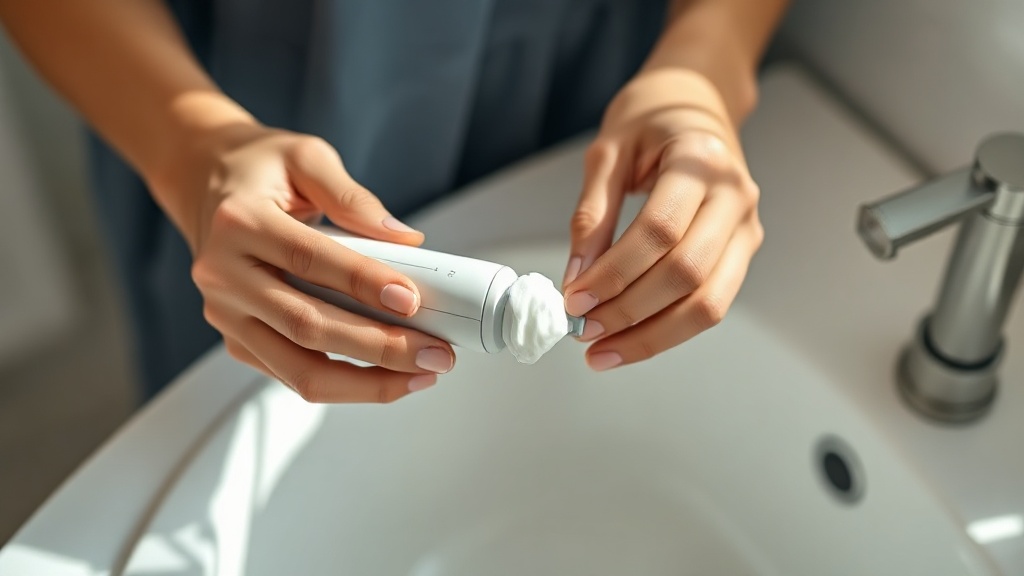
A powered brush with a gentle, low-abrasion paste is the everyday workhorse for keeping coffee stain from building up.
Book a dental visit rather than reaching for stronger products if a single tooth suddenly darkens, if a stain is a distinct brown or grey spot rather than a general film, or if thorough brushing and a cleaning do not touch it. Those can point to something below the surface, such as an old filling, a past injury or a change in the enamel, that cosmetic stain removal will not fix and a dentist should assess in person.
Frequently asked questions
Sources
- 1.
- 2.
- 3.
- 4.
- 5.
- 6.
- 7.
- 8.
- 9.

Fix your breath at the source.
The complete science-backed protocol — engineered to eliminate volatile sulfur compounds at the biological source.
Start the Breath Protocol →Related reading
Educational purposes only. The content on this page is not medical advice and is not a substitute for consultation with a qualified dental or medical professional.
More from the library
 Causes9 min
Coffee Stains on Teeth: Why They Happen and How to Fade Them
The real reason coffee leaves a mark on your smile, and the honest, gentle ways to fade and limit surface stains.
Read →→ Causes8 min
Why Do Teeth Turn Yellow? The Real Colour Science
A calm, evidence-based look at what actually makes teeth yellow — enamel optics, dentine colour and surface staining — and what you can realistically influence.
Read →→ Ingredients8 min
Baking Soda for Teeth Whitening: The Ingredient, Explained
What sodium bicarbonate really does to stained teeth, why its low abrasivity matters, and how to use it safely.
Read →→ Guides8 min
How to Keep Teeth White (and Make It Last)
The honest maintenance playbook: why white teeth drift back to yellow, and the small daily habits that actually slow it down.
Read →→ Answers8 min
Does Teeth Whitening Damage Enamel? The Evidence-Based Answer
The honest, evidence-based answer to whether whitening harms enamel — what peroxide really does to the surface, why sensitivity is not damage, and the DIY methods that actually cause wear.
Read →→ Answers8 min
Does Baking Soda Whiten Teeth? What the Evidence Says
An honest look at what baking soda can and cannot do for a whiter smile.
Read →→