Coffee Stains on Teeth: Why Your Morning Cup Leaves a Mark
The real reason coffee leaves a mark on your smile, and the honest, gentle ways to fade and limit surface stains.
- Coffee does not soak into your teeth like a dye. It leaves colour on the surface, in a thin protein film called the acquired pellicle that coats your enamel every day.
- The stain is built from coffee pigments and tannins that cling to that film, so it sits on the outside of the tooth and can be lifted with gentle, low-abrasivity cleaning.
- Coffee is a real but middling stainer. In lab comparisons black tea and red wine leave darker marks, and adding milk changes how the stain sticks.
- Staining is cumulative and time-based, adding up at roughly 0.34 shade units per day of contact, so how often and how long you sip matters more than the single cup.
- You cannot change your enamel or your age, but surface coffee stain is one of the most reversible cosmetic changes there is, and a professional cleaning removes it (though none fully restores your original tooth colour).
Coffee stains teeth because its dark pigments and tannins bind to the thin protein film, the pellicle, that covers your enamel. That makes it a surface stain, not a permanent dye, so it builds up with repeated contact and can be faded with gentle stain-removing care. Contact time and frequency matter most.
What a coffee stain actually is
Your enamel is not bare when you drink. Within seconds of cleaning, a thin, sticky layer of saliva proteins forms over every tooth. Dentists call it the acquired enamel pellicle, and it carries more than a hundred different proteins that lubricate and protect the surface. It is also the exact surface coffee stains onto. Coffee is loaded with dark pigment molecules called chromogens and with tannins, a group of plant compounds that are naturally good at grabbing onto proteins. When you sip, those tannins latch to the pellicle and act like a primer, letting more pigment settle and stack up over the day. Classic dental research showed that pretreating enamel with tannins produced marked discolouration that neither the tannin nor the pigment caused on its own, which is exactly why a tannin-rich drink like coffee leaves a mark that plain water never would. The important part for your smile is where all of this happens: on the outside of the tooth, in a film that is constantly being laid down and worn away. That is what makes a coffee stain an extrinsic stain, cosmetic and liftable, rather than a change deep inside the tooth.
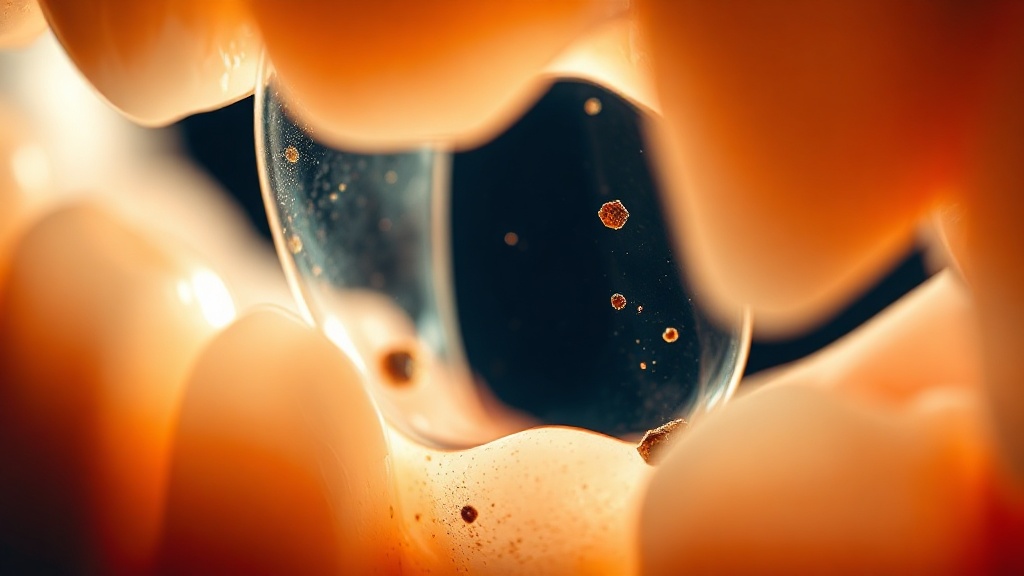
Coffee stain is built on the surface: tannins prime the thin pellicle film and pigment particles stack onto it over the day.
What the research actually shows
Every claim below maps to a named, peer-reviewed source in the Sources section. According to PubMed.
| Claim | Evidence | Source |
|---|---|---|
| Coffee pigments and tannins bind to the thin protein pellicle on enamel; tannins act as a primer that lets pigment build up as surface stain. | Human enamel pellicle staining model. | Nordbo et al., 1982 |
| Among common drinks, black tea and red wine stain the most, with coffee a notable but lesser stainer; adding milk changes the stain layer and how firmly it sticks. | Human enamel, 11 beverages, spectrophotometry. | Sarembe et al., 2022 |
| Staining is cumulative and time-dependent: enamel darkened about 0.34 shade units for each day of beverage exposure. | In vitro staining over 15 days. | Farawati et al., 2019 |
| A low-abrasivity baking-soda dentifrice reduced extrinsic stain by 61.6% and lightened teeth 2.57 shade units over six weeks versus an unchanged control. | 146-subject randomized controlled trial. | Ghassemi et al., 2012 |
| A powered toothbrush removed about 90.6% of extrinsic stain over two weeks, statistically similar to a professional dental cleaning at 94.4%. | Randomized clinical stain-removal trial. | Terezhalmy et al., 2008 |
What actually deepens a coffee stain
| Factor | Why it deepens the stain | Can you change it? |
|---|---|---|
| How often you drink | Each exposure adds pigment; stain builds at roughly 0.34 shade units per day of contact | Yes, fewer and shorter exposures |
| Letting the cup linger | Sipping slowly over an hour bathes the pellicle far longer than one quick cup | Yes, drink it and rinse |
| A thick, mature pellicle | The protein film that holds pigment grows if teeth are not cleaned regularly | Partly, with gentle daily cleaning |
| Tannin-rich add-ins | Extra tannins prime the film to grab even more colour | Somewhat |
| A rougher, more porous surface | Older or micro-roughened enamel holds more surface stain | No, but the surface stain still lifts |
Why coffee is not quite the villain it is made out to be
It is worth putting coffee in its place, because the internet treats it as smile enemy number one and the evidence is gentler than that. When researchers lined up eleven everyday drinks on real enamel, black tea and red wine produced the heaviest staining, while coffee sat below them; a ginger-and-lemon infusion and even lager also left their mark. So if you drink coffee but avoid red wine and strong tea, your biggest stainer may not be the coffee at all. Adding milk matters too, and not only for taste: milk noticeably changed the stain layer and how tightly it clung to the tooth, softening the result. There is also a difference worth understanding between a stain and the natural colour of your teeth. Surface coffee stain is the liftable layer we have been describing. But many people look in the mirror, see a yellowish cast, and blame their coffee when part of what they are seeing is the tooth itself: with age, enamel thins and the yellower dentine underneath shows through more. That underlying colour is normal biology, not a stain, and no amount of scrubbing removes it, which is exactly why gentle surface care has limits and why honesty about the cause protects you from over-abrasive fixes.
Evidence you can act on.
Occasional emails — new research, new protocols, no noise.
How to keep coffee stains from building up
You do not have to give up coffee to keep the stain in check. Because the colour is cumulative and sits on the surface, small changes to contact time and a gentle routine do most of the work. None of this treats a disease; it simply keeps the surface clean and bright.
- 1
Shorten the contact, not necessarily the coffee
every cupSince stain builds with each day of exposure, the slow all-morning sip is worse than the same coffee finished in one sitting. Drink it and move on rather than nursing the cup, and the pellicle spends far less time bathed in pigment.
- 2
Rinse with water afterwards
a few secondsSwishing plain water after coffee is a harmless way to dilute pigment and cut contact time. There is no direct trial proving it fades stain, so treat it as a sensible tactic rather than a sure thing, but it costs nothing and makes mechanistic sense.
- 3
Give it a little time before brushing
20 to 30 minutesCoffee is mildly acidic, which can briefly soften the enamel surface. Brushing hard the instant you finish can scrub that softened layer, so let saliva neutralise things first, then brush normally.
- 4
Use a gentle, low-abrasivity stain toothpaste
twice dailyA baking-soda dentifrice removed most surface stain and lightened teeth by more than two shade units over six weeks, and it did so at low abrasivity. Stain removal and abrasiveness are not the same thing, so you do not need a harsh, gritty paste to lift coffee colour.
- 5
Consider a powered toothbrush
two minutes, twice dailyIn a head-to-head trial a powered brush removed about 90% of extrinsic stain, close to a professional cleaning, and clearly better than leaving it. It is the single easiest upgrade for someone whose main complaint is drink stain.
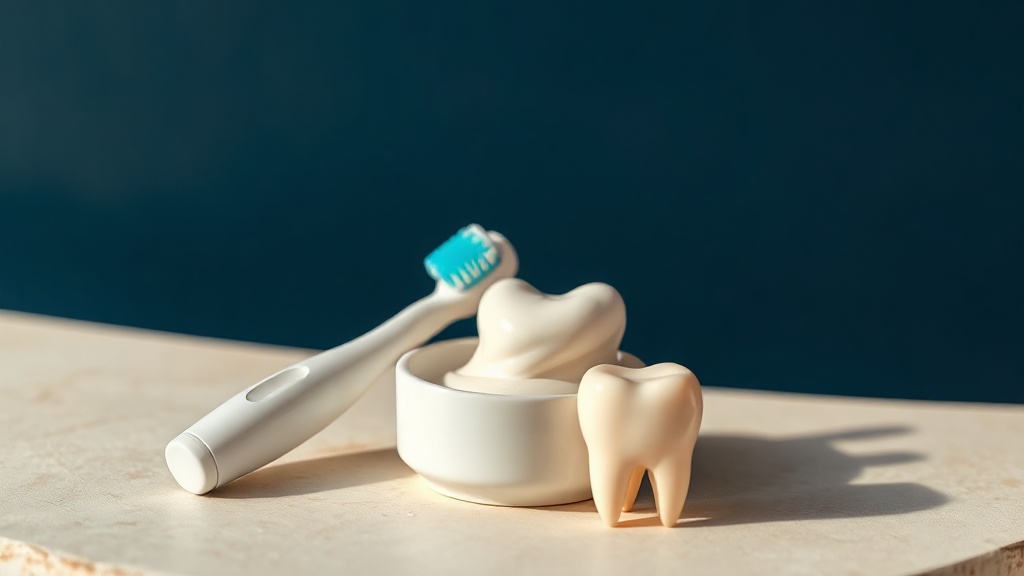
Gentle, low-abrasivity tools lift surface coffee stain without scrubbing away enamel.
See a dentist if a stain will not budge with gentle surface care, if a single tooth looks darker than its neighbours, or if you notice a new dark spot, roughness, or sensitivity. A professional cleaning removes surface stain that home care leaves behind, though no cleaning fully restores a tooth to its original colour. A dentist can also tell you whether the colour you dislike is liftable surface stain or the natural, age-related colour of the tooth, which points to very different next steps.
Frequently asked questions
Sources
- 1.
- 2.
- 3.
- 4.
- 5.
- 6.
- 7.
- 8.
- 9.
- 10.

Fix your breath at the source.
The complete science-backed protocol — engineered to eliminate volatile sulfur compounds at the biological source.
Start the Breath Protocol →Related reading
Educational purposes only. The content on this page is not medical advice and is not a substitute for consultation with a qualified dental or medical professional.
More from the library
 Guides8 min
How to Remove Coffee Stains From Teeth
A honest, evidence-based guide to lifting coffee stains from teeth without wrecking your enamel: what works, what only polishes the surface, and why to skip charcoal.
Read →→ Causes8 min
Does Turmeric Stain Teeth? Why It Happens and How to Remove It
The golden spice is a potent natural dye — but the stains it leaves sit on the surface and lift with the right gentle habits.
Read →→ Answers8 min
Does Teeth Whitening Damage Enamel? The Evidence-Based Answer
The honest, evidence-based answer to whether whitening harms enamel — what peroxide really does to the surface, why sensitivity is not damage, and the DIY methods that actually cause wear.
Read →→ Answers8 min
How Often Should You Whiten Your Teeth? Safe Frequency by Method
A method-by-method guide to how often you can brighten your smile without overdoing it — and why more is rarely better.
Read →→ Answers8 min
Does Baking Soda Whiten Teeth? What the Evidence Says
An honest look at what baking soda can and cannot do for a whiter smile.
Read →→ Best Of9 min
Best Fluoride-Free Whitening Toothpaste: An Honest, Evidence-Based Guide (2026)
Which fluoride-free whitening ingredients hold up to the research — and which are marketing. An honest buyer's guide.
Read →→