
Baking Soda for Teeth Whitening: The Ingredient, Explained
What sodium bicarbonate really does to stained teeth, why its low abrasivity matters, and how to use it safely.
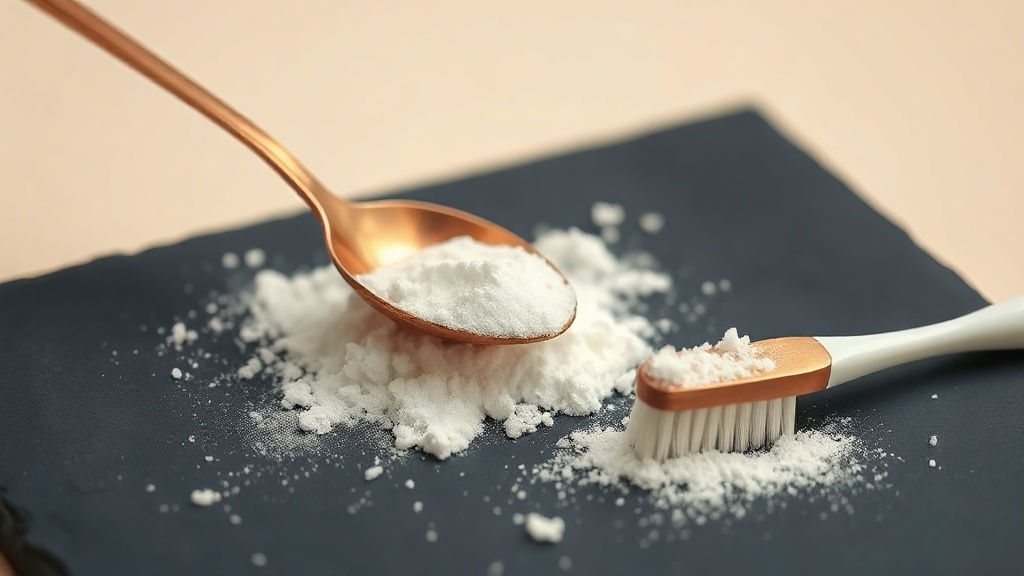
- Baking soda (sodium bicarbonate) whitens by mechanically lifting surface stains, not by bleaching the tooth. It cleans off what has settled on the enamel; it does not change the tooth's own colour.
- Its great advantage is gentleness: baking soda sits at the low end of the abrasivity scale, well below many silica-based whitening pastes, so it polishes stain without heavily scouring enamel.
- Crucially, stain removal and abrasivity are not the same thing. Research shows you do not need a harsh, high-abrasion paste to clean stains well, which is exactly why baking soda punches above its weight.
- It will not touch deep or age-related yellowing that comes from the dentine underneath. For that, only peroxide oxidation or professional treatment changes the colour.
- The real danger is not baking soda itself but DIY recipes that mix it with lemon or strawberry: the added fruit acid softens enamel. Baking soda plus water is safe; baking soda plus acid is not.
Baking soda is a mild abrasive that removes surface stains from teeth, making them look whiter, rather than bleaching them. It is one of the gentler whitening ingredients, with a low abrasivity rating, and is safe for regular use with water. It will not lighten deep, internal discolouration, and it should never be mixed with acidic foods like lemon.
What baking soda actually is, and how it whitens
Baking soda is sodium bicarbonate, a mildly alkaline, water-soluble crystalline powder that has been in toothpastes for over a century. Its whitening action is mechanical, not chemical. When you brush with it, the fine crystals gently scrub the outer surface of the enamel and dislodge the extrinsic stain that coffee, tea, red wine and tobacco deposit in the thin protein film, the pellicle, that coats every tooth. Lifting that stained layer reveals the lighter enamel beneath, so the tooth looks whiter, even though its underlying colour has not changed at all. Two properties make baking soda unusually well-suited to this job. First, because the crystals are water-soluble, they start dissolving the moment they meet saliva and your wet brush, softening and shrinking as you go. That self-limiting quality means the abrasion tapers off rather than grinding away for the full two minutes, which is part of why baking soda is gentler than many harder, insoluble abrasives. Second, being alkaline, it buffers the acids in your mouth, nudging the local environment away from the acidic conditions that soften enamel. So baking soda is best understood as a gentle surface polish with a helpful buffering side effect, not as a bleach.
Baking soda works on the surface: its soft, soluble crystals lift the thin stained film off the enamel rather than bleaching the tooth from within.
What the research actually shows
Every claim below maps to a named, peer-reviewed source in the Sources section. According to PubMed.
| Claim | Evidence | Source |
|---|---|---|
| Across 26 dentifrices, abrasivity (RDA) ranged from 36 to 269, and sodium-bicarbonate products generally sat at the lower end; stain removal and abrasivity are not directly coupled. | In vitro abrasion, polish and stain-removal testing of 26 commercial dentifrices. | Schemehorn et al., 2011 |
| Baking soda is low in abrasivity, acid-buffering and biologically compatible, and is effective and safe for stain removal, often out-cleaning higher-abrasivity pastes. | Review of in vitro and clinical stain-removal literature. | Li, 2017 |
| A baking-soda dentifrice cut extrinsic stain by 61.6% and improved shade by 2.57 units by week 6, while a silica control was essentially unchanged. | Randomized, controlled six-week clinical trial (146 subjects). | Ghassemi et al., 2012 |
| Sodium bicarbonate removed coffee stain but did not bleach the tooth; only hydrogen peroxide achieved true whitening beyond surface-stain removal. | In vitro comparison of over-the-counter agents against hydrogen peroxide. | Muller-Heupt et al., 2023 |
| A do-it-yourself strawberry-and-baking-soda mixture significantly reduced enamel microhardness, grouping with the acidic positive control. | Laboratory microhardness and surface analysis of whitening modalities. | Kwon et al., 2014 |
Baking soda as a whitening ingredient, at a glance
| Property | Baking soda (sodium bicarbonate) | What it means for you |
|---|---|---|
| Abrasivity (RDA) | Low, well below many whitening pastes | Gentle enough for regular stain polishing |
| How it works | Mechanical: lifts surface stain | Removes stains but does not bleach the tooth |
| Acid buffering | Neutralises mouth acids | A helpful bonus for the enamel environment |
| Deep or age-related colour | No effect | Will not lighten internal, dentine-based yellowing |
| DIY acid mixes (lemon, strawberry) | Adds erosive acid | Avoid: the acid softens enamel |
Abrasivity, RDA, and why gentle wins
The number that matters most for any whitening ingredient is its RDA, or Relative Dentin Abrasivity. It is a standardised measure of how much a paste wears away tooth structure, and dental authorities regard values up to 250 as safe for lifelong daily use. In head-to-head testing of commercial dentifrices, RDA values ran from around 36 all the way to 269, and baking-soda pastes clustered near the gentle end of that range, whereas many products marketed as whitening, especially silica-heavy ones, were more abrasive. The counter-intuitive finding that makes baking soda so appealing is that a paste's ability to remove stain is not tightly linked to how abrasive it is. In other words, being harsher does not automatically clean better. Some low-abrasion formulations removed stain as well as, or better than, far rougher ones. That decoupling is the whole case for baking soda: it delivers competitive stain removal from the low-abrasivity end of the scale, so you get the cosmetic payoff without paying for it in enamel wear. The practical takeaway is to distrust the instinct that a gritty, aggressive-feeling paste must be working harder. With stain, gentle and consistent beats harsh and occasional, and baking soda is built for gentle and consistent.
Evidence you can act on.
Occasional emails — new research, new protocols, no noise.
How to use baking soda safely
Baking soda is safe when used sensibly, and risky only when people turn it into an acidic DIY paste or scrub too hard. None of this treats a disease; it is simply safe cosmetic stain care.
- 1
Prefer a formulated baking-soda toothpaste
dailyA commercial baking-soda toothpaste gives you the ingredient at a controlled, low abrasivity, usually with fluoride. That is the easiest and safest way to get the benefit, and it takes the guesswork out of how much powder to use.
- 2
If you use plain powder, mix with water only
per useMake a soft paste with a little water, and nothing else. Never combine baking soda with lemon juice, vinegar or crushed strawberries: the fruit acid, not the baking soda, is what softens enamel in those viral recipes, and the damage is permanent.
- 3
Brush gently with a soft brush
two minutesLet the chemistry do the work, not force. Use a soft-bristled brush and light pressure; scrubbing hard adds abrasion without adding stain removal. Baking soda's crystals dissolve as you go, so a gentle two minutes is plenty.
- 4
Keep the frequency modest
a few times a weekFor most people, using baking soda a few times a week is enough to keep surface stain in check. Daily use of a gentle formulated paste is fine, but there is no benefit to aggressive daily scrubbing with loose powder.
- 5
Pair it with fluoride and know its limit
ongoingBaking soda handles surface stain; fluoride protects enamel. Use both. And remember that if your teeth are yellowing from within, baking soda cannot reach that. See a dentist about peroxide-based or professional whitening for deeper colour change.
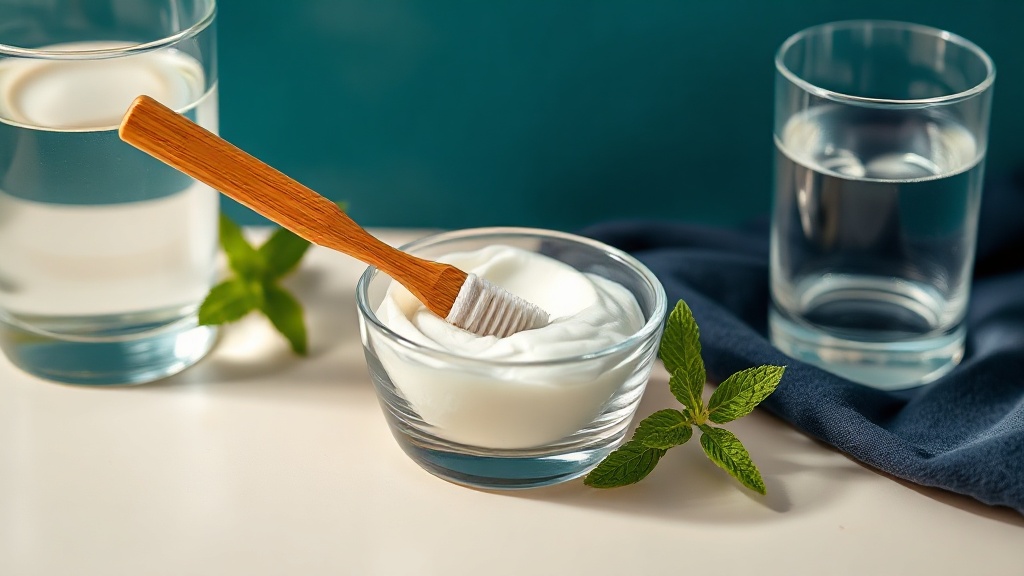
The safe way to use it: baking soda mixed with plain water into a soft paste. The moment you add lemon or another acid, it stops being gentle.
If your teeth look yellow or grey from the inside rather than merely stained on the surface, no amount of baking soda will change that, and a dentist can explain which whitening options actually reach dentine-based colour. Book a visit too if you notice increased sensitivity, a rough or notched feeling at the gumline, or stains that keep returning quickly, since these can signal enamel wear or another issue that a check-up should assess before you keep polishing.
Frequently asked questions
Sources
- 1.
- 2.
- 3.
- 4.
- 5.
- 6.
- 7.

Fix your breath at the source.
The complete science-backed protocol — engineered to eliminate volatile sulfur compounds at the biological source.
Start the Breath Protocol →Related reading
Educational purposes only. The content on this page is not medical advice and is not a substitute for consultation with a qualified dental or medical professional.
More from the library
 Answers8 min
Does Baking Soda Whiten Teeth? What the Evidence Says
An honest look at what baking soda can and cannot do for a whiter smile.
Read →→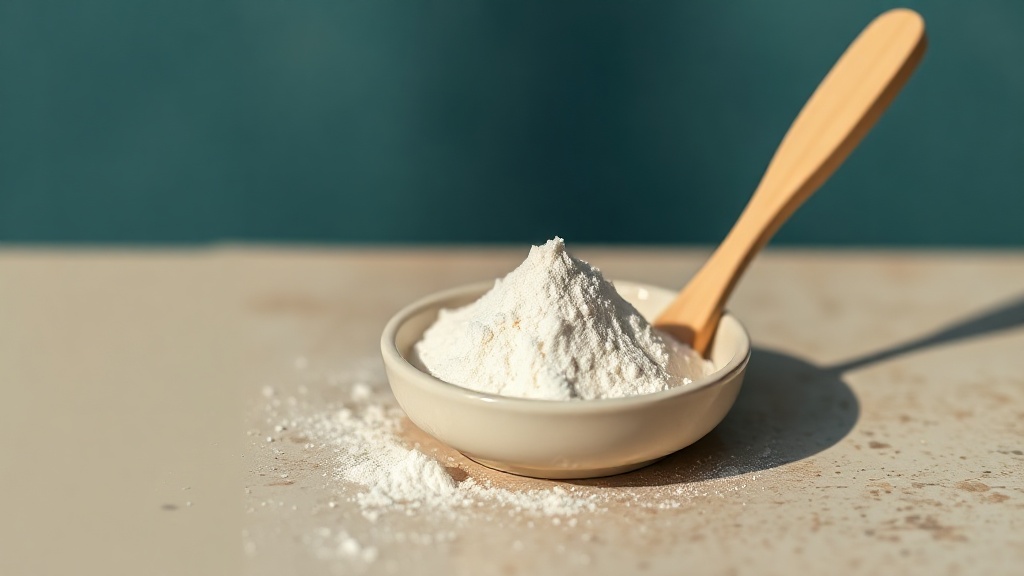 Best Of8 min
Best Teeth Whitening Powder (2025): Peroxide-Free & Enamel-Safe Picks
Whitening powders lift surface stain by polishing, not bleaching. The safe pick removes stain at low abrasivity; the trendy one quietly wears enamel.
Read →→ Answers8 min
Does Teeth Whitening Damage Enamel? The Evidence-Based Answer
The honest, evidence-based answer to whether whitening harms enamel — what peroxide really does to the surface, why sensitivity is not damage, and the DIY methods that actually cause wear.
Read →→ Guides8 min
How to Get Rid of Yellow Teeth: An Enamel-Safe Guide
Two kinds of yellow, two different fixes, and the enamel-safe way to brighten each one.
Read →→ Best Of9 min
Best Fluoride-Free Whitening Toothpaste: An Honest, Evidence-Based Guide (2026)
Which fluoride-free whitening ingredients hold up to the research — and which are marketing. An honest buyer's guide.
Read →→ Guides9 min
In-Office Teeth Whitening Cost: What Dentists Charge (2026)
An honest, evidence-based look at chairside whitening prices — and whether the convenience premium is really worth it.
Read →→