How to Remineralize Teeth Naturally
A saliva-first, diet-forward routine that genuinely supports remineralization, plus a straight answer on the myth that diet alone reverses cavities.
- Remineralization is real, but it only works on early demineralization with an intact surface; once a tooth cavitates, no natural routine can rebuild it, and trying to can cause harm.
- Your most powerful natural tool is your own saliva, which is naturally supersaturated with calcium and phosphate and acts as a constant mineral reservoir for enamel - so protecting saliva flow does more than any supplement.
- Diet works mainly by subtraction: cutting the frequency of sugar and acid gives enamel the long, calm windows it needs to repair, which matters more than any single food you add.
- The popular idea that diet or vitamin K2 alone reverses cavities is not supported by human evidence - enamel is acellular and cannot heal from the inside, so this framing is a myth to avoid.
- The honest natural routine pairs saliva and diet with a remineralizing toothpaste; fluoride and hydroxyapatite are the best-evidenced mineral sources, and a hydroxyapatite paste is a legitimate fluoride-free option.
You support natural remineralization by protecting saliva, cutting how often you eat sugar and acid, and giving enamel long recovery windows - ideally paired with a remineralizing toothpaste. This genuinely helps early spots with an intact surface. It cannot reverse a real cavity, and no diet or supplement heals enamel from within.
How natural remineralization actually works
Enamel is not a static block - it is in constant exchange with the fluid around it. Every time acid drops the pH at the tooth surface below roughly 5.5, mineral leaves the enamel; every time the pH recovers, mineral flows back. Natural remineralization simply means winning that exchange over time, and the hero of the process is saliva. Saliva is held supersaturated with calcium and phosphate by proteins like statherin, which makes it a standing mineral reservoir bathing your teeth all day; it also buffers acid, clears food debris, and carries antibacterial defences. That is why the single most natural thing you can do for your enamel is keep saliva flowing and let the mouth spend most of the day above the critical pH. What natural care cannot do is regrow structure. Mature enamel is acellular and avascular, with no living cells to rebuild it from within, so remineralization is strictly a surface chemistry event: mineral crystals re-forming from calcium and phosphate through an intact surface. Understand that and the whole routine makes sense - you are tilting a chemical balance, not healing a wound.
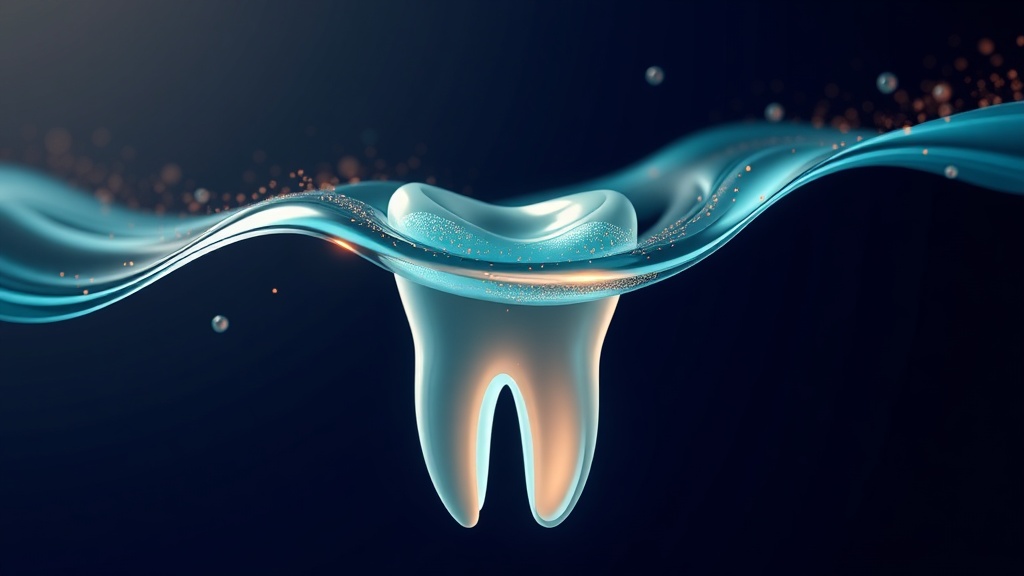
Saliva stays supersaturated with calcium and phosphate, feeding mineral back into enamel between acid attacks.
What the research actually shows
Every claim below maps to a named, peer-reviewed source in the Sources section. According to PubMed.
| Claim | Evidence | Source |
|---|---|---|
| Saliva protects teeth through buffering, clearance, antibacterial action and maintaining calcium-phosphate supersaturation. | Review of salivary function in caries. | Dowd, 1999 |
| Six weeks of diet counseling significantly raised salivary flow in high-risk children - salivary function is modifiable. | Clinical intervention study. | Jain et al., 2017 |
| Free sugars are the single most important dietary risk factor for caries; frequency of intake is the driver. | WHO systematic review. | Moynihan & Kelly, 2014 |
| No located clinical trial shows vitamin K2 prevents, reverses or remineralizes caries in humans. | Review of micronutrients and oral health. | Gutierrez Gossweiler & Martinez-Mier, 2019 |
| The diet-reverses-cavities theory rests on 1930s and 1960s-70s animal studies and a single 2015 hypothesis paper with no human remineralization data. | Medical Hypotheses paper (non-peer-reviewed by remit). | Southward, 2015 |
What natural care can and cannot do
| Situation | Can natural care help? | Why |
|---|---|---|
| Early spot, surface intact | Yes | Mineral can redeposit through the intact surface |
| Cavitated tooth (a hole) | No | Enamel cannot regrow lost structure |
| Low saliva / dry mouth | Yes, indirectly | Restoring flow restores the mineral reservoir |
| Fluorosis or hypoplasia | No | These are formed defects, not mineral loss |
| Relying on K2 or diet to reverse a cavity | No | No human evidence supports it |
The myth worth retiring
A whole online subculture insists you can heal cavities with the right diet, high-dose fat-soluble vitamins, or oil pulling, often anchored to a popular book whose title promises to cure tooth decay. It is worth being direct: this is not supported by human evidence, and taking it literally can be dangerous. The theory leans on 1930s dietary experiments, 1960s and 70s studies in rats, and a single 2015 hypothesis paper that, by the nature of the journal, was a proposal rather than peer-reviewed proof - with no human remineralization data behind it. Vitamin K2 in particular has no clinical trial showing it prevents or reverses caries or remineralizes enamel in people. The reason this matters is not academic. Real people have described trying to remineralize an open, cavitated tooth for months or years, watching it fail, and in at least one case letting an infection reach the root. Enamel over a broken surface cannot be rebuilt by any food. So the honest natural routine embraces everything diet genuinely does - protecting saliva and cutting acid frequency - while refusing the fantasy that it can close a cavity. A hole is a job for a dentist, not a smoothie.
Evidence you can act on.
Occasional emails — new research, new protocols, no noise.
The honest natural remineralization routine
This routine stacks the genuinely evidence-based natural levers. It supports early remineralization; it is not a treatment for an established cavity.
- 1
Protect and boost your saliva
all daySip water through the day, breathe through your nose, and chew sugar-free gum after meals to stimulate flow. Saliva is your built-in remineralizing fluid, and its function is modifiable - even diet counseling has been shown to raise flow.
- 2
Cut the frequency of sugar and acid
every mealBecause it is how often, not just how much, that drives mineral loss, cluster sweets and acidic drinks into mealtimes rather than grazing. Long acid-free windows are when enamel actually repairs.
- 3
Favour tooth-friendly foods
ongoingLean on calcium- and phosphate-rich foods like cheese and dairy, crunchy vegetables that stimulate saliva, and water over acidic drinks. Consider xylitol gum, which reduces plaque acid at an evidence-based dose of around 6 g a day over several exposures.
- 4
Still use a remineralizing toothpaste
twice dailyThe most natural routine works best paired with a mineral source on the enamel. Fluoride is the established standard; a hydroxyapatite toothpaste is a well-evidenced fluoride-free option that matched fluoride in adults. Spit, do not rinse.
- 5
Never try to remineralize a hole
ongoingIf a spot is rough, catching a fingernail, darkening or sensitive, stop relying on home care and see a dentist. A cavitated tooth cannot be repaired naturally, and delaying can turn a filling into something bigger.
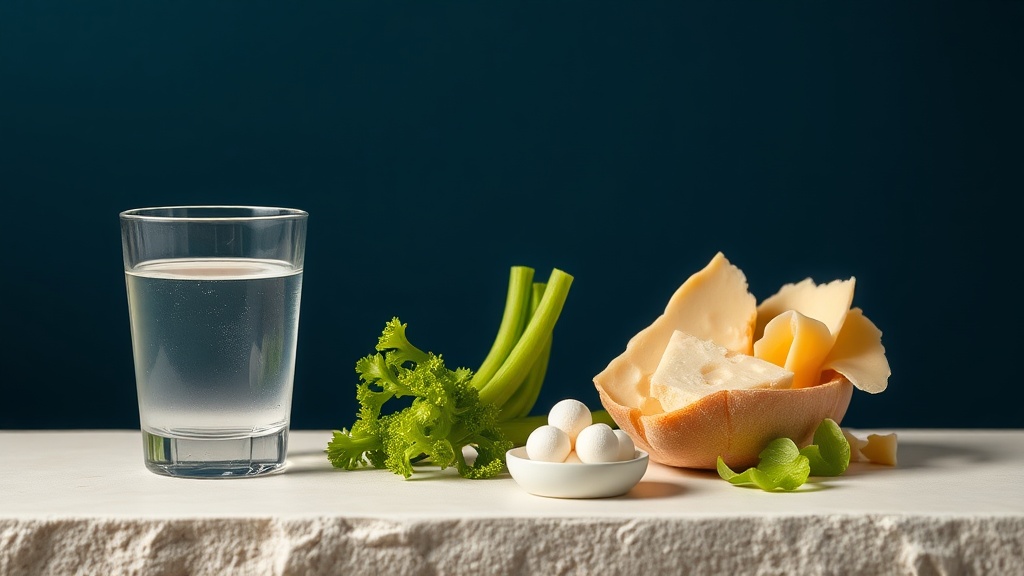
The real dietary lever is fewer acid attacks and steady saliva, not any single miracle food.
Natural remineralization is for early, intact-surface spots only. See a dentist if a spot feels rough or catches a fingernail, is darkening, or comes with sensitivity or pain, because those suggest the surface has broken and home care can no longer reach it. If you have a dry mouth from medication or a medical condition, a dentist can help protect your enamel more actively, since low saliva sharply raises risk.
Frequently asked questions
Sources
- 1.
- 2.
- 3.
- 4.
- 5.
- 6.
- 7.

Fix your breath at the source.
The complete science-backed protocol — engineered to eliminate volatile sulfur compounds at the biological source.
Start the Breath Protocol →Related reading
Educational purposes only. The content on this page is not medical advice and is not a substitute for consultation with a qualified dental or medical professional.
More from the library
 Answers8 min
How to Remineralize Teeth: An Honest, Practical Guide
The practical routine that supports enamel remineralization, and the clear line between the early lesions it can rebuild and the decay it cannot.
Read →→ Guides9 min
Enamel Remineralisation: The Complete Science Guide
The definitive, honestly graded reference on how enamel remineralises - the cycle, the chemistry, and what each active ingredient actually does.
Read →→ Ingredients8 min
Remineralizing Toothpaste: How It Works and What Actually Rebuilds Enamel
A plain-English guide to how remineralizing toothpaste works — and an honest comparison of fluoride, n-HA and CPP-ACP.
Read →→ Ingredients9 min
Xylitol Gum for Teeth: How It Works and What It Does
The real mechanism behind xylitol gum, the dose the evidence supports, and where it helps versus where it is oversold.
Read →→ Answers8 min
How to Get Rid of White Spots on Teeth: Your Options, Ranked
An honest, evidence-based ladder of options, from what you can do at home to what only a dentist can fix.
Read →→ Ingredients8 min
Hydroxyapatite Toothpaste Benefits: What the Evidence Actually Supports
A calm, science-first look at what hydroxyapatite toothpaste can genuinely do for your enamel, and where the evidence stops.
Read →→