The Complete Guide to Enamel Remineralisation
The definitive, honestly graded reference on how enamel remineralises - the cycle, the chemistry, and what each active ingredient actually does.
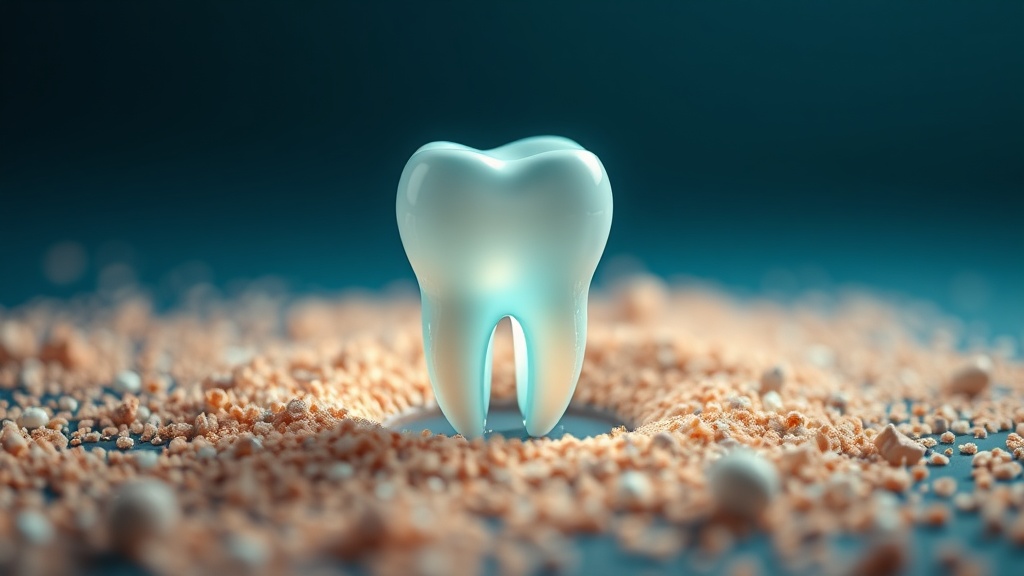
- Remineralisation is the natural counterpart to demineralisation: enamel constantly loses and regains mineral, and remineralisation simply means the balance tips toward mineral flowing back in.
- It works only while the surface is intact. Early, non-cavitated lesions can remineralise and arrest; once a tooth cavitates, the acellular enamel cannot rebuild lost structure at home.
- Saliva is the engine: kept supersaturated with calcium and phosphate, it is a standing mineral reservoir that buffers acid and drives repair whenever the mouth returns above the critical pH of about 5.5.
- Fluoride is the best-evidenced accelerant and forms a more acid-resistant mineral; hydroxyapatite is non-inferior to fluoride under remineralising conditions; CPP-ACP is real but not superior to fluoride.
- The evidence is graded, not hyped: remineralisation reliably arrests early lesions, but it does not regrow enamel, close cavities, or work through a broken surface - honesty about that line is the whole point.
Enamel remineralisation is the redepositing of calcium and phosphate into enamel that acid has partly dissolved, driven mainly by saliva and accelerated by fluoride or hydroxyapatite. It arrests and hardens early, intact-surface lesions and makes enamel more acid-resistant. It cannot regrow enamel or repair a cavity - those need a dentist.
The demineralisation-remineralisation cycle
The foundational fact of modern cariology is that a tooth is never simply healthy or decayed - it is in constant flux. Dental caries is defined as a biofilm-mediated, sugar-driven, dynamic disease of phasic demineralisation and remineralisation of the dental hard tissues, which is a precise way of saying enamel loses mineral and regains it many times a day. The switch that flips the direction is pH. When plaque bacteria ferment sugar, acid drives the surface pH below the critical point of roughly 5.5, and calcium and phosphate leach out of the enamel, mostly from a zone just beneath the surface. When the acid is cleared and the pH climbs back, that same enamel draws mineral back in from the fluid around it. Health, in this model, is not the absence of any demineralisation but a net balance where remineralisation keeps pace. A white spot lesion is what you see when demineralisation has been winning for a while but the surface has not yet broken; a cavity is what happens when it collapses. Everything a remineralisation routine does is aimed at one goal: spend more of the day on the rebuilding side of that cycle.

Enamel swings between mineral loss below the critical pH and repair above it - remineralisation means winning the balance over time.
What the research actually shows
Every claim below maps to a named, peer-reviewed source in the Sources section. According to PubMed.
| Claim | Evidence | Source |
|---|---|---|
| Caries is a dynamic disease of phasic demineralisation and remineralisation of the dental hard tissues. | Nature Reviews Disease Primers consensus. | Pitts et al., 2017 |
| Protective salivary factors can prevent or reverse the early demineralisation process - reversal of the process, not of a formed cavity. | Landmark review of the caries balance. | Featherstone, 1999 |
| Enamel remineralised with fluoride is more acid-resistant than the original mineral. | Review of fluoride mechanisms. | Buzalaf et al., 2011 |
| A hydroxyapatite toothpaste was non-inferior to 1,450 ppm fluoride for adult caries prevention over 18 months. | Randomized non-inferiority trial. | Paszynska et al., 2023 |
| CPP-ACP remineralises early lesions versus placebo but is not significantly different from fluoride. | Systematic review of long-term remineralisation. | Li et al., 2014 |
The active ingredients, honestly graded
| Agent | Mechanism | Evidence grade |
|---|---|---|
| Fluoride | Forms fluorapatite-like, acid-resistant mineral | Strong - the gold standard |
| Hydroxyapatite (n-HA) | Supplies enamel-like mineral to the surface | Non-inferior to fluoride when remineralising |
| CPP-ACP | Delivers bioavailable calcium and phosphate | Real, but not superior to fluoride |
| Saliva | Natural supersaturated mineral reservoir | Strong - the underlying engine |
| Diet or K2 alone reversing cavities | Claimed internal healing | Not supported in humans |
How the ingredients compare - without the hype
Once you understand the cycle, comparing products becomes straightforward. Fluoride remains the gold standard for a specific reason: it does not just add mineral, it changes its quality, building enamel that incorporates fluoride and resists acid better than the enamel it replaced, with more than half a century of trials behind it and a clear dose-response. Hydroxyapatite is the same mineral family as enamel itself, and the fairest reading of the evidence is equivalence, not superiority: it was non-inferior to fluoride for prevention in adults and remineralised early lesions comparably, though the most sceptical high-quality review graded the certainty low and noted it does not resist pure acid attack the way fluoride does. CPP-ACP delivers calcium and phosphate and genuinely remineralises early lesions versus placebo, but reviews find it no better than fluoride, and a dental association guideline actually recommends against relying on it as a caries-arrest agent. The honest synthesis is that these are complementary mineral sources, not miracle cures, and that the differences between them are far smaller than the difference between doing a consistent routine and doing nothing. Choose fluoride or hydroxyapatite by preference, use it consistently, and let saliva and diet do the rest.
Evidence you can act on.
Occasional emails — new research, new protocols, no noise.
Building a remineralisation routine that works
This is the evidence-based routine distilled. It supports remineralisation of early, intact-surface enamel; it is not a treatment for a cavity.
- 1
Pick one remineralising toothpaste and use it twice daily
twice dailyA 1,000-1,500 ppm fluoride toothpaste or a hydroxyapatite toothpaste both supply mineral to the enamel. Consistency beats brand-switching, so choose by preference and stick with it.
- 2
Spit, do not rinse
after brushingLeaving a thin film of toothpaste extends the contact time of fluoride or hydroxyapatite on the enamel, which is when remineralisation actually happens. Rinsing washes the active mineral away.
- 3
Add contact time with a leave-on step
nightlyA leave-on layer at night gives mineral hours to work; in one study a leave-on nano-hydroxyapatite layer raised remineralisation from about 38% to 58% versus placebo.
- 4
Keep the mouth above the critical pH
all dayCluster sugars and acids into meals, hydrate to protect saliva, and use xylitol gum to buffer acid. The longer the mouth spends above pH 5.5, the more repair happens.
- 5
Let a dentist stage anything you are unsure about
as neededRemineralisation only works on intact-surface lesions. A rough, darkening or sensitive spot may have cavitated and needs professional assessment, not more toothpaste.
Fluoride and hydroxyapatite are complementary mineral sources; consistency and contact time matter more than which you pick.
Remineralisation is powerful for early lesions but has a firm boundary. See a dentist if a spot feels rough or catches a fingernail, is darkening, or comes with sensitivity or pain, because those can mean the surface has cavitated and home care can no longer reach it. A dentist can stage lesions, apply high-strength fluoride or resin infiltration, and tell you honestly which of your spots can still be remineralised and which cannot.
Frequently asked questions
Sources
- 1.
- 2.
- 3.
- 4.
- 5.
- 6.
- 7.
- 8.
- 9.
- 10.

Fix your breath at the source.
The complete science-backed protocol — engineered to eliminate volatile sulfur compounds at the biological source.
Start the Breath Protocol →Related reading
Educational purposes only. The content on this page is not medical advice and is not a substitute for consultation with a qualified dental or medical professional.
More from the library
 Answers8 min
How to Remineralize Teeth: An Honest, Practical Guide
The practical routine that supports enamel remineralization, and the clear line between the early lesions it can rebuild and the decay it cannot.
Read →→ Guides8 min
How to Remineralize Teeth Naturally: An Honest Routine
A saliva-first, diet-forward routine that genuinely supports remineralization, plus a straight answer on the myth that diet alone reverses cavities.
Read →→ Comparisons8 min
Hydroxyapatite vs Fluoride: Which Toothpaste Is Right for You?
Two ways to strengthen enamel, one big difference in how much evidence stands behind each.
Read →→ Ingredients8 min
Remineralizing Toothpaste: How It Works and What Actually Rebuilds Enamel
A plain-English guide to how remineralizing toothpaste works — and an honest comparison of fluoride, n-HA and CPP-ACP.
Read →→ Answers8 min
How to Get Rid of White Spots on Teeth: Your Options, Ranked
An honest, evidence-based ladder of options, from what you can do at home to what only a dentist can fix.
Read →→ Ingredients8 min
Hydroxyapatite Toothpaste Benefits: What the Evidence Actually Supports
A calm, science-first look at what hydroxyapatite toothpaste can genuinely do for your enamel, and where the evidence stops.
Read →→