Xylitol Gum for Teeth
The real mechanism behind xylitol gum, the dose the evidence supports, and where it helps versus where it is oversold.
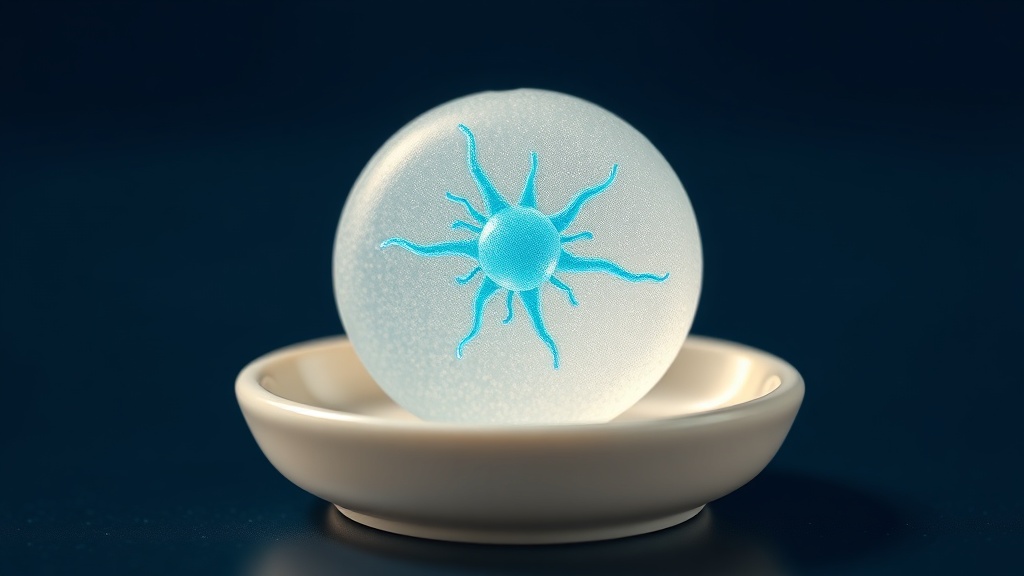
- Xylitol is a natural sugar alcohol that the main decay-causing bacterium, Streptococcus mutans, cannot ferment into acid - so unlike sugar it does not feed the process that dissolves enamel, and with repeated exposure it appears to lower the amount of that bacterium.
- Dose matters more than any magic number of pieces: the evidence points to roughly 5-6 grams of xylitol a day across at least three exposures, with benefits plateauing above about 6 grams - a single piece now and then does little.
- Chewing itself is half the benefit - it stimulates saliva, your mouth's own acid-buffering and remineralizing system, which is why sugar-free gum in general helps between meals.
- The strongest single finding is about transmission: mothers chewing xylitol gum passed less S. mutans to their children - a bacterial effect, not direct enamel repair - while broader 'xylitol prevents cavities on its own' claims remain unconfirmed.
- The honest role: xylitol gum is a useful, low-risk adjunct that supports saliva and nudges down decay bacteria - but it works alongside fluoride or hydroxyapatite toothpaste and a dentist, not instead of them.
Xylitol gum helps in two honest ways: decay bacteria cannot ferment xylitol into enamel-dissolving acid, and chewing boosts protective saliva. Evidence supports about 5-6 grams a day over at least three exposures, plateauing above 6 grams. Its clearest effect is lowering decay bacteria and transmission - a useful adjunct, not a stand-alone cavity preventer.
Why decay bacteria cannot use xylitol
Ordinary sugar is a problem for teeth because Streptococcus mutans, the main decay-driving bacterium, ferments it into acid that dissolves enamel. Xylitol breaks that chain. It is a five-carbon sugar alcohol, and although S. mutans takes xylitol up as if it were food, it cannot metabolise it. The bacterium spends energy importing a molecule it cannot use, running a kind of futile cycle, and produces no acid in the process. Do this repeatedly and, over time, the population of S. mutans in plaque tends to fall - in dose-response studies, higher daily amounts cut plaque S. mutans roughly ten-fold. Layered on top of that specific effect is the general benefit of chewing itself: it drives saliva flow, and saliva buffers acid, clears debris, and carries the calcium and phosphate that help early enamel recover. So xylitol gum works on two fronts - denying decay bacteria their fuel, and boosting the mouth's own protective system. What it does not do is directly rebuild enamel like a mineral paste; its action is on the bacteria and the environment around the tooth.
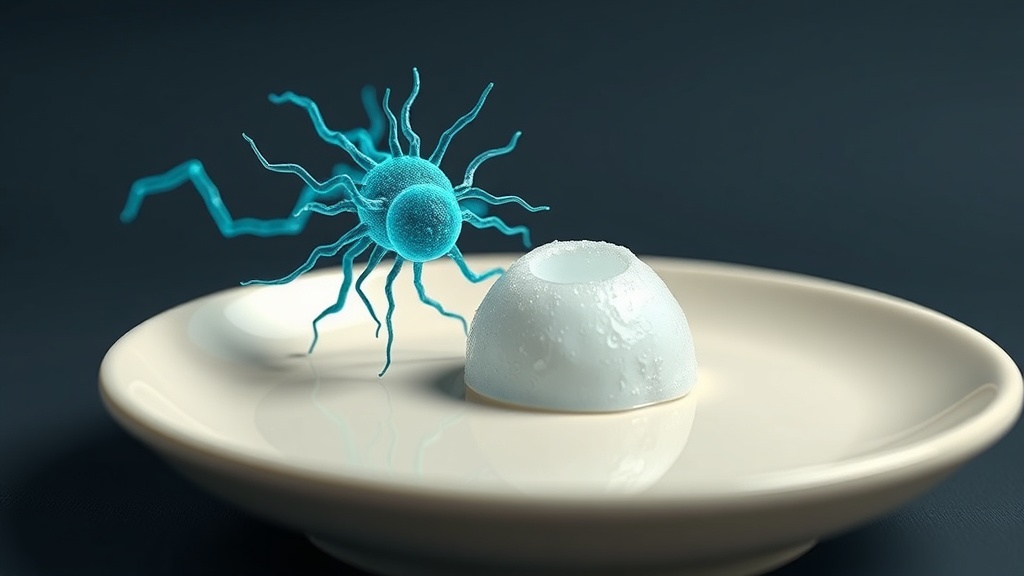
S. mutans takes up xylitol but cannot ferment it into acid - denying decay bacteria their fuel while chewing boosts protective saliva.
What the research actually shows
Every claim below maps to a named, peer-reviewed source in the Sources section. According to PubMed.
| Claim | Evidence | Source |
|---|---|---|
| 6.88 and 10.32 g/day of xylitol cut plaque S. mutans roughly ten-fold, but 3.44 g/day did not - dose, not a fixed number of exposures, is what matters. | Dose-response randomized controlled trial. | Milgrom et al., 2006 |
| About 5-6 g/day over at least three exposures is the practical threshold for a clinical effect, with a plateau above roughly 6 g. | Review of xylitol dosing evidence. | Milgrom et al., 2009 |
| Maternal xylitol gum reduced mother-to-child transmission of decay bacteria (9.7% vs 28.6% vs 48.5%) - its strongest single finding. | Randomized controlled trial. | Soderling et al., 2000 |
| Fluoride toothpaste with xylitol reduced caries about 13% more than fluoride alone (low certainty), while evidence for other xylitol products was insufficient. | Cochrane systematic review. | Riley et al., 2015 |
| A 2024 systematic review concluded that xylitol's stand-alone caries-prevention effect cannot be confirmed. | Systematic review. | Ortiz-Saez et al., 2024 |
Expectation versus reality
| What people expect | What xylitol gum really does | Honest note |
|---|---|---|
| It kills all decay bacteria | Lowers plaque S. mutans at an adequate dose | A surrogate marker, dose-dependent |
| It prevents cavities by itself | Stand-alone effect is unconfirmed | Works best alongside fluoride |
| A piece or two is enough | Needs about 5-6 g/day over 3+ exposures | Frequency and total dose matter |
| It rebuilds enamel directly | Mostly indirect - via saliva and less acid | Not a remineralizing agent as such |
| It is harmless to everyone | Well tolerated; excess can loosen stools; toxic to dogs | Keep it away from pets |
Dose, frequency, and honest expectations
The most common mistake with xylitol is treating it like an occasional treat rather than a dose. The studies are consistent on this: an amount below roughly 5-6 grams a day, or too few exposures, does little, while the benefit plateaus above about 6 grams - so more is not better past that point. Notably, the popular 'chew after every meal for five exposures' rule is not the validated threshold; what the dose-response data actually show is that total daily amount, spread across several exposures, is what moves the needle. Even at a good dose, honest expectations matter. Xylitol's best-supported effects are on the bacteria - lowering S. mutans counts and, in the standout study, reducing how much of it a mother passes to her child - rather than a dramatic drop in cavities on its own. A recent systematic review went as far as saying a stand-alone caries-prevention effect cannot be confirmed. Where xylitol shines is as an adjunct: a between-meals habit that boosts saliva and denies decay bacteria their fuel, sitting on top of the real foundation of fluoride or hydroxyapatite toothpaste and regular dental care. Used that way, it is a low-risk, sensible addition - not a substitute for anything.
Evidence you can act on.
Occasional emails — new research, new protocols, no noise.
How to use xylitol gum well
To get the effect the studies actually show, treat xylitol like a dose, not a treat - spread it out, reach the total, and keep your real prevention in place. This supports the tooth environment; it does not treat decay.
- 1
Pick gum sweetened mainly with xylitol
every pieceCheck the label so xylitol is the main sweetener, not just a trace ingredient. Products vary widely in how much xylitol each piece actually contains.
- 2
Aim for about 6 grams a day
3-5 times dailySpread it across the day in several small exposures rather than one big session - total daily dose over at least three exposures is what the evidence supports.
- 3
Chew after eating
after mealsChew for 10-20 minutes after meals to boost saliva and help clear the post-meal acid, especially when you cannot brush.
- 4
Keep it as an add-on
twice dailyFluoride or hydroxyapatite toothpaste twice a day is still the foundation of enamel protection. Xylitol gum is the extra layer, not the main event.
- 5
Store it away from pets
alwaysXylitol is dangerously toxic to dogs even in small amounts. Keep all xylitol gum and mints well out of their reach.
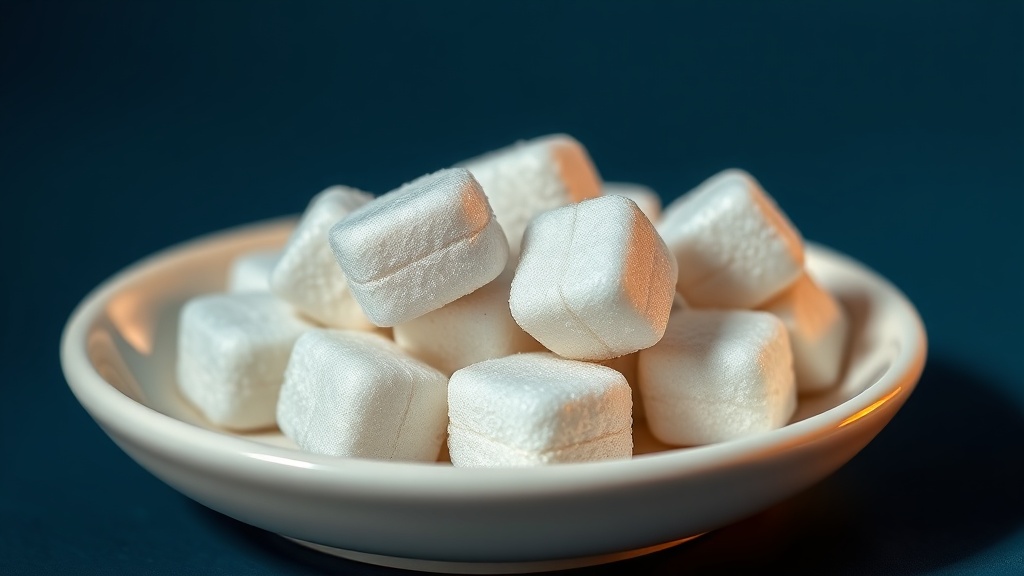
Spread across the day toward roughly 6 grams total, xylitol gum is a sensible adjunct - dose and frequency matter more than any single piece.
Xylitol gum is a supportive habit, not a treatment. See a dentist for white spots, sensitivity, or any hole you can feel, and for a plan if you are prone to decay - only a professional can stage whether a lesion is still reversible. And keep all xylitol products well away from dogs, for whom even small amounts are toxic.
Frequently asked questions
Sources
- 1.
- 2.
- 3.
- 4.
- 5.

Fix your breath at the source.
The complete science-backed protocol — engineered to eliminate volatile sulfur compounds at the biological source.
Start the Breath Protocol →Related reading
Educational purposes only. The content on this page is not medical advice and is not a substitute for consultation with a qualified dental or medical professional.
More from the library
 Answers9 min
Does Remineralizing Gum Work? An Honest Look at the Evidence
What remineralizing gum actually does, where the evidence is real, and where it is oversold - with the honest limits.
Read →→ Ingredients8 min
Probiotic Toothpaste: Do Oral Probiotics in Toothpaste Work?
What oral-probiotic toothpaste promises, how strains such as S. salivarius M18 are meant to work, and where the evidence is genuinely strong or thin.
Read →→ Answers8 min
How to Remineralize Teeth: An Honest, Practical Guide
The practical routine that supports enamel remineralization, and the clear line between the early lesions it can rebuild and the decay it cannot.
Read →→ Ingredients8 min
Baking Soda Mouthwash: What a DIY Rinse Can and Cannot Do
How a simple baking-soda rinse buffers acid, why it is not a plaque-buster, and how to mix and use it without overdoing it.
Read →→ Answers8 min
How to Get Rid of White Spots on Teeth: Your Options, Ranked
An honest, evidence-based ladder of options, from what you can do at home to what only a dentist can fix.
Read →→ Ingredients8 min
Hydroxyapatite Toothpaste Benefits: What the Evidence Actually Supports
A calm, science-first look at what hydroxyapatite toothpaste can genuinely do for your enamel, and where the evidence stops.
Read →→