How to Get Rid of Cavities
The honest options for getting rid of cavities: what a dentist does for a real hole, and what you do at home to remove early decay and prevent the next one.
- You cannot ‘get rid of’ a true cavity at home. A cavity is a hole in the enamel, and enamel is acellular — it cannot regrow, so a dentist has to restore it.
- What you can get rid of at home is early decay — a non-cavitated white-spot lesion can be remineralized away — and the risk factors that create new cavities.
- Modern dentistry increasingly seals and arrests rather than aggressively drills; for deep lesions, complete removal actually fails more often than sealing the decay in.
- There are professional options beyond fillings, including agents that arrest a lesion and resin infiltration that stops early proximal decay progressing — all dentist-delivered.
- The daily home lever that matters most is prevention: fluoride or hydroxyapatite toothpaste, less frequent sugar, and healthy saliva keep new cavities from forming.
A true cavity can only be got rid of by a dentist — usually a filling, sometimes a minimally-invasive seal or arrest agent — because enamel cannot regrow to refill a hole. At home you can remove early, non-cavitated decay by remineralizing it, and prevent new cavities with fluoride or hydroxyapatite, less sugar and good saliva. Home care prevents and reverses early decay; the dentist handles the hole.
Why a formed cavity can’t be removed at home
It helps to be precise about what a cavity is. Decay begins as invisible subsurface demineralization, and at that stage it is reversible. A cavity — the thing most people mean by the word — is the next stage: the weakened surface has collapsed into a physical hole. That hole cannot heal itself, for a simple biological reason. Unlike skin or bone, mature enamel has no living cells; it is roughly 96% mineral and completely acellular, so it cannot regenerate lost structure. A cavity is also a trap: its rough, open shape shelters bacteria where no toothbrush can reach, which keeps the decay active. That is why no toothpaste, oil, supplement or diet can ‘remove’ a cavity — there is nothing at home that both fills the missing structure and clears the bacteria sheltering inside it. Getting rid of the cavity means physically cleaning out the decay and replacing the lost structure, or sealing and arresting it — and both of those are dental procedures. Home care’s real job is upstream: reverse decay while it is still early, and stop the next cavity from starting.
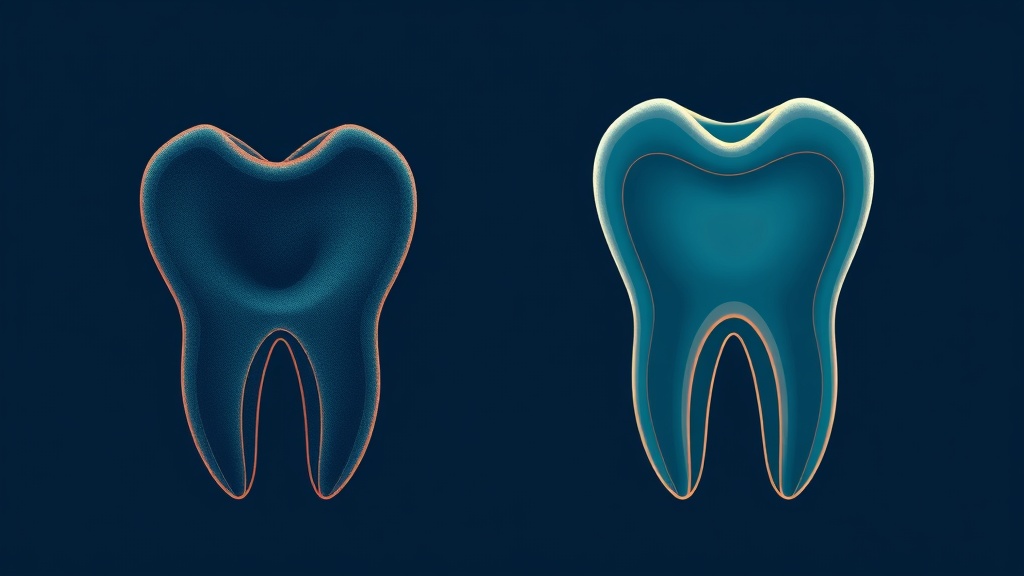
A formed cavity is cleaned and restored by a dentist; only early, non-cavitated decay can be removed at home by remineralizing it.
What the research actually shows
Every claim below maps to a named, peer-reviewed source in the Sources section. According to PubMed.
| Claim | Evidence | Source |
|---|---|---|
| A cavity is a hole and enamel cannot rebuild it — mature enamel is acellular and does not regrow structure. | Enamel biomaterials review. | Liu et al., 2022 |
| For deep lesions, complete caries removal fails more often than selectively sealing the decay in (odds ratio ~2 for failure). | Cochrane network meta-analysis. | Schwendicke et al., 2021 |
| Silver diamine fluoride arrests advanced lesions — it stops rather than reverses them — and is professionally applied. | Network meta-analysis of nonrestorative treatments. | Urquhart et al., 2019 |
| Resin infiltration cut 7-year progression of early proximal lesions from 45% to 9% — durable arrest of early decay, dentist-applied. | 7-year randomized split-mouth trial. | Paris et al., 2020 |
| Fluoride toothpaste prevents about 24% of new caries versus non-fluoride — the daily prevention lever. | Cochrane review of 70 trials. | Marinho et al., 2003 |
The honest menu of options
| Option | What it actually does | Who delivers it |
|---|---|---|
| Filling | Removes decay and replaces lost structure | Dentist |
| Silver diamine fluoride | Arrests (stops) an advanced lesion; stains it dark | Dentist |
| Resin infiltration / sealant | Seals and stops early lesions progressing | Dentist |
| Remineralizing routine | Reverses early, non-cavitated decay | You, at home |
| Sugar frequency + saliva care | Prevents the next cavity forming | You, at home |
‘Getting rid of it’ doesn’t always mean drilling
There is good news that the ‘just get it filled’ framing misses: dentistry has moved toward doing the least destructive thing that works. For deep lesions, the evidence now favors leaving some decay and sealing it in rather than chasing every last bit, because aggressive complete removal actually fails more often and risks the nerve. Early lesions between teeth can be stopped in their tracks with resin infiltration, which in a seven-year trial cut progression roughly fivefold. And an advanced lesion that is not ready for a filling can often be arrested with a professionally applied agent that halts it, at the cosmetic cost of a dark stain. None of these are home options — they are all dentist-delivered — but they matter because they change what ‘getting rid of a cavity’ looks like. It is not automatically a drill. A dentist can often choose the gentlest effective route, which is one more reason to get an early diagnosis instead of waiting until the only remaining option is the most invasive one.
Evidence you can act on.
Occasional emails — new research, new protocols, no noise.
Your home job: remove early decay and prevent the next cavity
Home care cannot remove a formed cavity, but it does two powerful things: reverse decay while it is still early, and stop new cavities from starting. This is prevention and early-lesion support, not treatment of a hole.
- 1
Get a diagnosis before you self-treat
firstA dentist confirms which spots are cavities that need restoring and which are early lesions you can work on at home. Guessing risks letting a real cavity progress.
- 2
Remineralize with fluoride or hydroxyapatite
twice dailyBoth remove early decay by re-hardening white-spot lesions, and they perform similarly in trials. Spit without rinsing to keep the mineral on the tooth.
- 3
Cut how often you eat sugar
every dayEach sugar hit restarts the acid attack that dissolves enamel; frequency drives new cavities more than total amount. Grouping sweets with meals gives teeth long recovery windows.
- 4
Keep your saliva healthy
all daySaliva neutralizes acid and supplies the minerals that reverse early decay. Hydrate, chew xylitol gum, and treat dry mouth, which measurably raises cavity risk.
- 5
Ask about professional prevention
at visitsSealants, fluoride varnish and, for the right lesion, arrest agents or resin infiltration let a dentist stop decay with minimal intervention — often better than waiting for a filling.
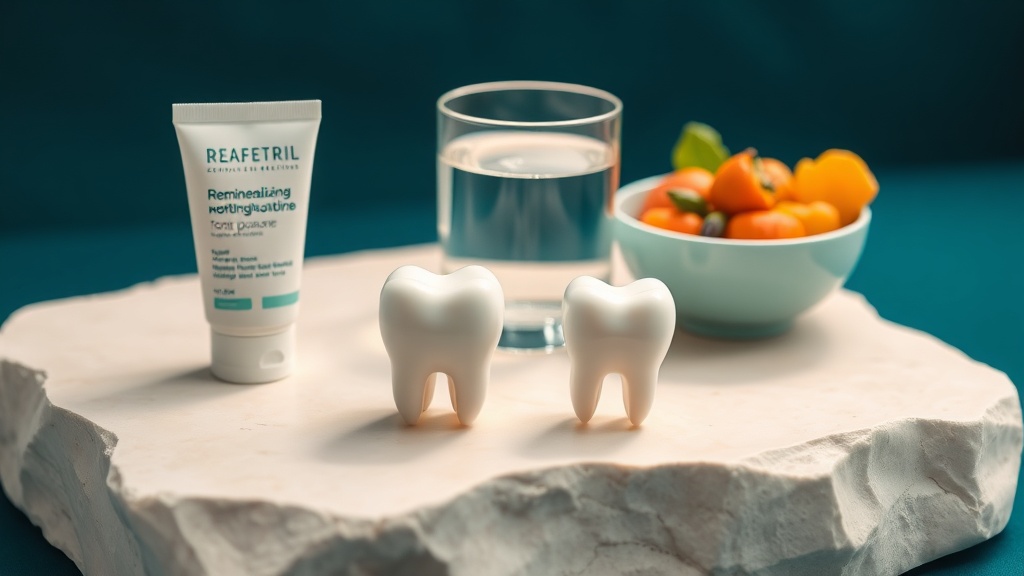
Your home role is prevention and reversing early decay — remineralizing toothpaste, controlled sugar frequency and healthy saliva — while the dentist handles any formed cavity.
Getting rid of a real cavity is a dental job, so a visit is the essential step, not an optional one. See a dentist if you can see or feel a hole, if food catches in a specific spot, if a tooth reacts to sweet, hot or cold in a way that lingers, or if there is pain or swelling. Delaying and relying on home remedies to ‘remove’ a cavity can let it reach the nerve, turning a simple filling into a root canal or extraction — a well-documented outcome. Book the exam first; the home routine works best as prevention alongside proper care.
Frequently asked questions
Sources
- 1.
- 2.
- 3.
- 4.
- 5.
- 6.
- 7.

Fix your breath at the source.
The complete science-backed protocol — engineered to eliminate volatile sulfur compounds at the biological source.
Start the Breath Protocol →Related reading
Educational purposes only. The content on this page is not medical advice and is not a substitute for consultation with a qualified dental or medical professional.
More from the library
 Answers8 min
How to Remineralize Teeth: An Honest, Practical Guide
The practical routine that supports enamel remineralization, and the clear line between the early lesions it can rebuild and the decay it cannot.
Read →→ Guides8 min
White Spots on Teeth: Causes and What to Do
The two common reasons enamel turns chalky white, and the honest guide to which spots you can rebuild at home and which need professional care.
Read →→ Best Of9 min
Toothpaste That Rebuilds Enamel: The Honest Answer
The honest answer to a common search: what a toothpaste can and cannot do for lost enamel.
Read →→ Answers8 min
Can You Reverse a Cavity? The Precise, Honest Answer
The exact answer, by stage: why an early white-spot lesion can be reversed and a cavitated cavity cannot — and why only a dentist can tell them apart.
Read →→ Answers8 min
How to Get Rid of White Spots on Teeth: Your Options, Ranked
An honest, evidence-based ladder of options, from what you can do at home to what only a dentist can fix.
Read →→ Ingredients8 min
Hydroxyapatite Toothpaste Benefits: What the Evidence Actually Supports
A calm, science-first look at what hydroxyapatite toothpaste can genuinely do for your enamel, and where the evidence stops.
Read →→