Toothpaste That Rebuilds Enamel: The Honest Answer
The honest answer to a common search: what a toothpaste can and cannot do for lost enamel.
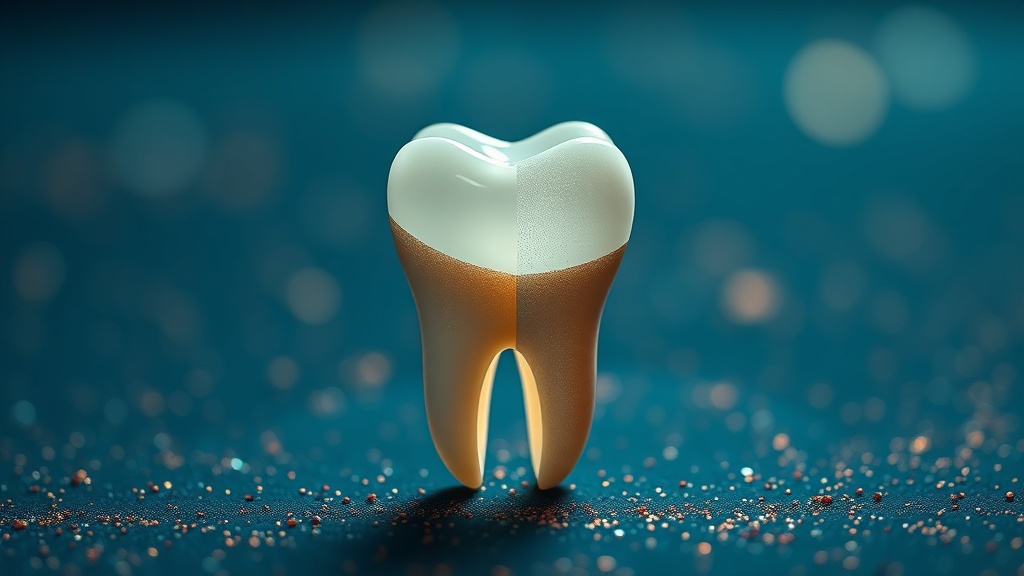
- No toothpaste rebuilds enamel in the sense most people mean — enamel is acellular, with no living cells to regrow lost structure, so a tube cannot fill a cavity or replace worn tooth.
- What the best pastes genuinely do is remineralize: they re-harden and strengthen the softened surface of early, non-cavitated enamel by depositing mineral.
- The ingredients with real evidence are fluoride and nano-hydroxyapatite; a fluoride-free hydroxyapatite paste matched 1,450 ppm fluoride in an 18-month adult trial.
- Remineralized enamel can actually end up more acid-resistant than the original surface — so 'strengthen', not 'rebuild', is the accurate promise.
- Early white or brown spots can often be arrested; a cavitated tooth cannot, and trying to remineralize an open tooth at home can make things worse — see a dentist to stage it.
Honestly, no toothpaste rebuilds enamel the way a filling replaces it — enamel has no living cells to regrow. What good remineralizing pastes do is re-harden and strengthen the softened surface of early, non-cavitated enamel by depositing mineral. That can arrest an early white-spot lesion, and the repaired surface can be more acid-resistant, but a cavity still needs a dentist.
Why 'rebuild' is the wrong word — and what's actually true
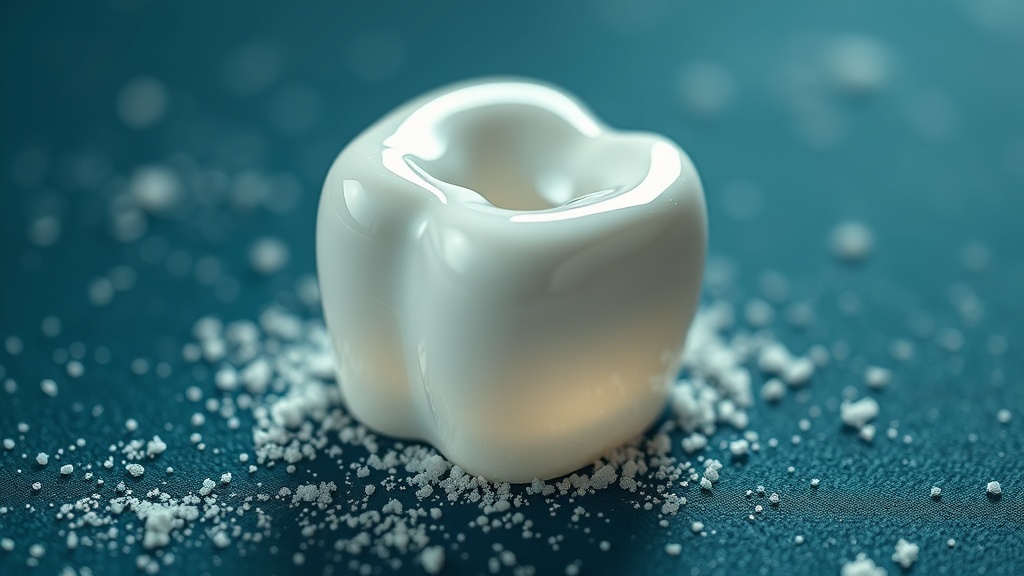
The phrase 'toothpaste that rebuilds enamel' promises more than any toothpaste can deliver, and it is worth being precise about why. Mature enamel is unlike bone or skin: it is acellular and avascular, meaning it contains no living cells and no blood supply once the tooth has erupted. Bone can remodel and heal because cells rebuild it; enamel simply cannot, because the cells that made it are long gone. So when a lesion progresses to an actual hole — cavitation — the lost structure is gone for good as far as your own body is concerned, and only a dentist can restore it with a filling. What a toothpaste can do is genuinely useful, just different. Enamel is about 96% mineral, and that surface mineral is in constant chemical exchange with your saliva, gaining and losing calcium and phosphate all day. A remineralizing toothpaste feeds that exchange, redepositing mineral into the microscopically softened, porous surface of an early lesion before it ever becomes a hole. The result is a re-hardened, strengthened surface — and here is the genuinely encouraging part: enamel that remineralizes with a little fluoride present can end up more acid-resistant than the original, because the new mineral excludes carbonate and takes up fluoride. That is a real, defensible benefit. It is just described accurately as strengthening and re-hardening the surface, not rebuilding the tooth.
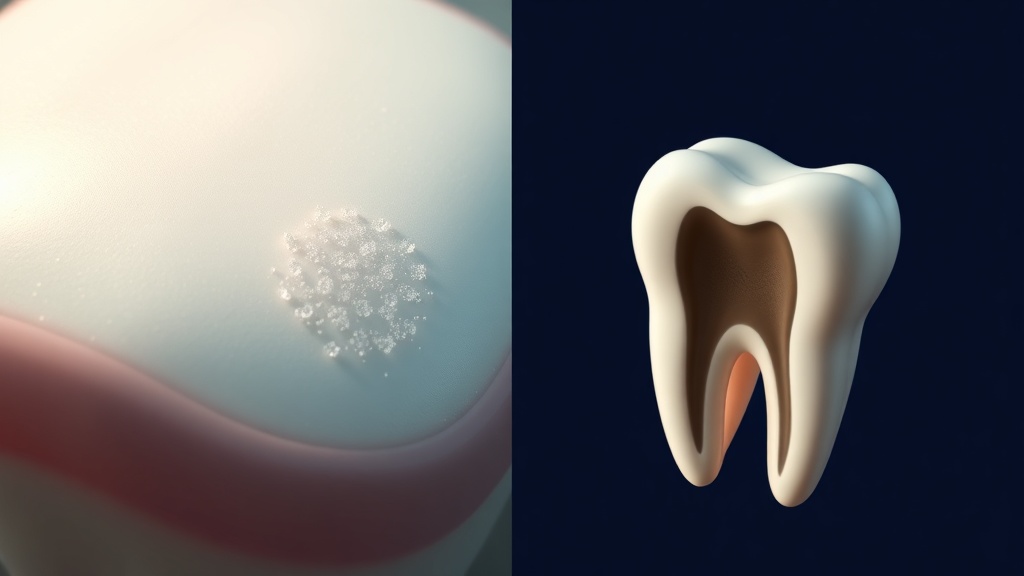
A paste can re-harden a softened surface (left); it cannot regrow the lost structure of a cavitated tooth (right).
What the research actually shows
Every claim below maps to a named, peer-reviewed source in the Sources section. According to PubMed.
| Claim | Evidence | Source |
|---|---|---|
| Once cavitation occurs, developed enamel 'cannot repair itself' — it is acellular and does not remineralize back to sound tooth. | Review of enamel structure and repair. | Liu et al., 2022 |
| Mature enamel has no cells to regenerate lost structure; the only non-invasive route is physicochemical re-growth of mineral crystals. | Review of enamel biomineralization. | Grohe & Mittler, 2021 |
| A fluoride-free hydroxyapatite toothpaste was non-inferior to 1,450 ppm fluoride for caries prevention in adults over 18 months. | 18-month randomized non-inferiority trial. | Paszynska et al., 2023 |
| Remineralized enamel formed with trace fluoride is more acid-resistant than the original mineral. | Review of fluoride mechanisms of action. | Buzalaf et al., 2011 |
| Nearly 80% of lesions that looked advanced on X-ray were still non-cavitated — many early spots are genuinely arrestable, not automatic drilling. | Tooth-separation validation study of proximal lesions. | Nascimento et al., 2020 |
What a toothpaste can and cannot do
| The claim | Reality | Why |
|---|---|---|
| Regrow or rebuild lost enamel | No | Enamel is acellular — no cells remain to regenerate structure |
| Fill or reverse a cavity | No | A cavitated surface is broken and plaque-retentive; it needs a dentist |
| Re-harden a softened early lesion | Yes | Mineral is redeposited into the porous surface before a hole forms |
| Make enamel more acid-resistant | Yes | Fluoride-remineralized mineral excludes carbonate and takes up fluoride |
Where the honest opportunity actually is
If a toothpaste cannot rebuild a tooth, is the whole idea a con? Not at all — the real opportunity is just earlier in the timeline than the marketing implies. Caries develops in stages, and there is a wide, genuinely reversible window before a hole ever appears, when the damage is still a subsurface softening that shows as a chalky white or brown spot. In one striking study, nearly 80% of lesions that looked advanced enough to drill on an X-ray turned out, on closer inspection, to still be non-cavitated — candidates for remineralization and arrest, not automatic fillings. That is where a good remineralizing paste, used consistently, earns its keep: hardening those early spots and helping prevent new ones. Progression can in principle be arrested at any stage, but only where the tooth can be kept genuinely plaque-free, which a cavitated, rough-surfaced lesion structurally prevents. This is also why one piece of internet advice is actively dangerous: trying to 'remineralize' an already open, cavitated tooth at home. Doing so does not rebuild it; it just delays real treatment while decay advances toward the nerve. The honest, and more hopeful, message is that catching enamel at the white-spot stage — with the right paste and a dentist watching it — is a genuine second chance. Waiting until you can see a hole is not.
Evidence you can act on.
Occasional emails — new research, new protocols, no noise.
How to actually strengthen early enamel
You cannot regrow enamel, but you can give an early, softened surface the best chance to re-harden. None of this treats a disease, and none of it replaces a dental exam.
- 1
Use a proven remineralizing paste, consistently
twice dailyChoose 1,000–1,500 ppm fluoride, or nano-hydroxyapatite if you prefer fluoride-free. Both re-harden early enamel; the key is twice-daily use over weeks and months, not a single dramatic fix.
- 2
Spit, don't rinse
after each brushLeave a thin film of paste on the teeth so the mineral stays in contact with the surface. Rinsing straight away washes most of the benefit away before it can deposit.
- 3
Starve the acid attacks
ongoingEvery sugary or acidic exposure softens the surface again. Cluster treats with meals rather than sipping and snacking all day, so the balance has time to swing back toward re-hardening.
- 4
Protect your saliva
all daySaliva is the body's own remineralizing system, keeping the mouth supersaturated with mineral. Stay hydrated and manage a dry mouth, which otherwise tilts everything toward mineral loss.
- 5
Get every spot staged early
as neededAsk a dentist to check any white, brown or chalky spot. Catching it while it is still non-cavitated is the entire window in which a toothpaste can help — once it is a hole, that window has closed.
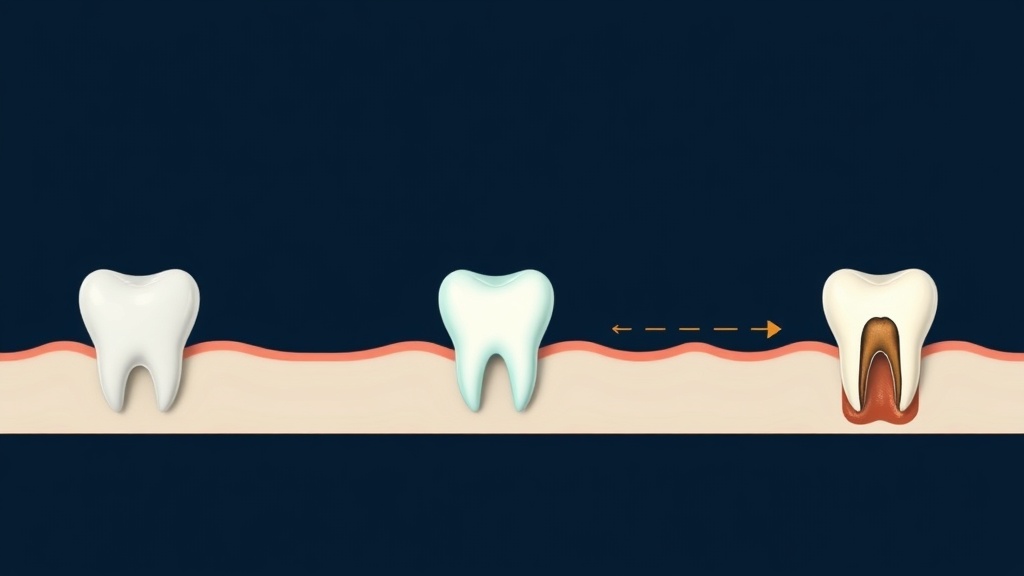
The window where a toothpaste can help sits before cavitation — at the white-spot stage, not after a hole has formed.
This is the most important line in the article: never try to remineralize a tooth that already has a visible hole, a dark spot you can catch a fingernail on, or any lingering pain. See a dentist to have it staged. Real harm has been documented when people delayed care on an open tooth in the hope of rebuilding it at home, letting a fixable problem become a root canal or extraction. A toothpaste is a tool for early, intact enamel and for prevention — a dentist is the only one who can restore a tooth that has actually broken down.
Frequently asked questions
Sources
- 1.
- 2.
- 3.
- 4.
- 5.
- 6.
- 7.
- 8.
- 9.

Fix your breath at the source.
The complete science-backed protocol — engineered to eliminate volatile sulfur compounds at the biological source.
Start the Breath Protocol →Related reading
Educational purposes only. The content on this page is not medical advice and is not a substitute for consultation with a qualified dental or medical professional.
More from the library
 Guides8 min
Does Hydroxyapatite Toothpaste Work? What the Evidence Shows
The fluoride-free ingredient dentists keep debating, measured against the actual clinical trials.
Read →→ Answers8 min
Is Nano-Hydroxyapatite Toothpaste Safe?
The nanoparticle worry, answered by the actual toxicology reviews rather than the headlines.
Read →→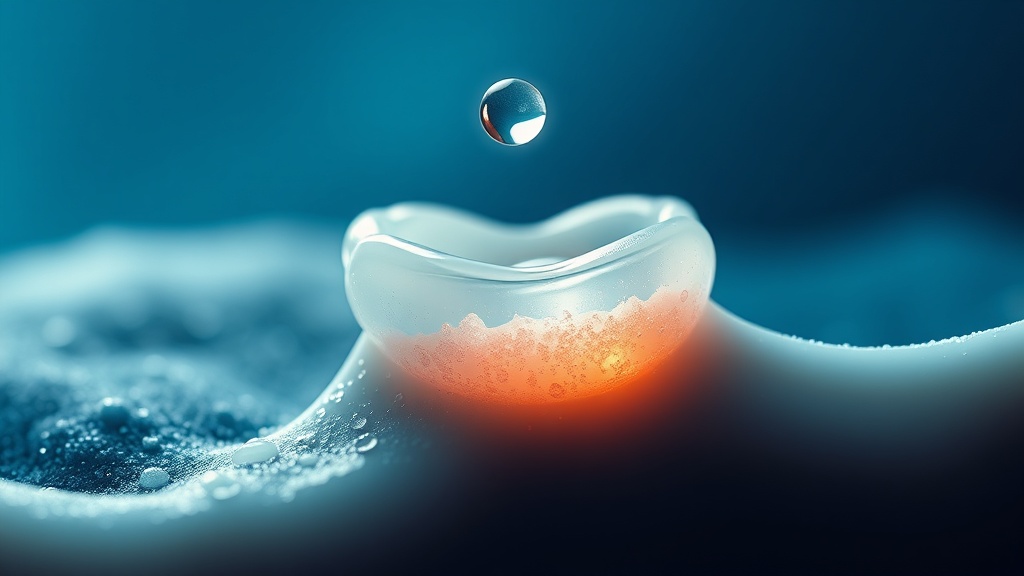 Ingredients8 min
Remineralizing Toothpaste: How It Works and What Actually Rebuilds Enamel
A plain-English guide to how remineralizing toothpaste works — and an honest comparison of fluoride, n-HA and CPP-ACP.
Read →→ Best Of8 min
How to Choose the Best Remineralizing Toothpaste
How to pick a remineralizing toothpaste by the evidence — not the marketing — and match it to your needs.
Read →→ Answers8 min
How to Get Rid of White Spots on Teeth: Your Options, Ranked
An honest, evidence-based ladder of options, from what you can do at home to what only a dentist can fix.
Read →→ Ingredients8 min
Hydroxyapatite Toothpaste Benefits: What the Evidence Actually Supports
A calm, science-first look at what hydroxyapatite toothpaste can genuinely do for your enamel, and where the evidence stops.
Read →→