
Fluoride Varnish for Kids: What Parents Should Know
A calm, honest look at the sticky coating your dentist paints on your child's teeth - what it does, how safe it really is, and why the temporary yellow tint is nothing to worry about.
- Fluoride varnish is a thin, sticky coating a dentist or hygienist paints on in under a minute - it helps harden tooth enamel and reduce new decay, but it does not fix or remove a cavity that has already formed.
- In baby teeth, varnish has been linked to roughly a 37% reduction in new decay, and it is the only topical fluoride an American Dental Association panel specifically recommends for children under six.
- The dull yellow tint you see afterwards is just the varnish itself sitting on the surface - it is temporary, harmless, and brushes off at the next cleaning.
- It works best as a repeated top-up every three to six months, on a schedule your dentist sets based on your child's decay risk, and it works alongside brushing at home rather than instead of it.
- The main honest trade-off is a small risk of mild fluorosis from swallowing too much fluoride during early childhood, which is why the amount and timing are kept age-appropriate and always decided with your dentist.
Fluoride varnish is a quick, needle-free coating a dentist paints onto your child's teeth to harden the enamel and reduce new decay. It is safe, sets in seconds, and the temporary yellow tint brushes off the next day. Most children benefit from an application every three to six months, guided by their own dentist based on their decay risk.
What fluoride varnish actually is
Fluoride varnish is not a treatment that repairs a cavity - it is a thin, sticky coating that a dentist or hygienist paints directly onto your child's teeth in under a minute. It is made of a high concentration of fluoride, usually 2.26% sodium fluoride, suspended in a resin that grips wet enamel and hardens the instant it meets saliva. Because it sets so quickly, it clings to the tooth for hours instead of being rinsed straight off, and that lingering contact is the whole point. It gives the fluoride time to soak into the outer layer of enamel where it does its work. There, fluoride helps the surface of the tooth take up minerals again, a process called remineralization, leaving the enamel harder and more resistant to the everyday acids that drive decay. What it does not do is create a permanent shield, and it cannot undo decay that has already broken through the surface. The honest way to picture it is a periodic top-up that strengthens the enamel, applied on a schedule and working alongside brushing at home. It matters most for children who are at higher risk - those with early white spots, a diet heavy in sugary snacks, or a family history of decay - because those are the teeth that benefit most from an extra layer of protection between check-ups. This is also why the researchers who study children's teeth still describe fluoride as central to reducing decay, while the newer fluoride-free alternatives are described as promising but supported by more limited clinical data. In other words, varnish is a well-tested, low-effort tool that does one specific job well: it buys the enamel more resilience during the years when little teeth are most vulnerable.
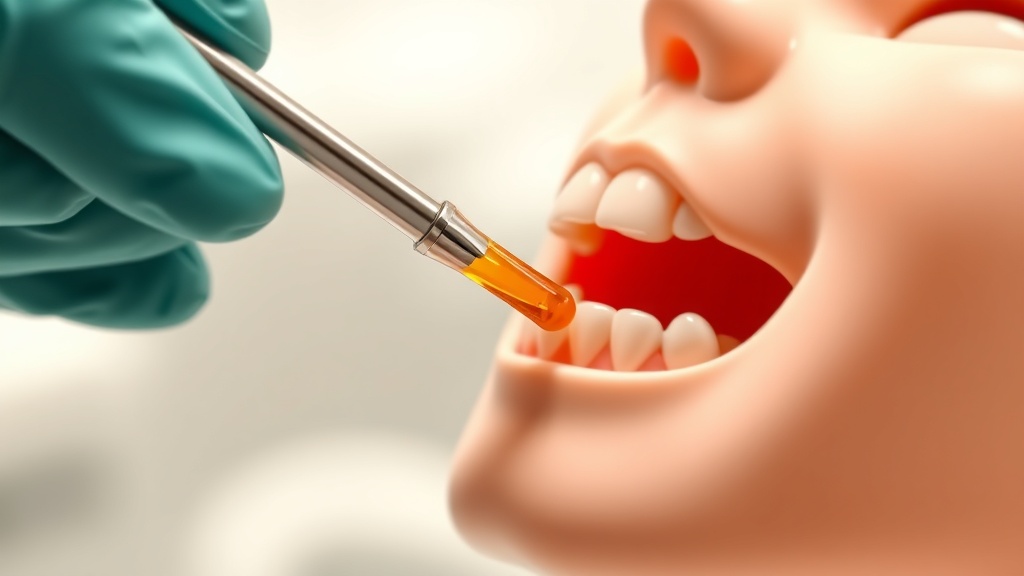
The whole application takes under a minute: a soft brush lays a thin coat of varnish that sets on contact with saliva.
What the research actually shows
Every claim below maps to a named, peer-reviewed source in the Sources section. According to PubMed.
| Claim | Evidence | Source |
|---|---|---|
| In baby teeth, fluoride varnish was linked to about a 37% reduction in new decay (43% in permanent teeth). | Cochrane review of fluoride-varnish trials in children. | Marinho et al., Cochrane 2013 |
| For children younger than six, 2.26% fluoride varnish is the only topical fluoride an ADA expert panel recommends. | ADA clinical guideline on topical fluoride. | Weyant et al. (ADA), 2013 |
| The choice of fluoride concentration for young children should be balanced against the small risk of fluorosis. | Cochrane review of fluoride-toothpaste concentrations. | Walsh et al., Cochrane 2019 |
| Mild dental fluorosis is the main potential downside identified for using topical fluoride at an early age. | Cochrane review of topical fluoride and fluorosis. | Wong et al., Cochrane 2024 |
| Fluorosis risk comes mainly from swallowing high doses of fluoride while teeth are forming - driven more by the amount used than its concentration. | Review of the risk factors for dental fluorosis. | Davies et al., 2003 |
How varnish fits with the other options
| Option | What it does | Who applies it |
|---|---|---|
| Fluoride varnish | A thin coat that releases fluoride to harden enamel and reduce new decay | Dentist or hygienist |
| Fluoride toothpaste at home | A low, everyday dose of fluoride - the daily baseline | Parent and child at home |
| Dental sealants | A thin plastic coat that seals the deep grooves of back teeth | Dentist or hygienist |
| Silver diamine fluoride | Halts an existing cavity in its tracks, but turns it black | Dentist |
| Doing nothing | Leaves early weak spots free to progress into cavities | - |
The temporary tint, and how often kids need it
Right after the varnish goes on, your child's teeth may look dull, yellowish, or slightly filmy, and the coating feels a little sticky against the tongue. This is completely normal and completely temporary. That tint is simply the varnish itself sitting on the surface - it is not staining the tooth and it is not a sign of any damage. It comes away at the next brushing, usually the following morning, and the teeth return to their normal colour. Some varnishes are tinted white or clear rather than amber, so ask your dental team what your child's will look like if you want to know in advance. The part parents most deserve to hear plainly is about frequency and trade-offs. Varnish is not a one-and-done fix: its benefit comes from being reapplied, typically every three to six months depending on how much decay risk your child carries, which is a judgement your dentist makes rather than a fixed rule. And like any fluoride used while the teeth are still forming, there is a small, well-documented trade-off. Swallowing too much fluoride over time in early childhood can lead to mild dental fluorosis - faint white flecks in the enamel that are usually only cosmetic and often barely visible. A professional varnish sidesteps most of that concern because it uses a tiny total amount and sets almost instantly, so very little is ever swallowed even in a wriggly toddler. That is precisely why an ADA panel singles out this form of fluoride for the under-six age group, where controlling the swallowed dose matters most. The goal throughout is honest balance: real strengthening of the enamel against decay, with the fluorosis risk kept low by using the right amount, in the right form, at the right age - and by leaving those decisions to the professional who knows your child's mouth.
Evidence you can act on.
Occasional emails — new research, new protocols, no noise.
What to expect at the visit and after
The whole process is quick, needle-free and usually painless. Here is what typically happens at the appointment and how to help the varnish do its job afterwards. None of this treats a disease - it simply strengthens the tooth surface and keeps decay risk lower.
- 1
A quick clean and dry
1-2 minutesThe dentist or hygienist gently wipes and dries the teeth so the varnish has a clean surface to grip. There is no drilling, no numbing and nothing sharp involved, so most children barely register that this part is happening at all.
- 2
Painting on the coating
under a minuteUsing a small soft brush, they lay a thin layer over the teeth, focusing on the surfaces most likely to develop decay, such as the grooves and the spots where teeth meet. It sets on contact with saliva within seconds, so your child can close their mouth and sit up straight away.
- 3
Wait before eating or drinking
about 30 minutesGive the varnish time to bond to the enamel. After roughly half an hour your child can sip water, but keep to soft foods and skip hot drinks for the rest of the day so the fresh coating is not scrubbed or melted off before it has finished working.
- 4
Skip brushing until the next day
that eveningLeave the varnish on overnight so the fluoride keeps soaking into the enamel while your child sleeps. Go back to normal brushing the next morning - that is when the dull film lifts away and the teeth look themselves again, brighter and clean.
- 5
Keep the home routine going
ongoingVarnish supports brushing, it does not replace it. Carry on brushing twice a day with an age-appropriate fluoride toothpaste, and keep sugary drinks and snacks to mealtimes, because how often sugar hits the teeth is still the single biggest lever on your child's decay risk between visits.
Leave the varnish on overnight; the dull tint brushes off the next morning and normal brushing resumes.
Fluoride varnish is always applied by a professional, so the decision is made with your dentist - but some signs mean you should book sooner rather than wait for the next routine visit. See a dentist if you notice chalky white patches or brown spots on your child's teeth, if they mention tooth pain or sensitivity to cold, if a tooth looks pitted or has a visible hole, or if your child has never had a dental check-up at all. A dentist can weigh your child's individual decay risk and decide whether varnish, sealants or another approach fits best for them. The first dental visit is recommended by around age one, and an early, calm visit does more than catch problems early - it also helps build a positive routine and lowers the chance of dental fear taking hold later on.
Frequently asked questions
Sources
- 1.
- 2.
- 3.
- 4.
- 5.
- 6.
- 7.
- 8.

Fix your breath at the source.
The complete science-backed protocol — engineered to eliminate volatile sulfur compounds at the biological source.
Start the Breath Protocol →Related reading
Educational purposes only. The content on this page is not medical advice and is not a substitute for consultation with a qualified dental or medical professional.
More from the library
 Guides8 min
Silver Diamine Fluoride for Kids: How It Stops Cavities, the Black Stain, and What to Expect
A dentist-applied liquid that can halt early tooth decay without a drill - and the honest trade-off it comes with: a permanent black stain on the treated spot.
Read →→ Guides8 min
Dental Sealants for Kids: Pros, Cons, and Cost
An honest guide to dental sealants for children — how they work, the pros and cons, typical cost, the BPA question, and when a dentist may suggest them.
Read →→ Best Of8 min
Fluoride Toothpaste for Kids: How Much Is Safe (2026)
Fluoride is the best-proven way to protect a child teeth from decay - and using the right small amount for their age is what keeps it both effective and safe.
Read →→ Guides9 min
Early Childhood Caries: Gentle Prevention for Little Smiles
What early childhood caries is, why it happens, and the calm daily habits - diet, bottle routines, brushing, dental visits - that lower a young child's risk.
Read →→ Best Of8 min
Best Teething Gel for Babies: Safer Soothing Options Compared
Why the honest best is non-medicated relief - and why the FDA warns against benzocaine and lidocaine teething gels for babies and toddlers.
Read →→ Best Of8 min
Best Toothbrush for Kids by Age (2026 Buying Guide)
A calm, honest guide to choosing a child toothbrush by age — soft bristles, small head, and the habits that matter more than any brand.
Read →→