
Fluoride Toothpaste for Kids
Fluoride is the best-proven way to protect a child teeth from decay - and using the right small amount for their age is what keeps it both effective and safe.
- Fluoride toothpaste is the best-proven, dentist-recommended way to help protect a child teeth from decay - it works by strengthening enamel against the acids behind cavities.
- The real question is not whether to use fluoride, but how much: the right amount for your child age is what makes it both effective and safe.
- Use a smear the size of a grain of rice for children under 3, and a pea-size amount for ages 3 to 6 - always under adult supervision.
- Teach your child to spit out rather than swallow, and to skip a big water rinse, so a thin protective film stays on the teeth.
- The main trade-off of too much fluoride while teeth are forming is mild dental fluorosis - usually faint white flecks - which is exactly why the small, age-right amount matters. Let your pediatric dentist tailor the plan.
Fluoride toothpaste is the most effective, dentist-recommended way to help prevent tooth decay in children - and the key is the amount. Use a rice-grain smear under age 3 and a pea-size amount from 3 to 6, always supervised, and teach your child to spit rather than swallow. Ask your dentist to personalise it.
How fluoride protects a child teeth
Fluoride does its work right at the surface of the tooth. It helps enamel stand up to the acids that bacteria make after meals, and it supports the natural repair of the early, soft spots where a cavity would otherwise begin - a structural strengthening of the tooth, not a drug acting on the body. It is also the single most thoroughly studied tool in childrens dentistry: a large Cochrane review found that fluoride toothpaste reduces the build-up of new decay by about a quarter compared with a non-fluoride paste. The part that surprises many parents is what happens at the low-fluoride end. Pastes below roughly 550 parts per million of fluoride - often marketed as the gentle, safer choice - show no significant cavity benefit in the trials, with a clear protective effect appearing only at around 1000 ppm and above. In other words, protection is dose-dependent, and a very low-fluoride paste is not a free safety upgrade; it can quietly trade away the very benefit you are brushing for. Fluoride remains the reference standard, while newer fluoride-free options such as hydroxyapatite are promising but still rest on more limited long-term evidence. The sensible path, then, is not to weaken the fluoride but to control the amount - which is where safety actually lives.
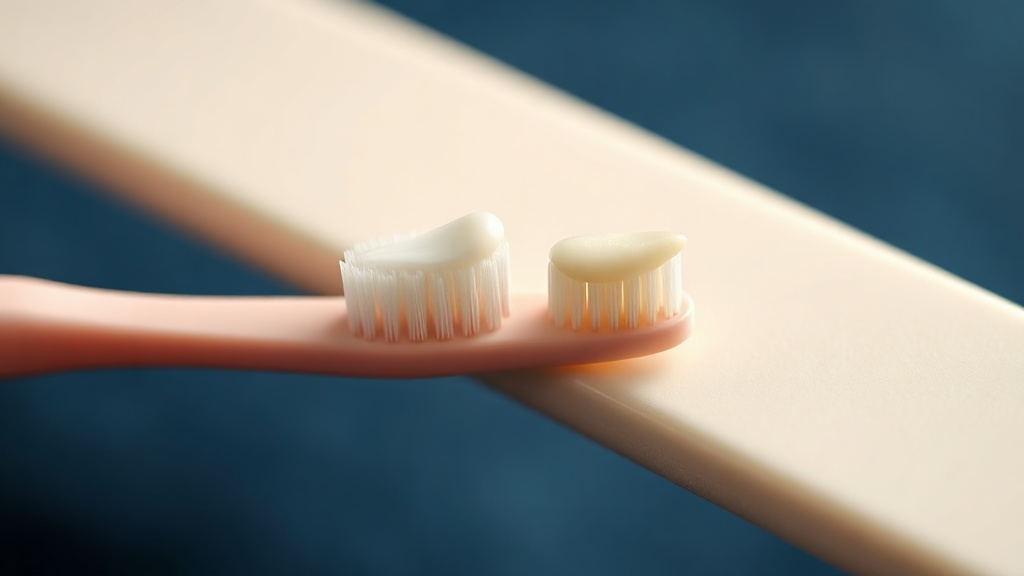
The whole safety story in one picture: a rice-grain smear under age 3, a pea-size amount from 3 to 6. The small dose is what keeps fluoride both effective and safe.
What the research actually shows
Every claim below maps to a named, peer-reviewed source in the Sources section. According to PubMed.
| Claim | Evidence | Source |
|---|---|---|
| Fluoride toothpaste is the best-proven cavity protection: it reduces the build-up of new decay by about 24% compared with a non-fluoride paste. | Cochrane review of 70 trials (42,300 children). | Marinho et al., 2003 |
| The protection is dose-dependent: toothpaste below 550 ppm fluoride showed no significant benefit over placebo, with a clear effect only at about 1000 ppm and above. | Cochrane network review of toothpaste fluoride concentrations. | Walsh et al., 2010 |
| Standard-strength fluoride toothpaste measurably reduces decay even in baby teeth, and the choice of concentration for young children should be balanced against fluorosis risk. | Cochrane review of different fluoride toothpaste concentrations. | Walsh et al., 2019 |
| The main trade-off of using topical fluoride early is mild dental fluorosis - usually faint white marks - identified as a potential adverse outcome. | Cochrane review of topical fluoride and fluorosis. | Wong et al., 2024 |
| Fluorosis is driven mainly by how much fluoride a child swallows while teeth are forming - the amount used matters more than the concentration - which is why the age-right dab is the safety lever. | Review of fluoride dose and fluorosis risk. | Davies et al., 2003 |
How much fluoride toothpaste, by age
| Child age or product | How much to use | How to use it |
|---|---|---|
| Under 3 (first tooth to age 3) | A thin smear the size of a grain of rice | Brush twice daily; a parent does the brushing; encourage spitting |
| 3 to 6 years | A pea-size amount | A parent supervises and helps; child spits, does not swallow or heavily rinse |
| 6 years and older | A pea-size amount | Supervise until brushing is reliable; spit, do not swallow |
| Low-fluoride paste under 550 ppm | Not the safety upgrade it looks like | Shows little cavity benefit; use standard strength in the right amount instead, per your dentist |
| Fluoride-free / hydroxyapatite paste | An alternative some families prefer | A reasonable option but with weaker long-term evidence; talk the trade-off through with your dentist |
The real safety story: the amount, not the fluoride
The fear that circulates online is that fluoride is toxic. The honest science says something more specific and more manageable: at the tiny topical amounts on a correctly loaded brush, fluoride toothpaste is both safe and protective. The genuine, evidence-based concern is dental fluorosis - faint white flecks that can form if a child regularly swallows too much fluoride while the permanent teeth are still developing under the gums, roughly before age eight. And that is entirely a question of dose. A rice-grain smear holds so little fluoride that even if it is swallowed, the amount is small; a big ribbon of paste eaten off the brush every day is the real risk. This is the whole reason the guidance is a smear or a pea, supervised, and spat out. It is worth naming the other worry directly, too: the headlines linking fluoride to lower IQ come from studies of high fluoride in drinking water, above 1.5 milligrams per litre - a whole-body, swallowed exposure - not from a pea of toothpaste spat into the sink, and even those reviews could not determine effects at lower levels. None of this calls for shame or lectures; parents who hesitate over fluoride are usually thoughtful, not careless. The productive move is to replace fear with a number: control the amount, supervise the brushing, and fluoride becomes both the safest and the strongest protection your child teeth can get.
Evidence you can act on.
Occasional emails — new research, new protocols, no noise.
How to use fluoride toothpaste safely, by age
Fluoride does its job safely when you control two things - the amount and the swallowing. Here is the simple, dentist-backed routine.
- 1
Start at the first tooth
twice dailyBegin brushing as soon as the first tooth appears, morning and night, with a rice-grain smear of standard fluoride toothpaste. For a baby or toddler, you do the brushing rather than leaving it to them.
- 2
Match the amount to the age
every brushA rice-grain smear under age 3, a pea-size amount from 3 to 6. That small amount is exactly what keeps fluoride effective while the permanent teeth are forming - resist copying the thick ribbon of paste shown in adverts.
- 3
Teach spit, not rinse
every brushEncourage your child to spit out the extra and not swallow it, and skip a big rinse with water afterwards so a thin, protective film of fluoride stays on the teeth a little longer.
- 4
Supervise and store it safely
ongoingSupervise brushing so the amount is right and most of it is spat out, and keep the tube up out of reach so a curious child cannot eat it like a treat between brushings.
- 5
Personalise it with your dentist
at checkupsA pediatric dentist tailors the strength and amount to your child cavity risk and your local water, and can add professional fluoride varnish for higher-risk children - for under-6s, only 2.26% varnish is recommended.
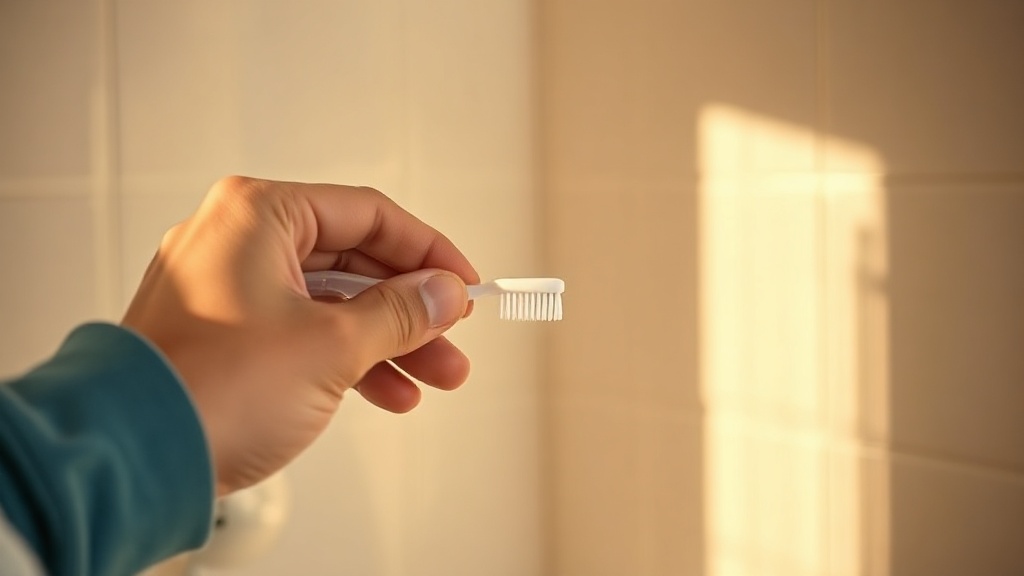
An adult loads the brush and supervises the brushing - that is how the amount stays right and most of the paste ends up spat out, not swallowed.
See a pediatric dentist to personalise your child fluoride plan - the right strength and amount depend on their age, their cavity risk, and how much fluoride is already in your water. Ask about professional fluoride varnish for higher-risk children. If you notice white or brown marks appearing on the teeth, or you are weighing fluoride-free options out of worry, talk it through with your dentist rather than guessing from social media. If a child swallows a large amount of toothpaste at once, contact poison control or your doctor, and always store the tube out of reach.
Frequently asked questions
Sources
- 1.
- 2.
- 3.
- 4.
- 5.
- 6.
- 7.
- 8.

Fix your breath at the source.
The complete science-backed protocol — engineered to eliminate volatile sulfur compounds at the biological source.
Start the Breath Protocol →Related reading
Educational purposes only. The content on this page is not medical advice and is not a substitute for consultation with a qualified dental or medical professional.
More from the library
 Best Of8 min
Best Toothpaste for Kids by Age: An Honest Guide
A calm, age-by-age guide to choosing a kids toothpaste - the right fluoride amount, why flavour matters, and the whitening and charcoal pastes worth skipping.
Read →→ Best Of8 min
Fluoride-Free Toothpaste for Kids: What Parents Should Weigh
Choosing fluoride-free toothpaste for a child is a values decision with a genuine dental trade-off, weighed honestly here.
Read →→ Guides8 min
Fluoride Varnish for Kids: What Parents Should Know
A calm, honest look at the sticky coating your dentist paints on your child's teeth - what it does, how safe it really is, and why the temporary yellow tint is nothing to worry about.
Read →→ Guides9 min
Early Childhood Caries: Gentle Prevention for Little Smiles
What early childhood caries is, why it happens, and the calm daily habits - diet, bottle routines, brushing, dental visits - that lower a young child's risk.
Read →→ Best Of8 min
Best Teething Gel for Babies: Safer Soothing Options Compared
Why the honest best is non-medicated relief - and why the FDA warns against benzocaine and lidocaine teething gels for babies and toddlers.
Read →→ Best Of8 min
Best Toothbrush for Kids by Age (2026 Buying Guide)
A calm, honest guide to choosing a child toothbrush by age — soft bristles, small head, and the habits that matter more than any brand.
Read →→