Fluoride-Free Toothpaste: An Honest, Balanced Guide
What a fluoride-free toothpaste can and cannot do, why nano-hydroxyapatite is the ingredient that matters, and a fair account of fluoride rather than a scare.
- A fluoride-free toothpaste is only worth using if it contains an active remineralizing ingredient. The one with real evidence is nano-hydroxyapatite; a paste that is simply free of fluoride and everything else is just a cleaner.
- Nano-hydroxyapatite has performed as non-inferior to fluoride for caries prevention and remineralization in head-to-head trials, so a good fluoride-free paste is a legitimate choice, not a compromise.
- The honest caveat: the strongest independent reviews rate the hydroxyapatite evidence as low-certainty, and note it may not resist a pure acid attack as well as fluoride. It is as good as fluoride, not proven better.
- Fluoride is a genuine gold standard with over half a century of evidence. Choosing fluoride-free is a reasonable personal preference; it is not an escape from a dangerous chemical, and this guide will not pretend otherwise.
- Hydroxyapatite has practical advantages for some: it causes no fluorosis if swallowed and can suit families who want fluorosis-free options for young children, though a dentist should guide that choice.
A fluoride-free toothpaste protects teeth only if it contains nano-hydroxyapatite, the fluoride alternative with real remineralization evidence, which has matched fluoride in head-to-head trials. It is a legitimate choice for those who prefer to avoid fluoride, with the honest caveat that the evidence is lower-certainty and fluoride remains the longest-proven standard. Avoid fluoride-free pastes that lack any active remineralizing ingredient.
What makes a fluoride-free toothpaste actually work
Toothpaste does two jobs: it helps clean plaque away, and, if it carries the right ingredient, it helps rebuild the enamel surface. Fluoride does the second job by steering saliva''s calcium and phosphate into a tougher, more acid-resistant mineral. A fluoride-free paste has to replace that second job or it is doing only half the work. The ingredient that credibly does so is nano-hydroxyapatite, a synthetic form of the very mineral enamel is made from, roughly 96 percent hydroxyapatite by weight. Instead of guiding a rebuild, hydroxyapatite supplies ready-made mineral building blocks that settle onto and into the softened surface, filling microscopic pores and re-hardening early lesions. That is a real, evidence-backed mechanism, which is why the fluoride-free conversation is really a nano-hydroxyapatite conversation. It also explains the warning in the key takeaways: a fluoride-free toothpaste built around charcoal, herbs or flavour but no remineralizing agent is cosmetic. If you are going fluoride-free specifically to protect enamel, the ingredient list, not the front-of-box claim, is what decides whether it can.

Nano-hydroxyapatite works by supplying ready-made enamel mineral that settles into a softened surface, a different route to the same goal fluoride reaches by steering saliva.
What the research actually shows
Every claim below maps to a named, peer-reviewed source in the Sources section. According to PubMed.
| Claim | Evidence | Source |
|---|---|---|
| Fluoride-free hydroxyapatite toothpaste was non-inferior to 1,450 ppm fluoride for caries prevention over 18 months in adults, 89.3 versus 87.4 percent caries-free. | 18-month randomized controlled trial in adults. | Paszynska et al., 2023 |
| Nano-hydroxyapatite matched fluoride in high-risk orthodontic patients, with new lesions at 54.7 versus 61.6 percent and non-inferiority met over six months. | Six-month randomized controlled trial. | Schlagenhauf et al., 2019 |
| Pooled analysis found hydroxyapatite clearly beats placebo but only numerically, not significantly, edges fluoride, supporting as good as rather than better than. | Systematic review and meta-analysis. | Pawinska et al., 2024 |
| The most rigorous independent review rated the hydroxyapatite evidence very low certainty and found it did not hinder demineralization under acid attack the way fluoride did. | Systematic review and meta-analysis. | Wierichs et al., 2022 |
| Hydroxyapatite has no reported adverse events and, if incidentally swallowed, dissolves to calcium and phosphate, the basis for a fluorosis-free option for young children. | Narrative review of hydroxyapatite safety. | OHagan-Wong et al., 2022 |
Fluoride versus fluoride-free (hydroxyapatite)
| Consideration | Fluoride toothpaste | Nano-hydroxyapatite (fluoride-free) |
|---|---|---|
| Strength of evidence | Over 50 years, high certainty | Growing but lower certainty |
| Remineralizes early lesions | Yes, well established | Yes, non-inferior in head-to-head trials |
| Under a pure acid attack | Actively resists demineralization | May resist less well than fluoride |
| If swallowed by young children | Cosmetic fluorosis risk in large amounts | No fluorosis; dissolves to calcium and phosphate |
| Best for | Anyone wanting the most-proven option | Those who prefer to avoid fluoride by choice |
A fair word about fluoride safety
Much of the demand for fluoride-free toothpaste rests on safety fears, and honesty cuts both ways here. Fluoride at toothpaste concentrations has an extremely long safety record, and the benefit is one of the best-documented in all of dentistry. The two real, measurable concerns are narrow. First, dental fluorosis, a cosmetic mottling that can form if young children repeatedly swallow too much fluoride while their teeth develop; at optimally fluoridated water levels about 12 percent of people show fluorosis of aesthetic concern, and it is a cosmetic issue, not a disease. Second, the fluoride and IQ question that circulates online: the most recent large analysis found the association was null at drinking-water levels below 1.5 mg/L, and typical fluoridated water sits at 0.7 mg/L, well under that line. In other words, the case for fluoride-free is best made as a personal preference, and as a genuinely fluorosis-free option for a small child, not as an escape from a proven toxin. A brand that fearmongers fluoride to sell hydroxyapatite is misrepresenting the science; the stronger, more honest pitch is simply that here is an equally capable alternative if you would rather not use fluoride.
Evidence you can act on.
Occasional emails — new research, new protocols, no noise.
How to choose and use a fluoride-free toothpaste
This is about picking a fluoride-free paste that actually protects enamel and using it well. None of it treats decay as a disease; it supports the enamel surface.
- 1
Check for nano-hydroxyapatite on the ingredient list
before you buyThis is the non-negotiable step. Look for hydroxyapatite or nano-hydroxyapatite listed as an active ingredient. If a fluoride-free paste does not contain it or another evidenced remineralizer, treat it as a cosmetic cleaner, not enamel protection.
- 2
Match the choice to your risk, with your dentist
at a check-upIf you are at higher decay risk, discuss the choice rather than deciding alone; fluoride remains the most-proven option and some mouths benefit from professional fluoride regardless. Hydroxyapatite is a reasonable everyday choice for many, including as a fluorosis-free option for young children under guidance.
- 3
Brush twice a day and leave a film
2 minutes, twice dailyLike fluoride, hydroxyapatite works best applied consistently and left in place. Spit out the excess rather than rinsing with water, so a thin layer of mineral stays on the surface to keep re-hardening early lesions between brushings.
- 4
Keep the diet and saliva basics
every dayNo toothpaste outruns constant acid. Cluster sugary and acidic foods into fewer moments and protect your saliva by staying hydrated, so whichever paste you choose has calm conditions to work in.
- 5
Do not use it to avoid the dentist
ongoingA fluoride-free paste is a maintenance tool for sound teeth and early lesions, not a substitute for care. Keep regular check-ups, and see a dentist for any spot that is changing, sensitive, or has broken the surface.
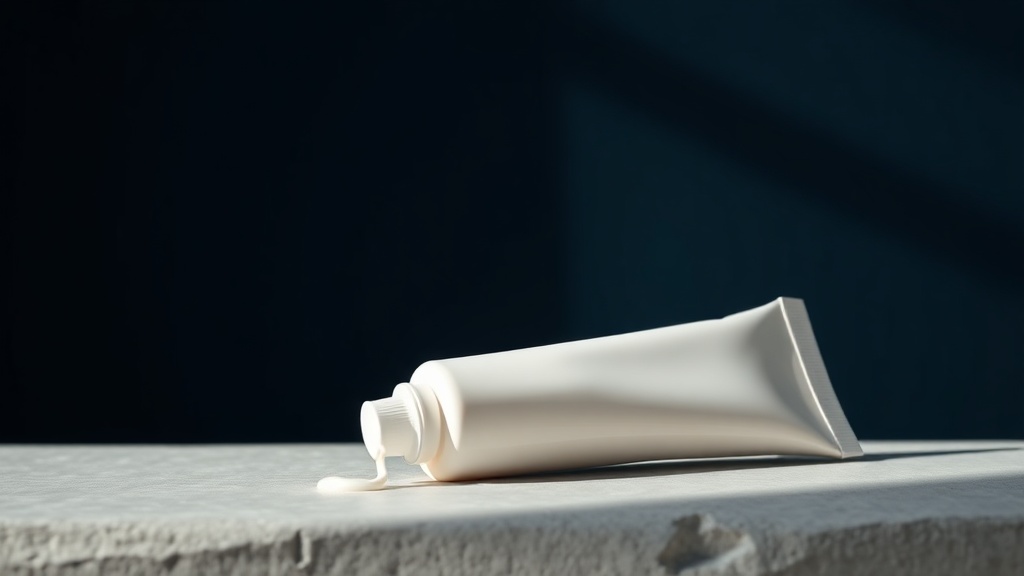
The label that matters: a fluoride-free paste earns its place only when nano-hydroxyapatite is on the ingredient list.
Choosing a toothpaste is not a substitute for dental care. See a dentist before switching if you are at higher decay risk, have young children and are weighing fluoride versus fluoride-free options, or have active white spots you want to remineralize; a professional can match the choice to your mouth and add treatment where it helps. And see a dentist for any spot that is spreading, sensitive, brown, or has broken the surface, because no toothpaste, fluoride or fluoride-free, can rebuild a cavity.
Frequently asked questions
Sources
- 1.
- 2.
- 3.
- 4.
- 5.
- 6.
- 7.
- 8.
- 9.

Fix your breath at the source.
The complete science-backed protocol — engineered to eliminate volatile sulfur compounds at the biological source.
Start the Breath Protocol →Related reading
Educational purposes only. The content on this page is not medical advice and is not a substitute for consultation with a qualified dental or medical professional.
More from the library
 Comparisons8 min
Hydroxyapatite vs Fluoride: Which Toothpaste Is Right for You?
Two ways to strengthen enamel, one big difference in how much evidence stands behind each.
Read →→ Guides8 min
Does Hydroxyapatite Toothpaste Work? What the Evidence Shows
The fluoride-free ingredient dentists keep debating, measured against the actual clinical trials.
Read →→ Answers8 min
Is Nano-Hydroxyapatite Toothpaste Safe?
The nanoparticle worry, answered by the actual toxicology reviews rather than the headlines.
Read →→ Best Of8 min
How to Choose the Best Hydroxyapatite Toothpaste
Skip the marketing and pick on the three things the research says actually matter.
Read →→ Answers8 min
How to Get Rid of White Spots on Teeth: Your Options, Ranked
An honest, evidence-based ladder of options, from what you can do at home to what only a dentist can fix.
Read →→ Ingredients8 min
Hydroxyapatite Toothpaste Benefits: What the Evidence Actually Supports
A calm, science-first look at what hydroxyapatite toothpaste can genuinely do for your enamel, and where the evidence stops.
Read →→