Enamel Erosion Causes: What Actually Wears Teeth Down
The real drivers of acid wear — diet, reflux, dry mouth and technique — and how to tell which one is yours.
- Enamel erosion is caused by acid touching the tooth directly — not by bacteria. When the surface pH drops below about 5.5, mineral dissolves out of the enamel.
- The four big causes are dietary acids, reflux (stomach acid), dry mouth (too little saliva), and mechanical wear from over-brushing — often several at once.
- Frequency and contact time matter more than quantity: sipping an acidic drink for an hour is far harder on enamel than the same drink taken quickly with a meal.
- Saliva is the counter-force — it buffers and clears acid and keeps the mouth mineral-rich — so anything that dries the mouth quietly accelerates erosion.
- Some causes are fully in your control (drinks, snacking, brushing habits) and some need a professional (reflux, medication-related dry mouth) — identifying yours is what stops the wear.
Enamel erosion is caused by acid dissolving the tooth surface. The main sources are dietary acids (fizzy, sports and citrus drinks, frequent snacking), reflux bringing up stomach acid, and dry mouth that removes saliva's protection — often worsened by brushing hard or right after acids. Frequency of acid, not just amount, drives the loss.
How acid actually erodes enamel
Erosion is a chemistry problem, and it is worth separating from tooth decay. A cavity is made by bacteria in plaque that ferment sugar and produce acid in a specific spot; erosion is acid from outside the bacteria — from your diet or your stomach — washing over the whole surface. The mechanism is the same at the crystal level, though. Enamel is about 96% mineral, and that mineral is stable only above a certain acidity. When the pH right at the surface falls below roughly 5.5, the crystals start to dissolve and calcium and phosphate leach out. This critical pH is not a fixed number — it shifts with how much calcium and phosphate are already dissolved around the tooth — but the principle holds: enough acid, often enough, and the surface loses more mineral than saliva can put back. Because enamel has no living cells, it cannot heal that loss; it simply gets thinner. Two things decide how fast: how acidic the source is, and how long and how often it stays in contact with the teeth. That is why the same glass of cola does very different damage sipped over an hour versus drunk in five minutes.
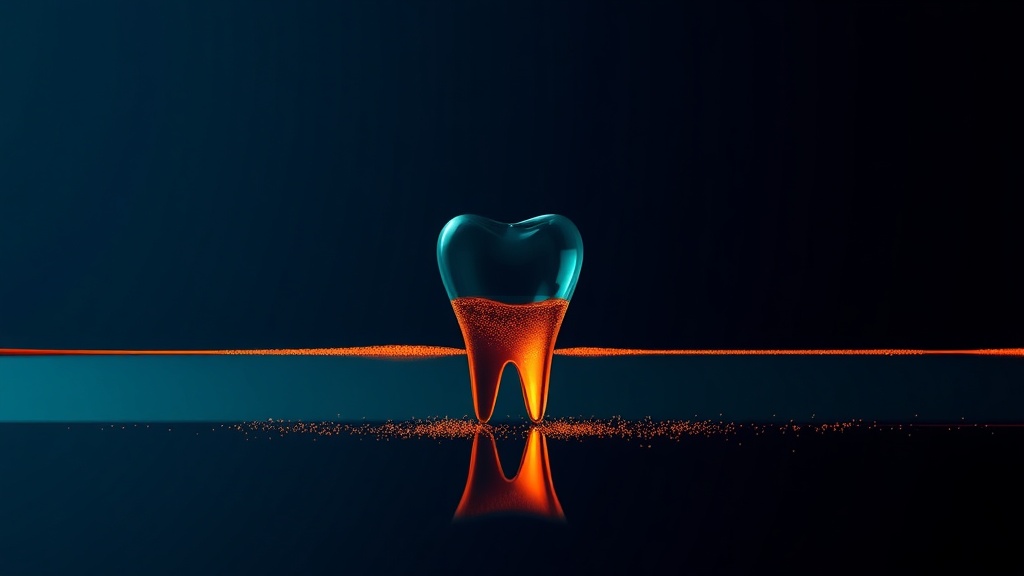
Below a critical pH around 5.5, enamel mineral starts to dissolve — the tipping point every erosion cause pushes the surface past.
What the research actually shows
Every claim below maps to a named, peer-reviewed source in the Sources section. According to PubMed.
| Claim | Evidence | Source |
|---|---|---|
| Enamel dissolves once surface pH falls below a critical point around 5.5, which varies with local calcium and phosphate rather than being a fixed constant. | Review of erosion and critical pH. | Lussi et al., 2011 |
| Dry mouth affects roughly 23% of people and raises the risk of enamel damage; it is most often linked to using several daily medications. | Clinical review of xerostomia. | Stoopler et al., 2024 |
| Saliva protects teeth through four functions — buffering acid, clearing it, antibacterial action, and keeping calcium and phosphate supersaturated. | Review of saliva and dental health. | Dowd, 1999 |
| Lower unstimulated salivary flow and lower salivary pH track with more tooth mineral loss, confirming saliva as a key protective variable. | Comparative study of salivary flow and pH. | Sivakumar et al., 2024 |
| Free sugars are the single most important dietary risk factor for tooth mineral loss; frequent intake keeps the surface under acid attack. | Review of sugars and dental health. | Moynihan, 2016 |
The main causes, and whether you can change them
| Cause | How it erodes enamel | Can you change it? |
|---|---|---|
| Dietary acids (fizzy, sports, citrus, wine) | Direct acid, worst when sipped or grazed | Yes — swap, time to meals, use water after |
| Reflux / GERD (incl. silent night-time) | Stomach acid bathes the teeth | Partly — needs a doctor to treat |
| Dry mouth (medications, mouth-breathing) | Removes saliva's buffering and clearance | Partly — treat the cause, boost saliva |
| Over-brushing / brushing after acids | Scrubs away acid-softened surface | Yes — soft brush, gentle, wait after acids |
| Frequent snacking / constant sipping | No acid-free windows to recover | Yes — cluster into meals |
Saliva: the cause hiding behind the causes
Most people picture erosion as an attack, but it is really a lost defense as much as an assault — and that defense is saliva. Between acid exposures, saliva does four things at once: it buffers the acid back toward neutral, it physically washes acid and debris away, it holds antibacterial proteins, and, crucially, it stays supersaturated with the very calcium and phosphate that enamel is made of, so it can hand those minerals back to the surface. When saliva is plentiful, the mouth spends most of the day above the critical pH and enamel recovers between meals. When saliva is scarce — from common medications, from breathing through the mouth, from dehydration, or from conditions that reduce flow — every acid exposure lingers longer and hits harder, and recovery stalls. This is why two people with the same diet can have very different enamel: the one with a drier mouth loses the tug-of-war. It also explains why erosion often worsens overnight, when saliva flow naturally falls, and why treating a dry mouth is one of the highest-value moves against erosion even though it is easy to overlook.
Evidence you can act on.
Occasional emails — new research, new protocols, no noise.
How to find and address your cause
Erosion usually has more than one driver. Work through these to identify yours — the goal is to switch off the acid, not to reverse damage already done.
- 1
Audit your drinks and snacking rhythm
a few daysNote every acidic drink and snack and how long each lingers. Constant sipping and grazing are the most common hidden cause, because they leave no acid-free windows for the surface to recover.
- 2
Consider reflux, especially the silent kind
ongoingIf wear shows on the inner or biting surfaces without an obvious dietary cause, or you have heartburn, a sour taste or morning symptoms, ask a doctor about reflux. Treating it protects the teeth at the source.
- 3
Check for a dry mouth
ongoingNotice dryness, thick saliva, or a mouth that is parched on waking, and review medications with a professional. Boost flow with water and sugar-free gum, and treat the underlying cause where possible.
- 4
Look at your brushing
one weekHard bristles, heavy pressure, and brushing right after acids all strip the softened surface. Switch to a soft brush, ease off, and wait 30–60 minutes after anything acidic.
- 5
Protect the surface while you fix the cause
twice dailyUse a fluoride or nano-hydroxyapatite toothpaste and spit rather than rinse, so the surface you still have is re-hardened and more acid-resistant while you remove the driver.
- 6
Get the pattern read by a dentist
one visitThe shape and location of wear often reveal the cause, and a dentist can confirm how far erosion has gone. Early input keeps the plan simple and any restoration small.
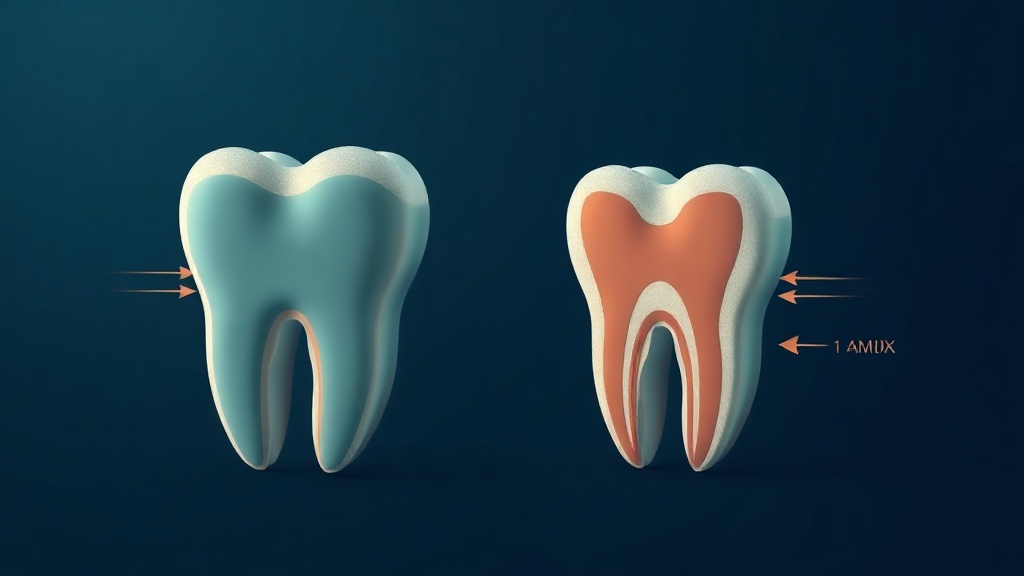
The location of wear is a clue: dietary acid tends to hit outer and biting surfaces, while reflux often marks the inner surfaces.
Erosion is often painless until it is advanced, so treat visible change as your signal. See a dentist if teeth look thinner, glassier or more yellow, if edges chip or turn translucent, if biting surfaces look cupped, or if you notice new sensitivity. See a doctor if reflux may be the cause, and review medications if your mouth is persistently dry. A professional can pinpoint the driver and, where enamel is truly lost, restore the tooth — home care alone cannot.
Frequently asked questions
Sources
- 1.
- 2.
- 3.
- 4.
- 5.
- 6.

Fix your breath at the source.
The complete science-backed protocol — engineered to eliminate volatile sulfur compounds at the biological source.
Start the Breath Protocol →Related reading
Educational purposes only. The content on this page is not medical advice and is not a substitute for consultation with a qualified dental or medical professional.
More from the library
 Guides8 min
Eroded Enamel: What to Do (A Calm Action Plan)
What to do first when enamel is eroding — and the honest line between what you can fix and what a dentist must.
Read →→ Guides8 min
How to Restore Tooth Enamel: A Practical, Honest Guide
A realistic daily routine to re-harden early enamel and stop the slide — plus the point where a dentist takes over.
Read →→ Answers8 min
Does Tooth Enamel Grow Back? The Honest Science
Why enamel is the one part of your body that never regrows — and what you can genuinely do instead.
Read →→ Best Of8 min
Enamel Repair Toothpaste: How to Choose One That Actually Works
What repair toothpaste can honestly do, the three actives that matter, and how to match one to your teeth.
Read →→ Answers8 min
How to Get Rid of White Spots on Teeth: Your Options, Ranked
An honest, evidence-based ladder of options, from what you can do at home to what only a dentist can fix.
Read →→ Ingredients8 min
Hydroxyapatite Toothpaste Benefits: What the Evidence Actually Supports
A calm, science-first look at what hydroxyapatite toothpaste can genuinely do for your enamel, and where the evidence stops.
Read →→