Enamel Repair Toothpaste: How to Choose One That Actually Works
What repair toothpaste can honestly do, the three actives that matter, and how to match one to your teeth.
- "Enamel repair toothpaste" is a marketing name for remineralizing toothpaste: it re-hardens and re-mineralizes the softened surface of early enamel, but it cannot regrow lost enamel or fill a real cavity.
- Three active ingredients carry almost all of the evidence — fluoride, nano-hydroxyapatite (n-HA), and stannous (tin) fluoride. Everything else printed on the tube is secondary.
- Fluoride at 1,000–1,500 ppm is the most heavily studied option; in adults, a hydroxyapatite toothpaste matched 1,450 ppm fluoride over 18 months (89.3% vs 87.4%).
- Match the active to your goal: fluoride or n-HA for everyday surface remineralization, stannous fluoride when sensitivity and gum-line grumbles come too, and a leave-on layer for extra surface repair.
- A chalky white spot may respond to a repair toothpaste; a hole, a dark spot, or a rough catch you can feel needs a dentist — no toothpaste reverses cavitated enamel.
An enamel repair toothpaste is simply a remineralizing toothpaste: it delivers minerals — fluoride, nano-hydroxyapatite, or stannous fluoride — that re-harden the softened surface of early enamel and slow further loss. Choose by active ingredient, not by brand hype. It repairs the surface of early damage; it cannot regrow enamel structure or fill a cavity.
What "repair" really means here
Enamel is the hardest tissue in your body and about 96% mineral by weight — but it has no living cells inside it. That one fact governs everything a repair toothpaste can and cannot do. When acid from plaque bacteria or from your diet drops the pH right at the tooth surface below roughly 5.5, mineral dissolves out of the enamel crystals. This is demineralization, and its earliest visible sign is a dull, chalky white patch. As long as that softened layer is still intact — a white spot rather than a broken hole — minerals carried in saliva can move back into the etched crystal surface and re-harden it. That is remineralization, and it is the only thing a toothpaste actually influences. A repair toothpaste floods the surface with the raw materials and the catalysts for that second process. Fluoride draws calcium and phosphate out of saliva onto the crystal and, in doing so, builds a tougher, more acid-resistant mineral than the original enamel. Nano-hydroxyapatite supplies ready-made, enamel-like mineral that settles into the etched surface directly. Neither one grows new enamel from nothing; both work on the outermost few microns that are still there. That is exactly why the honest verb is remineralize, not rebuild.
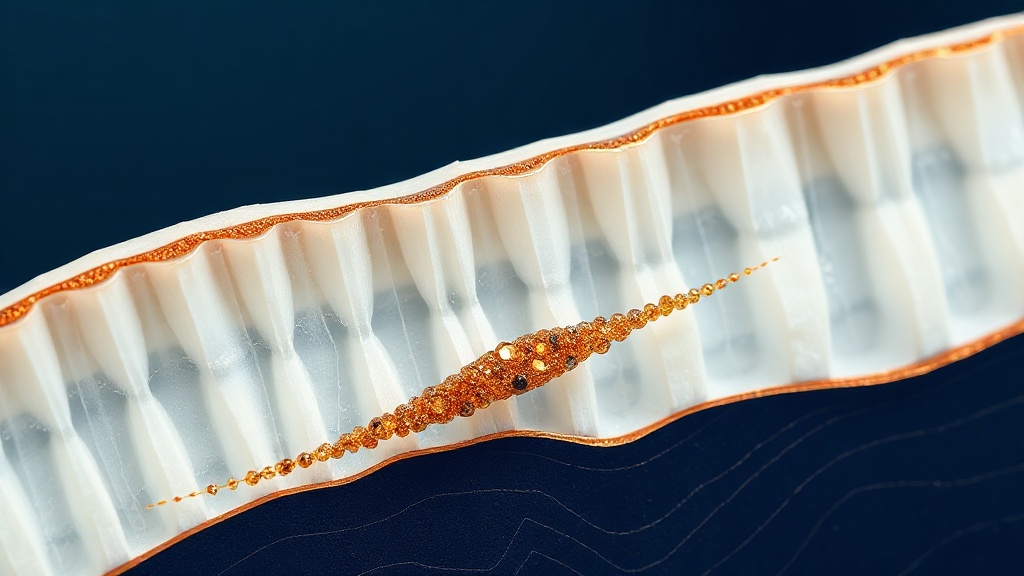
A repair toothpaste works only on the softened outer surface of early enamel — not on the sound enamel beneath, and not on a cavity.
What the research actually shows
Every claim below maps to a named, peer-reviewed source in the Sources section. According to PubMed.
| Claim | Evidence | Source |
|---|---|---|
| Fluoride toothpaste at 1,000–1,500 ppm reduces enamel mineral loss versus non-fluoride paste, with a clear dose-response by concentration. | Systematic review of fluoride toothpaste concentrations. | Walsh et al., Cochrane 2019 |
| In adults, a fluoride-free hydroxyapatite toothpaste matched 1,450 ppm fluoride for caries prevention over 18 months (89.3% vs 87.4%). | 18-month randomized non-inferiority trial in adults. | Paszynska et al., 2023 |
| Adding a 5% nano-hydroxyapatite leave-on layer after brushing raised surface remineralization from 37.7% to 58.4% versus a placebo layer. | In-situ randomized crossover study. | Amaechi et al., 2021 |
| Nano-hydroxyapatite equalled fluoride for remineralization, but the evidence was graded "very low" and it did not resist acid attack the way fluoride does. | Systematic review and meta-analysis. | Wierichs et al., 2022 |
| Once enamel actually cavitates, it cannot repair itself — the surface has broken past the point any toothpaste can reach. | Materials-science review of enamel repair. | Liu et al., 2022 |
How to choose by active ingredient
| Active ingredient | Best for | Honest caveat |
|---|---|---|
| Fluoride (1,000–1,500 ppm) | Everyday surface remineralization; the most-studied option | Builds acid-resistant mineral, but some people prefer to avoid fluoride |
| Nano-hydroxyapatite (n-HA) | Fluoride-free remineralization; often gentler on sensitivity | Matches fluoride under mild conditions, but certainty is "very low" and it is weaker under active acid |
| Stannous fluoride | Remineralizing plus calming sensitivity and gum-line grumbles | Can cause temporary surface staining in some users |
| Prescription 5,000 ppm fluoride | High-risk surfaces, directed by a dentist | Prescription only — not a daily default for most people |
| Leave-on n-HA layer or serum | Extra surface repair applied on top of brushing | An add-on, not a replacement for a good daily paste |
Why the numbers on the tube matter more than the brand
Most "enamel repair" marketing is spent on the front of the box; the part that actually works is printed small on the back. Two things decide whether a paste can help early enamel: which active it uses and how much of it. For fluoride, below about 500 ppm there is no reliable benefit, and the effect climbs with concentration up into the 1,000–1,500 ppm range that mainstream pastes use. For hydroxyapatite, the trials that matched fluoride used around a 5–10% concentration, so a token sprinkle of "hydroxyapatite" near the bottom of an ingredient list is not the same product as a properly formulated one. After that, technique does the rest of the work. The mineral needs contact time, so the single most useful habit is to spit out the excess after brushing but not rinse with water — rinsing washes the active straight down the drain before it can settle. Brushing twice a day keeps the surface topped up, because remineralization is a slow tug-of-war against the acid challenges of eating and drinking, not a one-time patch. And if you want to push surface repair a little further, the strongest signal in the research is for a brush-then-leave-on step, where a thin n-HA layer is left on the teeth rather than rinsed away.
Evidence you can act on.
Occasional emails — new research, new protocols, no noise.
How to pick and use a repair toothpaste
None of this treats a disease — it keeps early enamel supported and buys you time. Use it to choose sensibly and to get the most out of whatever you buy.
- 1
Read the active-ingredient panel, not the front label
2 minutes in the shopIgnore words like "repair," "restore" and "rebuild" on the front. Turn the box over and find the active: fluoride (as sodium fluoride, stannous fluoride, or sodium monofluorophosphate) or hydroxyapatite. If you cannot find one of those, it is not a remineralizing toothpaste.
- 2
Match the active to what your teeth actually need
one decisionEveryday surface remineralization: fluoride or n-HA. Sensitivity plus gum-line irritation: stannous fluoride or a dedicated sensitivity paste. Wanting to skip fluoride: a properly dosed n-HA paste is the evidence-backed alternative.
- 3
Check the concentration
30 secondsFor fluoride, look for 1,000–1,500 ppm. For hydroxyapatite, the trials that performed used roughly 5–10% — a trace amount buried low on the list is mostly for the label.
- 4
Brush twice a day, then spit — do not rinse
twice dailyLeaving a thin film of paste on the teeth gives the mineral the contact time it needs. Rinsing with water straight after brushing washes the active away before it can work.
- 5
Consider a leave-on layer for extra repair
under a minute at nightThe strongest surface-repair signal is a brush-then-leave-on step: a small amount of n-HA paste or serum left on the teeth at night. Treat it as a bonus on top of good brushing, not a substitute for it.
- 6
Have early damage staged before you rely on any paste
one dental visitA dentist can tell a reversible white spot from a hole that has already formed. A repair toothpaste is worth using on the first; the second needs professional care no toothpaste can provide.
Choose by the active-ingredient panel and its concentration — that, not the marketing on the front, is what does the work.
A repair toothpaste is for early, still-intact enamel. See a dentist promptly if you can feel a rough catch or a hole with your tongue or a fingernail, if a spot has gone brown or black, if a tooth is sensitive to sweet or cold in one specific place, or if a white spot is growing despite good care. Those are signs the surface has broken or the damage has gone deeper than any toothpaste can reach, and they need professional staging and treatment.
Frequently asked questions
Sources
- 1.
- 2.
- 3.
- 4.
- 5.
- 6.

Fix your breath at the source.
The complete science-backed protocol — engineered to eliminate volatile sulfur compounds at the biological source.
Start the Breath Protocol →Related reading
Educational purposes only. The content on this page is not medical advice and is not a substitute for consultation with a qualified dental or medical professional.
More from the library
 Best Of8 min
How to Choose the Best Hydroxyapatite Toothpaste
Skip the marketing and pick on the three things the research says actually matter.
Read →→ Best Of9 min
Toothpaste That Rebuilds Enamel: The Honest Answer
The honest answer to a common search: what a toothpaste can and cannot do for lost enamel.
Read →→ Guides8 min
Does Hydroxyapatite Toothpaste Work? What the Evidence Shows
The fluoride-free ingredient dentists keep debating, measured against the actual clinical trials.
Read →→ Answers8 min
Can You Rebuild Tooth Enamel? What Is Actually Possible
The honest split: what you can genuinely strengthen at home, and what only a dentist can restore.
Read →→ Answers8 min
How to Get Rid of White Spots on Teeth: Your Options, Ranked
An honest, evidence-based ladder of options, from what you can do at home to what only a dentist can fix.
Read →→ Ingredients8 min
Hydroxyapatite Toothpaste Benefits: What the Evidence Actually Supports
A calm, science-first look at what hydroxyapatite toothpaste can genuinely do for your enamel, and where the evidence stops.
Read →→