
Early Cavity: What to Do
The actionable playbook for an early cavity — the one stage of decay that is genuinely reversible — with the exact remineralization steps and when it needs treating instead.
- An ‘early cavity’ or ‘watch spot’ is the one stage of decay that is genuinely reversible — subsurface softening under an intact surface, before any hole has formed.
- This is the window worth acting on: many lesions that look advanced on an X-ray are still non-cavitated, so a diligent remineralization routine is a legitimate plan, not wishful thinking.
- The playbook is specific: confirm the staging with a dentist, remineralize daily with fluoride or hydroxyapatite (a leave-on step helps), cut sugar frequency, use xylitol, and protect saliva.
- A leave-on hydroxyapatite layer after brushing nearly doubled remineralization versus placebo in a controlled study — evidence that the extra step is worth it for an early lesion.
- The window can close. If the surface breaks or the spot progresses at a recheck, it stops being reversible and needs professional treatment — so keep the follow-up appointments.
An early cavity — a white-spot or ‘watch’ lesion your dentist hasn’t filled — is the reversible stage of decay, and the plan is to remineralize it before it cavitates. Confirm the staging with your dentist, then brush twice daily with fluoride or hydroxyapatite (add a nightly leave-on), cut how often you eat sugar, use xylitol, protect your saliva, and go to the rechecks.
Why an early cavity is the window that matters
When a dentist points to a spot and says ‘let’s keep an eye on this,’ that is not a delay — it is a clinical judgment that you are in the reversible window. An early cavity is subsurface demineralization: acid has pulled mineral out from just beneath the surface, but the surface itself is still intact. Because it is intact, calcium and phosphate from saliva — boosted by fluoride or hydroxyapatite — can diffuse back in and re-crystallize, re-hardening the lesion and even leaving it more acid-resistant than before. This window is more common than people assume: in a validation study, nearly 80% of lesions that looked advanced on X-ray turned out to still be non-cavitated, meaning genuinely arrestable rather than automatic candidates for drilling. That is the encouraging half of the caries story. The sober half is that the window is not permanent. If demineralization keeps outpacing recovery, the surface eventually collapses into a true cavity, and mature enamel — being acellular — cannot regrow to refill it. So an early cavity is exactly the moment your daily habits have the most leverage, and exactly the moment not to waste.
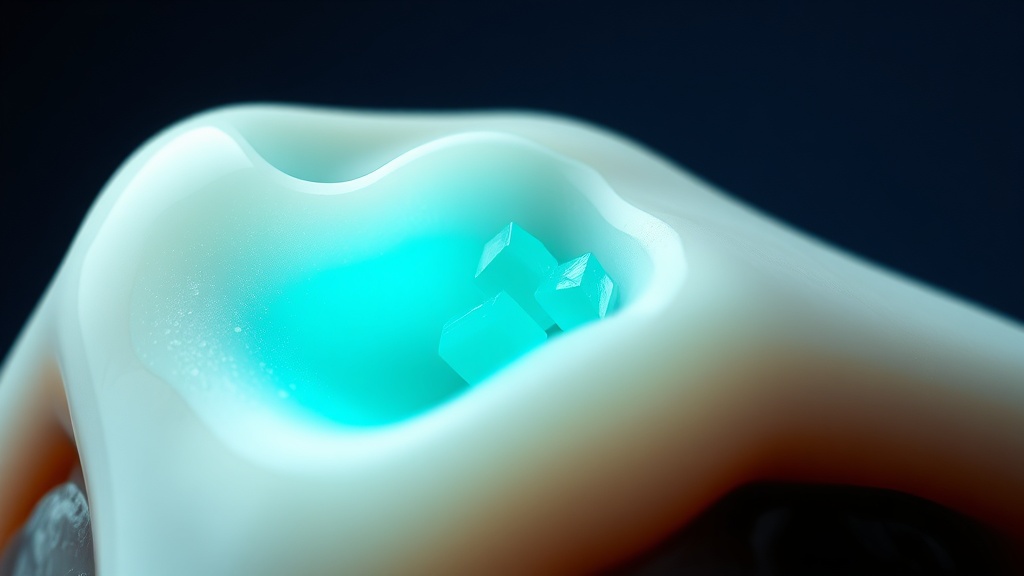
An early cavity is subsurface softening under an intact surface — the one stage where consistent home care can re-harden and arrest the lesion.
What the research actually shows
Every claim below maps to a named, peer-reviewed source in the Sources section. According to PubMed.
| Claim | Evidence | Source |
|---|---|---|
| Nearly 80% of lesions that looked advanced on X-ray were still non-cavitated — many early spots are genuinely arrestable, not automatic drilling. | Tooth-separation validation study. | Nascimento et al., 2020 |
| Early demineralization can be arrested or reversed by protective factors like saliva and fluoride. | Foundational review of the caries balance. | Featherstone, 1999 |
| A 5% nano-hydroxyapatite leave-on layer after brushing raised remineralization from 37.7% to 58.4% versus placebo. | In-situ randomized crossover study. | Amaechi et al., 2021 |
| 1,000–1,500 ppm is the effective fluoride range; below about 500 ppm shows no significant benefit. | Cochrane review with dose-response. | Walsh et al., 2019 |
| About 6 g/day of xylitol over three or more exposures reduces plaque decay-causing bacteria; frequency matters as much as amount. | Dose-response randomized study. | Milgrom et al., 2006 |
Early cavity: do this, skip that
| Do this | Skip this | Why |
|---|---|---|
| Confirm staging with a dentist | Self-diagnosing it as ‘early’ | Early lesions are the hardest to judge by eye |
| Fluoride or hydroxyapatite, spit don’t rinse | Rinsing the toothpaste away | Rinsing washes off the mineral before it works |
| Cut sugar frequency | Chasing a ‘cavity-healing’ diet | Frequency is the real lever; diet alone won’t refill a hole |
| Add a nightly leave-on step | Expecting overnight results | Remineralization takes weeks to months |
| Keep recheck appointments | Assuming ‘no pain’ means it’s reversing | Only a dentist confirms it’s arresting |
Making the routine actually work
Two details separate an early-cavity routine that works from one that just feels productive. The first is contact time. Remineralization is driven by how long the active mineral sits on the lesion, which is why ‘spit, don’t rinse’ matters and why a leave-on step pays off — a hydroxyapatite layer left on after brushing nearly doubled remineralization versus placebo in a controlled study. The second is consistency over intensity. There is no dose of anything that reverses an early cavity overnight; the studies measure change over weeks and months, so the win comes from doing the ordinary things every day without gaps. It also helps to know what to ignore. The pull toward a dramatic ‘cavity-healing diet’ is understandable, but its foundational claims have no human remineralization evidence, and time spent chasing them is time the lesion keeps demineralizing. Put your effort into the levers that are actually supported — mineral delivery, fewer acid attacks, and healthy saliva — and give a dentist the chance to confirm progress. That is how an early cavity quietly becomes a spot that arrested instead of a filling.
Evidence you can act on.
Occasional emails — new research, new protocols, no noise.
The early-cavity playbook
For a dentist-confirmed early, non-cavitated lesion, this is the evidence-based routine to remineralize it. It supports reversal of early decay and prevents new lesions — it is not a treatment for a formed cavity.
- 1
Confirm it’s truly early
first, with your dentistAsk directly whether the spot is non-cavitated and safe to monitor, and how long the watch window is. That answer is what makes this a remineralization plan rather than a gamble.
- 2
Brush with fluoride or hydroxyapatite — spit, don’t rinse
twice dailyUse 1,000–1,500 ppm fluoride or a hydroxyapatite toothpaste and leave a thin film on the teeth. Both re-harden early lesions; not rinsing keeps the mineral working longer.
- 3
Add a nightly leave-on layer
once daily, at nightA leave-on hydroxyapatite paste or gel after your last brush extends contact time overnight — the step that nearly doubled remineralization versus placebo in testing.
- 4
Cut sugar frequency and use xylitol
every dayGroup sweets with meals rather than grazing, and aim for about 6 g of xylitol a day over three or more exposures to lower decay-causing bacteria. Frequency is the lever.
- 5
Protect saliva and keep the rechecks
ongoingHydrate, treat dry mouth, and return for the review visits. A dentist confirming the lesion has arrested — not the absence of pain — is how you know it worked.
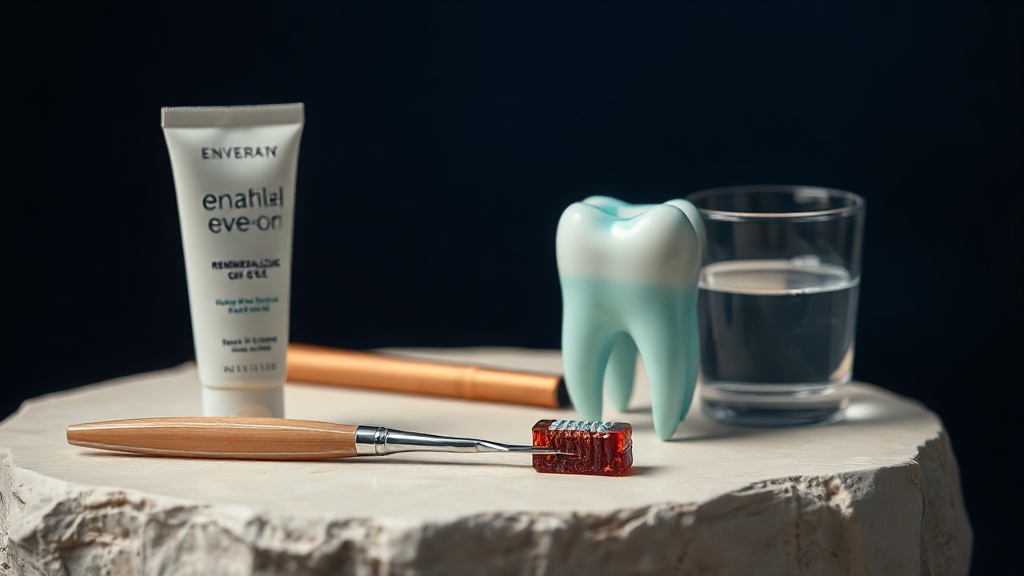
Two details make the routine work: keeping the mineral on the tooth (spit don’t rinse, add a leave-on) and doing it consistently for weeks.
An early-cavity plan only works if the spot really is early, and only a dentist can confirm that and track it. Get it staged in person before you rely on this routine, and go back if anything changes — a rough edge or hole you can feel, food catching in the spot, sensitivity to sweet, hot or cold that lingers, or any pain or swelling all mean the window may have closed and the tooth needs treating. Trying to remineralize a lesion that has already cavitated can let decay reach the nerve, a documented harm. When the dentist says ‘watch it,’ this playbook is how you make that watch count.
Frequently asked questions
Sources
- 1.
- 2.
- 3.
- 4.
- 5.
- 6.
- 7.

Fix your breath at the source.
The complete science-backed protocol — engineered to eliminate volatile sulfur compounds at the biological source.
Start the Breath Protocol →Related reading
Educational purposes only. The content on this page is not medical advice and is not a substitute for consultation with a qualified dental or medical professional.
More from the library
 Answers8 min
How to Remineralize Teeth: An Honest, Practical Guide
The practical routine that supports enamel remineralization, and the clear line between the early lesions it can rebuild and the decay it cannot.
Read →→ Guides8 min
White Spots on Teeth: Causes and What to Do
The two common reasons enamel turns chalky white, and the honest guide to which spots you can rebuild at home and which need professional care.
Read →→ Best Of9 min
Toothpaste That Rebuilds Enamel: The Honest Answer
The honest answer to a common search: what a toothpaste can and cannot do for lost enamel.
Read →→ Answers8 min
Can You Reverse a Cavity? The Precise, Honest Answer
The exact answer, by stage: why an early white-spot lesion can be reversed and a cavitated cavity cannot — and why only a dentist can tell them apart.
Read →→ Answers8 min
How to Get Rid of White Spots on Teeth: Your Options, Ranked
An honest, evidence-based ladder of options, from what you can do at home to what only a dentist can fix.
Read →→ Ingredients8 min
Hydroxyapatite Toothpaste Benefits: What the Evidence Actually Supports
A calm, science-first look at what hydroxyapatite toothpaste can genuinely do for your enamel, and where the evidence stops.
Read →→