Does Turmeric Stain Teeth?
The golden spice is a potent natural dye — but the stains it leaves sit on the surface and lift with the right gentle habits.
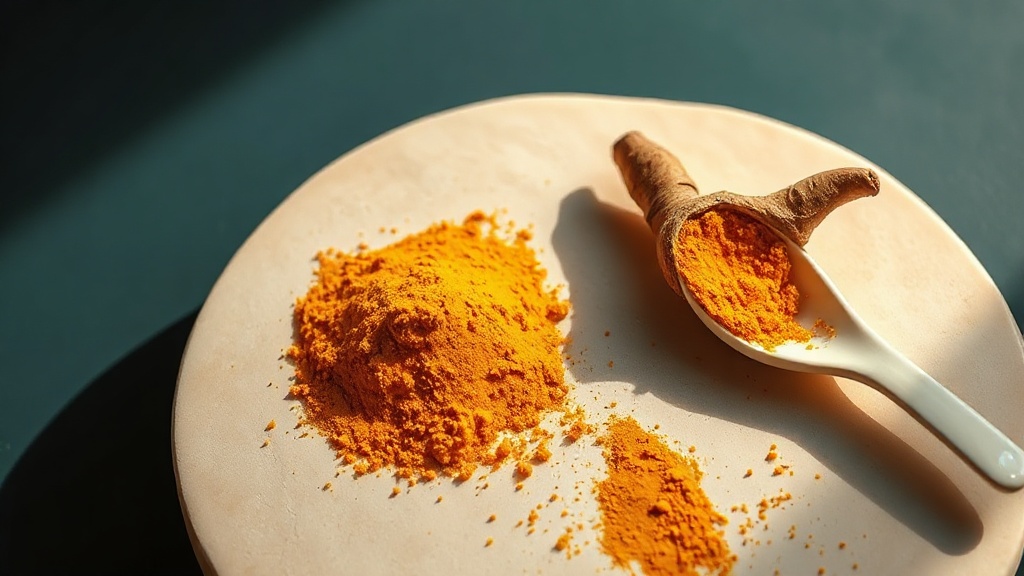
- Yes — turmeric can temporarily stain teeth. Its colour comes from curcumin, one of the most intense natural yellow pigments there is, and the same molecule that stains cloth and fingertips can tint the film on your teeth.
- The stain is extrinsic, meaning it sits on the surface film (the pellicle) and in the outer texture of the enamel, not inside the tooth — so it is the removable kind of discoloration, not permanent yellowing.
- Turmeric does not bleach teeth. The popular idea that a turmeric paste whitens is not supported; at best a paste scrubs off some surface stain, and on its own the pigment tends to add colour rather than remove it.
- How much it stains depends on contact time and frequency, not just the spice itself. Curry eaten quickly leaves far less colour than turmeric sipped slowly in a latte or held in the mouth as a paste.
- You remove it the gentle way — rinsing, a low-abrasion whitening toothpaste and good everyday cleaning — not with acids or harsh scrubbing, which can wear enamel faster than the stain ever could.
Yes, turmeric can stain teeth, because its pigment curcumin is an intense natural dye that clings to the thin protein film coating your enamel. The good news is the stain is extrinsic — it sits on the surface, not inside the tooth — so it is temporary and lifts with rinsing, a gentle whitening toothpaste and regular cleaning. Turmeric does not bleach or whiten teeth.
Why turmeric leaves a mark
Within seconds of cleaning your teeth, a microscopically thin layer of proteins from your saliva settles back over the enamel. This layer, called the acquired pellicle, is the tooth's natural conditioning film — and it is also exactly what coloured molecules grab onto. Enamel looks glassy, but its surface is faintly porous, so pigments settle both into the pellicle and into that outer texture. Turmeric is a near-perfect stainer for this because curcumin is a fat-loving pigment that binds readily to the pellicle's proteins; it is the same reason the spice colours plastic and fabric so stubbornly. Researchers describe extrinsic tooth stain arising through a few routes — pigmented molecules from food depositing on the surface, browning reactions, and metal-pigment complexes — and note that certain compounds actually prime the pellicle to hold more colour. Staining is also cumulative and time-dependent: the longer and more often a pigment bathes the teeth, the more builds up. That is why a quick curry barely marks teeth while a slowly sipped golden latte, or a turmeric paste left sitting on the enamel, has far more opportunity to tint the film.
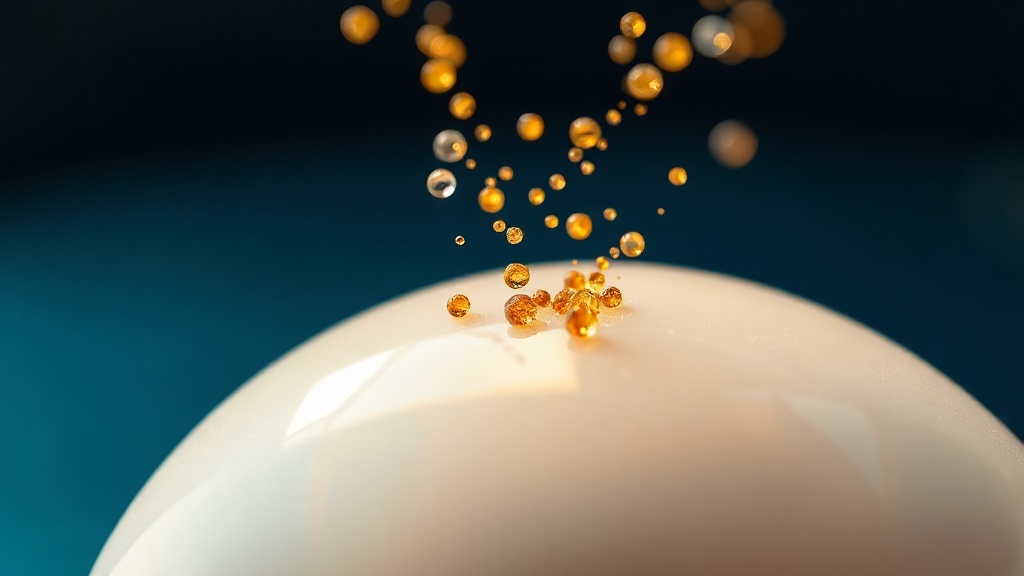
Turmeric's curcumin pigment lodges in the pellicle — the thin protein film on enamel — which is why the stain is surface-deep and removable.
What the research actually shows
Every claim below maps to a named, peer-reviewed source in the Sources section. According to PubMed.
| Claim | Evidence | Source |
|---|---|---|
| A thin salivary protein film, the pellicle, forms on enamel within seconds and is what dietary pigments bind to — the basis of surface (extrinsic) staining. | Review of acquired enamel pellicle composition and function. | Siqueira et al., 2012 |
| Extrinsic stains form when dietary chromogens, browning reactions and metal-pigment complexes deposit on the tooth surface — a removable class of discoloration. | Reference classification of tooth discoloration. | Sulieman, 2005 |
| Surface films can be primed to hold more pigment: pretreating enamel with tannins markedly increased staining, though neither stained much alone. | Experimental pellicle staining study. | Nordbo, 1982 |
| Surface staining is cumulative and time-dependent — colour builds up roughly in proportion to how long and how often teeth are exposed. | Controlled beverage-staining study over time. | Farawati et al., 2019 |
| Low-abrasivity toothpastes such as baking soda remove surface stain effectively, and stain removal is not tied to how abrasive a paste is. | Review of baking-soda dentifrice stain removal. | Li, 2017 |
What makes turmeric staining worse or better
| Factor | Effect on staining | What to do |
|---|---|---|
| Contact time | Longer exposure (lattes, pastes) stains far more than a quick meal | Don't hold turmeric in your mouth; finish and rinse |
| Frequency | Daily turmeric drinks let colour accumulate | Rinse or sip water between and after |
| A drinking straw | Keeps liquid off the front teeth | Use one for golden lattes and turmeric shots |
| Rinsing with water | Clears loose pigment before it sets into the film | Swish right after turmeric |
| Turmeric as a DIY paste | Sits pigment directly on the enamel; may add colour | Skip it as a whitening trick |
Does turmeric whiten teeth? The honest answer
Search turmeric and teeth and you will find countless claims that a turmeric-and-coconut-oil paste whitens your smile. It is worth being clear: there is no good evidence for that, and mechanistically it runs backwards. Whitening in the true sense means lightening the colour inside the tooth, and only oxidising agents like peroxide do that; every non-peroxide natural agent studied removes surface stain at best rather than lightening the tooth. A turmeric paste has no oxidising power at all — any brightening people notice is just the mild abrasion of brushing lifting some surface film, the same thing plain toothpaste does, while the pigment itself is far more inclined to deposit colour than remove it. The honest, evidence-based way to read turmeric is simple: treat it as a potent natural dye to manage, not a whitener to chase. If your goal is a brighter smile, the reliable levers are removing surface stain gently and, if you want to change the tooth's actual shade, a proper peroxide product — not the spice that tinted the film in the first place.
Evidence you can act on.
Occasional emails — new research, new protocols, no noise.
How to remove and prevent turmeric stains
Turmeric stains are the removable, surface kind, so gentle and consistent beats harsh and fast. None of this treats a dental problem — it simply keeps the surface film clean.
- 1
Rinse right after turmeric
10 secondsSwish with plain water immediately after a curry, latte or shot to clear loose pigment before it settles into the pellicle. It is the single easiest habit and it works.
- 2
Use a straw for golden drinks
ongoingSipping turmeric lattes, shots or juices through a straw keeps most of the pigment off the front of your teeth, where stains show the most.
- 3
Brush gently with a low-abrasion whitening toothpaste
twice dailyA mild whitening or baking-soda toothpaste lifts surface stain without being harsh — abrasivity and stain removal are not the same thing, so you do not need a gritty paste.
- 4
Let a powered brush do the work
twice dailyAn electric toothbrush removes extrinsic stain about as well as a professional cleaning in studies; let it glide over the teeth rather than scrubbing hard.
- 5
Skip acids and hard scrubbing
alwaysLemon, vinegar or a stiff brush can wear enamel faster than turmeric ever stains it, and worn enamel actually looks yellower. Gentle and regular wins every time.
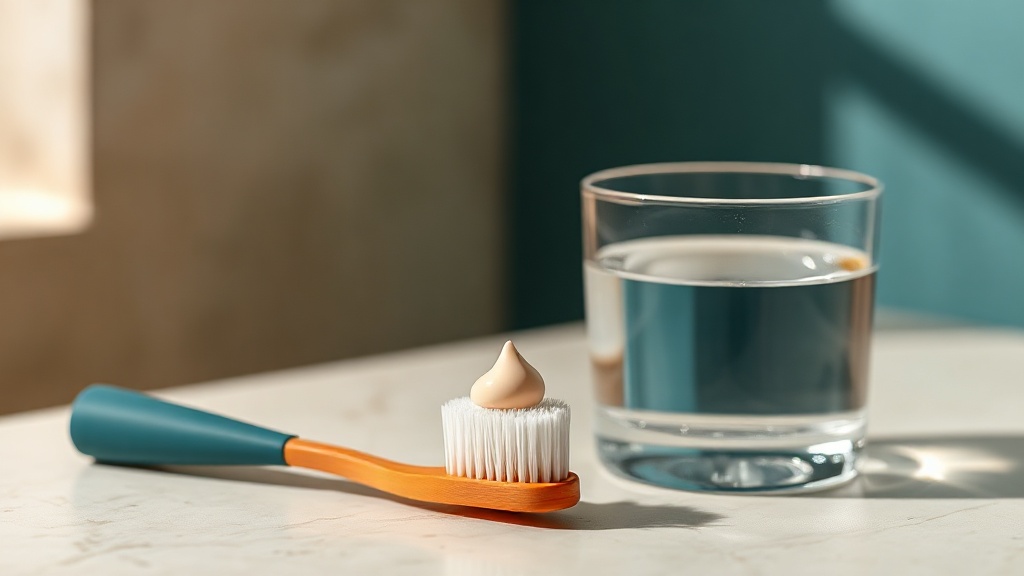
Turmeric stain lifts with gentle, low-abrasion cleaning and rinsing — not acids or hard scrubbing.
Surface stains from food lift with cleaning, so if a yellow or brown mark on a tooth will not budge, it may not be turmeric at all. See a dentist if a stain is fixed in one spot, a single tooth looks darker or grey, or the discoloration sits below the surface — these can come from inside the tooth, an old filling or the natural aging of dentine, none of which a spice or a whitening toothpaste will change. A professional cleaning also removes built-up stain that home brushing cannot reach.
Frequently asked questions
Sources
- 1.
- 2.
- 3.
- 4.
- 5.
- 6.
- 7.
- 8.
- 9.
- 10.

Fix your breath at the source.
The complete science-backed protocol — engineered to eliminate volatile sulfur compounds at the biological source.
Start the Breath Protocol →Related reading
Educational purposes only. The content on this page is not medical advice and is not a substitute for consultation with a qualified dental or medical professional.
More from the library
 Causes9 min
Coffee Stains on Teeth: Why They Happen and How to Fade Them
The real reason coffee leaves a mark on your smile, and the honest, gentle ways to fade and limit surface stains.
Read →→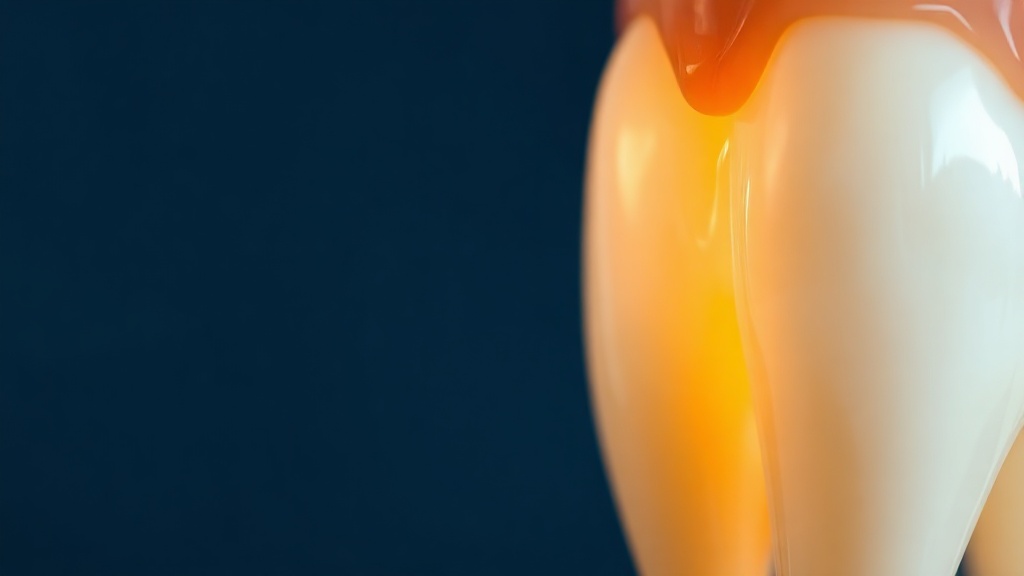 Causes8 min
Why Do Teeth Turn Yellow? The Real Colour Science
A calm, evidence-based look at what actually makes teeth yellow — enamel optics, dentine colour and surface staining — and what you can realistically influence.
Read →→ Causes8 min
Brown Stains on Teeth: What Causes Them and How to Fade Them Safely
Most brown tooth stains are surface deposits from everyday food, drink and tobacco. Here is why they form and the enamel-safe ways to lighten them.
Read →→ Guides8 min
How to Remove Coffee Stains From Teeth
A honest, evidence-based guide to lifting coffee stains from teeth without wrecking your enamel: what works, what only polishes the surface, and why to skip charcoal.
Read →→ Answers8 min
Does Teeth Whitening Damage Enamel? The Evidence-Based Answer
The honest, evidence-based answer to whether whitening harms enamel — what peroxide really does to the surface, why sensitivity is not damage, and the DIY methods that actually cause wear.
Read →→ Answers8 min
Does Baking Soda Whiten Teeth? What the Evidence Says
An honest look at what baking soda can and cannot do for a whiter smile.
Read →→