Tooth Nerve Pain: What Causes It and the Warning Signs
The sharp, throbbing, or lingering ache of an irritated tooth nerve is a signal worth understanding, and acting on.
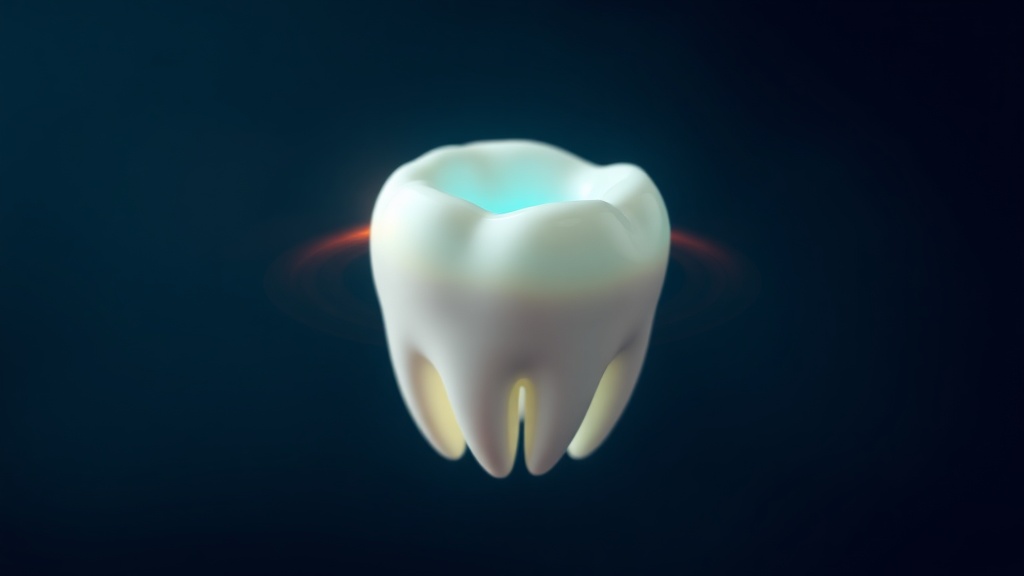
- Tooth nerve pain comes from the pulp, the living core of nerves and tiny blood vessels inside each tooth, reacting to a trigger such as exposed dentin, deep decay, a crack, or recent dental work.
- Short, sharp pain that fades within seconds of a cold, hot, or sweet trigger usually points to exposed dentin or a passing irritation; lingering, spontaneous, or throbbing pain is a warning sign of deeper pulp involvement.
- Pain is a signal, not a diagnosis. Only a dentist can tell whether the nerve is reversibly irritated or whether the tooth needs professional care.
- Home comfort measures can ease the sensation for a short while, but they never remove the underlying cause; swelling, fever, or pain that keeps you awake needs prompt professional or medical attention.
- Because enamel does not grow back once it is truly broken, the earlier a painful tooth is assessed, the more options you and your dentist usually have.
Tooth nerve pain happens when the pulp inside a tooth is irritated, most often by exposed dentin, deep decay, a crack, gum recession, or recent dental work. Brief pain that fades is usually a minor irritation, while lingering, spontaneous, or throbbing pain signals deeper involvement and should be checked by a dentist promptly.
What tooth nerve pain actually is
There is no nerve sitting on the surface of your tooth. The nerves live deep inside, in the pulp, a soft chamber of blood vessels and sensory fibres at the core of the tooth. What most people call nerve pain is that pulp reacting to something reaching it. The pathway is the dentin, the yellowish layer beneath the enamel, which is threaded with millions of microscopic tubules that run straight down toward the pulp. When enamel is intact, those tubules are sealed off and the tooth feels nothing. When enamel is worn, a gum line recedes, or decay opens a channel, the tubules are exposed and the fluid inside them can move. The widely accepted hydrodynamic theory holds that a cold sip, a sweet bite, or a rush of air makes this fluid shift, and that movement bends the nerve endings at the pulp, which you feel as a sharp jolt. So tooth nerve pain is rarely the nerve being damaged directly; it is usually the pulp being provoked through an exposed doorway that should have stayed shut.
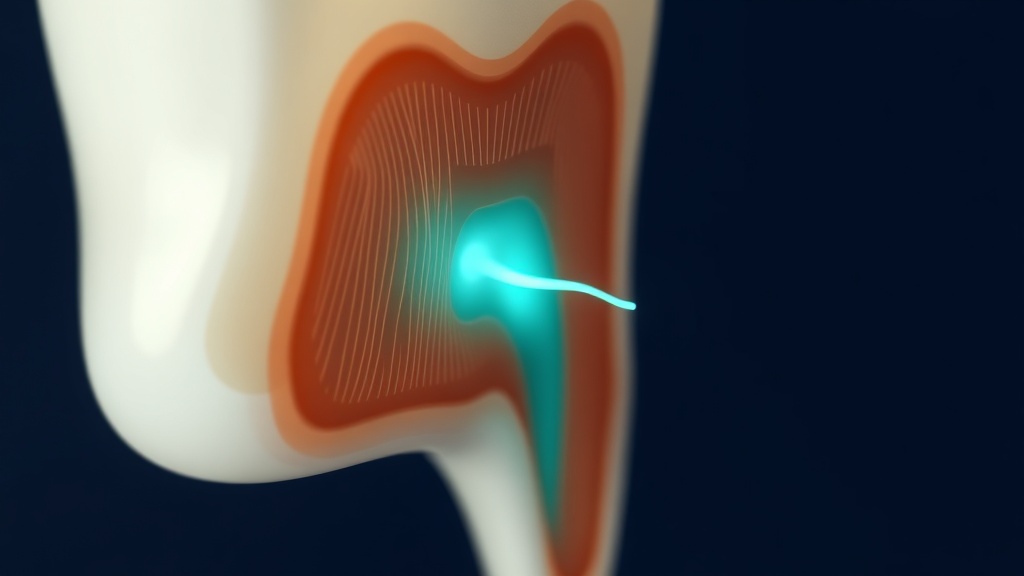
Tooth nerve pain travels through exposed dentin tubules to the pulp, where the sensory nerves actually sit.
What the research actually shows
Every claim below maps to a named, peer-reviewed source in the Sources section. According to PubMed.
| Claim | Evidence | Source |
|---|---|---|
| Under the hydrodynamic theory, fluid movement within exposed dentin tubules stimulates the pulp nerves, producing the short, sharp pain of a sensitive tooth. | Evidence-based review of dentin hypersensitivity mechanisms. | Liu et al., 2020 |
| Dentin hypersensitivity is a short, sharp pain from exposed dentin that is diagnosed only after other causes of tooth pain are ruled out. | JADA clinical review of diagnosis and management. | Orchardson and Gillam, 2006 |
| Dental caries is a biofilm-mediated, sugar-driven disease that progressively demineralises the tooth and can advance toward the pulp. | Nature Reviews Disease Primers consensus definition. | Pitts et al., 2017 |
| Once enamel cavitates it cannot repair itself, so decay that reaches this stage needs professional care rather than home management. | Materials-science analysis of enamel repair limits. | Liu et al., 2022 |
| Lingering and spontaneous pain characterises symptomatic irreversible pulpitis, which is managed by a dental professional, not at home. | Systematic review of pain control in irreversible pulpitis. | Nogueira et al., 2018 |
Reading the pattern of your pain
| What the pain feels like | What it often points to | A sensible next step |
|---|---|---|
| A brief zing to cold or sweet that fades within seconds | Exposed dentin or early sensitivity | Gentle desensitising care; mention it at your next check-up |
| Pain that lingers for 30 seconds or more after the trigger goes away | Deeper irritation of the pulp | See a dentist soon |
| Spontaneous, throbbing, or pain that wakes you at night | More advanced pulp involvement | Arrange a prompt dental assessment |
| Pain with facial swelling, fever, or a bad taste | Possible infection that home care cannot reach | Urgent professional or medical care |
| A sharp stab when biting on one particular spot | A possible crack in the tooth | Have it examined by a dentist |
Why the same tooth can hurt for very different reasons
Clinicians find it useful to separate irritation that can settle from irritation that will not. When exposed dentin or a shallow problem provokes the pulp, the pain is typically brief and tied to a trigger, and calming the trigger often calms the tooth. When the pulp is inflamed more deeply, the pain becomes spontaneous and lingering, and this pattern signals that the tooth needs a professional, not a rinse. Confusingly, a tooth nerve can also be provoked by things that are not the tooth at all. Pressure from a sinus infection can radiate into upper back teeth and mimic a toothache. Night-time clenching and grinding can leave several teeth aching and sensitive by morning. A brand-new filling or crown can be tender to temperature for days or weeks as the pulp settles. And a hairline crack can send a sharp jolt only when you bite in a certain direction. This is exactly why self-diagnosis is unreliable: the same sensation can come from a minor, manageable cause or from one that will keep worsening until a dentist intervenes.
Evidence you can act on.
Occasional emails — new research, new protocols, no noise.
How to read your own tooth pain
The goal here is to understand the signal and arrange the right care, not to treat a tooth yourself. None of these steps fixes an underlying cause; they help you respond sensibly.
- 1
Note the trigger and the timing
a momentIs the pain set off by cold, heat, sweetness, biting, or nothing at all? Pain with a clear trigger that stops when the trigger stops is generally less worrying than pain that arrives on its own. Jotting this down helps your dentist far more than trying to describe it later.
- 2
Time how long it lingers
a few secondsCount how long the ache lasts after the trigger is removed. A jolt that fades almost immediately behaves differently from one that throbs on for half a minute or more. Lingering pain is one of the clearest signs that the pulp is more deeply involved and needs to be looked at.
- 3
Watch for red-flag company
ongoingSwelling of the face or gum, fever, a persistent bad taste, or pain that disturbs your sleep are signs that home comfort measures are not enough. These belong to a dentist or doctor promptly, not to another night of waiting.
- 4
Ease the discomfort temporarily while you arrange care
as neededA warm salt-water rinse and an over-the-counter pain reliever used strictly as the label directs can make you more comfortable in the meantime. Treat this as a bridge to professional care, never as a substitute for it.
- 5
Book a dental assessment rather than waiting it out
as soon as possibleBecause a truly broken tooth surface does not heal on its own, an early look usually means simpler, calmer options. Even if the pain eases, a tooth that has hurt like this deserves to be checked.

The pattern and staying-power of tooth pain, not its sharpness alone, is what tells you how soon to seek care.
A toothache or tooth nerve pain is a signal to see a dentist, not a problem to outlast. Book an appointment promptly for any pain that is severe, throbbing, spontaneous, or lasts more than a day or two. Seek urgent professional or medical care straight away if you have facial or gum swelling, fever, a foul taste or discharge, or pain that stops you sleeping or eating, as these can point to an infection that home measures cannot reach. Comfort measures at home are only ever a temporary bridge to that professional assessment.
Frequently asked questions
Sources
- 1.
- 2.
- 3.
- 4.
- 5.

Fix your breath at the source.
The complete science-backed protocol — engineered to eliminate volatile sulfur compounds at the biological source.
Start the Breath Protocol →Related reading
Educational purposes only. The content on this page is not medical advice and is not a substitute for consultation with a qualified dental or medical professional.
More from the library
 Guides8 min
Tooth Nerve Pain Relief: A Comfort Toolkit That Buys You Time
You can calm the ache for a while; here is how to do it sensibly, and why it is only ever a bridge to professional care.
Read →→ Answers8 min
How to Stop Tooth Pain Fast: A Quick, Honest Checklist
When a tooth flares up, here is what to do in the next ten minutes, and what to do next.
Read →→ Guides8 min
White Spots on Teeth: Causes and What to Do
The two common reasons enamel turns chalky white, and the honest guide to which spots you can rebuild at home and which need professional care.
Read →→ Answers8 min
How to Remineralize Teeth: An Honest, Practical Guide
The practical routine that supports enamel remineralization, and the clear line between the early lesions it can rebuild and the decay it cannot.
Read →→ Answers8 min
How to Get Rid of White Spots on Teeth: Your Options, Ranked
An honest, evidence-based ladder of options, from what you can do at home to what only a dentist can fix.
Read →→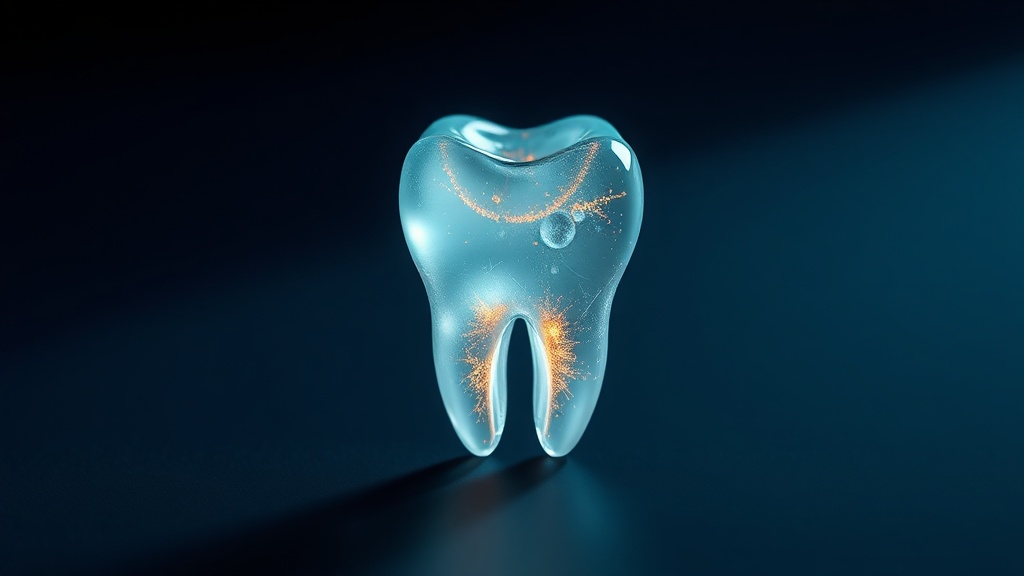 Ingredients8 min
Hydroxyapatite Toothpaste Benefits: What the Evidence Actually Supports
A calm, science-first look at what hydroxyapatite toothpaste can genuinely do for your enamel, and where the evidence stops.
Read →→